2009
Syed Akbar
Hyderabad, March 18: Faced with severe funds crunch this general election,
former chief minister and Telugu Desam president N Chandrababu Naidu is
literally begging money from Telugu NRIs settled in about 90 countries to
meet the campaign requirements.
The Telugu Desam, once dubbed as the richest regional political party in the
country, is now hard pressed for funds. Out of power for the last five years,
the party could not get enough financial support from the regular donors. It
has turned its attention on Telugu NRIs to fill up its empty coffers.
"Donate a dollar per Assembly constituency. The State has 294 Assembly
segments. Please donate 294 US dollars," says an appeal put up by the
Telugu Desam on its website meant for NRIs.
To give a charismatic touch to the fund-raising campaign, the Telugu Desam
leadership is circulating the photographs showing party founder NT Rama
Rao with an open bag seeking money from the common masses.
The TD leadership has ensured that the quantum of donation from an
individual NRI does not exceed Rs 20,000 as it would invite the provisions of
FERA. Central government Rules stipulate that any donation above Rs
20,000 has to be accompanied with details of the donor's passport.
Even as the Telugu Desam leadership is seeking fresh round of donations
from the NRIs, those who contributed heavily during the earlier round are
now reportedly bringing pressure on Chandrababu Naidu to give party ticket
to their kin.
The Telugu Desam, however, does not attach much importance to the
criticism generated by the fund-raising programme. "There's nothing wrong
in a political party seeking funds from people and admirers. After all we need
money to run the show," senior TD leader Nagam Janardhan Reddy said.
The TD leadership has drawn up the email addresses of Telugu-speaking
people settled abroad to directly contact them seeking funds. The TD is also
urging the NRI supporters to prevail upon their family members and relatives
in Andhra Pradesh to vote for the Telugu Desam and its political allies.
Friday, 20 March 2009


Election manifestos go global
2009
Syed Akbar
Hyderabad, March 18: Election manifestos have now gone global. All major
political parties in the State have borrowed the best of governance systems
from around the world in a bid to win over the local voters this general
elections.
If one political party has copied the Brazil model of helping the poor, the
other wants to replicate the irrigation system adopted in China to turn
perennial drought-hit lands greener. Those engaged in drafting manifestos are
busy going through the administrative set-up in developing countries,
collecting the best of them to be incorporated locally. The entry of film actor
Chiranjeevi into politics and his assertion to bring about "change" ala Barack
Obama has forced the old political players to launch a search internationally
for the best of promises and schemes.
The Telugu Desam, which wants to wrest power from the ruling Congress,
has taken the lead by studying the politico-social models in Latin American
countries including Brazil, Chile and Venezuela, where people living below
the poverty line are paid monthly allowances.
Former Union minister Ummareddy Venkateswarlu, who looks after the
Telugu Desam's manifesto, does not hesitate to admit that the "cash transfer
scheme" of his party was influenced by the social security programmes being
adopted in some Latin American countries.
"We have contacted Telugu-speaking people living in South America for
their inputs. We went for the cash scheme as it is not only attractive but also
beneficial to a large section of people. In fact it is a novel programme, first of
its kind in the Indian sub-continent," he points out.
The Congress, on the other hand, is looking towards the Chinese model of
irrigation (Three Gorges Dam) to turn backward Telangana fertile and
prosperous. Chief Minister YS Rajasekhar Reddy has been quite often
referring to this model to give a boost to his Jalayagnam campaign.
The BJP too talks of the Chinese irrigation model and plans to make it a
reality in Telangana, where it has commendable following. Not to lag behind
the Left parties too reiterate their Russian and Chinese forms of socialism,
albeit with an Indian touch.
Syed Akbar
Hyderabad, March 18: Election manifestos have now gone global. All major
political parties in the State have borrowed the best of governance systems
from around the world in a bid to win over the local voters this general
elections.
If one political party has copied the Brazil model of helping the poor, the
other wants to replicate the irrigation system adopted in China to turn
perennial drought-hit lands greener. Those engaged in drafting manifestos are
busy going through the administrative set-up in developing countries,
collecting the best of them to be incorporated locally. The entry of film actor
Chiranjeevi into politics and his assertion to bring about "change" ala Barack
Obama has forced the old political players to launch a search internationally
for the best of promises and schemes.
The Telugu Desam, which wants to wrest power from the ruling Congress,
has taken the lead by studying the politico-social models in Latin American
countries including Brazil, Chile and Venezuela, where people living below
the poverty line are paid monthly allowances.
Former Union minister Ummareddy Venkateswarlu, who looks after the
Telugu Desam's manifesto, does not hesitate to admit that the "cash transfer
scheme" of his party was influenced by the social security programmes being
adopted in some Latin American countries.
"We have contacted Telugu-speaking people living in South America for
their inputs. We went for the cash scheme as it is not only attractive but also
beneficial to a large section of people. In fact it is a novel programme, first of
its kind in the Indian sub-continent," he points out.
The Congress, on the other hand, is looking towards the Chinese model of
irrigation (Three Gorges Dam) to turn backward Telangana fertile and
prosperous. Chief Minister YS Rajasekhar Reddy has been quite often
referring to this model to give a boost to his Jalayagnam campaign.
The BJP too talks of the Chinese irrigation model and plans to make it a
reality in Telangana, where it has commendable following. Not to lag behind
the Left parties too reiterate their Russian and Chinese forms of socialism,
albeit with an Indian touch.
Sunday, 15 March 2009
Regional political parties to play a key role at national level, say astrologers
2009
Syed Akbar
Hyderabad: Regional political parties will play a key role at the
national level in the formation of the next Central government.
An analysis of astrological charts of various political parties and present
planetary positions reveal that at least four regional political parties will
call the shots at the national level. Present planetary positions show four
planets in the seventh house and this indicates that four or more political
parties will come together to form the next Union government. The
Bahujan Samaj Party led by Uttar Pradesh Chief Minister Mayawati will
be one of these parties, but its support will be for a short period and will
come with strings attached.
"The impact of red planet mars will 'activate' power politics in some
States. Guru Chandala Yoga indicates that minorities and downtrodden
sections will be the deciding factor in this general election and a majority
of them will side with local political parties, rather than national parties
like the Congress or the BJP," predicts senior astrologer PS Sharma.
Mayawati's stars have been on top since October 22, 2007 and she is
strong astrologically. "Her party will get a good number of seats in the
Lok Sabha elections and her stars will continue to be favourable for her till
August 28, 2010," points out Acharya Kishore of All-India Federation of
Astrologers' Societies. On the other hand Sharad Pawar (Vrichikam,
Mesham, Barani 4th Padam) will not become the Prime Minister, though
he will hold a top position in the Central Cabinet. His Nationalist Congress
Party will romp home with fairly good number of seats in Maharashtra.
According to astro-psychologist Sirikonda V Nagnath, on September 10,
2009 the position of saturn will jump into Kanya raasi, causing
uncertainty and internal rivalry in political parties. Regional political
parties will vie for power and superiority.
"Till November, 2010 regional parties will call the shots but they will not
be stable and consistent in winning the hearts of people. Mayawati may
become the prime minister for a short period in the next five years. From
November 2010 onwards national parties will take over. Jupiter will not
give stability from makara raasi or from kumba raasi, unless Jupiter will
have a comfortable position in his own house Meena raasi. Saturn needs
his exultation positions from thula raasi. Things will settle down only after
two years," Nagnath points out.
The BSP may create hurdles for national parties to form the government,
though it may ultimately support them. The Samajwadi Party will support
the Central government and its support will remain consistent even after
November 28, 2010. The Rashtriya Janata Dal of Lalu Prasad Yadav will
remain successful in provocating and influencing social weakness due to
the position of Saturn in Meena raasi.
Shiva Sena of Bal Thackeray does not have any strong stand in this
general election and it cannot influence the State or the Central level
politics.
Nagnath predicts that the DMK in Tamil Nadu will remain strong and
stable but this general election will not favour the party in terms of good
results. The AIADMK will benefit from the elections but it will not have a
sound role at the Central level.
Syed Akbar
Hyderabad: Regional political parties will play a key role at the
national level in the formation of the next Central government.
An analysis of astrological charts of various political parties and present
planetary positions reveal that at least four regional political parties will
call the shots at the national level. Present planetary positions show four
planets in the seventh house and this indicates that four or more political
parties will come together to form the next Union government. The
Bahujan Samaj Party led by Uttar Pradesh Chief Minister Mayawati will
be one of these parties, but its support will be for a short period and will
come with strings attached.
"The impact of red planet mars will 'activate' power politics in some
States. Guru Chandala Yoga indicates that minorities and downtrodden
sections will be the deciding factor in this general election and a majority
of them will side with local political parties, rather than national parties
like the Congress or the BJP," predicts senior astrologer PS Sharma.
Mayawati's stars have been on top since October 22, 2007 and she is
strong astrologically. "Her party will get a good number of seats in the
Lok Sabha elections and her stars will continue to be favourable for her till
August 28, 2010," points out Acharya Kishore of All-India Federation of
Astrologers' Societies. On the other hand Sharad Pawar (Vrichikam,
Mesham, Barani 4th Padam) will not become the Prime Minister, though
he will hold a top position in the Central Cabinet. His Nationalist Congress
Party will romp home with fairly good number of seats in Maharashtra.
According to astro-psychologist Sirikonda V Nagnath, on September 10,
2009 the position of saturn will jump into Kanya raasi, causing
uncertainty and internal rivalry in political parties. Regional political
parties will vie for power and superiority.
"Till November, 2010 regional parties will call the shots but they will not
be stable and consistent in winning the hearts of people. Mayawati may
become the prime minister for a short period in the next five years. From
November 2010 onwards national parties will take over. Jupiter will not
give stability from makara raasi or from kumba raasi, unless Jupiter will
have a comfortable position in his own house Meena raasi. Saturn needs
his exultation positions from thula raasi. Things will settle down only after
two years," Nagnath points out.
The BSP may create hurdles for national parties to form the government,
though it may ultimately support them. The Samajwadi Party will support
the Central government and its support will remain consistent even after
November 28, 2010. The Rashtriya Janata Dal of Lalu Prasad Yadav will
remain successful in provocating and influencing social weakness due to
the position of Saturn in Meena raasi.
Shiva Sena of Bal Thackeray does not have any strong stand in this
general election and it cannot influence the State or the Central level
politics.
Nagnath predicts that the DMK in Tamil Nadu will remain strong and
stable but this general election will not favour the party in terms of good
results. The AIADMK will benefit from the elections but it will not have a
sound role at the Central level.
Early human migration: India, cradle of humanity
By Syed Akbar
Hyderabad: India has long been known as the sojourn of early human migration from Africa and latest research studies by city scientists based on male sex chromosome shows that the country also served as the cradle of languages.
The forefathers of Austro-Asiatic linguistic family originated in India and later dispersed themselves to different places, according to a joint study by the Hyderabad-based Centre for Cellular and Molecular Biology and Molecular anthropology group of Biological Anthropology Unit of Indian Statistical Institute and the Shillong-based North Eastern Hill University's Department of Anthropology.
The Austro-Asiatic linguistic family is considered to be the oldest
in the country and people who speak these languages are scattered all over Southeast Asia. The scientists' team analysed the male Y-chromosome
to trace the origin and historic expansion of Austro-Asiatic groups of India.
The report was published online in the latest issue of science journal of international repute BMC Genetics. The city team studied genetic data of 1222 individuals from 25 Indian populations, covering all the three branches of Austro-Asiatic tribes, Mundari, Khasi-Khmuic and Mon-Khmer. The team, comprising among others Dr Lalji Singh, K Thangaraj and BM Reddy, compared the data with the already available scientific information on 214 relevant populations from Asia and Oceania.
The results suggested a strong paternal genetic link, not only among the
subgroups of Indian Austro-Asiatic populations but also with those of
Southeast Asia. However, maternal link based on mitochondrial DNA is not evident.
The haplogroup in the Austro-Asiatic populations had originated around 65,000 years ago and the ancestors of this linguistic family carried it further to Southeast Asia via the Northeast Indian corridor. "Subsequently, in the process of expansion, the Mon-Khmer populations from Southeast Asia seem to have migrated and colonised Andaman and Nicobar Islands at a much later point of time," the study pointed out.
The present findings are consistent with the linguistic evidence, which suggests that the linguistic ancestors of the Austro-Asiatic populations have
originated in India and then migrated to Southeast Asia. Four major linguistic groups, Austro-Asiatic, Dravidian, Indo-European and Tibeto-Burman, are present in the Indian sub-continent and the ancestors of speakers of these languages might have entered at different points of time.
The Austro-Asiatic languages include Mundari, spoken by a number of tribes living in Chota-Nagpur plateau in Central and Eastern India, Mon-Khmer (Nicobarese and Shompen tribes from Andaman and Nicobar islands) and Khasi-Khmuic (Khasi subtribes from Northeast India).
The team sampled almost all the Austro-Asiatic populations of India covering the entire geographic and micro-linguistic heterogeneity inherent among them, including the molecular genetic data on the Austro-Asiatic Khasi from
Northeast India, considered as an important corridor for human
migrations to Southeast Asia.
"Austro-Asiatic populations of India are not only linguistically linked to
Southeast Asian populations but also genetically associated. It is most likely that these populations have come from Central Asia through the Western Indian corridor and subsequently colonised Southeast Asia, although more data on Y-chromosome and mtDNA are needed from other relevant populations to draw firmer conclusions," the study pointed out.
Hyderabad: India has long been known as the sojourn of early human migration from Africa and latest research studies by city scientists based on male sex chromosome shows that the country also served as the cradle of languages.
The forefathers of Austro-Asiatic linguistic family originated in India and later dispersed themselves to different places, according to a joint study by the Hyderabad-based Centre for Cellular and Molecular Biology and Molecular anthropology group of Biological Anthropology Unit of Indian Statistical Institute and the Shillong-based North Eastern Hill University's Department of Anthropology.
The Austro-Asiatic linguistic family is considered to be the oldest
in the country and people who speak these languages are scattered all over Southeast Asia. The scientists' team analysed the male Y-chromosome
to trace the origin and historic expansion of Austro-Asiatic groups of India.
The report was published online in the latest issue of science journal of international repute BMC Genetics. The city team studied genetic data of 1222 individuals from 25 Indian populations, covering all the three branches of Austro-Asiatic tribes, Mundari, Khasi-Khmuic and Mon-Khmer. The team, comprising among others Dr Lalji Singh, K Thangaraj and BM Reddy, compared the data with the already available scientific information on 214 relevant populations from Asia and Oceania.
The results suggested a strong paternal genetic link, not only among the
subgroups of Indian Austro-Asiatic populations but also with those of
Southeast Asia. However, maternal link based on mitochondrial DNA is not evident.
The haplogroup in the Austro-Asiatic populations had originated around 65,000 years ago and the ancestors of this linguistic family carried it further to Southeast Asia via the Northeast Indian corridor. "Subsequently, in the process of expansion, the Mon-Khmer populations from Southeast Asia seem to have migrated and colonised Andaman and Nicobar Islands at a much later point of time," the study pointed out.
The present findings are consistent with the linguistic evidence, which suggests that the linguistic ancestors of the Austro-Asiatic populations have
originated in India and then migrated to Southeast Asia. Four major linguistic groups, Austro-Asiatic, Dravidian, Indo-European and Tibeto-Burman, are present in the Indian sub-continent and the ancestors of speakers of these languages might have entered at different points of time.
The Austro-Asiatic languages include Mundari, spoken by a number of tribes living in Chota-Nagpur plateau in Central and Eastern India, Mon-Khmer (Nicobarese and Shompen tribes from Andaman and Nicobar islands) and Khasi-Khmuic (Khasi subtribes from Northeast India).
The team sampled almost all the Austro-Asiatic populations of India covering the entire geographic and micro-linguistic heterogeneity inherent among them, including the molecular genetic data on the Austro-Asiatic Khasi from
Northeast India, considered as an important corridor for human
migrations to Southeast Asia.
"Austro-Asiatic populations of India are not only linguistically linked to
Southeast Asian populations but also genetically associated. It is most likely that these populations have come from Central Asia through the Western Indian corridor and subsequently colonised Southeast Asia, although more data on Y-chromosome and mtDNA are needed from other relevant populations to draw firmer conclusions," the study pointed out.
Fertility is lost because of exposure to coal mining
By Syed Akbar
Hyderabad: People occupationally exposed to coal mining and construction work are at a higher risk of losing their fertility levels including giving birth to children with congenital malformations.
Two different research studies conducted by the Human Genetics Laboratory in the Department of Zoology, Osmania University, and the Department of Environmental Toxicology, Institute of Genetics and Hospital for Genetic Diseases, Hyderabad, revealed that workers of coal mines and those exposed to cement concrete are more prone to abortions and low sperm quality. The incidence of stillbirth and neonatal deaths are also higher in these two groups of workers.
V Vijendar Reddy and C Jyothsna of Human Genetics Laboratory carried out a study on about 1000 workers employed in the coal industry. The research was conducted in the coal belt area in Godavarikhani of Singareni Collieries.
Since coal contains hydrocarbons which may give rise to polycyclic hydrocarbons during technological processes associated with open fire or temperature, constant exposure to such substances had led to genotoxicity among coal mine workers.
The researchers recorded data on the fertility and other reproductive end points in 1000 couples where males were occupationally exposed to coal. Data from 400 unexposed people belonging to same age group and not having any history of exposure to coal was collected and compared for analysis. The results on the reproductive epidemiology in coal mine workers indicated that there was decreased fertility and live birth in coal-exposed population as compared with those of the control group.
In another research study conducted by P Vidyullatha, B Sivaprasad and others of the Department of Environmental Toxicology, on 53 cement workers, exposed to concrete for longer periods, showed symptoms of skin irrigation, contact dermatitis, respiratory and other health problems.
What is surprising is that their fertility levels had gone down. Like coal workers, construction labour too showed higher frequency of stillbirths, neonatal deaths and premature births. A significant decrease in the frequency of live births was also observed in construction workers.
Hyderabad: People occupationally exposed to coal mining and construction work are at a higher risk of losing their fertility levels including giving birth to children with congenital malformations.
Two different research studies conducted by the Human Genetics Laboratory in the Department of Zoology, Osmania University, and the Department of Environmental Toxicology, Institute of Genetics and Hospital for Genetic Diseases, Hyderabad, revealed that workers of coal mines and those exposed to cement concrete are more prone to abortions and low sperm quality. The incidence of stillbirth and neonatal deaths are also higher in these two groups of workers.
V Vijendar Reddy and C Jyothsna of Human Genetics Laboratory carried out a study on about 1000 workers employed in the coal industry. The research was conducted in the coal belt area in Godavarikhani of Singareni Collieries.
Since coal contains hydrocarbons which may give rise to polycyclic hydrocarbons during technological processes associated with open fire or temperature, constant exposure to such substances had led to genotoxicity among coal mine workers.
The researchers recorded data on the fertility and other reproductive end points in 1000 couples where males were occupationally exposed to coal. Data from 400 unexposed people belonging to same age group and not having any history of exposure to coal was collected and compared for analysis. The results on the reproductive epidemiology in coal mine workers indicated that there was decreased fertility and live birth in coal-exposed population as compared with those of the control group.
In another research study conducted by P Vidyullatha, B Sivaprasad and others of the Department of Environmental Toxicology, on 53 cement workers, exposed to concrete for longer periods, showed symptoms of skin irrigation, contact dermatitis, respiratory and other health problems.
What is surprising is that their fertility levels had gone down. Like coal workers, construction labour too showed higher frequency of stillbirths, neonatal deaths and premature births. A significant decrease in the frequency of live births was also observed in construction workers.
Left busy wooing Muslims in MIM fiefdom
Syed Akbar
Hyderabad, March 14: The Left is now busy consolidating its votebank
among Muslims, who form the large chunk of electorate in Hyderabad.
CPM MP P Madhu and CPI MP Mohammad Azeez Pasha have been
holding a series of meetings with local Muslim leaders right from the
municipal division level to wean away voters from the Majlis-e-
Ittehadul Muslimeen.
The Left leaders got a shot in the arm with the Telugu Desam too
extending political support to them against the MIM, which has been in
control of old city for almost five decades. The Left and Telugu Desam
leaders plan to win over the local voters by highlighting the "failures"
of the Majlis and the ruling Congress whom it backs.
On Saturday too the Left-TD leaders convened a meeting of senior
Muslim leaders including from some religious groups to chalk out a
political strategy to beat the MIM in its own game. Former MP and
senior Telugu Desam leader SM Laljan Basha, former Wakf Board
chairman Muhammad Saleem, besides Madhu and Pasha attended the
pre-election meeting.
"The Congress and the MIM failed in their task to develop old city
during the past five years. Time has now come for the voters to revolt
against them. The city will witness development only if the old players
are voted out," Madhu said.
The Communists want to checkmate the MIM as the latter is poised to
win as many as seven Assembly and one Lok Sabha constituencies
hands down, thanks to the recent delimitation exercise. "If we do not
check them now, people will be put to trouble further because there
will be no development in the old city," Saleem said.
Hyderabad, March 14: The Left is now busy consolidating its votebank
among Muslims, who form the large chunk of electorate in Hyderabad.
CPM MP P Madhu and CPI MP Mohammad Azeez Pasha have been
holding a series of meetings with local Muslim leaders right from the
municipal division level to wean away voters from the Majlis-e-
Ittehadul Muslimeen.
The Left leaders got a shot in the arm with the Telugu Desam too
extending political support to them against the MIM, which has been in
control of old city for almost five decades. The Left and Telugu Desam
leaders plan to win over the local voters by highlighting the "failures"
of the Majlis and the ruling Congress whom it backs.
On Saturday too the Left-TD leaders convened a meeting of senior
Muslim leaders including from some religious groups to chalk out a
political strategy to beat the MIM in its own game. Former MP and
senior Telugu Desam leader SM Laljan Basha, former Wakf Board
chairman Muhammad Saleem, besides Madhu and Pasha attended the
pre-election meeting.
"The Congress and the MIM failed in their task to develop old city
during the past five years. Time has now come for the voters to revolt
against them. The city will witness development only if the old players
are voted out," Madhu said.
The Communists want to checkmate the MIM as the latter is poised to
win as many as seven Assembly and one Lok Sabha constituencies
hands down, thanks to the recent delimitation exercise. "If we do not
check them now, people will be put to trouble further because there
will be no development in the old city," Saleem said.
Friday, 13 March 2009
People sell blood to fight recession
Feb 13, 2009
By Syed Akbar
Hyderabad: Want to make Rs 50,000 in one go to beat the economic crisis thrown up by global recession? Simply `donate’ your egg. Or do you need just Rs 7,000 to augment your pocket? Then settle for sperm `donation’. Will Rs 1000 suffice? Blood sale is the best option.
The rate card at illegal sperm, egg and blood banks is loud and clear.
Walk in, donate and walk out with your purse loaded with money. Donation of vital body fluids and eggs is not a new phenomenon, but the present economic slowdown has only added new players to this silently thriving medical business. Hyderabad is one of the few cities in the world where a number of illegal sperm and blood banks thrive clandestinely, without the official licence.
The global economic recession may have resulted in a steep fall in business and industrial incomes the world over, but it has given a new
impetus to illegal organ and body fluids trade. The sale of sperm,blood, ova, plasma and hair has recorded at least 50 per cent increase in the last six months in the United States and other industrialised countries.
India, where the full tremors of economic slowdown are yet to be felt,
is slowly catching up with the US on this front. But unlike in the US,
for obvious reasons, there are no official statistics in India on the
sale of sperm, eggs, blood and plasma.
Medical insiders and sexologists admit in private that more and more Indian youth, men and women, are going in for donation of their vital body fluids, besides eggs and hair, to beat the economic recession. A one time sperm `donation’ (sale) fetches anything upward of Rs 2,000 depending on the complexion, height and social background of the donor, nay seller. Blood donation brings in between Rs 400 and Rs 1,000 depending on the urgency.
The latest fad is blood plasma donation. And those with long, curly and beautiful hair are also in demand. But it is the egg donation that is wrought with pain and suffering. The egg donor undergoes severe pain while the egg is removed from the body.
”It is a multi crore business, mostly done under wraps. We have pecialized sperm banks in Mumbai, Bangalore, Hyderabad and other major cities. They keep the identity of donors secret. Recession or no recession the activity has been thriving illegally. The number of people selling body fluids and eggs has definitely gone up now, may be due to economic slowdown. yderabad is already notorious for organ sales,” points out senior sexologist Dr Swayam Prakash.
In the USA, the Northeast Assisted Fertility Group has found that the
number of applications from women looking to donate their eggs has ecently doubled. The number of men selling their sperm has also increased by at least 15 per cent. The rate card in the USA is far higher than that of in India. A young woman donating her eggs makes a cool 10,000 US dollars or Rs 5 lakh. The sperm donor will get $50 to $200.
“Wigs and hair extensions are always in demand, and the companies that make them constantly have to source high quality human hair. This is where you come in. How much you'll get for your hair will depend on its colour, length, type and quality. A particularly popular head of hair may sell for £1,000 or even more,” says the NAFG report.
Dr Swayam Prakash warns that donating eggs may often lead to hospitalisation and future infertility. “This is because the drugs used by fertility clinics to stimulate egg formation will have long term side effects,” he said.
The youngsters, who want money, are just cashing in on the infertility
situation. Though India is the second most populous nation in the world, it also has one of the top infertility rates. The number of childless couples has been growing steadily in India, partly due to genetic and partly due to environmental reasons including lifestyles.
According to the World Health Organisation, 8-10 per cent of couples
experience some form of infertility problems. In India nearly 1.5 crore couples are infertile.
By Syed Akbar
Hyderabad: Want to make Rs 50,000 in one go to beat the economic crisis thrown up by global recession? Simply `donate’ your egg. Or do you need just Rs 7,000 to augment your pocket? Then settle for sperm `donation’. Will Rs 1000 suffice? Blood sale is the best option.
The rate card at illegal sperm, egg and blood banks is loud and clear.
Walk in, donate and walk out with your purse loaded with money. Donation of vital body fluids and eggs is not a new phenomenon, but the present economic slowdown has only added new players to this silently thriving medical business. Hyderabad is one of the few cities in the world where a number of illegal sperm and blood banks thrive clandestinely, without the official licence.
The global economic recession may have resulted in a steep fall in business and industrial incomes the world over, but it has given a new
impetus to illegal organ and body fluids trade. The sale of sperm,blood, ova, plasma and hair has recorded at least 50 per cent increase in the last six months in the United States and other industrialised countries.
India, where the full tremors of economic slowdown are yet to be felt,
is slowly catching up with the US on this front. But unlike in the US,
for obvious reasons, there are no official statistics in India on the
sale of sperm, eggs, blood and plasma.
Medical insiders and sexologists admit in private that more and more Indian youth, men and women, are going in for donation of their vital body fluids, besides eggs and hair, to beat the economic recession. A one time sperm `donation’ (sale) fetches anything upward of Rs 2,000 depending on the complexion, height and social background of the donor, nay seller. Blood donation brings in between Rs 400 and Rs 1,000 depending on the urgency.
The latest fad is blood plasma donation. And those with long, curly and beautiful hair are also in demand. But it is the egg donation that is wrought with pain and suffering. The egg donor undergoes severe pain while the egg is removed from the body.
”It is a multi crore business, mostly done under wraps. We have pecialized sperm banks in Mumbai, Bangalore, Hyderabad and other major cities. They keep the identity of donors secret. Recession or no recession the activity has been thriving illegally. The number of people selling body fluids and eggs has definitely gone up now, may be due to economic slowdown. yderabad is already notorious for organ sales,” points out senior sexologist Dr Swayam Prakash.
In the USA, the Northeast Assisted Fertility Group has found that the
number of applications from women looking to donate their eggs has ecently doubled. The number of men selling their sperm has also increased by at least 15 per cent. The rate card in the USA is far higher than that of in India. A young woman donating her eggs makes a cool 10,000 US dollars or Rs 5 lakh. The sperm donor will get $50 to $200.
“Wigs and hair extensions are always in demand, and the companies that make them constantly have to source high quality human hair. This is where you come in. How much you'll get for your hair will depend on its colour, length, type and quality. A particularly popular head of hair may sell for £1,000 or even more,” says the NAFG report.
Dr Swayam Prakash warns that donating eggs may often lead to hospitalisation and future infertility. “This is because the drugs used by fertility clinics to stimulate egg formation will have long term side effects,” he said.
The youngsters, who want money, are just cashing in on the infertility
situation. Though India is the second most populous nation in the world, it also has one of the top infertility rates. The number of childless couples has been growing steadily in India, partly due to genetic and partly due to environmental reasons including lifestyles.
According to the World Health Organisation, 8-10 per cent of couples
experience some form of infertility problems. In India nearly 1.5 crore couples are infertile.
Now computer virus hoax is the in-thing
By Syed Akbar
Hyderabad: Bomb hoax is a passe. Now virus hoax seems to be the in-thing. Computer users are being flooded with e-mail messages warning that a potentially dangerous virus called "Invitation" will attack computers in the next few days "burning" hard discs.
Software companies, however, dub the "warning" e-mail as a spam and allays the fears of net users saying that no virus by name "Invitation", has ever been detected in any part of the world.
The "Invitation" virus, also called "Olympic Torch" is projected as something dangerous, the first-ever "virus" capable of damaging the hardware like "burning" the whole hard disc C of computer. The virus and worms detected so far only damages the software and data stored in computers.
"The Invitation virus is a hoax," says H Topiwala, a city-based ethical hacker, who had graduated from the Ethical Hackers' School, London. He describes the e-mail as nothing more than a mass spam to create a sense of fear pshychosis among people.
The content of the e-mail spreading the virus hoax reads like this: "You should be alert during the next days: Do not open any message with an attached filed called "Invitation" regardless of who sent it . It is a virus that opens an Olympic Torch which "burns" the whole hard disc C of your computer".
The e-mail further says that "this virus will be received from someone who has your e-mail address in his/her contact list, that is why you should send this e-mail to all your contacts. It is better to receive this message 25 times than to receive the virus and open it. If you receive a mail called "invitation", though sent by a friend, do not open it and shut down your computer immediately. This is the worst virus announced by CNN, it has been classified by Microsoft as the most destructive virus ever".
To give credence to the virus hoax, the generator of the e-mail says, "this virus was discovered by McAfee yesterday, and there is no repair yet for this kind of virus. This virus simply destroys the Zero Sector of the Hard Disc, where the vital information is kept".
The CNN website does not refer to the virus at all while McAfee's website describes the virus threat as a hoax.
Says security specialist Ganga Raju of Networks Data, "the e-mail is created to increase the bandwidth. The more the number of friends you forward the e-mail, the more the usage of bandwidth. This simply means more money to the internet service provider". He suggests that anti-spam software should be deployed to prevent such virus hoax messages.
Snopes.Com, a website on rumours, describes the "Invitation" virus as nothing but a rehashed hoax call about "virtual card for you" virus. "The classics never go away, it seems, so just in time for the 2006 Winter Olympics someone has dusted off an old virus warning hoax (most commonly seen in its incarnation as the "[Virtual] Card for You" hoax) and reintroduced it as an "Olympic Torch" virus warning," it points out.
Hyderabad: Bomb hoax is a passe. Now virus hoax seems to be the in-thing. Computer users are being flooded with e-mail messages warning that a potentially dangerous virus called "Invitation" will attack computers in the next few days "burning" hard discs.
Software companies, however, dub the "warning" e-mail as a spam and allays the fears of net users saying that no virus by name "Invitation", has ever been detected in any part of the world.
The "Invitation" virus, also called "Olympic Torch" is projected as something dangerous, the first-ever "virus" capable of damaging the hardware like "burning" the whole hard disc C of computer. The virus and worms detected so far only damages the software and data stored in computers.
"The Invitation virus is a hoax," says H Topiwala, a city-based ethical hacker, who had graduated from the Ethical Hackers' School, London. He describes the e-mail as nothing more than a mass spam to create a sense of fear pshychosis among people.
The content of the e-mail spreading the virus hoax reads like this: "You should be alert during the next days: Do not open any message with an attached filed called "Invitation" regardless of who sent it . It is a virus that opens an Olympic Torch which "burns" the whole hard disc C of your computer".
The e-mail further says that "this virus will be received from someone who has your e-mail address in his/her contact list, that is why you should send this e-mail to all your contacts. It is better to receive this message 25 times than to receive the virus and open it. If you receive a mail called "invitation", though sent by a friend, do not open it and shut down your computer immediately. This is the worst virus announced by CNN, it has been classified by Microsoft as the most destructive virus ever".
To give credence to the virus hoax, the generator of the e-mail says, "this virus was discovered by McAfee yesterday, and there is no repair yet for this kind of virus. This virus simply destroys the Zero Sector of the Hard Disc, where the vital information is kept".
The CNN website does not refer to the virus at all while McAfee's website describes the virus threat as a hoax.
Says security specialist Ganga Raju of Networks Data, "the e-mail is created to increase the bandwidth. The more the number of friends you forward the e-mail, the more the usage of bandwidth. This simply means more money to the internet service provider". He suggests that anti-spam software should be deployed to prevent such virus hoax messages.
Snopes.Com, a website on rumours, describes the "Invitation" virus as nothing but a rehashed hoax call about "virtual card for you" virus. "The classics never go away, it seems, so just in time for the 2006 Winter Olympics someone has dusted off an old virus warning hoax (most commonly seen in its incarnation as the "[Virtual] Card for You" hoax) and reintroduced it as an "Olympic Torch" virus warning," it points out.
Vedic diet helps fight heart problems like arrhythmia
By Syed Akbar
Hyderabad: Intake of Vedic diet comprising fresh uncooked vegetables and raw sprouts will stabilise the heart beat and prevent arrhythmias, which often lead to death.
Arrhythmia is a health problem affecting the electrical system of the cardiac muscle and causes the heart to beat slowly or pump blood less effectively. A research study on various diets mentioned in the ancient Indian texts revealed that those who take a diet comprising vegetables, grains, sprouts, minimum quantity of oil and raw foods showed a rhythmic heart beat.
The study, conducted by Dr P Ravi Shankar and others at the Russian Medical Academy, showed that cells of the same tissue would exist with different resting potentials depending on the dietary intake as prescribed in the Indian system of medicine.
As many as 75 male Wistar rats were used in the study. They were divided into five groups each comprising 15 rats. Three groups of rats were fed with different types of diets referred to in the ancient Indian Scriptures. The other two groups were taken as control groups. The researchers used the action potentials in the heart muscle as a reference parameter. The action potentials showed an average resting potential of about - 84.5 milli volts. At the end of the study, the rats were killed and action potentials were measured from their intact hearts.
The values of action potentials in the rats fed with a diet made up of raw vegetables and grains were very close to the resting potential. The action potentials of those fed with spicy foods had varied between 86.5 milli volts and 93.5 milli volts. The third group which received cooked foods with lot of oil and sweets had action potentials between 105.28 milli volts and 112.28 milli volts.
"The findings prove that the more the resting potential, the lesser the external stimulus needed to excite and generate an action potential which gives a greater understanding of arrhythmias in cardiac muscles and various nervous and other disorders," the study pointed out.
Hyderabad: Intake of Vedic diet comprising fresh uncooked vegetables and raw sprouts will stabilise the heart beat and prevent arrhythmias, which often lead to death.
Arrhythmia is a health problem affecting the electrical system of the cardiac muscle and causes the heart to beat slowly or pump blood less effectively. A research study on various diets mentioned in the ancient Indian texts revealed that those who take a diet comprising vegetables, grains, sprouts, minimum quantity of oil and raw foods showed a rhythmic heart beat.
The study, conducted by Dr P Ravi Shankar and others at the Russian Medical Academy, showed that cells of the same tissue would exist with different resting potentials depending on the dietary intake as prescribed in the Indian system of medicine.
As many as 75 male Wistar rats were used in the study. They were divided into five groups each comprising 15 rats. Three groups of rats were fed with different types of diets referred to in the ancient Indian Scriptures. The other two groups were taken as control groups. The researchers used the action potentials in the heart muscle as a reference parameter. The action potentials showed an average resting potential of about - 84.5 milli volts. At the end of the study, the rats were killed and action potentials were measured from their intact hearts.
The values of action potentials in the rats fed with a diet made up of raw vegetables and grains were very close to the resting potential. The action potentials of those fed with spicy foods had varied between 86.5 milli volts and 93.5 milli volts. The third group which received cooked foods with lot of oil and sweets had action potentials between 105.28 milli volts and 112.28 milli volts.
"The findings prove that the more the resting potential, the lesser the external stimulus needed to excite and generate an action potential which gives a greater understanding of arrhythmias in cardiac muscles and various nervous and other disorders," the study pointed out.
Monday, 9 March 2009
Milad-un-Nabi and the Gandhian Charka
By Syed Akbar
As the Muslim world celebrates the Milad-un-Nabi, birthday of Holy Prophet Hazrat Muhammad, old timers in Hyderabad recall how the Gandhian "Charka" had changed the living standards of people in the Islamic holy cities of Mecca and Medina before Independence.
Scores of "Charka" experts from Hyderabad went to Medina, the city of the Prophet, to train the local Arabs in the art of making thread and weaving cloth. Some Hyderabadis also went to Mecca, the city of Allah, with the Gandhian mission of providing livelihood to the poor through Charka.
As the poor people of Mecca and Medina could not master the art of making thread on the Charka despite several training sessions by expert Hyderabadis, it was then decided that the local Arabs be trained in weaving cloth. Hyderabadis then carried with them what is known as "Kargha" (a type of loom) to weave Khadi cloth.
Incidentally, it was Hyderabad which provided the first-ever power generation facility in Masjid-al-Haram in Mecca and Masjid-un-Nabavi in Medina in 1936. Then Nizam of Hyderabad Mir Osman Ali Khan and some members of the noble Paigah family donated the two generators that illuminated the Islamic shrines in the otherwise dark desert nights.
According to eminent educationist KM Arifuddin, in 1932 Shaik Abdullah, then prime minister of Kashmir, the Nawab of Chattari and then prime minister of Hyderabad held a meeting and formed what came to be known as "Anjuman Parcha Bafi Harmain Sharieff". Arifuddin is presently the secretary of the Anjuman. The purpose of the Anjuman or society was to help the poor people of the two Islamic holy cities. The Anjuman acquired properties and the rents accrued from them were sent to Mecca and Medina as charity.
"Later the society felt that sending money will not serve the purpose well. So it decided to give training to the local Arabs in hand weaving industry. A unit was set up in Medina and it functioned till 1945. After Independence and oil discovery in Saudi Arabia Hyderabadis stopped sending funds or training the locals in hand weaving," says Arifuddin.
Former IAS officer Hasnuddin Ahmad says the Gandhian Charka and Kargha had changed the living standards of the Arabs in those days.
"The cloth produced from handlooms was not of superior or fine quality. The cloth was coarse in nature. The Arab people had marketing problems. The Hyderabadis came out with a solution. It was suggested that the cloth could be used as "kafan" (shroud) to cover the dead. The Arabs used to dip the cloth in the holy waters of Zamzam (a perennial well in the precincts of the Sacred Mosque in Mecca) and sold it to the pilgrims from around the world during Haj or Umra," Ahmad observes.
The Rubat (accommodation) in Mecca and Medina is another contribution of Hyderabadis, according to senior Urdu journalist Syed Fazil Hussain Parvez.
Keeping the long association with the Islamic holy cities, the synonyms of peace and love, Hyderabadis have been observing Milad-un-Nabi as "anti-terrorism day" to drive home the message that Islam means peace and the ill actions of a handful of Muslims cannot reflect on the community at large.
As the Muslim world celebrates the Milad-un-Nabi, birthday of Holy Prophet Hazrat Muhammad, old timers in Hyderabad recall how the Gandhian "Charka" had changed the living standards of people in the Islamic holy cities of Mecca and Medina before Independence.
Scores of "Charka" experts from Hyderabad went to Medina, the city of the Prophet, to train the local Arabs in the art of making thread and weaving cloth. Some Hyderabadis also went to Mecca, the city of Allah, with the Gandhian mission of providing livelihood to the poor through Charka.
As the poor people of Mecca and Medina could not master the art of making thread on the Charka despite several training sessions by expert Hyderabadis, it was then decided that the local Arabs be trained in weaving cloth. Hyderabadis then carried with them what is known as "Kargha" (a type of loom) to weave Khadi cloth.
Incidentally, it was Hyderabad which provided the first-ever power generation facility in Masjid-al-Haram in Mecca and Masjid-un-Nabavi in Medina in 1936. Then Nizam of Hyderabad Mir Osman Ali Khan and some members of the noble Paigah family donated the two generators that illuminated the Islamic shrines in the otherwise dark desert nights.
According to eminent educationist KM Arifuddin, in 1932 Shaik Abdullah, then prime minister of Kashmir, the Nawab of Chattari and then prime minister of Hyderabad held a meeting and formed what came to be known as "Anjuman Parcha Bafi Harmain Sharieff". Arifuddin is presently the secretary of the Anjuman. The purpose of the Anjuman or society was to help the poor people of the two Islamic holy cities. The Anjuman acquired properties and the rents accrued from them were sent to Mecca and Medina as charity.
"Later the society felt that sending money will not serve the purpose well. So it decided to give training to the local Arabs in hand weaving industry. A unit was set up in Medina and it functioned till 1945. After Independence and oil discovery in Saudi Arabia Hyderabadis stopped sending funds or training the locals in hand weaving," says Arifuddin.
Former IAS officer Hasnuddin Ahmad says the Gandhian Charka and Kargha had changed the living standards of the Arabs in those days.
"The cloth produced from handlooms was not of superior or fine quality. The cloth was coarse in nature. The Arab people had marketing problems. The Hyderabadis came out with a solution. It was suggested that the cloth could be used as "kafan" (shroud) to cover the dead. The Arabs used to dip the cloth in the holy waters of Zamzam (a perennial well in the precincts of the Sacred Mosque in Mecca) and sold it to the pilgrims from around the world during Haj or Umra," Ahmad observes.
The Rubat (accommodation) in Mecca and Medina is another contribution of Hyderabadis, according to senior Urdu journalist Syed Fazil Hussain Parvez.
Keeping the long association with the Islamic holy cities, the synonyms of peace and love, Hyderabadis have been observing Milad-un-Nabi as "anti-terrorism day" to drive home the message that Islam means peace and the ill actions of a handful of Muslims cannot reflect on the community at large.
Subscribe to:
Posts (Atom)
Mother's Care
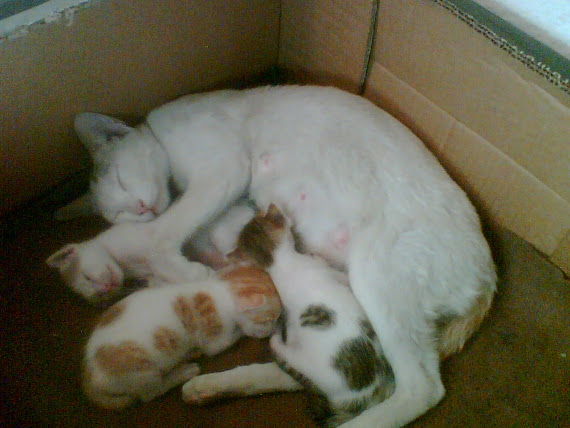
Minnu The Cat & Her Kittens Brownie, Goldie & Blackie
Someone with Nature

Syed Akbar in an island in river Godavari with Papikonda hills in the background
Recognition by World Vegetable Centre

Under the shade of Baobab tree

At Agha Khan Akademi in Kenya
Gateway to the Southern Hemisphere

Convention on Biodiversity

Syed Akbar at the 11th Conference of Parties to the United Nations Convention on Biological Diversity