By Syed Akbar
Hyderabad, Sept 27: In a major study that could help treat lung cancer
at the genetic level, an Indian origin doctor in the USA has for the
first time landscaped the genome of cancer cells in both smokers and
non-smokers. Smokers showed a higher number of mutations than people,
who never smoke in their life.
Dr Ramaswamy Govindan, Professor of Medicine in the Division of Oncology at
Washington University School of Medicine, USA, and his team have found
several new gene alterations in cancer patients, not previously
reported.
“The number of mutations in never smokers with lung cancer is
significantly lower than in smokers. By looking at the entire genome
of tumour specimens, we found at least one critical gene mutation that
can be treated in every one of our never smokers,” Dr Ramaswamy told
this correspondent.
He said with new tools and technologies, the team will now study the
tumor genomic landscape to identify new targets for treatment of
cancer. “This is going to revolutionize our treatment”.
Cancer is the disease where by genes inside the cells get altered
(mutated). There are trillions and trillions of normal cells in the
body. Each and every cell has about 2,00,000 genes. These genes get
altered more if one smoker or drinks or eat poor and unhealthy diet.
About 10 per cent of patients with lung cancer in the US and Europe do
not report any history of smoking. The number of non- smokers with
lung cancer is high in certain parts of Asia including India.
Lung cancer in never smokers for some peculiar reasons affects women
more than men. “We did a study of looking at all these genes in cancer
specimens from patients with lung cancer. We compared the full
complement of Genomes not only from the patients’ tumour cells but
also from their normal cells to figure out how many and what
genes were uniquely altered in lung cancer specimens,” he added.
Showing posts with label Cancers. Show all posts
Showing posts with label Cancers. Show all posts
Friday, 28 September 2012
Dr Ramaswamy Govindan: In a major study that could help treat lung cancer at the genetic level, an Indian origin doctor in the USA has for the first time landscaped the genome of cancer cells in both smokers and non-smokers. Smokers showed a higher number of mutations than people, who never smoke in their life


Tuesday, 19 June 2012
Neither ventilation nor filtration will reduce the impact of tobacco smoke in closed door environments. There is nothing like safe limits for second-hand tobacco smoke in areas which are closed. About 300 cases of cancer are reported to about 200 chest specialists in Hyderabad every week and about 50 patients are non-smokers
A majority of the patients reporting at hospitals and clinics are as young as 35 years and doctors link it to
smoking in colleges
emerged as the major cause of lung
diseases and reproductive problems in twin cities.
Records on patients reported at various hospitals in the city in the last
six years show that there has been an increase
in cancer and infertility cases by at least five per cent every year.
About 15 per cent of these patients are victims of
second-hand tobacco smoke, a term referred to people who do not smoke
themselves but involuntarily inhale harmful
elements from regular smokers.
According to estimates by health experts, as many as 15,000 cancer cases
were reported last year in Hyderabad as
against 10,000 cases in 2000. Infertility cases too went up considerably
from 6,000 to 10,000 a year during the same
period. Most of the cancer and infertility cases in non-smokers are due to
second-hand tobacco smoke. Health
experts point out that the victims are non-smokers who frequent bars, pubs
and restaurants where smoking is allowed
in closed doors.
"Neither ventilation nor filtration will reduce the impact of tobacco
smoke in closed door environments. There is
nothing like safe limits for second-hand tobacco smoke in areas which are
closed. About 300 cases of cancer are
reported to about 200 chest specialists in Hyderabad every week and about
50 patients are non-smokers. What is
troubling is that the incidence has gone up drastically among women, who
are mostly non-smokers," says senior lung
specialist Dr Pradyut Waghray.
The problem of second-hand tobacco increased to such alarming levels that
the World Health Organisation was
forced to issue policy recommendations to member countries recommending
compulsory smoke-free environments to
protect public health.
A majority of the patients reporting at city hospitals and clinics are as
young as 35 years and doctors link it to
smoking in colleges.
Fertility expert Dr Roya Rozati, who has done considerable research on
second-hand tobacco smoke and infertility,
points out that tobacco pollutants will affect both men and women. "While
it reduces sperm count and the quality of
the semen in men, it leads to infertility in women," she says.
According to Dr SVSN Prasad, senior medical oncologist at Apollo Cancer
Hospital, changing lifestyle among the
youth, especially women, can be a cause of further increase in lung
cancers in future. "Women from the IT and ITES
sectors are taking to smoking. This is further contributing to passive
smoking or second-hand tobacco smoke. The
increase in pub culture can also increase the number of cancer patients in
Hyderabad," he warns.
Incidence of acute myeloid leukaemia in mothers is also on the increase in
twin cities because of second-hand
tobacco smoke.
smoking in colleges
By Syed Akbar
Hyderabad: Second-hand tobacco smoke in closed environs hasemerged as the major cause of lung
diseases and reproductive problems in twin cities.
Records on patients reported at various hospitals in the city in the last
six years show that there has been an increase
in cancer and infertility cases by at least five per cent every year.
About 15 per cent of these patients are victims of
second-hand tobacco smoke, a term referred to people who do not smoke
themselves but involuntarily inhale harmful
elements from regular smokers.
According to estimates by health experts, as many as 15,000 cancer cases
were reported last year in Hyderabad as
against 10,000 cases in 2000. Infertility cases too went up considerably
from 6,000 to 10,000 a year during the same
period. Most of the cancer and infertility cases in non-smokers are due to
second-hand tobacco smoke. Health
experts point out that the victims are non-smokers who frequent bars, pubs
and restaurants where smoking is allowed
in closed doors.
"Neither ventilation nor filtration will reduce the impact of tobacco
smoke in closed door environments. There is
nothing like safe limits for second-hand tobacco smoke in areas which are
closed. About 300 cases of cancer are
reported to about 200 chest specialists in Hyderabad every week and about
50 patients are non-smokers. What is
troubling is that the incidence has gone up drastically among women, who
are mostly non-smokers," says senior lung
specialist Dr Pradyut Waghray.
The problem of second-hand tobacco increased to such alarming levels that
the World Health Organisation was
forced to issue policy recommendations to member countries recommending
compulsory smoke-free environments to
protect public health.
A majority of the patients reporting at city hospitals and clinics are as
young as 35 years and doctors link it to
smoking in colleges.
Fertility expert Dr Roya Rozati, who has done considerable research on
second-hand tobacco smoke and infertility,
points out that tobacco pollutants will affect both men and women. "While
it reduces sperm count and the quality of
the semen in men, it leads to infertility in women," she says.
According to Dr SVSN Prasad, senior medical oncologist at Apollo Cancer
Hospital, changing lifestyle among the
youth, especially women, can be a cause of further increase in lung
cancers in future. "Women from the IT and ITES
sectors are taking to smoking. This is further contributing to passive
smoking or second-hand tobacco smoke. The
increase in pub culture can also increase the number of cancer patients in
Hyderabad," he warns.
Incidence of acute myeloid leukaemia in mothers is also on the increase in
twin cities because of second-hand
tobacco smoke.
Saturday, 29 October 2011
Sambar prevents growth of cancerous cells in the body
By Syed Akbar
Hyderabad: The mouth-watering south Indian sambar has several
anti-oxidant properties which prevent the
growth of cancerous cells in the body.
The special ingredients that go into the preparation of this south Indian
patented dish help in easy digestion, provide
the much-needed energy and boost the immune system. They are also
anti-carcinogenic in nature and prevent the
development of cancer.
The Union Ministry of Health and Family Welfare, in association with the
Public Health Foundation of India, has
launched a campaign to promote traditional Indian foods as part of its
"healthy India" programme. The campaign
highlights the importance of south Indian sambar in the over all diet
balance of an individual and prevention of a
variety of diseases including carcinomas.
"Vegetables that are incorporated in dal preparations like sambar increase
the glycemic index of food and provide a
variety of nutrients and anti-oxidants. This also ensures that a number of
vegetables get consumed everyday, as
sambar is an essential food item consumed by most households," the MoHFW
points out in its campaign.
Drumsticks, onions, garlic, asafoetida, bhendi, brinjal and bottle gourd
are essential ingredients of sambar and each
of them have their own medicinal and anti-oxidant properties.
Any item that increases the glycemic index of food keeps the body healthy
and strong and free from diseases or
major health complications. A balanced glycemic index means control over
diabetes, weight and blood lipids and
improved body sensitivity to insulin and fast re-fuel of carbohydrate
stores after exercise. Sambar is the ideal kitchen
preparation to maintain the glycemic index of food.
Since sambar is prepared with less oil, it does not give much calories to
the body. Consumption of sambar and
traditional chutneys prepared from special spices provide additional
health benefits by virtue of micronutrients, anti-
oxidants and vitamins present in them in sufficiently large quantities.
"Healthy eating habits and increased physical activity alone can reduce
the risk of developing diabetes by 58 per
cent, high blood pressure by 66 per cent and heart attacks and stroke by
40-60 per cent," it points out.
Hyderabad: The mouth-watering south Indian sambar has several
anti-oxidant properties which prevent the
growth of cancerous cells in the body.
The special ingredients that go into the preparation of this south Indian
patented dish help in easy digestion, provide
the much-needed energy and boost the immune system. They are also
anti-carcinogenic in nature and prevent the
development of cancer.
The Union Ministry of Health and Family Welfare, in association with the
Public Health Foundation of India, has
launched a campaign to promote traditional Indian foods as part of its
"healthy India" programme. The campaign
highlights the importance of south Indian sambar in the over all diet
balance of an individual and prevention of a
variety of diseases including carcinomas.
"Vegetables that are incorporated in dal preparations like sambar increase
the glycemic index of food and provide a
variety of nutrients and anti-oxidants. This also ensures that a number of
vegetables get consumed everyday, as
sambar is an essential food item consumed by most households," the MoHFW
points out in its campaign.
Drumsticks, onions, garlic, asafoetida, bhendi, brinjal and bottle gourd
are essential ingredients of sambar and each
of them have their own medicinal and anti-oxidant properties.
Any item that increases the glycemic index of food keeps the body healthy
and strong and free from diseases or
major health complications. A balanced glycemic index means control over
diabetes, weight and blood lipids and
improved body sensitivity to insulin and fast re-fuel of carbohydrate
stores after exercise. Sambar is the ideal kitchen
preparation to maintain the glycemic index of food.
Since sambar is prepared with less oil, it does not give much calories to
the body. Consumption of sambar and
traditional chutneys prepared from special spices provide additional
health benefits by virtue of micronutrients, anti-
oxidants and vitamins present in them in sufficiently large quantities.
"Healthy eating habits and increased physical activity alone can reduce
the risk of developing diabetes by 58 per
cent, high blood pressure by 66 per cent and heart attacks and stroke by
40-60 per cent," it points out.
Monday, 30 March 2009
Change daily routine to stop cancer
2009
Syed Akbar
Hyderabad, March 29: People, who change their daily routine frequently, are
less susceptible to the killer cancer.
In an interesting study on mouse model, a US team, which included a
Hyderabadi scientist Shobhan Gaddameedhi, has found that disruption of the
biological clock is in fact helpful at least in prevention of cancers, though the
risk of obesity and sleep disorders still persist.
The study has also revealed that the time of the day that chemotherapy drugs
are administered to cancer patients will actually determine their efficacy and
effectiveness as also the extent of side effects.
Every living creature including human beings have a hidden mechanism
called the body's circadian or biological clock that takes care of various vital
functions, both physiological and biological. So far scientists believed that
any disruption of this mechanism will have bad impact on one's health. But
the present study negates the existing belief and establishes that a change in
the circadian clock will help at least in preventing the growth of cancer cells.
"The results have important implications for cancer treatment. Our body's
daily rhythms are synchronised with the sun and coordinated by the body's
circadian clock. While a region of the brain operates as the master biological
clock, the system is complex and operates in virtually every cell of the body.
It regulates our sleep, body temperature, eating habits and activity level,"
says Dr Shobhan.
The team found that the extracts obtained from mouse brains in the morning
repaired damaged DNA samples six to seven times faster than those taken at
night. To find out the exact mechanism behind it, the scientists analysed the
levels of six core excision repair proteins over a 24-hour period.
Levels of one DNA damage repair protein called xeroderma pigmentosa A
(XPA) proved to be much higher in the mouse brains during the day than at
night. To confirm that reduced excision repair at night was affected by low
levels of XPA, the scientists added known amounts of XPA to the extracts.
"Adding extra XPA to the samples taken at night increased their ability to
repair damaged DNA samples. In contrast, for samples collected in the
morning, the extra XPA had little effect on the ability to repair damaged
DNA. These results support the idea that DNA repair depends at least in part
on fluctuating levels of XPA," Dr Shobhan said adding that by hitting cancer
cells with chemotherapy at a time when their ability to repair themselves is
minimal, one can maximise effectiveness and minimise side effects of
treatment.
The new study found that genetically altering one of four essential biological
clock genes actually suppressed cancer growth in a mouse model. Further
research will help doctors to reset the internal clock of each cancer cell to
render it more vulnerable to attack with chemotherapeutic drugs.
"Adjusting the clock in this way could certainly be a new target for cancer
treatment. Our study indicates that interfering with the function of these
clock genes in cancer tissue may be an effective way to kill cancer cells and
could be a way to improve upon traditional chemotherapy," said team head
Dr Aziz Sancar.
Syed Akbar
Hyderabad, March 29: People, who change their daily routine frequently, are
less susceptible to the killer cancer.
In an interesting study on mouse model, a US team, which included a
Hyderabadi scientist Shobhan Gaddameedhi, has found that disruption of the
biological clock is in fact helpful at least in prevention of cancers, though the
risk of obesity and sleep disorders still persist.
The study has also revealed that the time of the day that chemotherapy drugs
are administered to cancer patients will actually determine their efficacy and
effectiveness as also the extent of side effects.
Every living creature including human beings have a hidden mechanism
called the body's circadian or biological clock that takes care of various vital
functions, both physiological and biological. So far scientists believed that
any disruption of this mechanism will have bad impact on one's health. But
the present study negates the existing belief and establishes that a change in
the circadian clock will help at least in preventing the growth of cancer cells.
"The results have important implications for cancer treatment. Our body's
daily rhythms are synchronised with the sun and coordinated by the body's
circadian clock. While a region of the brain operates as the master biological
clock, the system is complex and operates in virtually every cell of the body.
It regulates our sleep, body temperature, eating habits and activity level,"
says Dr Shobhan.
The team found that the extracts obtained from mouse brains in the morning
repaired damaged DNA samples six to seven times faster than those taken at
night. To find out the exact mechanism behind it, the scientists analysed the
levels of six core excision repair proteins over a 24-hour period.
Levels of one DNA damage repair protein called xeroderma pigmentosa A
(XPA) proved to be much higher in the mouse brains during the day than at
night. To confirm that reduced excision repair at night was affected by low
levels of XPA, the scientists added known amounts of XPA to the extracts.
"Adding extra XPA to the samples taken at night increased their ability to
repair damaged DNA samples. In contrast, for samples collected in the
morning, the extra XPA had little effect on the ability to repair damaged
DNA. These results support the idea that DNA repair depends at least in part
on fluctuating levels of XPA," Dr Shobhan said adding that by hitting cancer
cells with chemotherapy at a time when their ability to repair themselves is
minimal, one can maximise effectiveness and minimise side effects of
treatment.
The new study found that genetically altering one of four essential biological
clock genes actually suppressed cancer growth in a mouse model. Further
research will help doctors to reset the internal clock of each cancer cell to
render it more vulnerable to attack with chemotherapeutic drugs.
"Adjusting the clock in this way could certainly be a new target for cancer
treatment. Our study indicates that interfering with the function of these
clock genes in cancer tissue may be an effective way to kill cancer cells and
could be a way to improve upon traditional chemotherapy," said team head
Dr Aziz Sancar.
Monday, 12 January 2009
Nanotechnology to replace poisonous chemotherapy in cancer cases
By Syed Akbar
Hyderabad: Cancer patients need no longer undergo highly poisonous chemotherapy once the phase-II clinical trials using nanotechnology prove successful.
According to Andhra-born US biotechnologist Dr Krishna R Dronamraju, doctors have successfully carried out phase-I trials using Nanoshells to treat cancer patients.
"The technology will be available for cancer patients in the next three years," he said.
Dr Krishna, who is currently in Hyderabad, is the adviser to the US Government on biotechnology and is an authority on frontier biological sciences including synthetic biology and nanotechnology. He has announced opening of a centre in Hyderabad for AP-US cooperation in new technology for mutual research and sharing of information on treatment of diseases like cancer, AIDS, malaria, muscular dystrophy and diabetes.
In Nanotechnology to treat cancer, nanoshells are injected into cancer tumors. Laboratory tests have shown that cancer tumor is destroyed by nanoshells when heated to high temperatures using lasers. While chemotherapy involves spread of toxic chemicals to all over the body, nanotechnology pinpoints the tumor and destroys the cancerous cells. The healthy cells are left untouched.
"Nanotechnology combined with synthetic biology are going to play a major role in treating common ailments in the next few years. Synthetic biology is more advanced than traditional gene therapy. A new species can be created using synthetic biology and experiments so far have been successful. We can create new genes and cells, in fact organisms, through synthetic biology," Dr Krishna observes.
Hyderabad: Cancer patients need no longer undergo highly poisonous chemotherapy once the phase-II clinical trials using nanotechnology prove successful.
According to Andhra-born US biotechnologist Dr Krishna R Dronamraju, doctors have successfully carried out phase-I trials using Nanoshells to treat cancer patients.
"The technology will be available for cancer patients in the next three years," he said.
Dr Krishna, who is currently in Hyderabad, is the adviser to the US Government on biotechnology and is an authority on frontier biological sciences including synthetic biology and nanotechnology. He has announced opening of a centre in Hyderabad for AP-US cooperation in new technology for mutual research and sharing of information on treatment of diseases like cancer, AIDS, malaria, muscular dystrophy and diabetes.
In Nanotechnology to treat cancer, nanoshells are injected into cancer tumors. Laboratory tests have shown that cancer tumor is destroyed by nanoshells when heated to high temperatures using lasers. While chemotherapy involves spread of toxic chemicals to all over the body, nanotechnology pinpoints the tumor and destroys the cancerous cells. The healthy cells are left untouched.
"Nanotechnology combined with synthetic biology are going to play a major role in treating common ailments in the next few years. Synthetic biology is more advanced than traditional gene therapy. A new species can be created using synthetic biology and experiments so far have been successful. We can create new genes and cells, in fact organisms, through synthetic biology," Dr Krishna observes.
Cancer becomes major cause of mortality and morbidity
Cancer is one of the major causes of mortality and morbidity in this world.
The annual incidence of cancer in India is about 7.0 lacs with atleast 2 milion people suffering with it at any given time. About 4 lacs die every year in India due to cancer. About 30% of cancers are diet related.
The components of the food we eat on one side cause cancer but on the other also protect us from this dreaded disease. The dietary factors which may promote cancer are the fatty acids, i.e. saturated and to some extent n-6 PUFA, while n-3 has a distinct preventive role.
Diets low in micronutrients increase the risk of cancers in a milieu of pro-carcinogens. Se, Zn, ascorbic acid etc. act as antioxidants have anticancer properties. Fruits and vegetables are the most beneficial in cancer prevention.
Isothiocyanates in cruciferous vegetable, phenolic compounds in garlic, green tea, soya, cereals, etc. flavonoids in fruits, vegetables, green tea, soya bean, mono-terpenes in garlic, citrus fruits, mint, , organo sulfides, isoflavones, indole contribute to the anti-cancer properties.
Food analysis would provide the basis for choice of food, which may benefit significantly by reducing cancer risk.
The annual incidence of cancer in India is about 7.0 lacs with atleast 2 milion people suffering with it at any given time. About 4 lacs die every year in India due to cancer. About 30% of cancers are diet related.
The components of the food we eat on one side cause cancer but on the other also protect us from this dreaded disease. The dietary factors which may promote cancer are the fatty acids, i.e. saturated and to some extent n-6 PUFA, while n-3 has a distinct preventive role.
Diets low in micronutrients increase the risk of cancers in a milieu of pro-carcinogens. Se, Zn, ascorbic acid etc. act as antioxidants have anticancer properties. Fruits and vegetables are the most beneficial in cancer prevention.
Isothiocyanates in cruciferous vegetable, phenolic compounds in garlic, green tea, soya, cereals, etc. flavonoids in fruits, vegetables, green tea, soya bean, mono-terpenes in garlic, citrus fruits, mint, , organo sulfides, isoflavones, indole contribute to the anti-cancer properties.
Food analysis would provide the basis for choice of food, which may benefit significantly by reducing cancer risk.
Tuesday, 13 May 2008
Helicobacter pylori may cause cancer of the stomach

May 13, 2008
By Syed Akbar
Helicobacter pylori, the bacteria that lives in the human gut, is capable of causing severe health complications including carcinomas. Certain genotypes of H pylori have higher predictive value for the development of intestinal-type cancer at an early age.
Researchers at the Centre for Liver Research and Diagnostics, Deccan College of Medical Sciences and the Department of Gastroenterology, Osmania General Hospital, have suggested that genotyping of H. pylori will serve as a useful tool for screening people at increased risk of developing malignancy. The city study is in contrast to earlier findings that H. pylori has no role in gastric cancers.
The study was led by eminent gastroenterologist CM Habibullah. Malignant tumours of the stomach are common, but the incidence of stomach cancer varies from country to country, probably a result of genetic, epigenetic and environmental factors.
"Stomach cancer often occurs in older people whose stomachs produce only small quantities of acid. Although infection with Helicobacter pylori has been proven beyond doubt in the aetiopathogenesis of various gastric disorders, not much is known about the genotypes of H pylori infection in early-onset gastric cancer," the study noted.
As part of the study, 92 patients were separated into three groups on the basis of their endoscopic findings: group 1, gastric cancer; group 2, gastric ulcer; group 3, non-ulcer dyspepsia.
According to the city team of researchers, gastric cancer is the second leading cause of cancer-related deaths world-wide. Malignancy of the stomach is the most common cancer in Asia, nearly two-thirds of which occurs in developing countries.
"Our understanding of gastric cancer underwent a discernible shift with the discovery of Helicobacter pylori. Infection with H pylori probably still plays a leading role in the development of gastric cancer in young patients. In a country such as India, where more than 75 per cent of the population are infected, it has been proved beyond doubt that H pylori infection is high, especially in areas of low socio-economic status and bad hygiene conditions," the scientists said.
In addition, a number of environmental factors have been shown to be associated with gastric cancer, including high-salt diets, N-nitrosamines and low intake of dietary antioxidants typically found in fresh fruit and vegetables.
Thursday, 8 February 2007
Robotic surgery to treat cervical and ovarian cancers
2007
By Syed Akbar
Hyderabad, Feb 8: Now it's robotic surgery to treat cervical and ovarian cancers. A team of US cancer specialists is in the city to train local doctors in this new surgical system, which is fast becoming popular in the West.
Robotic surgery is an advanced version of laproscopy, but involves almost no blood loss. Only a small (1 cm) incision is made and the surgeon operates upon the patient sitting on a monitor away from the operating bed.
According to Dr Linus Chuang of Mt. Sinai School of Medicine, New York, USA, the robotic surgery is relatively painless. "This subsequently leads to decreased need for blood transfusions and speedier recovery to daily livings and works," he says.
Dr Linus is part of the robotic surgeons' team which is in the city to attend the two-day international cancer care, education and research conference beginning Saturday. Once the local oncologists are trained in the robotic surgical methods, robotic surgery will become a norm in Hyderabad.
"At present the cost is quite high. Once it is introduced in India, the cost will come down drastically," says Apollo Hospitals senior oncologist Dr Vijay Anand P Reddy, who is organising the international cancer conference.
Cervical cancer is the most common cancer in women in India and the human papilloma virus is the culprit. It is traditionally treated by radical hysterectomy or radiation therapy. Robotic surgery will soon replace the traditional methods of cancer management.
"The intuitive nature of the robotic approach, as well as the magnification, dexterity, and flexibility, combined with the significant reduction in surgeon's fatigue offered by the robotic system, will allow and encourage more surgeons to use this minimally invasive approach to radical hysterectomy," says Dr Linus.
The robotic surgical device consists of an ergonomically designed surgeon’s console, a patient-side cart with three to four interactive robotic arms, a high-performance 3-dimensional vision system and seven degrees of mobility.
Because of the improved visualisation, control and dexterity, the robotic surgical device overcomes the limitations of traditional laparoscopic technology, he said.
By Syed Akbar
Hyderabad, Feb 8: Now it's robotic surgery to treat cervical and ovarian cancers. A team of US cancer specialists is in the city to train local doctors in this new surgical system, which is fast becoming popular in the West.
Robotic surgery is an advanced version of laproscopy, but involves almost no blood loss. Only a small (1 cm) incision is made and the surgeon operates upon the patient sitting on a monitor away from the operating bed.
According to Dr Linus Chuang of Mt. Sinai School of Medicine, New York, USA, the robotic surgery is relatively painless. "This subsequently leads to decreased need for blood transfusions and speedier recovery to daily livings and works," he says.
Dr Linus is part of the robotic surgeons' team which is in the city to attend the two-day international cancer care, education and research conference beginning Saturday. Once the local oncologists are trained in the robotic surgical methods, robotic surgery will become a norm in Hyderabad.
"At present the cost is quite high. Once it is introduced in India, the cost will come down drastically," says Apollo Hospitals senior oncologist Dr Vijay Anand P Reddy, who is organising the international cancer conference.
Cervical cancer is the most common cancer in women in India and the human papilloma virus is the culprit. It is traditionally treated by radical hysterectomy or radiation therapy. Robotic surgery will soon replace the traditional methods of cancer management.
"The intuitive nature of the robotic approach, as well as the magnification, dexterity, and flexibility, combined with the significant reduction in surgeon's fatigue offered by the robotic system, will allow and encourage more surgeons to use this minimally invasive approach to radical hysterectomy," says Dr Linus.
The robotic surgical device consists of an ergonomically designed surgeon’s console, a patient-side cart with three to four interactive robotic arms, a high-performance 3-dimensional vision system and seven degrees of mobility.
Because of the improved visualisation, control and dexterity, the robotic surgical device overcomes the limitations of traditional laparoscopic technology, he said.
Subscribe to:
Posts (Atom)
Mother's Care
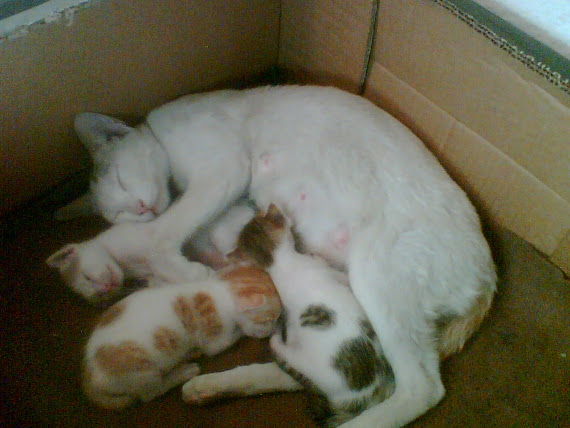
Minnu The Cat & Her Kittens Brownie, Goldie & Blackie
Someone with Nature

Syed Akbar in an island in river Godavari with Papikonda hills in the background
Recognition by World Vegetable Centre

Under the shade of Baobab tree

At Agha Khan Akademi in Kenya
Gateway to the Southern Hemisphere

Convention on Biodiversity

Syed Akbar at the 11th Conference of Parties to the United Nations Convention on Biological Diversity