Showing posts with label Vaccines. Show all posts

Monday, 21 June 2010

Swine flu: No takers for novel human influenza vaccine

Syed Akbar
Hyderabad, June 21: Several lakh doses of novel human influenza vaccine are available in the Indian market, but there are no takers for fear of side effects.

The novel human influenza vaccine including the recently launched Indian variety may cause adverse reactions in people allergic to certain ingredients present in them. The side effects are more severe if the person has previous history of allergy to protein present in eggs and chicken.

If statistics are any indication, even health workers, who are supposedly to be vaccinated before the swine flu vaccine is used for the general public, are not inclined to take the dose. The vaccine did not go well in major cities including Hyderabad, Delhi and Pune.

Many health workers in Andhra Pradesh are not willing to take the vaccine, forcing the State government to seek permission from the Centre for immunisation of the general public. The Centre had sent about 80,000 doses of swine flu vaccine to the State. Only 550 persons had undergone vaccination in Hyderabad thus far. In Pune, where swine flu created havoc last year, the response was poor. Even free vaccination camps were reported to be empty.

The Union Ministry of Health and Family Welfare has admitted that the signs of allergic reaction to human influenza vaccine may include itchy skin rash, shortness of breath and swelling of the face or tongue. In rare cases it may lead to shock. "Doctors are aware of this possibility and need to have emergency treatment available for use in such cases," according to MoHFW guidelines on the vaccine use.

One in every 10 persons vaccinated will have side effects like headache, muscular pain and pain at the injection site, while one to 10 users in 100 will complain of shivering, fever, and redness and swelling at the site of injection.

"These side effects usually disappear without treatment within 1 to 3 days after onset. But those suffering from asthma should be extra careful about the vaccine. They may have severe reaction to the vaccination," admits Dr Ch Jaya Kumari, Hyderabad district medical and health officer.

In severe cases of reaction to the vaccine, the patient may suffer from neugalgia (pain in nerve route), convulsions with fever and differences in the perception of touch, pain, heat and cold (paraesthesia). The neurological disorders may result in stiff neck, confusion, numbness, pain and weakness of the limbs, loss of balance, loss of reflexes, paralysis of part or all the body.

The MoHFW has noted with caution that "as with all injectable vaccines, appropriate medical treatment and supervision should always be readily available in case of a rare anaphylactic event following the administration of the vaccine". However, Dr K Subhakar Rao, State coordinator for swine flu, refused to comment on the adverse reactions the vaccine may cause.

With fresh bouts of swine flu cases being reported from different parts of the country including Hyderabad, the Central government has made it mandatory for all health officials to send report on the adverse events following immunisation.

The first information report is to be furnished to the Ministry of Health and Family Welfare within 48 hours. Preliminary investigation report for the serious adverse event is to be reported within seven days by district AEFI (adverse events following immunisation) Committee to the State and the Central governments.

Monday, 26 October 2009

Oral cholera vaccine has been found to be safe in India

2009
By Syed Akbar
Hyderabad, Oct 25: Oral cholera vaccine has been found to be safe in India and is likely to be introduced for inoculation in cholera endemic areas in the country including Hyderabad.

Though oral cholera vaccine consisting of killed whole cells has been present in the market for many years,
it is never prescribed by health authorities fearing its safety.


Vietnam is the only country where it is prescribed, though in a limited way. With India and several other countries showing bouts of cholera epidemic at regular intervals, the Seoul-based International Vaccine Institute took up its safety and efficacy studies on Indian populations.

The IVI modified the vaccine to suit World Health Organisation standards and inoculated over a lakh people in Kolkata. A leading pharmaceutical research company from Hyderabad collaborated the project and prepared the vaccine. It is inexpensive and has been found to be highly useful in preventing cholera.

IVI advocacy officer Tae Kyung Byun told this correspondent that the vaccine protected individuals in age-groups one to 4.9 years, 5·0 to 14·9 years, and 15 years and older, and protective efficacy did not differ significantly between age-groups.

This modified killed-whole-cell oral vaccine, compliant with WHO standards, is safe, provides protection
against clinically significant cholera in an endemic setting, and can be used in children aged one to 4·9
years, who are at the highest risk of developing cholera in endemic settings like Hyderabad.

According to WHO statistics, cholera accounts for an estimated 1,20,000 deaths every year world-wide.
"WHO has recommended the use of oral cholera vaccine for control of the disease since 2001, and one such
vaccine, containing recombinant cholera toxin B subunit and killed whole cells is internationally licensed,"
he said.


The Kolkata trial has revealed that the vaccine is safe and confers 66 per cent protection in all individuals older than one year of age, eight to 10 months after vaccination, and 50 per cent protection, three to five
years after vaccination. The vaccine has been found to be safe and immunogenic in India.

Over all, the vaccine provides about 70 per cent protection against clinically significant cholera for at least two years after vaccination, equally in children and older people.

Thursday, 6 August 2009

Swine flu: India to have its own human influenza H1N1 vaccine by December 09

Syed Akbar
Hyderabad, Aug 4: The Indian Council of Medical Research has swung into action following the first ever swine flu death in the country by hastening its plans to introduce by November-end an indigenously developed vaccine to contain novel human influenza virus.

India's first human influenza virus vaccine developed locally will be ready in about 100 days for phase-1 or phase-2 human trials to test its efficacy on the local population. The ICMR has invited letters of intent from research agencies
and major hospitals to carry out H1N1 or swine flu vaccine trials in the country on human beings.

"There's a necessity for development of an indigenous vaccine that suits the local population. Other countries including the USA are also busy developing similar vaccines. The USA too plans to introduce the vaccine before winter sets in there," senior scientist Dr MN Khaja told this correspondent.

Presently seasonal influenza vaccine is available in India but it does not give protection against the novel human influenza vaccine that claimed hundreds of lives world-wide. However, the new vaccine will not be a replacement to seasonal flu problems. Both the new vaccine as well as the existing seasonal flu vaccines will be available in the market.

High on the priority list of ICMR for the new vaccine trials are pregnant women, ayahs looking after children below six months, people between six months and 24 years of age, and those with health conditions associated with higher
risk of medical complications from flu.

The ICMR has received action plans for different types of vaccines like killed inactivated, live attenuated, and vaccine developed from virus like particles. Some of these vaccines are likely to be available for human trials by November/December, according to senior scientist Dr Harpreet Kaur of ICMR.

During the trials ICMR team will evaluate safety, immunogenicity and tolerability of the vaccine(s). The ICMR has fixed August 17 as the deadline for receipt of LoI from research groups and institutions.

Monday, 21 April 2008

International Vaccine Institute develops needle-free vaccines


April 21, 2008
By Syed Akbar
Scientists working on animal models have developed a special process to deliver vaccine onto the skin using a patch, without needles.
When it is applied in human beings, vaccination will become quite simple and virtually painless. Vaccines like cholera vaccine can be delivered without the use of needles.
Researchers at the International Vaccine Institute in Seoul, South Korea, of which India is a member, have now successfully discovered the mechanism by which a vaccine applied onto the skin can cause an immune response in the gut, as well as in the body.
The International Vaccine Institute is an international organisation which has been working for development of vaccines for the developing world. India is also a beneficiary of the IVI research. This new method is called transcutaneous immunisation or simply TCI. It involves applying a vaccine onto the skin using a patch. In previous animal and human studies, TCI was found to induce robust immune responses in blood and in mucosal secretions.
IVI's Tae Kyung Byun told this correspondent from South Korea that the IVI team had found in an animal study that dendritic cells (cells that capture vaccines and carry them to the immune system) were induced by TCI in the lymph nodes draining the gut. They were involved in the initiation of intestinal antibody responses, which are essential to stopping bacteria and virus infections.
"Such findings provide an explanation why intestinal immune responses are induced after skin immunisation, the reason for which had remained elusive until now," said IVI's post-doctoral fellow Sun-Young Chang.
The study suggests that an efficient "cross-talk" exists between the skin and gut immune systems and appears to be mediated by specialised dendritic cells in lymph nodes draining the intestines," said Dr. Kweon Mi-na, who led the study.
The IVI's study challenges the traditional notion that ingesting vaccines is the only means for inducing immunity in the gut. The results reported by Dr Kweon's team not only supports the notion that administering a vaccine in a skin patch can do the job but also provides a clue as to why this approach works, Tae Kyung Byun observed.

Thursday, 10 August 2006

New vaccine based on Virosome technology to prevent Hepatitis A

2006

By Syed Akbar
Hyderabad, Aug 10: A new vaccine based on the latest virosome technology for prevention of Hepatitis A will soon enter the Indian market.
According to Dr Christian Herzog, who developed the vaccine, the new technology that went into the preparation of the vaccine makes it quite gentle on the body without causing fever, pain or red rash. Virosome uses a biodegradable delivery system presenting the most natural way of delivering antigens to the immune system of the body.
Unlike conventional vaccines for Hepatitis A, which uses aluminium salt as an adjuvant to give extra kick to the vaccine, the virosome Hepatitis A vaccine employs the empty shell of influenza virus. No adjuvants are added to the vaccine and this makes it safer. The empty viral shell ensures that the vaccine embedded on it is delivered effectively without causing any side effects, said Dr Herzog.
According to Dr M Indra Shekar Rao, professor and head of the department of paediatrics, Institute of Child Health, Niloufer Hospital, the Hepatitis A virus is quite active during rainy seasons and it spreads fast in comparison to other viruses. The virus easily spreads in areas where there are poor sanitary conditions or where personal hygiene is not observed.
"Of the 50 cases of jaundice reported in Niloufer Hospital every day, one case relates to Hepatitis A. The latest problem is that it is being observed in older age group of people between 15 and 20 years. Earlier it was felt only in small children," Dr Indra Shekar pointed out.
Dr S Sanjay of the Indian Academy of Paediatrics' committee on immunisation, said though Hepatitis A was not as problematic as Hepatitis B, it's better one should get immunised for the A variant of the virus if one could afford it.

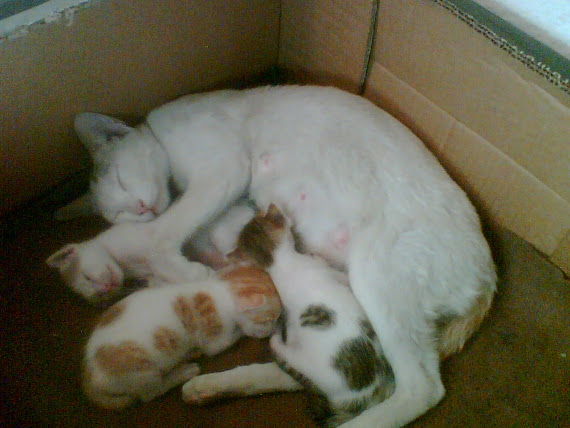
Mother's Care

Mother's Care
Minnu The Cat & Her Kittens Brownie, Goldie & Blackie

Someone with Nature

Someone with Nature
Syed Akbar in an island in river Godavari with Papikonda hills in the background

Recognition by World Vegetable Centre

Recognition by World Vegetable Centre

Under the shade of Baobab tree

Under the shade of Baobab tree
At Agha Khan Akademi in Kenya

Gateway to the Southern Hemisphere

Gateway to the Southern Hemisphere

Convention on Biodiversity

Convention on Biodiversity
Syed Akbar at the 11th Conference of Parties to the United Nations Convention on Biological Diversity