By Syed Akbar
Hyderabad: As many as seven Indian teams are participating in the final round of competition for the prestigious NASA mission aimed at mining precious elements on the moon and bringing them back to the earth.
Of the 12 international teams selected by the National Aeronautical and Space Administration, seven are from India, including one from Visakhapatnam. The Lunabotics mining competition will be held in the USA
from May 23. The team from Visakhapatnam comprising students of GITAM University has prepared a robot that will crawl on the hostile terrain of the moon, picking up regolith (moon dust) and depositing it in a container for shipment back to the earth.
But before selecting the robots for actual assignment on the moon, NASA will test their efficiency and durability in an artificial atmosphere resembling the lunar terrain. The task given to each of the teams is that their robots should collect and deposit a minimum of 10 kgs lunar simulant within 15 minutes
"The regolith of the moon is said to contain previous elements including uranium and thorium of high nuclear grade. About 10 grams of uranium and thorium mined from the moon is equivalent to about a kg of the nuclear material found on the earth. NASA is looking at new technology that works with high precision and great durability," said Raj Kumar, a third-year student of mechanical engineering, GITAM university. Raj Kumar is one of the five-member student team of the university which designed the robot, called lunabot.
NASA will directly benefit from the competition by encouraging the development of innovative lunar excavation concepts from universities which may result in clever ideas and solutions which could be applied to an actual lunar excavation device or payload. The challenge is for students to design and build a remote controlled or autonomous excavator.
"The challenge is quite complex. It is not an easy task. The lunar simulant is highly abrasive. There are also limitations to the weight and size of the lunabot. Also, it is very difficult to control the lunabot from a remote control centre," pointed out another student Sai Suraj.
Utilising the students' talent, particularly from India, which is fast emerging as a space giant, NASA plans to explore the mineral wealth of the moon, which is rich in oxygen, silicon, iron, calcium, aluminium, magnesium,
titanium, chromium, manganese, sodium, potassium, nitrogen, sulphur, carbon, hydrogen, helium 3, uranium and thorium.
The students said they had to cross many technical hurdles to design their robot as the lunar regolith has unique physical properties. The gravity is one- sixth of the earth's. The environment in the moon is a complete vacuum. Though NASA will immensely benefit from the students' technology and innovative ideas, it will offer just 5000 US dollars as the first prize.
Showing posts with label science. Show all posts
Showing posts with label science. Show all posts
Wednesday, 11 May 2011


Wednesday, 20 April 2011
How to fight Climate Change: Here are some wacky ideas
By Syed Akbar
Injecting sulphur into the sky
What's the colour of the sky? Blue, of course. But if global warming turns worse shooting up temperatures, mankind may have to explore this option to keep the human planet cool: Inject sulphur into the sky. Temperatures will come down, but the sky will change its colour. May be to yellow. No matter how the sky appears, it will halt climate change.
Scientists the world over are now giving a deep thought to injecting sulphur or "global dimming" after Australian scientist Tim Flannery proposed this radical solution, which may no longer keep the sky blue.
According to him, climate change is taking place so fast that we may have to pump sulphur into the atmosphere if we want to survive on the earth. Sulphur when injected in its gaseous form into the earth's stratosphere will help prevent harmful sun rays from falling on us. It will also slow down global warming.
Flannery is confident that this technology will become a reality in the next five years. The process is quite simple. Add sulphur to the fuel of jet engines or aeroplanes. Since the exhaust contains sulphur, it will settle down in the stratosphere, reflecting back the sunlight.
As Flannery argues, adding sulphur to the atmosphere should be the last barrier to climate collapse.
Sulphur emissions through automobiles may have been harmful for human and animal health. But this pollutant may become a saviour of mankind, if scientists like Flannery have their way.
Feed the sea with iron
Human health and iron are synonymous. Iron keeps us alive by fixing atmospheric oxygen to the blood. In fact, our blood gets is red colour because of the presence of iron.
Now two different batches of marine biologists from the University of Hawaii and Oregon State University are exploring methods to feed the sea with iron. Not to boost its strength, but to save humanity from imminent fallout of global warming and climate change.
Dr Brian von Herzen of The Climate Foundation strongly believes that iron could play a major role in the blooming of phyto and zoo plankton. The blooming plankton will help in obsorption of a large quantity of carbon dioxide from the atmosphere, thus bringing down the over all temperatures on the blue planet.
The plankton are capable of utilising large quantities of CO2 through photosynthesis. Aquatic plankton, particularly, phyto plankton, are known to obsorb many times more carbon dioxide than plants and trees that grow on the land. Just have a small bloom of phyto plankton through iron feeding and this simply equals the task of planting trees on scores of acres of land.
Oceanographers and marine biologists already know that iron will help in plankton bloom. The plankton works in several ways. After obsorbing the harmful CO2 from the atmosphere, it stores the gas in its cells. As the plankton dies it settles down in the ocean's bed, safely carrying the carbon dioxide. A bloom in plankton also means more aquatic life as many marine animals including fish feed on them.
The formula works well in oceanic areas where there's iron deficiency. Who said, oceans and seas are not anaemic, like we humans?
Space Umbrellas to the rescue
We have heard our leaders urging us to come under one umbrella. Though it's not literally possible for all to come under one single umbrella, geo-engineers believe it could be possible, scientifically.
Yes, these geo-engineers, a new breed of scientists who want to tinker with the Nature to save mankind from global warming and the resultant climate change, have conceptualised what they call space umbrellas to bounce back the harmful radiation from the sun.
Scientists from the University of Arizona argue that space umbrellas will gradually reduce earth's temperature, and thus the harmful effects of global warming.
The university wants to launch a trillion tiny umbrellas or sunshields into the outer space. Each umbrella will be a small, light spacecraft, weighing about a gram. It carries a sunshade with a diametre of 30 cms. When such mini space umbrellas come together, they act as a sunscreen, filtering harmful radiation.
The area such a sunscreen each covers will extend to one lakh square km. These umbrellas will hover around the earth at a safe distance of 15 lakh km. The geo-engineers believe that such mini space umbrellas will reduce the sunlight's intensity by 1.8 per cent, sufficient to fight global warming.
The university group, which is working on the model, says it could happen by 2035.
Power from snow
With the threat of global warming looming large on the future of humanity, environmentalists feel that snow-fed rivers can be easily tackled to generate electricity.
Most of the hydroelectricity plants in the world are located on rivers fed by rains. Since monsoons have been playing truant of late, upsetting the calculations of planners, eco-experts suggest that it's high time policy- makers turned their attention to rivers fed by glaciers and snow.
While rivers fed on rains in their catchment are seasonal, those securing supplies from snow-covered mountains and glaciers are perennial. The runoff from snow-fed rivers is comparatively quite high. If these rivers are harvested for hydel power, the dependence on thermal energy will gradually come down. This will ultimately check rising temperatures because of carbon emission from thermal energy plants.
As senior environmentalist R Ravi put its, India have a vast potential of energy generation from snow. All the rivers in the north India are fed by snow melt. If mini hydel plants are set up, the energy crisis in the country can easily be overcome.
Also experts in global warming warn of snow and glacial melt if carbon emissions are not checked. The time is now apt to act. Before the snow melts under influence of global warming, we should set up hydel plants all along the snow-fed rivers.
Chimneys that cool the earth
Ever heard of a chimney that's cool to touch. While conventional chimneys attached to our kitchen and industries are hot with pollutants loaded with carbondioxide and carbon monoxide and other gases, scientists in the United States have patented a chimney that consumes internal energy and reduces temperatures, thus keeping the earth cool.
The latest chimney device for houses and industries is being touted as one of the simple tools to fight global warming.
This patented chimney will also induce water precipitation and produces electricity. It helps in climate control, production of fresh water and energy that's needed to keep the house and industry cool. When set up in large numbers, such devices will ultimately bring down the global temperatures.
It sucks in warm air from the earth surface and lifts it to a height. Later, it expels the air into the upper atmosphere. The lifting of warm air to higher altitude causes the atmosphere to shed some of its heat. This keeps the earth cool.
"When the air is expelled from the chimney, it is oversaturated with water vapors. Therefore, when it mixes with surrounding air and cools down, water naturally precipitates causing precipitation in the surrounding area. The amount of that precipitation can be substantial enough to sustain agriculture in areas such as deserts," claim the inventors.
Bomb that explodes greenery
After nuclear bombs and human bombs, it's the turn of tree bombs. Unlike the nuclear one, the tree bomb does not cause destruction. It resurrects the barren earth with greenery.
The tree bomb is now seen as the simplest way of greening the deforested and barren lands to fight rising temperatures. US scientists have already trial tested the tree bomb in Louisiana mangrove forests after the Hurricane Katrina left a trail of destruction there.
Depleting forest wealth in the world can be checked through these tree bombs. Seedlings are dropped in a wax canister full of fertiliser. On hitting the ground, it explodes exposing the seeds, which later germinate. The growth rate here is faster than conventional manual planting of saplings.
Senior marine biologist D Srinivas says tree bombs can be used in mangrove forests in Krishna, Coringa and Sundarbans, the only forests in India where mangroves grow.
"It works with all types of trees. We can carpet bomb with plants of all types in denuded lands to regrow the greenery," he says. In deserts and sandy tracts like Rajasthan, xerophytes and other trees like phoenix and dates can be planted on a massive level using the technology.
Wednesday, 19 January 2011
Fun learning: Make science, maths funny to learn
By Syed Akbar
 Hyderabad: Chemistry, mathematics, physics and biology... If your son or
daughter feels these subjects are boring and dull, it's not the fault of your
child. The lapse lies largely with the primary teacher. Scientists and learning
experts argue that nothing is boring to the brain in the world of learning, and
whether or not a student likes a particular subject depends on how
interestingly or boringly it is taught to him or her.
A little bit of history intertwined with interesting anecdotes and illustrations
and how it helps us in daily life makes any academic subject as lively as
watching a favourite cartoon or a funny movie.
"Create interest in students about the subjects they feel boring," says senior
scientist Dr MN Khaja. "Tell them small historical stories associated with the
given topic. Do not be monotonous. Crack a few jokes in between the lecture.
Come out with illustrations. A student will not grasp a subject unless he or
she feels it interesting. Activate the brain," adds Dr Khaja, who has been
guiding students on genetics.
Dr Pradeep Kumar Srivastava, joint director, biochemistry lab of Central
Drug Research Laboratory, argues that the best way to teach students is to
make science fun to learn. Dr Srivastava has been advocating a new concept
of learning called scientoon, teaching science through cartoons and
illustrations.
"Scientoons and Scientoonics" impress upon the minds of the students.
"Using a mixture of cartoons and anecdotes, I have been explaining the most
complex of theories and problems in the most simplest and humorous way.
Students from other countries too are attracted to science thanks to
scientoons.
Explaining further what scientoon learning is, Dr Srivastava, who is currently
in Hyderabad, says scientoons are the cartoons, based on science. "They not
only make you smile and laugh but also provide information about new
researchers, subjects, data and concepts in a simple, understandable and
interesting thought-provoking way".
Realising the importance of "imaginative" teaching to create interest in
students in the so-called dull subject of chemistry, the International Union of
Pure and Applied Chemistry has declared 2011 as the "International Year of
Chemistry". The IUPAC plans to involve students the world over including
India through a series of novel yet simple experiments, like purifying water at
one's school or house, how chemicals react, molecules bind together, energy
is converted and metals get their malleability and ductility. The students
themselves will do the experiments.
The IUPAC's concept of making chemistry a fun to learn has been well
received by learning experts in the State. S Srinivas, a teacher of over two
decades, says metallurgy, for instance is a subject that is sure to trigger
yawning, and it can be made quite interesting too.
"Students will learn metallurgy with much enthusiasm if they are told that
aluminium was once costlier than silver and how rulers had sported
aluminium buttons on their coats, throwing away gold and silver ones.
Napoleon had once hosted a party for the nobles. He served them food in
aluminium plates while his soldiers had to be content with the silver utensils.
Napoleon had in fact sported aluminium buttons to his coat," Srinivas
observes.
Scientists point out that different regions of the brain are involved when a
person lets loose his imagination. Students should be allowed to imagine.
Their thoughts should not be limited to the four walls of the class room or the
pages of the textbook, points out eminent physicist Dr Mani Lal Bhaumik.
"No question is silly. Teachers should clarify the doubts and answer the
questions of students, however small they seem to be," he points out.
The prefrontal cortex of the brain gets activated if you are dealing with a big
mathematical problem. Hippocampus and amygdala are emotional and
memory regions of the brain and they make imaginations highly colourful.
Interesting anecdotes trigger these sites in the brain and make students
understand the subject well - whether they are the complex molecular
structures in chemistry, the difficult Kreb's cycle in botany, the mysterious
genetic code in animals, the troublesome trigonometry or the abstract laws of
physics.

daughter feels these subjects are boring and dull, it's not the fault of your
child. The lapse lies largely with the primary teacher. Scientists and learning
experts argue that nothing is boring to the brain in the world of learning, and
whether or not a student likes a particular subject depends on how
interestingly or boringly it is taught to him or her.
A little bit of history intertwined with interesting anecdotes and illustrations
and how it helps us in daily life makes any academic subject as lively as
watching a favourite cartoon or a funny movie.
"Create interest in students about the subjects they feel boring," says senior
scientist Dr MN Khaja. "Tell them small historical stories associated with the
given topic. Do not be monotonous. Crack a few jokes in between the lecture.
Come out with illustrations. A student will not grasp a subject unless he or
she feels it interesting. Activate the brain," adds Dr Khaja, who has been
guiding students on genetics.
Dr Pradeep Kumar Srivastava, joint director, biochemistry lab of Central
Drug Research Laboratory, argues that the best way to teach students is to
make science fun to learn. Dr Srivastava has been advocating a new concept
of learning called scientoon, teaching science through cartoons and
illustrations.
"Scientoons and Scientoonics" impress upon the minds of the students.
"Using a mixture of cartoons and anecdotes, I have been explaining the most
complex of theories and problems in the most simplest and humorous way.
Students from other countries too are attracted to science thanks to
scientoons.
Explaining further what scientoon learning is, Dr Srivastava, who is currently
in Hyderabad, says scientoons are the cartoons, based on science. "They not
only make you smile and laugh but also provide information about new
researchers, subjects, data and concepts in a simple, understandable and
interesting thought-provoking way".
Realising the importance of "imaginative" teaching to create interest in
students in the so-called dull subject of chemistry, the International Union of
Pure and Applied Chemistry has declared 2011 as the "International Year of
Chemistry". The IUPAC plans to involve students the world over including
India through a series of novel yet simple experiments, like purifying water at
one's school or house, how chemicals react, molecules bind together, energy
is converted and metals get their malleability and ductility. The students
themselves will do the experiments.
The IUPAC's concept of making chemistry a fun to learn has been well
received by learning experts in the State. S Srinivas, a teacher of over two
decades, says metallurgy, for instance is a subject that is sure to trigger
yawning, and it can be made quite interesting too.
"Students will learn metallurgy with much enthusiasm if they are told that
aluminium was once costlier than silver and how rulers had sported
aluminium buttons on their coats, throwing away gold and silver ones.
Napoleon had once hosted a party for the nobles. He served them food in
aluminium plates while his soldiers had to be content with the silver utensils.
Napoleon had in fact sported aluminium buttons to his coat," Srinivas
observes.
Scientists point out that different regions of the brain are involved when a
person lets loose his imagination. Students should be allowed to imagine.
Their thoughts should not be limited to the four walls of the class room or the
pages of the textbook, points out eminent physicist Dr Mani Lal Bhaumik.
"No question is silly. Teachers should clarify the doubts and answer the
questions of students, however small they seem to be," he points out.
The prefrontal cortex of the brain gets activated if you are dealing with a big
mathematical problem. Hippocampus and amygdala are emotional and
memory regions of the brain and they make imaginations highly colourful.
Interesting anecdotes trigger these sites in the brain and make students
understand the subject well - whether they are the complex molecular
structures in chemistry, the difficult Kreb's cycle in botany, the mysterious
genetic code in animals, the troublesome trigonometry or the abstract laws of
physics.
Monday, 18 October 2010
India ranks 10th in terms of scientific research
Syed Akbar
Hyderabad, Oct 18: India ranks 10th in the world in terms of scientific research but it has to work harder to achieve its past glory of 1970s when it stood eight, according to a report of the Academy of Sciences for the Developing World (TWAS).
The TWAS, which is holding its 21st general meeting in the city for three days from Tuesday, pointed out that nevertheless, "India by any measure, is on a roll". Prime Minister Manmohan Singh will inaugurate the general meeting which will be attended by around 350 scientists and researchers from 50 developing countries.
According to TWAS editor Daniel Schaffer, "what’s true for India's economy is also true for science. The government spending on research and development has grown by 15 per cent or more each year over the past several years. While India has recently approached the one per cent threshold of expenditures in R&D as proportion of GDP, it still lags far behind other
countries." In India the percentage inched forward from 2.5 per cent to 2.6 per cent.
"Today, India ranks 10th in the world in internationally peer-reviewed scientific publications. That’s up from 12th in 2003. While India’s publication output has accelerated over the past several years, it
still falls short of its ranking in the 1970s, when it was eighth," TWAS said in its report ahead of the city's general meeting.
According to the report, the disparity in patents between China and India is even more glaring. In 2006, China received 2,452 patents while India received just 648. The report, however, added that the good news is that the number of patents has increased with the rise of high-technology companies focusing on R&D.
On the environment front, India is not a polluting nation. India, which has some 18 per cent of the world’s population, produces just 4.5 per cent of the
world’s greenhouse gases. Approximately, six per cent of India’s energy is produced by renewables, largely traditional biomass.
Stating that India has some five million people working in S&T, TWAS report said yet, its ratio of S&T workers to the overall workforce is
about 120 per one million workers. In China, it’s 715. In South Korea,
3,700. And in the US, 4,600.
"When observers look at where India has been and where it is heading, they see a rapidly emerging economic and scientific powerhouse that is successfully drawing on its expanding capabilities to build a vibrant
society characterised by prosperity and confidence. India has a complex web
of S&T organisations that are moving ahead at a breakneck speed," Daniel said.
Friday, 20 August 2010
The Fields Medal, alternative to Nobel in mathematics
2010
By Syed Akbar
The Fields Medals, first awarded in 1936, is the most traditional and important international prize in the world of mathematics.
Up to four medals are awarded every four years on the occasion of the quadrennial International Congress of mathematicians (ICM) to recognize outstanding mathematical achievements for existing work and for the promise of future achievement.
To be eligible for the award, the candidate’s 40th birthday must not have occurred before January 1, of the year when the award is announced.
 The Fields Medals were first proposed at the 1924 ICM in Toronto, where it was resolved that, at each subsequent Congress, two gold medals should be awarded for outstanding mathematical achievement. The Canadian mathematician J.C. Fields, who was the Secretary of the 1924 Congress, later donated funds towards these awards. Fields considered two undamental principles for the award: the solution of a difficult problem and the creation of a new theory enlarging the fields of application of mathematics.
In 1966, in view of greatly expanding mathematical research, it was decided that up to four medals could be given. The Fields Medal is made of gold and the award includes a cash prize of Canadian $15,000.
The 2010 Fields Medals winners are:
1. Elon Lindenstrauss of Hebrew University, Jerusalem, Israel;
2. Ngô Bảo Châu of Université Paris-Sud, Orsay, France;
3. Stanislav Smirnov of Université de Genève, Switzerland; and,
4. Cédric Villani of Institut Henri Poincaré, Paris, Fran
By Syed Akbar
The Fields Medals, first awarded in 1936, is the most traditional and important international prize in the world of mathematics.
Up to four medals are awarded every four years on the occasion of the quadrennial International Congress of mathematicians (ICM) to recognize outstanding mathematical achievements for existing work and for the promise of future achievement.
To be eligible for the award, the candidate’s 40th birthday must not have occurred before January 1, of the year when the award is announced.
 The Fields Medals were first proposed at the 1924 ICM in Toronto, where it was resolved that, at each subsequent Congress, two gold medals should be awarded for outstanding mathematical achievement. The Canadian mathematician J.C. Fields, who was the Secretary of the 1924 Congress, later donated funds towards these awards. Fields considered two undamental principles for the award: the solution of a difficult problem and the creation of a new theory enlarging the fields of application of mathematics.
In 1966, in view of greatly expanding mathematical research, it was decided that up to four medals could be given. The Fields Medal is made of gold and the award includes a cash prize of Canadian $15,000.
The 2010 Fields Medals winners are:
1. Elon Lindenstrauss of Hebrew University, Jerusalem, Israel;
2. Ngô Bảo Châu of Université Paris-Sud, Orsay, France;
3. Stanislav Smirnov of Université de Genève, Switzerland; and,
4. Cédric Villani of Institut Henri Poincaré, Paris, Fran
Subscribe to:
Posts (Atom)
Mother's Care
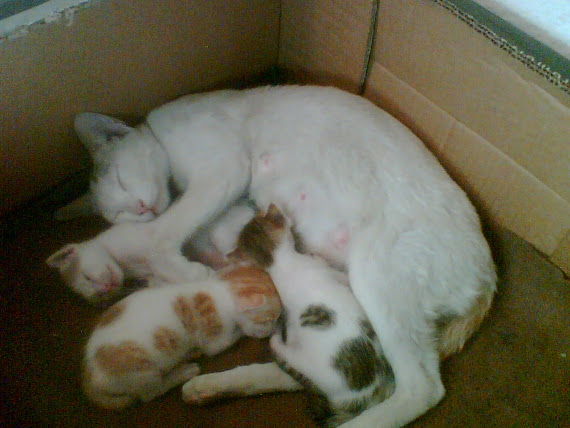
Minnu The Cat & Her Kittens Brownie, Goldie & Blackie
Someone with Nature

Syed Akbar in an island in river Godavari with Papikonda hills in the background
Recognition by World Vegetable Centre

Under the shade of Baobab tree

At Agha Khan Akademi in Kenya
Gateway to the Southern Hemisphere

Convention on Biodiversity

Syed Akbar at the 11th Conference of Parties to the United Nations Convention on Biological Diversity