By Syed Akbar
Hyderabad: The shadow of novel Coronavirus is likely to haunt
the annual Haj season, which begins in the next two weeks. India sends
the third largest contingent of Haj pilgrims to Saudi Arabia with
about 1.70 lakh Indians performing Haj.
The novel Coronavirus, detected early this week in two Arab nationals,
has already claimed one life. The other patient is receiving treatment
in a hospital in London. The World Health Organisation (WHO) has
suggested precautions during this Haj season, but felt a travel
advisory is not necessary at this stage.
The Haj Committee of India, which processes about 1.30 lakh Haj
pilgrims from the country, is yet to come out with an official
statement on the novel Coronavirus and the likely health problems it
creates for pilgrims. Haj is the world’s largest peaceful annual
gathering of humanity with nearly three million people rubbing
shoulders and performing prayers in the open grounds. Any outbreak of
a disease may lead to a pandemic as people from more than 100
countries participate in the Haj.
Though Coronaviruses are not new, the strain that was found in two
Arab nationals is of a novel type. It mimics Severe Acute Respiratory
Syndrome (SARS) and common cold, and is capable of spreading from
person to person through cough. Viruses that spread through nasal
route pose a major threat to public health during massive
congregations like the Haj.
Saudi guidelines make it mandatory for all intending pilgrims to be
vaccinated against novel human influenza and other major health issues
including meningitis and polio. But city doctors express doubt whether
the vaccine against novel H1N1 will give protection. Says Dr Aftab
Ahmed, expert in internal medicine, “Since novel Coronavirus is a new
strain, we do not know how it behaves. But the best way to prevent its
spread is through simple precautions like proper washing of hands and
following of cough etiquette. Use of disposable towels and kerchiefs
while coughing or sneezing will be great help”.
The Saudi health ministry has asked people to wash hands, follow
personal hygiene and wear masks during the Haj and Umrah. Infectious
diseases expert Dr Suneetha Narreddy points out that viruses evolve
constantly and the best way of protecting oneself from novel strains
like Coronavirus is to isolate people with the symptoms. “Those with
flu symptoms better stay at home and not travel till their health
improves,” she says adding that it is too early to issue a general
warning.
According to WHO, Coronaviruses are a large family of viruses which
includes viruses that cause the common cold and SARS. Given that this
is a novel Coronavirus, WHO is currently in the process of obtaining
further information to determine the public health implications of
these two confirmed cases.
Showing posts with label Diseases. Show all posts
Showing posts with label Diseases. Show all posts
Wednesday, 26 September 2012


Tuesday, 28 August 2012
In a major cause of concern, an international team of researchers has discovered a new disease that mimics AIDS and destroys the body immune system. The disease identified in elderly Asians, however, is not infectious and does not transmit from person to person like the AIDS
By Syed Akbar
Hyderabad: In a major cause of concern, an international team
of researchers has discovered a new disease that mimics AIDS and
destroys the body immune system. The disease identified in elderly
Asians, however, is not infectious and does not transmit from person
to person like the AIDS.
Moreover, this AIDS-like disease is not caused by the human
immunodeficiency virus. Since there is no pathogen or causative agent,
the disease cannot be spread from person to person through either body
fluids or other sources.
Doctors in India are yet to find out if the AIDS-like disease is
present in the country. City experts in infectious diseases point out
that they have not come across such cases so far, as no research study
has been done here. Many doctors including those attached to corporate
hospitals in the city feigned ignorance about this disease saying they
are yet to study the new finding.
This immunodeficiency syndrome causes damage to the immune system
throwing open the body to a myriad of infectious diseases,
particularly tuberculosis. The body loses immunity against fungal,
viral and bacterial infections too.
Many diseases in India go unnoticed, as hospitals are not equipped
with modern laboratory equipment to detect new pathogens. Acute
shortage of clinician scientists also adds to the problem. The Indian
Council of Medical Research (ICMR) had woken up to new diseases only
after scientists elsewhere discovered them. The super bug, New Delhi
Metallo-beta lactamase, is the best example.
Reporting its finding in the latest issue of international scientific
journal, New England Journal of Medicine, the team led by Sarah K
Browne of US National Institute of Allergy and Infectious Diseases,
noted that the problem could be due to either genetic make up of
Asians or the local environment factors. The AIDS-like disease was
identified in a little over 200 patients from Thailand and Taiwan.
They had either pulmonary tuberculosis or other forms of TB, or
opportunistic infections. The patients do not respond to known
antibiotics.
The researchers found the patients had an immune-system antibody,
whose presence had made their body system ineffective to fight
infections. This antibody nullifies the impact of a molecule,
interferon-gamma, which protects the body against diseases.
Though it is a solace that the disease is non-infectious, what is
worrying researchers is that it is capable of making people severely
ill, often resulting in death. An interesting aspect about the
research is that a detailed study of the functioning of
interferon-gamma would help in finding cure to viral diseases. Viral
diseases, at present, do not have a known cure.
The major difference between AIDS and AIDS-like disease is that in the
former case, antibodies are formed to fight virus, and in the latter,
the body creates antibodies to fight against itself.
Hyderabad: In a major cause of concern, an international team
of researchers has discovered a new disease that mimics AIDS and
destroys the body immune system. The disease identified in elderly
Asians, however, is not infectious and does not transmit from person
to person like the AIDS.
Moreover, this AIDS-like disease is not caused by the human
immunodeficiency virus. Since there is no pathogen or causative agent,
the disease cannot be spread from person to person through either body
fluids or other sources.
Doctors in India are yet to find out if the AIDS-like disease is
present in the country. City experts in infectious diseases point out
that they have not come across such cases so far, as no research study
has been done here. Many doctors including those attached to corporate
hospitals in the city feigned ignorance about this disease saying they
are yet to study the new finding.
This immunodeficiency syndrome causes damage to the immune system
throwing open the body to a myriad of infectious diseases,
particularly tuberculosis. The body loses immunity against fungal,
viral and bacterial infections too.
Many diseases in India go unnoticed, as hospitals are not equipped
with modern laboratory equipment to detect new pathogens. Acute
shortage of clinician scientists also adds to the problem. The Indian
Council of Medical Research (ICMR) had woken up to new diseases only
after scientists elsewhere discovered them. The super bug, New Delhi
Metallo-beta lactamase, is the best example.
Reporting its finding in the latest issue of international scientific
journal, New England Journal of Medicine, the team led by Sarah K
Browne of US National Institute of Allergy and Infectious Diseases,
noted that the problem could be due to either genetic make up of
Asians or the local environment factors. The AIDS-like disease was
identified in a little over 200 patients from Thailand and Taiwan.
They had either pulmonary tuberculosis or other forms of TB, or
opportunistic infections. The patients do not respond to known
antibiotics.
The researchers found the patients had an immune-system antibody,
whose presence had made their body system ineffective to fight
infections. This antibody nullifies the impact of a molecule,
interferon-gamma, which protects the body against diseases.
Though it is a solace that the disease is non-infectious, what is
worrying researchers is that it is capable of making people severely
ill, often resulting in death. An interesting aspect about the
research is that a detailed study of the functioning of
interferon-gamma would help in finding cure to viral diseases. Viral
diseases, at present, do not have a known cure.
The major difference between AIDS and AIDS-like disease is that in the
former case, antibodies are formed to fight virus, and in the latter,
the body creates antibodies to fight against itself.
Saturday, 5 February 2011
Crimean-Congo haemorrhagic fever: Many Congo fever cases may have been wrongly diagnosed as dengue
By Syed Akbar
Hyderabad, Feb 3: With many doctors unable to distinguish between dengue and Congo fever based on symptoms, the Indian Council of Medical Research has asked health officials to review cases of fever that have been declared as dengue, particularly in rural areas.
The ICMR suspects that some of the fever cases that had been diagnosed as dengue may actually be those of Congo fever. The State and several parts of the country have witnessed many cases of death related to dengue. The emergence of a new serotype of dengue virus, dengue-4 or Denv-4, has further complicated
the task of doctors, many of whom had no first hand experience of treating patients suffering from Crimean-Congo haemorrhagic fever.
The symptoms of Denv-4, which was first reported in Hyderabad in 2007, and those of Congo fever interlap making it difficult to diagnose the case at first sitting. Since Congo fever had not been reported in the country prior to January this year, many doctors suspect complicated cases of fever as those of dengue. In both the cases haemorrhage or bleeding is common. The fatality rate of Congo fever, however, is higher. Common dengue is mild, while cases related to serotype Denv-4 may turn out to be fatal.
Cases of dengue haemorrhagic fever have increased in the country since 1990 after the common dengue virus
underwent mutation leading to change in the virus "lineage especially with regard to Denv-2 and Denv- 3", according to Dr D Cecilia of the National Institute of Virology. Dr Cecilia's team has recently found re-emergence of Denv-4 in Maharashtra after a gap of 35 years. Denv-4 cases have thus far been rare.
"It's true that unless thorough clinical investigation is done, it is difficult to differentiate between dengue and Congo fevers initially because the symptoms of both are almost the same such as haemorrhage and fever," says Dr K Subhakar of Government Chest Hospital in the city. He agrees that the blood samples collected need to be studied properly to find out whether it’s a dengue virus or Congo fever virus.
While the NIV has called for a close monitoring of Denv-4 cases, senior physician of Care Hospitals Dr S Vijay Mohan accepts that some Congo fever cases are being passed off as dengue fever mainly because of ignorance about this new disease.
"Except the four cases in Gujarat, it hasn’t been found anywhere in India. Since symptoms of the two diseases are more or less the same, only a blood test can reveal whether it’s dengue fever or some other kinds of viral fever. There are hundreds of country-specific viruses, causing unknown fevers. Unless, a
specific test to detect the Congo fever virus is conducted, it will be difficult to point out the nature of the fever causing virus," he adds.
Even as the ICMR has suggested a review of dengue cases from rural areas, a study by NIV scientists warns that the high degree of diversity in the envelope gene observed for the Denv-4 viruses circulating in the subcontinent indicates that the "serotype is evolving". And if this happens, there may be newer dengue
strains.
Hyderabad, Feb 3: With many doctors unable to distinguish between dengue and Congo fever based on symptoms, the Indian Council of Medical Research has asked health officials to review cases of fever that have been declared as dengue, particularly in rural areas.
The ICMR suspects that some of the fever cases that had been diagnosed as dengue may actually be those of Congo fever. The State and several parts of the country have witnessed many cases of death related to dengue. The emergence of a new serotype of dengue virus, dengue-4 or Denv-4, has further complicated
the task of doctors, many of whom had no first hand experience of treating patients suffering from Crimean-Congo haemorrhagic fever.
The symptoms of Denv-4, which was first reported in Hyderabad in 2007, and those of Congo fever interlap making it difficult to diagnose the case at first sitting. Since Congo fever had not been reported in the country prior to January this year, many doctors suspect complicated cases of fever as those of dengue. In both the cases haemorrhage or bleeding is common. The fatality rate of Congo fever, however, is higher. Common dengue is mild, while cases related to serotype Denv-4 may turn out to be fatal.
Cases of dengue haemorrhagic fever have increased in the country since 1990 after the common dengue virus
underwent mutation leading to change in the virus "lineage especially with regard to Denv-2 and Denv- 3", according to Dr D Cecilia of the National Institute of Virology. Dr Cecilia's team has recently found re-emergence of Denv-4 in Maharashtra after a gap of 35 years. Denv-4 cases have thus far been rare.
"It's true that unless thorough clinical investigation is done, it is difficult to differentiate between dengue and Congo fevers initially because the symptoms of both are almost the same such as haemorrhage and fever," says Dr K Subhakar of Government Chest Hospital in the city. He agrees that the blood samples collected need to be studied properly to find out whether it’s a dengue virus or Congo fever virus.
While the NIV has called for a close monitoring of Denv-4 cases, senior physician of Care Hospitals Dr S Vijay Mohan accepts that some Congo fever cases are being passed off as dengue fever mainly because of ignorance about this new disease.
"Except the four cases in Gujarat, it hasn’t been found anywhere in India. Since symptoms of the two diseases are more or less the same, only a blood test can reveal whether it’s dengue fever or some other kinds of viral fever. There are hundreds of country-specific viruses, causing unknown fevers. Unless, a
specific test to detect the Congo fever virus is conducted, it will be difficult to point out the nature of the fever causing virus," he adds.
Even as the ICMR has suggested a review of dengue cases from rural areas, a study by NIV scientists warns that the high degree of diversity in the envelope gene observed for the Denv-4 viruses circulating in the subcontinent indicates that the "serotype is evolving". And if this happens, there may be newer dengue
strains.
Monday, 6 July 2009
South Indian men more prone to prostate cancers than their counterparts in the north
By Syed Akbar
Hyderabad: South Indian men are relatively more prone to prostate cancers than their counterparts in the north. This is because of their distinct ethnic identity and genetic make-up.
According to a study conducted by the city-based Centre for Cellular and Molecular Biology, the repeat of nucleotides - cytosine, adenine and guanine - on chromosomes has a direct bearing on the onset of prostate cancer in men belonging to certain ethnic communities. The androgen receptor gene possesses polymorphic cytosine, adenine and guanine or CAG tandem repeats and the repeat length has been inversely related to the risk of prostate cancer.
"The distinct ethnic variation in the CAG repeat length may be correlated to differences in prostate cancer risk in different populations, says Dr Thangaraj Kumarasamy of CCMB.
As many as 87 prostate cancer patients and 120 control subjects from South India were studied for the purpose. Prostate cancer, one of the most common malignancies in men, exhibits obscure aetiology. The growth of the prostate gland is dependent on circulating androgens and intracellular steroid signalling pathways. The effects of androgen are mediated through the androgen receptor. Moreover, androgen receptor gene transactivation is important for the normal growth and function of the prostate.
He said studies on CAG repeat variation in prostate cancer risk had been inconsistent. In India the one study conducted on the north Indian population showed significant association. However, there have been no studies on South Indian men to date. Since India is known for its unique population structure, having about 5000 endogamous populations, one would expect CAG repeat length variation among South Indians to be different.
"Therefore, we have attempted to analyse the association of CAG repeat number in the androgen receptor gene of the prostate cancer patients as well as control men from the same ethnic background, and to understand whether repeat length is associated with the age of onset and or cancer progression," he pointed out.
Hyderabad: South Indian men are relatively more prone to prostate cancers than their counterparts in the north. This is because of their distinct ethnic identity and genetic make-up.
According to a study conducted by the city-based Centre for Cellular and Molecular Biology, the repeat of nucleotides - cytosine, adenine and guanine - on chromosomes has a direct bearing on the onset of prostate cancer in men belonging to certain ethnic communities. The androgen receptor gene possesses polymorphic cytosine, adenine and guanine or CAG tandem repeats and the repeat length has been inversely related to the risk of prostate cancer.
"The distinct ethnic variation in the CAG repeat length may be correlated to differences in prostate cancer risk in different populations, says Dr Thangaraj Kumarasamy of CCMB.
As many as 87 prostate cancer patients and 120 control subjects from South India were studied for the purpose. Prostate cancer, one of the most common malignancies in men, exhibits obscure aetiology. The growth of the prostate gland is dependent on circulating androgens and intracellular steroid signalling pathways. The effects of androgen are mediated through the androgen receptor. Moreover, androgen receptor gene transactivation is important for the normal growth and function of the prostate.
He said studies on CAG repeat variation in prostate cancer risk had been inconsistent. In India the one study conducted on the north Indian population showed significant association. However, there have been no studies on South Indian men to date. Since India is known for its unique population structure, having about 5000 endogamous populations, one would expect CAG repeat length variation among South Indians to be different.
"Therefore, we have attempted to analyse the association of CAG repeat number in the androgen receptor gene of the prostate cancer patients as well as control men from the same ethnic background, and to understand whether repeat length is associated with the age of onset and or cancer progression," he pointed out.
Sunday, 28 June 2009
Muscular Dystrophy: The need to fight this crippling disease
By Syed Akbar
Hyderabad: Nipun Loya was bubbling with energy and vigour till a few years ago. Today at 14, Nipun cannot stand, write or even wipe out the sweat from his face. And he could barely utter a few words.
Nipun is one of the 50 and odd muscular dystrophy patients who have gathered in the city from different parts of the country to dissolve their sorrow in a unique fun camp. Nipun no longer feels he is alone in suffering. He has found quite a few new friends from places as far away as Solan in Himachal Pradesh.
"Muscular Dystrophy patients do not generally move out of their homes. Most of them are caged in their living rooms for months together. An outing once in a while makes a big difference to them. The present fun-cum-picnic camp is programmed on the lines of "Jerry Kids" camps being held regularly by Hollywood comedian Jerry Lewis for MD patients", says Vipul Goel, himself a victim of the crippling genetic ailment. Vipul's brother Atul and sister Sanjana are also MD patients. Muscular Dystrophy is a common disease affecting mostly children progressively distroying their muscular system. Patients generally die before they attain the age of 25.
The city's fun camp is incidentally the first outdoor programme for MD patients in south India. With 52 patients in attendance, it is also the second biggest fun camp in the country after the Solan's camp held last year in which 92 patients participated. Points out Sanjana, president of Indian Association of Muscular Dystrophy, "no where in the world not even in the USA more than three dozen MD patients turn up for such programmes. Indeed it is an achievement".
The child patients participated in several fun events including infotainment competitions like word building, Antakshari, throw ball and lucky names. According to Sanjana and Vipul, chess player Venkatesh, who died from MD after his euthanasia plea was rejected by government, had inspired them to hold fun camps all over India. "We have made a beginning in Hyderabad and it will continue every year", they said.
Unmindful of what the cruel fate has in store for them, young MD patients spent time in sharing their dreams. "I want to be doctor", says 14-year-old G Srikrishna, who is good at sciences and social but not so good at mathematics. Srikrishna is now studying in 9th class and goes to school in his father's car.
Like Nipun, O Rahul and K Bharadwaja have stopped studying. "It is quite difficult to physically lift the child and put him in the classroom. He cannot maintain personal hygiene and so we have stopped sending him to school", says Nipun's father Narayan Loya. "He eats only one chapathi in the morning and one in the evening. He does not feel hungry. He even cannot change sides on the bed. We have to attend to his every need", he says.
The grown-up patients, however, want to spend the rest of their life in happiness. "We do not want to die early. We want to live and enjoy life to its fullest. We are against mercy killing. Why should one ask for it. Why the desperation" argues Vipul. Our picnic programmes are with a purpose and we want to bridge the gap between normal and disabled people, he adds.
According to Dr R Janardhan Rao, the association has an enrolment of about 3000 patients all over the country. Though the exact number of MD patients in the country is not known, it is believed that there are at least 3.5 lakh people affected by the disease.
Hyderabad: Nipun Loya was bubbling with energy and vigour till a few years ago. Today at 14, Nipun cannot stand, write or even wipe out the sweat from his face. And he could barely utter a few words.
Nipun is one of the 50 and odd muscular dystrophy patients who have gathered in the city from different parts of the country to dissolve their sorrow in a unique fun camp. Nipun no longer feels he is alone in suffering. He has found quite a few new friends from places as far away as Solan in Himachal Pradesh.
"Muscular Dystrophy patients do not generally move out of their homes. Most of them are caged in their living rooms for months together. An outing once in a while makes a big difference to them. The present fun-cum-picnic camp is programmed on the lines of "Jerry Kids" camps being held regularly by Hollywood comedian Jerry Lewis for MD patients", says Vipul Goel, himself a victim of the crippling genetic ailment. Vipul's brother Atul and sister Sanjana are also MD patients. Muscular Dystrophy is a common disease affecting mostly children progressively distroying their muscular system. Patients generally die before they attain the age of 25.
The city's fun camp is incidentally the first outdoor programme for MD patients in south India. With 52 patients in attendance, it is also the second biggest fun camp in the country after the Solan's camp held last year in which 92 patients participated. Points out Sanjana, president of Indian Association of Muscular Dystrophy, "no where in the world not even in the USA more than three dozen MD patients turn up for such programmes. Indeed it is an achievement".
The child patients participated in several fun events including infotainment competitions like word building, Antakshari, throw ball and lucky names. According to Sanjana and Vipul, chess player Venkatesh, who died from MD after his euthanasia plea was rejected by government, had inspired them to hold fun camps all over India. "We have made a beginning in Hyderabad and it will continue every year", they said.
Unmindful of what the cruel fate has in store for them, young MD patients spent time in sharing their dreams. "I want to be doctor", says 14-year-old G Srikrishna, who is good at sciences and social but not so good at mathematics. Srikrishna is now studying in 9th class and goes to school in his father's car.
Like Nipun, O Rahul and K Bharadwaja have stopped studying. "It is quite difficult to physically lift the child and put him in the classroom. He cannot maintain personal hygiene and so we have stopped sending him to school", says Nipun's father Narayan Loya. "He eats only one chapathi in the morning and one in the evening. He does not feel hungry. He even cannot change sides on the bed. We have to attend to his every need", he says.
The grown-up patients, however, want to spend the rest of their life in happiness. "We do not want to die early. We want to live and enjoy life to its fullest. We are against mercy killing. Why should one ask for it. Why the desperation" argues Vipul. Our picnic programmes are with a purpose and we want to bridge the gap between normal and disabled people, he adds.
According to Dr R Janardhan Rao, the association has an enrolment of about 3000 patients all over the country. Though the exact number of MD patients in the country is not known, it is believed that there are at least 3.5 lakh people affected by the disease.
Muscular Dystrophy – How To Tackle It?
By Syed Akbar
Muscular dystrophy is a crippling genetic disease. It continues to be an enigma to scientists and researchers all around the world. There is no cure as yet to muscular dystrophy. Clinically speaking, muscular dystrophy falls under the broad category of motor neuron disorders.
In patients affected with muscular dystrophy muscles stop synthesizing a particular type of protein called dystrophin. This protein is vital for all muscles to work perfectly. Unlike polio where disability stops soon after the attack, muscular dystrophy is a progressive disease crippling muscles throughout the life of the patient. Patients, if afflicted with the disease in early childhood, do not generally live beyond 25 years of age.
At present, there is no medicine to treat muscular dystrophy. It is advisable that those with the history of the disease in family should go for genetic counseling before the marriage. They may also prefer amniocentesis and go for abortion if the foetus carries the defective gene. This is the only way to avoid a muscular dystrophy patient from taking birth.
Muscular dystrophy may attack at any age. However, it generally attacks children at young age. The first symptoms of the disease include faulty gait and frequent falls. The calf muscles are bulged and the child cannot stand on its own.
The suffering caused by the disorder is considerable. First, it cause long-lasting disability, secondly there is no definitive treatment, and thirdly it may affect other family members because of its hereditary nature.
Untill a couple of decade ago virtually nothing was known about its pathogenesis. Now we know that it is a genetic disease.
In muscular dystrophy, the muscle fibres are gradually replaced by fatty tissue and the normal function of the muscle is impaired. The rate at which this happens, and therefore the rate at which weakness occurs, varies somewhat between children with the same condition. It is important to realize that some muscles are affected earlier than others, and this upsets the normal balance of strength between the muscle groups.
In children with muscular dystrophy the most frequently seen contractures occur at the ankles, knees and hips. These are partly caused by the child walking on his toes, with the knees at little bent and the feet apart, a position he adopts in order to balance in standing and walking as weakness of the hip. Knee and trunk muscles make it more difficult to keep his balance. The contractures are aggravated by the fact that children in latter stages of the condition spend more time sitting.
It is important to seek advice about physiotherapy and to start treatment aimed at preventing contractures as soon as possible after diagnosis, before there is any tightness. Do not wait untill there is an obvious deformity.
Increasing weakness makes tasks like walking and dressing more difficult but there are ways in which your child can be helped to make the most of his abilities and retain as much independence as possible, either causing distress or disrupting education or recreation.
Remember that worldwide search for a cure is on all the time, but when a therapy is found it will not make stiff or twisted joints move again. So this is another reason for trying to prevent deformities and keeping muscles supple and strong for as long as possible.
Exercises should be done regularly. It helps enormously if the exercises are done in an atmosphere of fun. They can be combined with singing, story telling and a general sense of enjoyment.
The child should not be stressed during exercises. Making the exercises into a game or having a chart of achievement might help towards a cooperative attitude.
It is important to keep a happy balance between encouragement and demand.
Praise and emphasise all the positives. Everything the child does successfully must be complimented and rewarded with a hug or on some other appropriate way.
Breathing exercises should be conducted for older children.
The child should be encouraged to attend school as long as possible. The teachers should be told about the problem in the child as their help is essential to provide the child greater and easier mobility in the school premises.
Muscular dystrophy is a crippling genetic disease. It continues to be an enigma to scientists and researchers all around the world. There is no cure as yet to muscular dystrophy. Clinically speaking, muscular dystrophy falls under the broad category of motor neuron disorders.
In patients affected with muscular dystrophy muscles stop synthesizing a particular type of protein called dystrophin. This protein is vital for all muscles to work perfectly. Unlike polio where disability stops soon after the attack, muscular dystrophy is a progressive disease crippling muscles throughout the life of the patient. Patients, if afflicted with the disease in early childhood, do not generally live beyond 25 years of age.
At present, there is no medicine to treat muscular dystrophy. It is advisable that those with the history of the disease in family should go for genetic counseling before the marriage. They may also prefer amniocentesis and go for abortion if the foetus carries the defective gene. This is the only way to avoid a muscular dystrophy patient from taking birth.
Muscular dystrophy may attack at any age. However, it generally attacks children at young age. The first symptoms of the disease include faulty gait and frequent falls. The calf muscles are bulged and the child cannot stand on its own.
The suffering caused by the disorder is considerable. First, it cause long-lasting disability, secondly there is no definitive treatment, and thirdly it may affect other family members because of its hereditary nature.
Untill a couple of decade ago virtually nothing was known about its pathogenesis. Now we know that it is a genetic disease.
In muscular dystrophy, the muscle fibres are gradually replaced by fatty tissue and the normal function of the muscle is impaired. The rate at which this happens, and therefore the rate at which weakness occurs, varies somewhat between children with the same condition. It is important to realize that some muscles are affected earlier than others, and this upsets the normal balance of strength between the muscle groups.
In children with muscular dystrophy the most frequently seen contractures occur at the ankles, knees and hips. These are partly caused by the child walking on his toes, with the knees at little bent and the feet apart, a position he adopts in order to balance in standing and walking as weakness of the hip. Knee and trunk muscles make it more difficult to keep his balance. The contractures are aggravated by the fact that children in latter stages of the condition spend more time sitting.
It is important to seek advice about physiotherapy and to start treatment aimed at preventing contractures as soon as possible after diagnosis, before there is any tightness. Do not wait untill there is an obvious deformity.
Increasing weakness makes tasks like walking and dressing more difficult but there are ways in which your child can be helped to make the most of his abilities and retain as much independence as possible, either causing distress or disrupting education or recreation.
Remember that worldwide search for a cure is on all the time, but when a therapy is found it will not make stiff or twisted joints move again. So this is another reason for trying to prevent deformities and keeping muscles supple and strong for as long as possible.
Exercises should be done regularly. It helps enormously if the exercises are done in an atmosphere of fun. They can be combined with singing, story telling and a general sense of enjoyment.
The child should not be stressed during exercises. Making the exercises into a game or having a chart of achievement might help towards a cooperative attitude.
It is important to keep a happy balance between encouragement and demand.
Praise and emphasise all the positives. Everything the child does successfully must be complimented and rewarded with a hug or on some other appropriate way.
Breathing exercises should be conducted for older children.
The child should be encouraged to attend school as long as possible. The teachers should be told about the problem in the child as their help is essential to provide the child greater and easier mobility in the school premises.
Friday, 6 October 2006
Andhra Pradesh government new initiative: Screening for children with heart ailments
2006
By Syed Akbar
Andhra Pradesh is going to add yet another feather in its cap. This time for taking up the gigantic task of providing medicare and conducting heart surgeries free of cost to around 5000 children, mostly from the lower strata of society.
The second phase screening of heart diseases in children, under an innovative scheme launched by the State government in August 2004, is currently on in the State. Already 3,200 children have been identified for surgery in medical camps held in September. Another round of medical camps is scheduled for October 8 at 44 centres across the State. Once the screening process is completed, heart surgeries will be performed on these children in about 50 corporate, private and government hospitals.
In the first phase screening held in 2004, over 5500 children were identified for surgeries and of them 4700 underwent heart operations. The remaining 700 children could not make their way to the operation theatre for want of infrastructure. These children will now be included in the list of fresh beneficiaries in the second phase.
Andhra Pradesh is the first and so far the only State in the country where children under 12 years of age are provided free heart treatment in the state-of-the-art corporate hospitals. They are also provided with free follow up treatment. Only the neighbouring Karnataka State has a health insurance scheme for children belonging to below the poverty families. Unlike the cardiac programme in Andhra Pradesh, the scheme in Karnataka provides for general health problems. A CM’s Children Relief Fund was exclusively set up for the purpose.
------------
How the Scheme Began:
------------
It was August 7, 2004. The new Congress government was just settling down. Hundreds of children suffering from heart diseases gathered in Hyderabad to press for their demand for free medical treatment. The Mahajana Sangarshna Samithi had organised the demonstration by mobilising poor children and their parents from all most all the rural areas of the State.
Tragedy struck the demonstration. One of the children, T Sobhan (12), of Shanigaram of Karimnagar district, collapsed on the Lower Tank Bund road apparently unable to bear the stress of walking and standing for long under the hot sun. A couple of days later, two more children, Rajasekhar from Prakasam district and Konda Saidulu from Nalgonda district succumbed to heart ailments. Incidentally, these two children too had participated in the demonstration.
This moved the new Congress government and Chief Minister YS Rajasekhar Reddy announced a special package for children suffering from cardiac ailments which includes free heart surgery. Andhra Pradesh thus became the first State in the country to introduce free heart treatment for children below 12 years of age.
In the first year the government conducted screening tests for 5500 children and of them about 2000 children underwent surgeries. Another 2700 children were operated upon in 2005. The government has initially allocated Rs 8 crore for the project and announced that it would be a continuous programme. Keeping its assurance, the government has now called for the second phase of screening tests in all the 23 districts to identify new patients.
The government has also taken up an ambitious programme to strengthen facilities in government hospitals so that state-of-the-art medicare is provided to poor children. The government has also roped in children specialists to perform surgeries.
Now buoyed by the success of the cardiac programme, the government has decided to introduce a universal health insurance scheme to take care of the health needs of children suffering from various ailments. Children below 12 years and belonging to below poverty line families will be covered under the proposed scheme. According to a rough estimate, two lakh children under 12 years are suffering from heart problems in the State and about 20,000 children add to this number every year.
--------
How It Works:
--------
Unlike in other States where free treatment is provided to the poor only in government hospitals, the Andhra Pradesh government has made a provision for treatment of poor children even in corporate and top class hospitals. The provides financial aid to corporate hospitals towards these surgeries and other follow up treatment if any.
These private hospitals charge 20 per cent less than the rates fixed by the State-controlled Nizam’s Institute of Medical Sciences. The payment is made by the Director of Medical Education to the hospital concerned after getting scrutiny of bills by a committee constituted for the purpose.
The State government has divided heart diseases into various categories for purpose of treatment. The category I covers PDA interruption pericardiectomy, closed mitral valvotomy and PA banding, while category II covers BT shunt coarctaion of aorta repair. Under category II, surgeries like ASD closure, VSD closure and AP window repair.
The other categories are: category IV: Intracardiac repair of TOF, intracardiac repair of TAPVC; Category V: Intracardiac repair of TGA, DORV, tricuspid atresia, trunkus arteriosus etc., and other surgeries needing special conduits like pulmonary atresia; Category VI: Valve repair, mitrial valve repair, tricuspid valve repair; Category VII: Mitral valve replacements,
aortic valve replacements, tricuspid valve replacements; Category VIII: double valve replacements (mitral valve replacement and aotric valve replacement); Category IX: Interventional procedures like percutaneous
balloon valvuloplasties, balloon septostomy including cardiac catheterization and cine angiograms.
Initially there was no provision for permanent pacemaker implantation (PPI) but now the government has included this category also. A new category - Category X - has been included to provide for permanent pacemaker implantation. Other cardiac problems not included in the above categories, whenever they come up would be examined and put in appropriate category on a case to case basis by the central cell at Gandhi Hospital in consultation with the Director of Medical Education.
--------
Special Cardiac Cells
--------
Moreover, special cardiac cells have been created in seven government teaching hospitals, which will treat, operate or refer patients to other hospitals. These cells are located at Osmania General Hospital, Hyderabad, King George Hospital, Visakhapatnam, Mahatma Gandhi Memorial Hospital, Warangal, Gandhi Hospital, Secunderabad, Government General Hospital, Kurnool, Government General Hospital, Guntur and Government General Hospital, Kakinada.
On being approached by a child cardiac patient, the cardiac cell in the Teaching Hospital will conduct necessary screening and render advice to the child patients and his/her parents/attendants. The cardiac cell will undertake treatment of the paediatric cardiac ailments at the same teaching hospital including surgeries.
If the surgeries for which facilities are not available or the required expert cardiac surgeon personnel are not available in the teaching hospital, then the cardiac cell of the teaching hospital will first enquire with the other government teaching hospitals as to whether they can handle the required type of surgeries.
If any of the other teaching hospitals in the State have such spare capacity, the case will be referred to there. If not, it will be referred to the nearest private hospital that can perform such surgery. An identification card is issued to the patient for this purpose, by the government cardiac cell of the teaching hospital.
In case, the patient comes back to the hospital concerned at a later date, where surgery is performed, the hospital should have to take proper care of the patient. It should not insist reference from the cardiac cell.
Congress MP V Hanumantha Rao demands that the Central government bear the cost of operations. "Thousands of children are in a critical condition for lack of medical facilities. The State government does not have the resources to fund the critical heart operations of children who are waiting for months for heart operations. Many children are also dying while they wait for heart operations in Andhra Pradesh. The Central government should pay attention to this critical problem," he pointed out.
By Syed Akbar
Andhra Pradesh is going to add yet another feather in its cap. This time for taking up the gigantic task of providing medicare and conducting heart surgeries free of cost to around 5000 children, mostly from the lower strata of society.
The second phase screening of heart diseases in children, under an innovative scheme launched by the State government in August 2004, is currently on in the State. Already 3,200 children have been identified for surgery in medical camps held in September. Another round of medical camps is scheduled for October 8 at 44 centres across the State. Once the screening process is completed, heart surgeries will be performed on these children in about 50 corporate, private and government hospitals.
In the first phase screening held in 2004, over 5500 children were identified for surgeries and of them 4700 underwent heart operations. The remaining 700 children could not make their way to the operation theatre for want of infrastructure. These children will now be included in the list of fresh beneficiaries in the second phase.
Andhra Pradesh is the first and so far the only State in the country where children under 12 years of age are provided free heart treatment in the state-of-the-art corporate hospitals. They are also provided with free follow up treatment. Only the neighbouring Karnataka State has a health insurance scheme for children belonging to below the poverty families. Unlike the cardiac programme in Andhra Pradesh, the scheme in Karnataka provides for general health problems. A CM’s Children Relief Fund was exclusively set up for the purpose.
------------
How the Scheme Began:
------------
It was August 7, 2004. The new Congress government was just settling down. Hundreds of children suffering from heart diseases gathered in Hyderabad to press for their demand for free medical treatment. The Mahajana Sangarshna Samithi had organised the demonstration by mobilising poor children and their parents from all most all the rural areas of the State.
Tragedy struck the demonstration. One of the children, T Sobhan (12), of Shanigaram of Karimnagar district, collapsed on the Lower Tank Bund road apparently unable to bear the stress of walking and standing for long under the hot sun. A couple of days later, two more children, Rajasekhar from Prakasam district and Konda Saidulu from Nalgonda district succumbed to heart ailments. Incidentally, these two children too had participated in the demonstration.
This moved the new Congress government and Chief Minister YS Rajasekhar Reddy announced a special package for children suffering from cardiac ailments which includes free heart surgery. Andhra Pradesh thus became the first State in the country to introduce free heart treatment for children below 12 years of age.
In the first year the government conducted screening tests for 5500 children and of them about 2000 children underwent surgeries. Another 2700 children were operated upon in 2005. The government has initially allocated Rs 8 crore for the project and announced that it would be a continuous programme. Keeping its assurance, the government has now called for the second phase of screening tests in all the 23 districts to identify new patients.
The government has also taken up an ambitious programme to strengthen facilities in government hospitals so that state-of-the-art medicare is provided to poor children. The government has also roped in children specialists to perform surgeries.
Now buoyed by the success of the cardiac programme, the government has decided to introduce a universal health insurance scheme to take care of the health needs of children suffering from various ailments. Children below 12 years and belonging to below poverty line families will be covered under the proposed scheme. According to a rough estimate, two lakh children under 12 years are suffering from heart problems in the State and about 20,000 children add to this number every year.
--------
How It Works:
--------
Unlike in other States where free treatment is provided to the poor only in government hospitals, the Andhra Pradesh government has made a provision for treatment of poor children even in corporate and top class hospitals. The provides financial aid to corporate hospitals towards these surgeries and other follow up treatment if any.
These private hospitals charge 20 per cent less than the rates fixed by the State-controlled Nizam’s Institute of Medical Sciences. The payment is made by the Director of Medical Education to the hospital concerned after getting scrutiny of bills by a committee constituted for the purpose.
The State government has divided heart diseases into various categories for purpose of treatment. The category I covers PDA interruption pericardiectomy, closed mitral valvotomy and PA banding, while category II covers BT shunt coarctaion of aorta repair. Under category II, surgeries like ASD closure, VSD closure and AP window repair.
The other categories are: category IV: Intracardiac repair of TOF, intracardiac repair of TAPVC; Category V: Intracardiac repair of TGA, DORV, tricuspid atresia, trunkus arteriosus etc., and other surgeries needing special conduits like pulmonary atresia; Category VI: Valve repair, mitrial valve repair, tricuspid valve repair; Category VII: Mitral valve replacements,
aortic valve replacements, tricuspid valve replacements; Category VIII: double valve replacements (mitral valve replacement and aotric valve replacement); Category IX: Interventional procedures like percutaneous
balloon valvuloplasties, balloon septostomy including cardiac catheterization and cine angiograms.
Initially there was no provision for permanent pacemaker implantation (PPI) but now the government has included this category also. A new category - Category X - has been included to provide for permanent pacemaker implantation. Other cardiac problems not included in the above categories, whenever they come up would be examined and put in appropriate category on a case to case basis by the central cell at Gandhi Hospital in consultation with the Director of Medical Education.
--------
Special Cardiac Cells
--------
Moreover, special cardiac cells have been created in seven government teaching hospitals, which will treat, operate or refer patients to other hospitals. These cells are located at Osmania General Hospital, Hyderabad, King George Hospital, Visakhapatnam, Mahatma Gandhi Memorial Hospital, Warangal, Gandhi Hospital, Secunderabad, Government General Hospital, Kurnool, Government General Hospital, Guntur and Government General Hospital, Kakinada.
On being approached by a child cardiac patient, the cardiac cell in the Teaching Hospital will conduct necessary screening and render advice to the child patients and his/her parents/attendants. The cardiac cell will undertake treatment of the paediatric cardiac ailments at the same teaching hospital including surgeries.
If the surgeries for which facilities are not available or the required expert cardiac surgeon personnel are not available in the teaching hospital, then the cardiac cell of the teaching hospital will first enquire with the other government teaching hospitals as to whether they can handle the required type of surgeries.
If any of the other teaching hospitals in the State have such spare capacity, the case will be referred to there. If not, it will be referred to the nearest private hospital that can perform such surgery. An identification card is issued to the patient for this purpose, by the government cardiac cell of the teaching hospital.
In case, the patient comes back to the hospital concerned at a later date, where surgery is performed, the hospital should have to take proper care of the patient. It should not insist reference from the cardiac cell.
Congress MP V Hanumantha Rao demands that the Central government bear the cost of operations. "Thousands of children are in a critical condition for lack of medical facilities. The State government does not have the resources to fund the critical heart operations of children who are waiting for months for heart operations. Many children are also dying while they wait for heart operations in Andhra Pradesh. The Central government should pay attention to this critical problem," he pointed out.
Subscribe to:
Posts (Atom)
Mother's Care
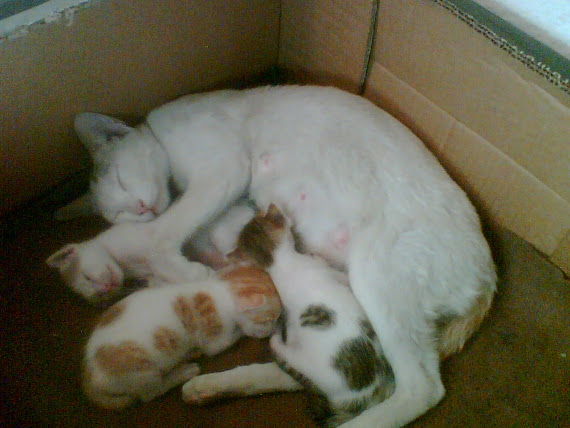
Minnu The Cat & Her Kittens Brownie, Goldie & Blackie
Someone with Nature

Syed Akbar in an island in river Godavari with Papikonda hills in the background
Recognition by World Vegetable Centre

Under the shade of Baobab tree

At Agha Khan Akademi in Kenya
Gateway to the Southern Hemisphere

Convention on Biodiversity

Syed Akbar at the 11th Conference of Parties to the United Nations Convention on Biological Diversity