Syed Akbar
Hyderabad: The renewed fight against tuberculosis in the country has paid rich dividends with the incidence of the killer disease coming down by appreciable levels.
But what is worrying health experts and planners is the explosion of drug-resistant tuberculosis fuelled by HIV/AIDS. Andhra Pradesh, with the largest number of HIV/AIDS cases in the country, is now more vulnerable to drug-resistant TB. Incidentally, the State too has a large number of TB patients.
India has one of the largest number of TB patients accounting for one-fifth of all the TB cases in the world and the emergence of drug-resistant TB strains has become a major challenge to medical doctors and scientists alike.
Strains of extremely drug-resistant tuberculosis or XDR-TB have now been found in 28 countries including India. The death rate for people co-infected with HIV and XDR-TB is around 85 per cent while for normal TB patients is less than 10 per cent.
According to World Health Organisation, India continues to be a global TB hot spot, despite reduction in the incidence in the country. In India every one minute a person afflicted by TB dies. The WHO observes that HIV and drug-resistant TB are threatening to reverse the gains made in TB control over the last few years, particularly during 2006. A majority of newly diagnosed TB patients have developed resistance to first-line anti-TB drugs.
The Central government launched last year a new strategy to stop TB and achieve reversal of the epidemic by 2015. "The new strategy while building on the previous DOTS strategy to control TB, includes additional interventions to meet evolving challenges such as HIV associated TB, emerging drug resistance and enhance the uptake of services by the community at large," a senior health official pointed out.
The death rates due to tuberculosis have come down to just four per cent
because of strict implementation of DOTS in different parts of India including Andhra Pradesh where TB is largely prevalent. While the death rate in patients who do not undergo DOTS is a whopping 29 per cent, those who are treated by DOTS are less susceptible with just four per cent mortality. Where DOTS is not used, infectious patients are seven times more likely to die from the disease.
Union Ministry of Health and Family Welfare records point out that more than three lakh children are forced to leave school every year because their parents are TB patients. More than a lakh women with TB are rejected by their families due to social stigma attached to the disease. The economic cost of tuberculosis in the country is about Rs 8,000 crore a year, i.e. had the disease been controlled, India would have saved that much amount.
Showing posts with label Disease Control. Show all posts
Showing posts with label Disease Control. Show all posts
Friday, 15 May 2009


Tuesday, 8 August 2006
Environmental Information System to keep check on spread of diseases
2006
By Syed Akbar
Hyderabad, Aug 7: Finally, the State government will be able to keep various epidemics, particularly the life-taking Japanese encephalitis, under control thanks to a special software being developed by the city-based Indian Institute of Chemical Technology.
Dozens of people fall victim to brain fever or Japanese encephalitis and several hundred to malaria and viral fevers in the State every year. The agency areas dominated by tribals are the worst hit. So far this year as many as a dozen people died due to viral attacks in different parts of the State. The main Opposition, Telugu Desam, however puts the number of deaths at around 1100.
The Environmental Information System at the IICT is presently working on a database management system for integrated control of Japanese encephalitis and bancroftian filariasis. It will be released in market soon. The software will help in successfully predicting the outbreak of epidemics round the year so that the State government wakes up in time to control the health menace.
"We are working on development of database on various ecological niches responsible for breeding of vector species with special reference to water quality," IICT director JS Yadav said.
The Envis is also busy developing a web-based software on identification of vector species with special reference to habitats by using expert system, text and graphics as well as a database on environmental and cultural methods for vector control in paddy fields.
The study includes development of various databases like micro and
macro breeding habitats, surveillance with special reference to ecological parameters like percentage of organic matter and factors influencing the emergence.
The software throws light on the ecological parameters affecting the dispersal and distribution of the vector species. The data will effectively bring out various environmental management methodologies for the control of vectors and vector borne diseases through integrated system and disseminate to various end users like post-graduate students of environmental sciences, health officials and non-governmental organisations.
By Syed Akbar
Hyderabad, Aug 7: Finally, the State government will be able to keep various epidemics, particularly the life-taking Japanese encephalitis, under control thanks to a special software being developed by the city-based Indian Institute of Chemical Technology.
Dozens of people fall victim to brain fever or Japanese encephalitis and several hundred to malaria and viral fevers in the State every year. The agency areas dominated by tribals are the worst hit. So far this year as many as a dozen people died due to viral attacks in different parts of the State. The main Opposition, Telugu Desam, however puts the number of deaths at around 1100.
The Environmental Information System at the IICT is presently working on a database management system for integrated control of Japanese encephalitis and bancroftian filariasis. It will be released in market soon. The software will help in successfully predicting the outbreak of epidemics round the year so that the State government wakes up in time to control the health menace.
"We are working on development of database on various ecological niches responsible for breeding of vector species with special reference to water quality," IICT director JS Yadav said.
The Envis is also busy developing a web-based software on identification of vector species with special reference to habitats by using expert system, text and graphics as well as a database on environmental and cultural methods for vector control in paddy fields.
The study includes development of various databases like micro and
macro breeding habitats, surveillance with special reference to ecological parameters like percentage of organic matter and factors influencing the emergence.
The software throws light on the ecological parameters affecting the dispersal and distribution of the vector species. The data will effectively bring out various environmental management methodologies for the control of vectors and vector borne diseases through integrated system and disseminate to various end users like post-graduate students of environmental sciences, health officials and non-governmental organisations.
Subscribe to:
Posts (Atom)
Mother's Care
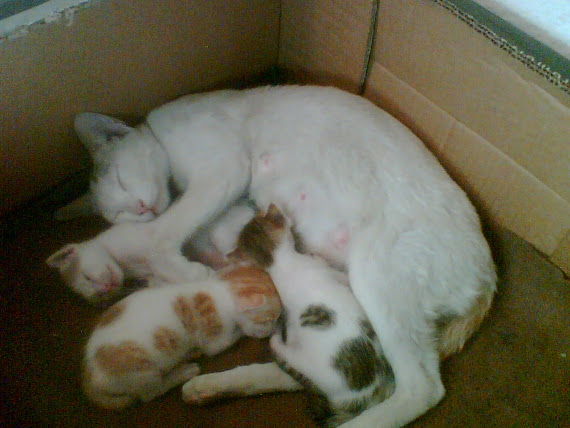
Minnu The Cat & Her Kittens Brownie, Goldie & Blackie
Someone with Nature

Syed Akbar in an island in river Godavari with Papikonda hills in the background
Recognition by World Vegetable Centre

Under the shade of Baobab tree

At Agha Khan Akademi in Kenya
Gateway to the Southern Hemisphere

Convention on Biodiversity

Syed Akbar at the 11th Conference of Parties to the United Nations Convention on Biological Diversity