Showing posts with label Research. Show all posts

Monday, 4 February 2013

When the Nizam of Hyderabad sent his Ayurveda Safari Dawakhana to Kumbhmela in 1942


Biotechnology Ignition Grant: Researchers at University of Hyderabad take up project on type-2 diabetes, multidrug resistant diseases

University of Hyderabad scientists bag BIG awards

By Syed Akbar
Hyderabad: Biotechnology Industry Research Assistance Council (BIRAC), an interface agency of the Department of Biotechnology, has recently introduced a program to enable early stage companies, academics and entrepreneurs to take their innovations from an idea to a proof-of-concept stage in the healthcare/biotechnology sector.

Two of the recipients of the Biotechnology Ignition Grant (BIG) are Dr. Ashwini Nangia of Crystalin Research and Dr. Radha Rangarajan of Vitas Pharma. Both innovators are based at the Technology Business Incubator on University of Hyderabad campus. They are also incubatees at Life Science Incubator in IKP Knowledge Park, which provides mentorship, networking, branding, funding support, and laboratory infrastructure to start ups. IKP is the BIG Partner for both new projects.

Dr. Ashwini Nangia of Crystalin Research will test novel drug molecules designed on the GPCR receptor (G-protein coupled receptor) for the treatment of Type 2 diabetes. The novelty of their approach lies in its simplicity. By modifying the functional group on an anti-psychotic drug it is expected that the change in binding to the receptor will lead to release of insulin.

The project will span the synthesis of drug molecules, their cell culture assays, and pre clinical animal trials to test the glucose level lowering efficacy of our “first in class drug”, says Dr. Nangia. He is a Professor of Chemistry at University of Hyderabad.

Dr. Radha Rangarajan is focused on identifying and developing novel therapies for multidrug resistant (MDR) infections at Vitas Pharma. MDR infections are a major public health concern in India and elsewhere, as they are associated with high levels of morbidity, mortality and treatment costs. The BIG Grant is intended for research on a novel class of compounds that target DNA replication in bacteria and prevent their growth through a unique mechanism, thus overcoming drug resistance.

The team will identify lead compounds with in vitro activity against highly resistant clinical strains and establish proof-of-concept in animal models. A successful drug emerging from this research would add to the armament of medicines for the effective management of infectious diseases.

Dr. Rangarajan has extensive research and development experience (Rockefeller University, Harvard School of Public Health and Dr. Reddy’s Laboratories). She is on the Guest Faculty at NIPER, Hyderabad.

Rs 15,000 crore loss per year in fish and marine industry due to lack of post-harvest waste prevention methods


Post-harvest wastage causing annual losses worth over Rs 15K crore to marine & fish industry: ASSOCHAM
By Syed Akbar

The post harvest fish wastage leads to annual losses worth over Rs 15,000 crore in India’s marine and inland fisheries sector, according to an analysis by apex industry body ASSOCHAM.
“The poor post-harvest fish handling infrastructure in major maritime states in India leads to wastage of about 25 per cent of the total fisheries resources,” according to a sector-specific an analysis by The Associated Chambers of Commerce and Industry of India (ASSOCHAM).
Besides, fish stocks in India’s territorial deep-sea waters also remain untapped owing to the dearth of suitable fishing vessels and also because traditional fishing communities are over-exploiting the coastal waters which is leading to fast depletion of maritime resources and shrinking the catch from the coastal zones.
The post-harvest losses are generally caused due to poor handling, processing of fish leading to quality deterioration arising out of biochemical and microbiological spoilage, inadequate packaging, marketing malpractices and lack of proper storage facilities.
“These losses result in potential income loss to fishermen community and all the stakeholders, traders, processors, involved in fishing related ancillary operations as the spoiled, physically damaged fish fetches 20-25 per cent lower price compared to the best quality catch,” said Mr D.S. Rawat, secretary general of ASSOCHAM while releasing the chamber’s analysis.
“Production of value-added fishery products should be encouraged to realize better returns for producers, besides there is also a need to develop top-notch harbor and storage facilities for development of marine products in the country,” said Mr Rawat. “Sustainable practices like eco-friendly fisheries management must be adopted in capture, cultivation, utilization and marketing of marine products and there is also a need to bring in regulations to keep a check on over-exploitation of fisheries resources.”
ASSOCHAM has suggested the government to modernize existing harbours and establish more cold storage facilities and factory vessels to aid the fish and marine industry which is worth over Rs 61,000 crore.
Besides, improved methods of fish handling and preservation facilities on-board fishing vessels must be provided through joint ventures for production and marketing of value-added fish products.
“Maximum care should be taken while catching, storing and handling of fish to avoid any damage to the catch as it would go a long way in improving the quality of India’s marine products,” said Mr Rawat. “The entire fishing community including the policy makers and other stakeholders need to find alternative sources to encourage more-sustainable practices in aquaculture otherwise it could lead to degradation of land and marine habitat.”

Saturday, 26 January 2013

Leading defence scientist Dr Vijay Kumar Saraswat gets Padma Bhushan award

By Syed Akbar

Dr Vijay Kumar Saraswat, one of the greatest scientists of India with more than four decades of experience in defence research. Apart from being a scientist, he is a rare combination of an innovator, technologist and visionary. Dr Saraswat has been credited with authority in indigenous development of variety class of Missiles like Ballistic Missiles, Cruise Missiles, Anti-Tank Missiles and is principal architect behind the first ever BMD development program in India by spearheading major technology breakthroughs in the areas of missile defence systems.

Born at Gwalior on 25 May 1949, Dr Saraswat completed his engineering education in Gwalior and then went to IISc Bangalore for Masters Degree in Engineering and Ph.D from Osmania University.

During the last 30 years, he actively supported the development of the engineering profession in India and stimulated public interest the potential value of self-reliance in Defence Research in a wide variety of engineering applications. His initiatives and drive have made India self reliant and placed the nation under the spotlight in the global arena.

He developed a highly successful 30 Tonne LP Engine for aerodefence applications. His contribution towards successful induction of indigeneously developed surface-to-surface missile PRITHVI Weapon system - PRIDE OF THE NATION and its variants like DHANUSH with extended range intro armed forces, made Govt of India to honour him with the prestigious national award of PADMASHRI in 1998. With the recent successes of long range missile AGNI-5 and AGNI variants, ASTRA, SHOURYA, PRAHAAR, NAG, AKASH, Dr Saraswat’s dream has come true that today, nation can boast of reaching any shores in the world with the nuclear capable missiles with different strike ranges demonstrating the self-reliance of our Nation.

His technological capabilities coupled with managerial excellence have led to realization of two new missiles Exo and Endo atmospheric interceptor systems along with other BMD elements viz Radars, Command, Control, Communication, Computers & Intelligence (C4I) systems and the integration of battle management resources in a record time. The successive interception of incoming target missiles at Exo and Endo atmospheres demonstrated during the last six years are a testimony to his dedicated untiring efforts and exploitation of limited technological resources. This success made India join the select nations that have the capability to develop BMD systems and the only nation that has achieved the Exo atmospheric intercept other than USA who has been spending billions of dollars on missile defence

Dr. VK Saraswat has built “Strategic Communication Network” bringing high degree of Redundancy, Robustness and Reliability through multiple layers covering command hierarchy. Under his leadership, missiles have been made available to Strategic Force Command as Vectors.

Development of new technologies which are critical under MTCR viz., Ring Laser Gyros, Fibre Optic Gyros, Electro-Hydraulic Servo Valves, Electro Mechanical Actuation System, MEMS Technology for Inertial Sensors have been realized with the rigorous efforts of Dr Saraswat. Vision of Dr Saraswat lead to initiate the programmes on Cyber Security, Directed Energy Weapons, future Materials, Space based surveillance & Security system, Nano Technologies, Low Intensity Conflict and NBC Products, Bio defence and Silicon Photonics development during the past two years.

Dr Saraswat set up the State-of the-Art facilities consisting of 100 Class Clean Rooms, Optical Processing Systems, Vacuum Units micro machining and precision manufacturing systems and high end assembly integration and testing equipments overcoming all odds of export controls including creation of an excellent industry base to support defence research. Dr Saraswat’s vision and efforts towards achieving technological self-reliance paved the way not only for development of technological systems but also generated employment opportunities and for economic development of the regions Presently, the Indian industry has graduated from the status of ‘component level’ fabricators to ‘system level’ manufacturing agencies for the defence sector.

Dr Saraswat was honored with numerous accolades during his entire career namely Vikram Sarabhai Memorial Award from Indian Science Congress (2011); Lifetime Achievement Award by Ramakrishna-Vivekananda International Foundation, New Delhi; Prof Jai Krishna Memorial Award by Indian National Academy of Engineering (INAE); Dr Y Nayudamma Memorial Gold Medal for the year 2011 by AP Science Congress; Jawaharlal Nehru S&T Award (2009) by Govt of Madhya Pradesh; FICCI Annual Award; ARYABHATA Award (2011) from Astronautical Society of India; National Aeronautical Prize (1998); Dr Y Nayudamma Memorial Award

The Times Magazine of United States (17 Sep 2007) described Dr Saraswat as an Innovator working on New Technologies which include development of Propulsion System to accelerate to Mach 8 speed, SCRAMJET and AVATAR (Aerobic Vehicle for Advanced Trans Atmospheric Research) at low cost.

India Today (27 Dec 1999) described Dr VK Saraswat as Rocket Scientist and Missile Man II, after Dr APJ Abdul Kalam under the Title “Faces of the Millennium Sciences”

Dr Saraswat received many honorary degrees from many Indian universities and is a Fellow of numerous scientific societies, including Indian national Academy of Engineering, Aeronautical Society of India, Astronautical Society of India, Institution of Engineers, Systems Society of India, Society for Shock Wave Research and AP Akademi of Sciences; Life Member of Indian Science Congress Association and Instrumentation Society of India and Chairman of Combustion Institute (Indian Section). He has been elected as President of Aeronautical Society of India.

He was the Chief Controller R&D (Missiles & Strategic Systems) and Programme Director for Air Defence at DRDO from the year 1996-2009 before being appointed as Secretary Dept of Defence R&D, Scientific Adviser to Raksha Mantri and Director General to lead India's Defence Research & Development Organisation. In addition, Dr Saraswat is also the Chairman of Governing Council of Defence Institute of Aadvanced Technology, Pune and Motilal Nehru National Inst of Technology, Allahabad; Member of Advisory Council of BHEL R&D and Member of Scientific Advisory Committee to Cabinet under the chairmanship of Honble Prime Minister of India.

Under his leadership, DRDO has transformed from a technology importer to a pioneer in providing integrated technology and process solutions on weapon delivery platforms. The principle of striving for greater-self-reliance in technology while instilling team spirit has been his motto. Dr Saraswat laid the Technology Roadmap for development of future technologies.
During the last three years, Dr Saraswat’s innovative leadership achieved - induction of first nuclear powered submarine INS ARIHANT; induction of VARUNA EW System; induction ofDIVYADRISHTI (EW software) into Services; TEJAS (Light Combat Aircraft) have Initial Operational clearance and Naval version has been rolled out after its successful demonstration; NAG(Anti Tank Missile) complete User Trials; ASTRA (Air-to-Air Missile) complete aerodynamic configuration trials; Maiden flight test of Unmanned Aerial Vehicles RUSTOM;; Induction of MBTsand PINAKA launchers; and successful launch of PRAHAR. He has guided NAG (Anti-Tank Missile) complete User Trials; ASTRA (Air-to-Air Missile) complete aerodynamic configuration trials; Successful launch of Under water Missile SHAURYA; Development of guided Glide Bomb with extended range; development of System on Chip for missile and EW applications; demonstration of RUSTOM-I; Initiated development of Surveillance Systems, Cyber Security, Nano Technologies; Development of LIC & NBC Technologies to support Security & Paramilitary forces and Induction of DIVYADRISHTI (EW software) into Services. Production of first lot of Titanium Sponge; Supply of Oleoresin Grenades, Plastic Bullets, Mini UAV NETRA, Laser Dazzlers, ROV DAKSH, Explosive Detection Kits, Multi-mode Hand Grenades, and Combo Rations for Low Intensity Conflicts; Solar Powered Modular Green Shelters

Most recently Dr Saraswat while taking our defence capabilities to greater heights brought new dimension to the national defence scenario through successful test firing of AGNI-5 an Inter-Continental Ballistic Missile which has become Game Changer. Maiden success of LRSAM developed under Joint Venture with Israel is another significant achievement under his leadership.

Dr Saraswat’s recent research initiatives have taken shape into establishment of Research & Innovation Centre- RIC at IIT Madras Research Park – to focus on innovation &Research in coordination with Academia and MILIT- dedicated to training on S&T needs of officers of MoD; CERT- DRDO with the aim of reporting, auditing and handling emergency response of Information Security Incidents; CHESS with the mandate of development of High Energy Laser and Microwave devices aimed at futuristic requirements and is envisaged to become a cutting edge technology development center; and finally establishment of Kyrgyz-Indian Mountain Bio-Medical Research Centre at Kyrgyzstan. In order to advance economic development opportunities, Accelerated Technology Assessment and Commercialization (ATAC) Programme in association with FICCI has been started with a motto to bring the DRDO developed products into market for civilian applications.

Bio-Digesters for Railways and Odisha Govt for rural development and Launch of AAHAR programmes have gained larger interests which are aimed at providing DRDO developed food products for the lowest strata of Society as part of Corporate Social Responsibility.

Guiding 8 PhD Students. He has number of papers at his credit published in various journals at national and international level.
Dr Saraswat made a unique contribution to the society, for upgradation of technology in select areas, in popularizing defence research, by giving a series of lectures on Critical technological areas to Scientific community, academia, researchers and Students and providing them an insight on various scientific theories and applications. The new international airport and Aerospace SEZ at Hyderabad are a testimony of his initiatives and able guidance through AeSI since 2002.

Dr Saraswat’s rigorous efforts as Chairman Combustion Institute, led to establishment of Advanced Combustion Research Centers at IISc and IIT(M). His initiatives on research in Fuel Cell Technologies have made good progress and soon will have technologies for commercial usage.
Degree of Doctor of Science was conferred upon him by more than 15 Universities including NIT Surat and Andhra University, Visakhapatnam in recognition of his outstanding contributions towards development of Science & Technology in Aerospace and Defence fields.

Missile scientist Avinash Chander gets Padma Sri for his outstanding contribution to Agni missiles

By Syed Akbar

Hyderabad: Mr Avinash Chander, distinguished scientist, Chief Controller R&D (Missiles & Strategic Systems) and Programme Director, Agni, is the main architect behind the success of Agni-5, 5000 km ICBM class of missile and gave the country a new dimension to its defence capability.


Dynamic leadership of Avinash Chander in the development of Agni-4 and Agni-5 in a short span of time with the state- of-the- art technologies has put the country in the elite class of Advanced Nations in the world.

As prime designer of Long Range Missile Systems in the country, successfully delivered three long-range weapon systems Agni-1, Agni-2 and Agni-3 to the Indian Armed Forces. His outstanding contributions enabled India with indigenous technologies in the critical areas under severe control regimes. He has created infrastructure for production of the systems motivating and encouraging industry participation with innovative management initiatives. He joined DRDO in 1972 after completing his graduation in electrical engineering from IIT Delhi. He obtained MS in spatial information technology from JNTU, Hyderabad. He is a Fellow of Indian National Academy of Engineers, Fellow of System Society of India, Fellow of Andhra Pradesh Academy of Sciences, Fellow and Vice-President of Astronautical Society of India.

He has received numerous awards and honours in his career like DRDO Scientist of the year (1989), Astronautical Society of India Award (1997) in the field of Rocketry, AGNI Self-Reliance Award (1999), Dr. Biren Roy Space Science Award (2000), DRDO Award for Path Breaking Research / Outstanding Technology Development (2007), Outstanding Technologist Award (2008) by Punjab Technical University, DRDO Technology Leadership Award (2008) and Outstanding contribution towards National Development Award (2011) by IIT, Delhi.

Wednesday, 9 January 2013

Power from road traffic movement: Indian villager has developed a prototype of power generator that produces electricity utilizing the vibrations caused by vehicles on busy road junctions.

By Syed Akbar
Hyderabad, Jan 5: An intermediate dropout from a remote village in
Guntur district has developed a prototype of power generator that
produces electricity utilizing the vibrations caused by vehicles on
busy road junctions. It converts the mechanical energy created by the
road traffic into electrical energy, which can be added to the power
grid or stored in battery.

The prototype generator developed by Damalapati Venkata Krishna of
Ganapavaram village in Rajulapalem mandal of Guntur district will be
displayed at the Renewable Energy World Asia (REWA) conference in
Bangkok, Thailand in the first week of October this year.

The 100th session of the Indian Science Congress currently underway in
Kolkata had accepted the paper of Venkata Krishna for a poster
presentation. But when he went to Kolkata to make the presentation, he
was denied permission on the grounds that he is not a graduate,
Venkata Krishna told this correspondent.

“Prof AK Rao, sectional president, physical sciences, Indian Science
Congress Association, 2013, sent the acceptance letter. He also
directed me to two of the organisers of the science congress for
accommodation in Kolkata. But to my surprise they told me that since I
am not a graduate, I am not eligible for the presentation,” Venkata
Krishna pointed out.

Dr Gollapalli Nageswara Rao of Andhra University said generation of
electricity from road traffic movement is feasible. “Venkata Krishna
had made a prototype generator of road traffic energy. Many scientists
the world over are involved in research on similar projects to
generate green electricity from vehicular movement on busy roads. We
have to see if the prototype is commercial feasible for mass
production,” Dr Nageswara Rao observed.

Venkat Krishna’s prototype generator has two components, a pressure
plate and a power- producing device. The pressure plate is put
underneath the road and is connected to the power-producing device.
Whenever a vehicle passes through the plate, the pressure generated
from vibrations and weight is passed on to the device, which converts
this mechanical energy into electrical energy.

“It will be useful in heavy traffic roads in cities and national
highways. To begin with, the power generated can be utilised to supply
electricity to traffic signals or streetlights. It works better, when
the density of traffic is high. Since the power can be stored in
battery, it will supply continuous power to traffic signals even
during non-peak hours,” Venkat Krishna said.

Earlier, he developed a device called Kishan Rakshak, which
automatically throws a covering shield over chilli crop kept for sun
drying, whenever it rains.

Tuesday, 1 January 2013

Young achievers: Dr Sharmistha Banerjee - decoding the molecular mystery of HIV and TB coinfection

Dr Sharmistha Banerjee, scientist, University of Hyderabad

By Syed Akbar

Tuberculosis and human immunodeficiency virus (HIV) are dreaded diseases individually.
And when they join hands and infect a person, they become even more dangerous.
Understanding the co-infection of HIV and TB will help doctors to know the disease
mechanism better. Dr Sharmistha Banerjee achieved a significant progress in unravelling
the mystery of HIV-TB co-infection at the molecular level.

Dr Sharmistha Banerjee, who is attached to the biochemistry laboratory of the University
of Hyderabad, received the Innovative Young Biotechnologist Award from the Department of
Biotechnology for her contribution that provides scientific insights into the TB and HIV
germs when they infect a person at the same time. Sharmistha, 39, hails from West Bengal
but had her higher education in Hyderabad.

Co-infection of HIV and tuberculosis are quite common in India and thousands of people
suffer from the twin problem.

“The award has motivated me to take up challenging research and find out the hidden
scientific secrets,” says young Dr Sharmistha.

Dr Sharmistha received her PhD in biochemistry from University of Hyderabad. She worked
at Centre for DNA Fingerprinting and Diagnostics (CDFD), Hyderabad, and later continued
her postdoctoral studies at the Laboratory of Transcriptional Biology.

Young achievers: Dr Rajeev Trehan - three complicated surgeries in one go

Dr Rajeev Trehan, cardio-thoracic surgeon

By Syed Akbar

This young heart surgeon created a record of sorts when he performed a complex surgery
involving three procedures in one go – coronary artery bypass graft, mitral valve
replacement and left ventricle reconstruction. It was a challenging task as the patient
is 65 year old.

Dr Rajeev Trehan, who made Hyderabad his second home in 2007, did not take chances when
the patient was admitted to Apollo DRDO Hospital, Hyderabad, in August with severe
breathlessness and sweating. The patient could neither lie down on bed nor walk due to
heart failure.

Thirty-nine year old Dr Trehan treated the patient for all three lesions of the heart.
For the patient to recover, all this had to be done in one go, which was extremely risky.
“It was a big challenge. I did not do such a complex surgery before, but I went ahead
with the procedure to save the patient,” he recalls. Trehan conducted double surgical
procedures – bypass surgery and left ventricular repair – five times earlier.

“Many doctors do not risk taking complex cases fearing high mortality rate. Life and
death are in the hands of the Almighty. As a doctor I do my best to save critically ill
patients,” he points out.

Young achievers: RCI scientist G Satheesh Reddy guides missiles to their target


G Satheesh Reddy, the Agni guide


By Syed Akbar

Internationally acclaimed defence scientist G Satheesh Reddy can be described as the 
“Agni guide” as he plays an important role in guiding the Agni series of ballistic 
missiles, which gave India a major defence edge in the region.

Satheesh joined the DRDO as scientist B in Hyderabad in 1986. He rose rank by rank during 
the last 26 years through his. At 48, today he is the youngest outstanding scientist in 
the Defence sector in India.

He heads the inertial systems in the DRDO’s RCI in the city. His lab is responsible for 
the accuracy of the missile systems. In short, he guides India’s missiles to their 
targets.

Satheesh received a number of awards this year including the Institution of Electronics 
and Telecommunication Engineers’ award for planning, design, development, production and 
timely delivery of critical avionics systems and diversified navigation technologies for 
land, air, sea and space applications. He developed diversified core navigation 
technologies. Satheesh, who is also the associate director of RCI in Hyderabad, added 
another feather in his cap by winning the `Vikram Award’ of the Systems Society of India 
(SSI).

He is the guiding force behind all the series of the Agni missiles including the 
intercontinental ballistic missile, Agni 5. He also proved his prowess in the interceptor 
technology, giving India its Defence Shield.

Young achiever: DRDO scientist Muthukrishnan Kannan

Muthukrishnan Kannan, defence scientist


By Syed Akbar

Muthukrishnan Kannan, 38, bagged the prestigious `Swarna Jayanthi Award’ from the
Aeronautical Society of India (AeSI) for the year 2012.

Kannan, who has been working for the Research Centre Imarat (RCI), Hyderabad since 1997
has made outstanding contribution for development of components used in missiles,
aircraft and submarines.

He led the team for indigenous navigation systems (INS) for naval ships. He also headed
the navigational team for the cruise missile, BrahMos, a stealth supersonic cruise
missile. BrahMos can be launched from all the “three fields” – air (aircraft), sea
(submarines) and land. Incidentally, BrahMos is the fastest cruise missile in operation
today. The last 15 years have made Kannan a true Hyderabadi. He also speaks fluent Telugu.

Kannan bagged the ‘Swarna Jayanti Award’ for his outstanding contributions towards the
design, development, production and delivery of critical components for strategic and
tactical defence applications
He is also associated with several important projects that include Agni-3 ballistic
missile, Tejas, a lightweight multi-role fighter aircraft, and Shaurya, a hypersonic
surface-to-surface tactical missile. Kannan made valuable contribution for air defence
(AD) missile too.

Young achievers: Brajnish Sitara, navigational engineer at Research Centre Imarat, Hyderabad


Brajnish Sitara, navigational engineer

By Syed Akbar

India made an impressive achievement on the missiles front during 2012, successfully
firing a series of missiles. For any missile to complete its course and hit the given
target, it should be `guided’ properly. Brajnish Sitara, 31, a navigational engineer with
the Defence Research and Development Organisation (DRDO), made significant contribution
in guiding the missiles to destroy the targets.

A member of the navigation team, Brajnish has mastered the art of navigational sciences
and aerospace engineering at quite a young age. An engineering graduate from the National
Institute of Technology, Jamshedpur, Brajnish made Hyderabad his second home city. He has
been associated with DRDO, Hyderabad, for the past nine years.

This year Brajnish was awarded the ‘Young Engineer Award’ by the Indian National Academy
of Engineering (INAE) for his outstanding contributions towards development of new
alignment and navigation algorithms and schemes. They have a high accuracy rate. His
contribution has helped in advanced navigational facilities for ships, aircraft and
strategic applications.

Brajnish is also responsible for development of advanced inertial sensor models and aided
navigation techniques for a number of defence projects, besides missiles.

Antibiotics and turmeric together a bad idea: Turmeric has been an integral part of Indian kitchen for ages, but now researchers from the Indian Institute of Science (IISc) suggest that people on antibiotics medication should avoid turmeric for fast recovery

By Syed Akbar
Hyderabad: Turmeric has been an integral part of Indian
kitchen for ages, but now researchers from the Indian Institute of
Science (IISc) suggest that people on antibiotics medication should
avoid turmeric for fast recovery.

A study conducted by the Centre for Infectious Disease Research and
Biosafety Laboratories, IISc, Bengaluru, reveals that curcumin, an
active chemical substance found in turmeric, interferes with the
efficacy of antibiotics like ciprofloxacin. Thus, antibiotics lose
their ability to fight against harmful bacteria. The IISc team tested
ciprofloxacin against typhoid bacteria in the presence of curcumin.

Turmeric has gained importance in treating various diseases, as a food
additive, and as a preservative. Many people consume turmeric tablets
as a daily dietary supplement. Some consume them to derive benefit
from the curative properties of curcumin. Moreover, haldi is added in
many Indian dishes including the delicious pulihora. Though turmeric
is good for health, it should not be taken while one is on antibiotics
regimen.

Typhoid fever is ever on rise across the globe and this disease burden
is a serious cause of economic loss, mortality and morbidity in a
developing country like India. Ciprofloxacin is the first line drug to
treat typhoid.

The IISc team demonstrated that curcumin inhibited the action of
ciprofloxacin by not preventing the ciprofloxacin-induced cleavage of
DNA. The study was published in the latest issue of the Journal of
Antimicrobial Chemotherapy.

Curcumin is a major dietary molecule among Indians and on an average,
a person takes 0.03 to 0.12 grams per day. As curcumin interferes with
the action of ciprofloxacin, the typhoid bacterial population
increases. The patient will take a longer time for recovery from
typhoid.

Typhoid is caused by Salmonella species. “The successful treatment of
typhoid patients is a challenge, especially in immuno-compromised
individuals. The emergence of multidrug-resistant strains further
calls for alternative drugs against typhoid,” the study noted adding
emphasing the effect of diet on the outcome of typhoid disease and its
treatment.

Termite mounds and presence of metals: The search for uranium and other elements may soon concentrate around anthills. Researchers from the department of geology, Sri Venkateswara University, Tirupati, have found that anthills or termite mounds are natural indicators of the presence of uranium, copper, lead, zinc, nickel, chromium, and barium among other minerals

By Syed Akbar
Hyderabad: The search for uranium and other elements may soon
concentrate around anthills. Researchers from the department of
geology, Sri Venkateswara University, Tirupati, have found that
anthills or termite mounds are natural indicators of the presence of
uranium, copper, lead, zinc, nickel, chromium, and barium among other
minerals.

The SVU team analysed termite mounds in Tummalapalle village in Kadapa
district, which is famous for its vast uranium resources. It noticed
that uranium concentration ranged from 10 to 36 ppm in the termite
mounds. The concentration of the radioactive element was less in the
soils where there are no anthills.

Tummalapalle is dotted by a number of termite mounds and this has
attracted the SVU researchers to analyse if they had anything to do
with the uranium mineralisation in the region. Their systematic
research revealed the presence of several other minerals. The
researcher based their analysis on a biogeochemical parameter called
“biological absorption coefficient” which showed that termite affected
soils contained huge amounts of chemical elements than the adjacent
soils.

This is the first time that a study has been conducted on
termite-mediated process to find minerals in India. The team comprised
Dr Arveti Nagaraju, S Reginald, K Sunil Kumar, V Harinath and Y
Sreedhar.

Termites dig the soil making burrows and in the process transport
upward buried components of the regolith (loose layer of soil around a
hard rock). Thus, a study of the soil samples from the termite mound
serves as an indicator of the nature of minerals present in the
vicinity. Termites also sample the sub-surface geological formations
for their construction material and mix large quantities of soil from
different horizons during mound building.

The concentration of various elements in termite soils and its
adjacent surface soils show that the elements like copper, lead, zinc,
nickel, cobalt, chromium, lithium, rubidium, strontium, barium and
uranium have been concentrated in more amounts in termite soils than
in the adjacent surface soils. The concentration of uranium ranged up
to 36 ppm in the termite mounds studied and there is no enrichment of
uranium in its adjacent surface soils.

Friday, 21 December 2012

Forget Windows and Linux, new computer operating system (OS) for India: Faced with the threat of cyber hacking, India is now developing its own computer operating system, which will minimise the cyber onslaught and fight malware


By Syed Akbar
Hyderabad, Dec 20: Faced with the threat of cyber hacking, India is
now developing its own computer operating system, which will minimise
the cyber onslaught. The indigenous operating system will be ready by
2015.

Dr Vijay Kumar Saraswat, director-general of the Defence Research and
Development Organisation (DRDO), told reporters on the sidelines of
the Pearl Jubilee International Conference on Navigation and
Communication (Navcom 2012) here on Thursday that several Indian
research organisations including the DRDO were involved in the
development of the operation system. This will be India’s own
operating system, he added.

Explaining the need for an indigenous operating system for India, Dr
Saraswat pointed out that imported operating systems are prone to
computer worms and may cause damage to the vital data stored. “One of
the major elements of cyber security is having our own operating
system because we are dependent on imported operating systems. Whether
it is based on Windows or Linux, the operating system is likely to
have malicious worms,” he said adding that it was essential that India
developed its own operating system.

The two-day Navcom-2012 is conducted by Osmania University to mark the
30th anniversary of its Research and Training Unit for Navigational
Electronics. Dr Saraswat said work on the operation system had already
started. “We are 18 months into the programme and we hope to complete
it in the next three years,” he said adding 150 engineers are involved
in the mega project.

The DRDO chief said the operating system would be purely indigenous
and no foreign collaboration was involved.

Dr Saraswat pointed out that India was also developing regional
navigational satellite system, which would be ready soon. As many as
seven such satellites would be launched till 2015. It would have 20
metres accuracy.

G Sateesh Reddy, deputy director of Research Centre Imarat, said India
had been involved in research in development of advanced navigational
systems. “India now ranks in the list of developed nations as far as
defence technology is concerned,” he added.

Dr Saraswat also emphasised the need for development of indigenous
radio sets without depending on foreign nations for imports.

Dr Avinash Chander, chief controller, R and D, DRDO, said India would
develop atomic gyroscope for future interplanetary missions.

Wednesday, 19 December 2012

Fuel alternatives: The Krishna-Godavari basin could soon turn out to be the new source of “shale gas”, which holds promise as the future fuel for humanity for at least 200 years

By Syed Akbar
Hyderabad: The Krishna-Godavari basin could soon turn out to
be the new source of “shale gas”, which holds promise as the future
fuel for humanity for at least 200 years.

The KG basin is one of the few places identified in India for
exploration and exploitation of shale gas. The total potential of
shale gas in the country is estimated to range between 600 trillion
cubic metres and 2000 trillion cubic metres. Shale gas is a natural
gas trapped within shales or fine-grained sedimentary rocks. Besides
the KG basin, shales are also present in the Cuddapah Super Basin in
Andhra Pradesh and other places spread over the country.

The city-based National Geophysical Research Institute (NGRI) and the
Geological Survey of India have been carrying out research studies to
identify news sources of shale gas to boost the natural gas production
in the country. The shale gas resources are several times more than
the natural gas resources.

Oil and natural gas experts and geophysicists from different parts of
the world will converge on the NGRI on Wednesday to discuss the latest
scientific strategies to explore and exploit shale gas. Identification
of shale gas gains significance in view of fast depletion of
conventional energy resources.

The International Energy Agency (IEA) has identified shale gas as one
of the alternative energy resources whose economic potential is more
than two times the projected production potential of natural gas.
According to NGRI scientists, India has a large number of sedimentary
basins with proven shale gas reservoirs and the oil industry has taken
positive strides towards exploration and exploitation of shale gas
that could contribute to the energy security of the country.
Prospective blocks are being identified for detailed exploration and
development in the near future.

India has a large number of sedimentary basins with proven shale gas
reservoirs. KG basin is one of them. The other sites are Cambay basin,
Assam-Arakan basin, Damodar Valley and Cauvery basin. The
international conference at NGRI will discuss among other things the
geological, geophysical and geochemical aspects of shale gas
exploration, micro-seismic imaging, drilling, completion and
production technologies and environmental hazard in shale gas
exploitation.

Shale gas is also found in “unconventional” reservoirs like coal bed
methane, gas from tight sandstones and gas hydrates.

According to a document of the Pandit Deendayal Petroleum University,
shale gas exploration by Oil and Natural Gas Commission (ONGC) at
Raniganj in Assam showed encouraging results. “The initial results are
encouraging but one has to wait for some more time to ascertain
whether shale gas production is commercially viable or not,” it
pointed out. However, IEA believes that half of the shale gas
resources could be exploited.

Antisense technology is fast emerging as the future of medical science for treatment of a number of diseases including cancers, heart problems, malaria, typhoid and genetic disorders

By Syed Akbar
Hyderabad:  Anti-sense technology is fast emerging as the
future of medical science for treatment of a number of diseases
including cancers, heart problems, malaria, typhoid and genetic
disorders.

Eminent geneticist and biotechnologist Dr Krishna Dronamraju, who is
also director of Foundation for Genetic Research, Houston, USA, points
out that the novel anti-sense technology holds great promise for a
diverse populous country like India. Anti-sense technology is so
called because it creates confusion in the genes by fighting against
their “sense”. For instance, if a particular gene plans to create
trouble in the body in the form of cancer or a genetic disease, it can
be confused using the anti-sense technology. The confused gene or set
of genes will not be in a position to trigger major health issues.

Dr Krishna is currently in India to participate in the centennial of
the Indian Science Congress (ISC) scheduled for early next month in
Kolkata. The theme of this year’s ISC is the future of science in
India. He will present a paper, which will focus on nano-science,
human gene therapy and synthetic biology and the promise they hold for
the future of life sciences in India.

“We can also introduce the anti-sense technology at the early foetal
stage to prevent congenital problems. Diabetes, blood disorders and
mental health issues can also be tackled through this promising
science, which is fast catching up,” Dr Krishna pointed out.

He told this correspondent that the menace of malaria, which continues
to claim 30 lakh people globally every year, could be eradicated using
either anti-sense methods or human gene therapy. Through human gene
therapy, immunity could be built up in the body against the malarial
parasite (Plasmodium). If this happens, mosquitoes will not be able to
transmit malaria to human beings.

“Alternatively we can target the malarial parasite or the mosquito
itself. We can alter the gene sequence of either of them to make them
ineffective against human beings. Research is going on in the USA and
the UK,” he added.

He said the human gene therapy, which was neglected till recently, was
now gaining prominence. Earlier, scientists concentrated on genetic
and rare diseases but now they have changed their focus to treat even
common diseases through gene therapy. They are also concentrating on
foetal gene therapy.

Rating India at five on a scale of 10 for scientific temper, research
and innovations, Dr Krishna regretted that basic sciences had been
neglected in the country. A country with billion-plus people should
not neglect pure sciences and the governments should encourage
students to join courses in basic sciences like biology, chemistry and
physics.

Wednesday, 12 December 2012

ICMR's luciferase reporter phage assay: A new diagnostic kit that detects both latent and active tuberculosis will soon be available in the market. The kit, developed by the Indian Council of Medical Research, is the most advanced of all TB diagnostic devices and provides the most accurate result in a shorter time

By Syed Akbar
Hyderabad:  A new diagnostic kit that detects both latent and
active tuberculosis will soon be available in the market. The kit,
developed by the Indian Council of Medical Research (ICMR), is the
most advanced of all TB diagnostic devices and provides the most
accurate result in a shorter time.

The ICMR has announced commercialization of the TB diagnostic kit and
invited medical companies for manufacture on largescale. The ICMR’s
luciferase reporter phage assay (LRPA) kit detects the TB bacterium,
Mycobacterium tuberculosis, directly from processed sputum samples.

According to an ICMR statement, the new diagnostic kit is a “very
promising candidate for drug susceptibility testing and diagnosing the
TB bacterium more rapidly as the assay allows detection of viable M
tuberculosis in clinical samples”. A large group of Indians carries
the TB bacterium without showing any external symptoms (latent TB).
India also has a high burden of tuberculosis and new strains of TB
resistant to a majority of drugs have been discovered in the country.

TB free certification has been made mandatory for Indians visiting the
UK for more than six months. The ICMR kit is expected to be economical
and accurate and thus reduces the number of false positive and false
negative reports. Moreover, it can be used as an alternative to
antibiotics to control the overgrowth of normal flora (bacteria) in
processed sputum samples. It is a promising technique to diagnose
actively growing tubercle bacilli present in sputum samples.

“The assay is more rapid and sensitive to diagnose tuberculosis as
compared to existing methods and can be effectively used in detection
of Mycobacterium tuberculosis in wide range of clinical samples. It is
the only available growth based method to diagnose presence of latent
cells of tubercle bacilli (TB),” the ICMR statement added.

Fighting the troublesome common cold is now just a “chew away”. A team of Indian researchers has developed a medicated chewing gum that gives relief from the symptoms of the common cold within just 15 minutes

By Syed Akbar
Hyderabad: Fighting the troublesome common cold is now just a
“chew away”. A team of Indian researchers has developed a medicated
chewing gum that gives relief from the symptoms of the common cold
within just 15 minutes.

Normal cold reliever tablets and syrups take at least one hour for
onset of action. The medicated chewing gum works within a few minutes
as the medicine is released directly into the blood circulatory system.

Researchers from the premier National Institute of Pharmaceutical
Education and Research (NIPER), Ahmedabad, used cetirizine to make the
chewing gum. Since cetirizine is bitter and highly unpalatable, they
masked its bitterness. The chewing gum for common cold is sweet and
its flavour lasts for about eight minutes. By this time, the medicine
starts entering the systemic (blood) circulation and begins its action.

“Patients will get quick relief from symptoms of common cold with
greater compliance compared to other conventional dosage forms. Taste
is one of the most important parameters in governing patient
compliance. The medicated gum has soft chewability, high consistency,
sweet taste, and total average flavor lasting time of 6 to 8 minutes,”
said the researchers Shivang A Chaudhary and Aliasgar F Shahiwala. The
result of the study on the medicated chewing gum was published in the
prestigious International Journal of Pharmaceutical Investigation.

Unlike drugs meant for common cold, which give a mild sedative effect,
the medicated chewing gum does not produce sedation. “Common cold is
the most frequently recurring disease in the world and is a leading
cause of doctor visits and missed days from school and work. Cold
reliever medicated chewing gum will be a definitive patient acceptable
solution for this condition,” they said.

The medicine in the chewing gum is easily released into the salivary
fluid within a few minutes of chewing and it can permeate from oral
mucosa by the pressure created by the chewing action and absorbed to a
larger extent into the blood circulation. The team conducted a "chew
out" study involving volunteers to find out the efficacy of the
medicated chewing gum. They found that 90 per cent of the drug is
released within 15 minutes.

Since it provides a slow and steady release of medicine, the medicated
chewing gum technology can be utilised for local treatment of mouth
disease or systemic delivery of medicine by direct intraoral (blood
circulation) absorption through the mucus membrane present in the mouth.

According to the NIPER team, it is a trouble-free self-medication with
complete control and allows patients to live an active life during
treatment. It also makes oral administration of drugs possible
anywhere anytime without simultaneous intake of water.

Wednesday, 5 December 2012

Solving two problems in one go, a team of Indo-Norwegian scientists has fined-tuned the technology to increase production of oil and reduce carbondioxide pollution in the atmosphere

By Syed Akbar
Hyderabad:  Solving two problems in one go, a team of
Indo-Norwegian scientists has fined-tuned the technology to increase
production of oil and reduce carbondioxide pollution in the atmosphere.

The team is now studying oil and natural gas fields in Andhra Pradesh,
Gujarat and other States to pump in large quantities of carbondioxide
into the earth to flush out oil. The “game-changing” technology will
partly solve the problem of foreign exchange on oil imports and reduce
atmospheric pollution in the country.

Pumping carbondioxide into the earth will push up oil and helps in
enhanced extraction up to 60 per cent. This also solves the problem of
carbondioxide pollution in the atmosphere, caused by automobiles and
industries. Obtaining carbondioxide is not a major issue as huge
quantities of the gas are released during oil extraction.

Experts in earth sciences from different parts of the world including
the USA and Norway are meeting in Hyderabad over a three-day
conference to chalk out strategy for enhanced oil recovery by pumping
in carbondioxide into the oil fields. The conference began at the
National Geophysical Research Institute (NGRI) here on Monday.

Preliminary studies will be launched at Ankleshar oil field. This will
be followed by KG Basin. Presence of oil will also be studied in
Deccan plateau. Prof Mrinal K Sen, director of NGRI, said they would
carry out numerical modelling and simulation of potential reservoir
models for carbondioxide enhanced oil recovery. Data from Ankleshwar
oil field is also being studied.

Dr Idar Akervoll, senior petroleum researcher from Norway, said
burning of coal and hydrocarbon gas generates carbondioxide and other
exhaust gases that accumulate in the atmosphere. The technology will
help in capturing carbondioxide from the atmosphere for storage inside
the earth. “The captured carbondioxide is an attractive gas for the
petroleum industry for injection into oil reservoirs. The injected gas
could then be locked in and stored in the reservoir,” he said.

The experts will identify the oil fields in the country where
carbondioxide could be pumped in. They will also study if injecting
carbondioxide into the earth will create problems like tremors or
release huge quantities of carbondioxide in case an earthquake strikes
the area.

The life of an oil field can be increased by about 15 years. The daily
extraction rate will also go up to 60 per cent depending on the nature
of the oil field. The minimum increase in oil extraction is about 20
per cent. Norway has been experimenting on this technology for the
last 10 years. It is now being fine-tuned to suit the Indian conditions.

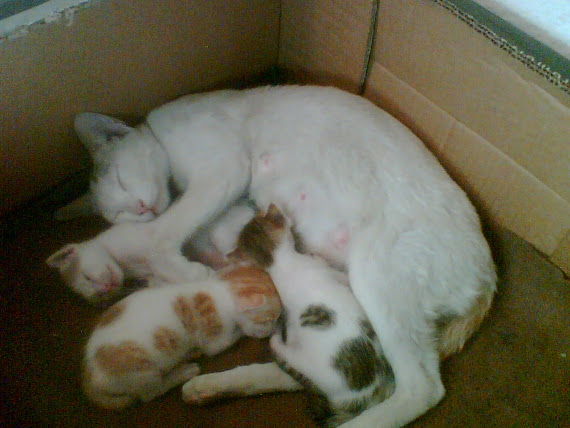
Mother's Care

Mother's Care
Minnu The Cat & Her Kittens Brownie, Goldie & Blackie

Someone with Nature

Someone with Nature
Syed Akbar in an island in river Godavari with Papikonda hills in the background

Recognition by World Vegetable Centre

Recognition by World Vegetable Centre

Under the shade of Baobab tree

Under the shade of Baobab tree
At Agha Khan Akademi in Kenya

Gateway to the Southern Hemisphere

Gateway to the Southern Hemisphere

Convention on Biodiversity

Convention on Biodiversity
Syed Akbar at the 11th Conference of Parties to the United Nations Convention on Biological Diversity