By Syed Akbar
The British had its own music band mostly played at the Residency,
the present day Women’s College in Kothi, before visiting European
dignitaries and the city nobles
The Nizams had a special department of music and arts. The Indian
unit had 108 employees on its rolls including great musicians like
Pandit Maniram, Pandit Motiram, Ustad Bade Ghulam Ali Khan and Begum
Akthar. The highest salary offered was Rs 50 a month. The eminent
musicians got special allowance for each appearance additionally.
The Nizam VI, Mir Mahboob Ali Khan, encouraged a special English
music band of his own (String Band), in addition to the one employed
by the British Residency. Eminent German musician Joseph Henry
Luschwitz was the Director of Music to the Nizam government. His son,
Charles Henry Luschwitz, succeeded him.
Mir Turab Ali Khan, Salar Jung I, prime minister to Mir Mahboob Ali
Khan, during one of his European tours invited Joseph Luschwitz to
Hyderabad. Luschwitz was then performing in Vienna and the Salar Jung
I was impressed by his music. He was a first a band master in the
Nizam’s String Band and then elevated to the status of Director of
Music by the Nizam VI.
Luschwitz accepted the invite and started a band for the Hyderabad
Dominion. He settled down in Hyderabad. Two of his three children (two
out of first marriage and one out of second marriage), were born in
the city. They were baptized at St Joseph’s Church.
He reportedly served as a band master to the second Balouchi
regiment before settling down in Hyderabad.
Nawab Asman Jah Bahadur, a Paigah noble and brother-in-law of Mir
Mahboob Ali Khan, too used to host English music band at the now
demolished Basheerbagh Palace. The Nizam and visiting European
dignitaries were his guests. The band used to play on special
occasions like the birthday of the ruler.
Falaknuma Palace boasts of a mechanical organ, said to be the
largest in the world. Piped music was played to the guests during
banquets and special occasions.
The Hyderabad military band too used to play special western
classical music. It had a Scottish bagpiper unit too.
Showing posts with label Culture. Show all posts
Showing posts with label Culture. Show all posts
Friday, 24 August 2012


Friday, 20 July 2012
The Hyderabadi link of composer Zubin Mehta
By Syed Akbar
Hyderabad, July 19: Eminent composer Zubin Mehta was wowed by the “eye-opening”
collection of arts and artifacts at the Salarjung Museum.
The director for life of Israel Philharmonic Orchestra was on a day’s private visit to
the city. Accompanied by his wife Nancy Kovack, Zubin had a whirlwind tour of the history
and culture of Hyderabad as he went round a few prominent historic places of the city.
Zubin, who stayed at Taj Falaknuma, checked out later in the afternoon.
“What an eye-opening impression and education into the enormous good taste of Salarjung.
World class collection and world class management,” Zubin Mehta wrote in the VIP
visitors’ book, after spending about 45 minutes in Salarjung Museum. He later visited
Purani Haveli and Chowmahalla Palace.
According to Salarjung Museum governing body member Zakir Hussain, Zubin Mehta was
particularly attracted by the statues of Rebecca, and of Mephistopheles and Margaretta.
The latter is a double statue with two different carving on either side. “Zubin sahib
appreciated the vast collection of jade, weaponry, European paintings, the knife used by
Queen Noorjahan and the swords of Aurangzeb and Shahjahan,” he said.
Zubin Mehta kept his visit in wraps and did not inform even the authorities at the
Salarjung and the Chowmahalla. “He visited the palace as a common tourist. He was
impressed by the architectural marvel of the palace,” G Kishen Rao, director of
Chowmahalla Palace said.
According to sources, Zubin had enquired whether his father Mehli Mehta, a violinist and
founding conductor of Bombay Symphony Orchestra, had performed before the Nizam. During
the regimes of Nizam VI Mir Mahboob Ali Khan and Nizam VII Mir Osman Ali Khan, the
Hyderabad State had a special department called, Arbab-e-Nisab, or the music wing.
“Mehli Mehta may have performed before the Nizam. The Arbab-e- Nisab had 108 employees
including prominent musicians like Pandit Motiram, Pandit Maniram, Bade Ghulam Ali Khan
and Aziz Ahmed Warsi. Though Mehli’s name did not figure in the list, he may have
performed on special occasion, as he was a prominent violinist of his times,” city
historian Dr Mohammad Safiullah said.
Officials of Taj Falaknuma accompanied Zubin and his wife to the historical places
including the Salarjung museum.
Hyderabad, July 19: Eminent composer Zubin Mehta was wowed by the “eye-opening”
collection of arts and artifacts at the Salarjung Museum.
The director for life of Israel Philharmonic Orchestra was on a day’s private visit to
the city. Accompanied by his wife Nancy Kovack, Zubin had a whirlwind tour of the history
and culture of Hyderabad as he went round a few prominent historic places of the city.
Zubin, who stayed at Taj Falaknuma, checked out later in the afternoon.
“What an eye-opening impression and education into the enormous good taste of Salarjung.
World class collection and world class management,” Zubin Mehta wrote in the VIP
visitors’ book, after spending about 45 minutes in Salarjung Museum. He later visited
Purani Haveli and Chowmahalla Palace.
According to Salarjung Museum governing body member Zakir Hussain, Zubin Mehta was
particularly attracted by the statues of Rebecca, and of Mephistopheles and Margaretta.
The latter is a double statue with two different carving on either side. “Zubin sahib
appreciated the vast collection of jade, weaponry, European paintings, the knife used by
Queen Noorjahan and the swords of Aurangzeb and Shahjahan,” he said.
Zubin Mehta kept his visit in wraps and did not inform even the authorities at the
Salarjung and the Chowmahalla. “He visited the palace as a common tourist. He was
impressed by the architectural marvel of the palace,” G Kishen Rao, director of
Chowmahalla Palace said.
According to sources, Zubin had enquired whether his father Mehli Mehta, a violinist and
founding conductor of Bombay Symphony Orchestra, had performed before the Nizam. During
the regimes of Nizam VI Mir Mahboob Ali Khan and Nizam VII Mir Osman Ali Khan, the
Hyderabad State had a special department called, Arbab-e-Nisab, or the music wing.
“Mehli Mehta may have performed before the Nizam. The Arbab-e- Nisab had 108 employees
including prominent musicians like Pandit Motiram, Pandit Maniram, Bade Ghulam Ali Khan
and Aziz Ahmed Warsi. Though Mehli’s name did not figure in the list, he may have
performed on special occasion, as he was a prominent violinist of his times,” city
historian Dr Mohammad Safiullah said.
Officials of Taj Falaknuma accompanied Zubin and his wife to the historical places
including the Salarjung museum.
Sunday, 1 April 2012
Scholars for revision of Telugu history
Syed Akbar
Hyderabad: Eminent scholars from around the world will meet
in London for two days this July at the first-ever World Congress of
Telugu History to dig out many hidden facets of history and culture of
the Telugu land, its people, and language.
They will also deliberate on different issues to fill the “gaps and
voids” in the long line of Telugu history to strengthen the case of
Telugu as a classical language, and for better understanding of the
history and culture of the Telugus.
A few weeks prior to the World Congress of Telugu History, scheduled
for July 14 and 15, a small group of scholars from Andhra Pradesh will
study ancient palm leaflets (talapatralu) more than 1000 years old,
and Telugu literary works of the early 19th century, preserved at the
British Library, London. The findings of this group of scholars will
be debated and discussed by a larger group comprising 350 experts at
the Congress. They will prepare a final report, which will be
submitted to the Government of Andhra Pradesh.
The palm leaflet and books are unique as they are not available
anywhere else. They hold several “missing links” which will throw
light on the hitherto unknown aspects of the history of the Telugu
people, the evolution of their language, their contribution to human
intellectual growth, their kingdoms and civil societies , arts and
crafts, coins and trade, costumes and traditions, and their living
standards. The literary works preserved at the British Museum in
London include palm leaflets on the Adiparvam of Mahabharata, and
those penned by Nannayya, the first Telugu poet, dating back to 1120 CE.
Prabhakar Kaza, president of the organizing committee of the World
Telugu History Congress, told this correspondent that the
participating scholars would prepare an “action plan to review and
revise the existing history of the Telugu people. “There are many gaps
and voids in the long line of Telugu history. We need to fill them up
for continuity,” he added. Many of the rare books and palm leaves on
Telugu history were moved out of the country for preservation at the
British Library.
As part of the World Telugu Congress, there will be special workshops
on the contribution of British scholars to Telugu language and
culture. Focus will be on scholars like Francis White Ellis, Colonel
Colin Mackenzie, Fergusson, Robert Bruce Forte, HB Foote, Longhurst,
Alexander Rea, FR Allchin, Boswell, Robert Sewell, Meadows Taylor,
Edgor Thurston, Alexander Campbell, William Carry, Caldwell, Prof
Halden, Will Durant, Sir Arthur Cotton, and CP Brown.
Prabhakar said the Telugu Congress would catalogue rare books on
Telugu culture, exclusively available in London.
Hyderabad: Eminent scholars from around the world will meet
in London for two days this July at the first-ever World Congress of
Telugu History to dig out many hidden facets of history and culture of
the Telugu land, its people, and language.
They will also deliberate on different issues to fill the “gaps and
voids” in the long line of Telugu history to strengthen the case of
Telugu as a classical language, and for better understanding of the
history and culture of the Telugus.
A few weeks prior to the World Congress of Telugu History, scheduled
for July 14 and 15, a small group of scholars from Andhra Pradesh will
study ancient palm leaflets (talapatralu) more than 1000 years old,
and Telugu literary works of the early 19th century, preserved at the
British Library, London. The findings of this group of scholars will
be debated and discussed by a larger group comprising 350 experts at
the Congress. They will prepare a final report, which will be
submitted to the Government of Andhra Pradesh.
The palm leaflet and books are unique as they are not available
anywhere else. They hold several “missing links” which will throw
light on the hitherto unknown aspects of the history of the Telugu
people, the evolution of their language, their contribution to human
intellectual growth, their kingdoms and civil societies , arts and
crafts, coins and trade, costumes and traditions, and their living
standards. The literary works preserved at the British Museum in
London include palm leaflets on the Adiparvam of Mahabharata, and
those penned by Nannayya, the first Telugu poet, dating back to 1120 CE.
Prabhakar Kaza, president of the organizing committee of the World
Telugu History Congress, told this correspondent that the
participating scholars would prepare an “action plan to review and
revise the existing history of the Telugu people. “There are many gaps
and voids in the long line of Telugu history. We need to fill them up
for continuity,” he added. Many of the rare books and palm leaves on
Telugu history were moved out of the country for preservation at the
British Library.
As part of the World Telugu Congress, there will be special workshops
on the contribution of British scholars to Telugu language and
culture. Focus will be on scholars like Francis White Ellis, Colonel
Colin Mackenzie, Fergusson, Robert Bruce Forte, HB Foote, Longhurst,
Alexander Rea, FR Allchin, Boswell, Robert Sewell, Meadows Taylor,
Edgor Thurston, Alexander Campbell, William Carry, Caldwell, Prof
Halden, Will Durant, Sir Arthur Cotton, and CP Brown.
Prabhakar said the Telugu Congress would catalogue rare books on
Telugu culture, exclusively available in London.
Wednesday, 19 January 2011
Sankranti: The vanishing tribes of Haridas, Gangireddu
By Syed Akbar
Hyderabad: Haridas, Gangireddu, cock and bull fights, and rangoli. They have been the symbols of Sankranti, the festival of harvest, for hundreds of years. These traditional festive symbols are now conspicuous by their absence, robbing Sankranti of its original glory, grandeur and cultural heritage.
If modernity and fast-paced life have taken a heavy toll of Haridas, Gangireddu and rangoli in towns and cities, strict animal laws have put an end to traditional cock and bull fights. They now remain just the
remnants of Sankranti. High inflation and unchecked price rise have forced many families to forgo delicious food preparations traditionally associated with the festival of harvest.
Old timers recall how the streets in villages, towns and cities reverberated with the devotional hymns and bhajans of Haridas and how children watched in awe and amusement heavily built Gangireddu humbly
dancing to the diktats of his master. Colourful rangoli used to welcome visitors outside every house.
Haridas and Gangireddu are now limited to just a few pockets in the State and the tradition is fast dying with the new generation in the traditional families diverting to new and more lucrative profession.
"The concept of Haridas was born to tell people about the rich and varied culture and heritage of the country. Most of the narration by them centred around epics like Ramayana and Mahabharata. It was in simple language and everyone was attracted to the hymn," recalled senior arts teacher S Srinivas Rao.
While cock fight was popular everywhere in the State, bull fight or Jallikattu was held in areas bordering Tamil Nadu, where it was quite common in earlier days. This practice of fighting with the bull was seen mainly in a few villages of Chittoor district.
Rangampeta, 20 kms from Tirupati, as well as at mandal headquarters town, Pakala in Chittoor district, were popular for the bull game organised on Kanumu, the concluding day of the three-day harvest festival. Courageous men try to tame the disoriented bulls, running in the midst of huge congregation of people, by
holding on to them as long as possible.
The State government has banned the "cattle festival" due to fatalities involved in the game. Still it is observed in a couple of villages, albeit clandestinely, away from the police glare.
"Gone are the days where children in villages used to run after decorated bull being
taken by a man seeking alms, and also the Haridas, who used to roam about praising Lord Hari," regrets noted poet Sannidanam Narasimha Sarma.
Deploring the change of trend among people, Sarma observes, "our women are synonymous with our culture. But young women of late feel shy of singing traditional songs and decorating house front yards with rangoli. The culture and traditions need to be taught by parents to their children. But young parents in pursuit of money fail to teach their children. What is now left is no tradition, but vulgar display of wealth and pomp".
The government ban on cock fight notwithstanding, a few interior villages still witness this age-old practice. A cock- fight organiser, G Murali, says "we expect a large number of people this time too. The stakes are quite high, as also the risk of being caught by the police".
West Godavari superintendent of police C Ravi Varma said the police are keeping a close watch and any illegal activity will be curbed with an iron hand. "We will not spare anyone how big they are," he warned.
Experts fear that more than 90 per cent of Haridas mendicants have quit the profession. Several thousand families used to eke out a living through singing devotional hymns. Gangireddu owners called Basavannas used to make a lot of money as everyone donated them either in kind or cash.
Nuzvidu town in Krishna district was famous for its cock fights. Former rulers of this area encouraged cockfights.
B Jayaprakash of Krishnaveni creations, a literary and cultural association, feels sorry that people are no longer encouraging traditions. "Artistes still love to perform folk songs, folklore and traditional dances but people do not want to encourage them. Lack of encouragement is one of the factors for the disappearance
of traditions".
In many places Sankranti used to celebrated with palmyrah leaves decorated all around the house. Farmers used to make newly harvested paddy and leaves of palm tree available to people in urban areas. Even though they are sold for a price, they used to be available on a large scale. Paddy is necessary for distribution to the poor and palm leaves for bonfire on Bhogi day.
"Now procuring these items is a difficult task especially palmyra leaves," astrologer Y Karthikeya Sarma said. The other difficulty urbanites face is preparation of traditional dishes like arisalu, synonymous with Sankranti.
Dasaradharama Murthy of Nellore agrees that festival atmosphere is missing this time because Haridas and Gangireddu have played a vanishing trick.
In Telangana Sankranti is marked by the celebration of "Kari". Sankranthi is third important festival in the Telangana region as the locals prefers Dasara (Vijayadashami) and Deepavali. The temple town of Inavolu in Wardhanapet in Warangal district comes alive with people making their offerings to Sri Mallikarjuna
Swamy.
Every year farmers from nearby villages like Ontimamidipally, Singaram, Udalhagudem, Lingamarigudem, Ponnulu and Inavolu decorate their bullock carts and tractors with mango leaves and coloured festoons before they arrive in the temple town to take round of the ancient temple in gratitude of the residing deity
for the harvest.
The ‘Mallana Jatara’, as it is popularly known here, on Sankranti eve, the fair remains the most preferred spot for devotees to visit in Warangal. Common sights here on this day would be of women carrying ‘bonam’ on their heads, married women desiring children offering prayers touching the wall of the temple and thousands of people making an overnight stay at the 100 acre temple site.
Hyderabad: Haridas, Gangireddu, cock and bull fights, and rangoli. They have been the symbols of Sankranti, the festival of harvest, for hundreds of years. These traditional festive symbols are now conspicuous by their absence, robbing Sankranti of its original glory, grandeur and cultural heritage.
If modernity and fast-paced life have taken a heavy toll of Haridas, Gangireddu and rangoli in towns and cities, strict animal laws have put an end to traditional cock and bull fights. They now remain just the
remnants of Sankranti. High inflation and unchecked price rise have forced many families to forgo delicious food preparations traditionally associated with the festival of harvest.
Old timers recall how the streets in villages, towns and cities reverberated with the devotional hymns and bhajans of Haridas and how children watched in awe and amusement heavily built Gangireddu humbly
dancing to the diktats of his master. Colourful rangoli used to welcome visitors outside every house.
Haridas and Gangireddu are now limited to just a few pockets in the State and the tradition is fast dying with the new generation in the traditional families diverting to new and more lucrative profession.
"The concept of Haridas was born to tell people about the rich and varied culture and heritage of the country. Most of the narration by them centred around epics like Ramayana and Mahabharata. It was in simple language and everyone was attracted to the hymn," recalled senior arts teacher S Srinivas Rao.
While cock fight was popular everywhere in the State, bull fight or Jallikattu was held in areas bordering Tamil Nadu, where it was quite common in earlier days. This practice of fighting with the bull was seen mainly in a few villages of Chittoor district.
Rangampeta, 20 kms from Tirupati, as well as at mandal headquarters town, Pakala in Chittoor district, were popular for the bull game organised on Kanumu, the concluding day of the three-day harvest festival. Courageous men try to tame the disoriented bulls, running in the midst of huge congregation of people, by
holding on to them as long as possible.
The State government has banned the "cattle festival" due to fatalities involved in the game. Still it is observed in a couple of villages, albeit clandestinely, away from the police glare.
"Gone are the days where children in villages used to run after decorated bull being
taken by a man seeking alms, and also the Haridas, who used to roam about praising Lord Hari," regrets noted poet Sannidanam Narasimha Sarma.
Deploring the change of trend among people, Sarma observes, "our women are synonymous with our culture. But young women of late feel shy of singing traditional songs and decorating house front yards with rangoli. The culture and traditions need to be taught by parents to their children. But young parents in pursuit of money fail to teach their children. What is now left is no tradition, but vulgar display of wealth and pomp".
The government ban on cock fight notwithstanding, a few interior villages still witness this age-old practice. A cock- fight organiser, G Murali, says "we expect a large number of people this time too. The stakes are quite high, as also the risk of being caught by the police".
West Godavari superintendent of police C Ravi Varma said the police are keeping a close watch and any illegal activity will be curbed with an iron hand. "We will not spare anyone how big they are," he warned.
Experts fear that more than 90 per cent of Haridas mendicants have quit the profession. Several thousand families used to eke out a living through singing devotional hymns. Gangireddu owners called Basavannas used to make a lot of money as everyone donated them either in kind or cash.
Nuzvidu town in Krishna district was famous for its cock fights. Former rulers of this area encouraged cockfights.
B Jayaprakash of Krishnaveni creations, a literary and cultural association, feels sorry that people are no longer encouraging traditions. "Artistes still love to perform folk songs, folklore and traditional dances but people do not want to encourage them. Lack of encouragement is one of the factors for the disappearance
of traditions".
In many places Sankranti used to celebrated with palmyrah leaves decorated all around the house. Farmers used to make newly harvested paddy and leaves of palm tree available to people in urban areas. Even though they are sold for a price, they used to be available on a large scale. Paddy is necessary for distribution to the poor and palm leaves for bonfire on Bhogi day.
"Now procuring these items is a difficult task especially palmyra leaves," astrologer Y Karthikeya Sarma said. The other difficulty urbanites face is preparation of traditional dishes like arisalu, synonymous with Sankranti.
Dasaradharama Murthy of Nellore agrees that festival atmosphere is missing this time because Haridas and Gangireddu have played a vanishing trick.
In Telangana Sankranti is marked by the celebration of "Kari". Sankranthi is third important festival in the Telangana region as the locals prefers Dasara (Vijayadashami) and Deepavali. The temple town of Inavolu in Wardhanapet in Warangal district comes alive with people making their offerings to Sri Mallikarjuna
Swamy.
Every year farmers from nearby villages like Ontimamidipally, Singaram, Udalhagudem, Lingamarigudem, Ponnulu and Inavolu decorate their bullock carts and tractors with mango leaves and coloured festoons before they arrive in the temple town to take round of the ancient temple in gratitude of the residing deity
for the harvest.
The ‘Mallana Jatara’, as it is popularly known here, on Sankranti eve, the fair remains the most preferred spot for devotees to visit in Warangal. Common sights here on this day would be of women carrying ‘bonam’ on their heads, married women desiring children offering prayers touching the wall of the temple and thousands of people making an overnight stay at the 100 acre temple site.
Sankranti: Inflation, crop loss dampen festivity
By Syed Akbar
 Unprecedented inflation and crop loss have dampened the festive spirit of Sankranti.
Farmers in all the three regions
have been hit by unseasonal rains triggered by cyclones and low pressure even as the
common man is struggling hard
to keep the hearth burning.
Crop damage has been extensive in coastal districts, Rayalaseema and parts of Telangana.
Added to it is the
unchecked inflation and unprecedented increase in the prices of essential commodities.
Sankranti is the time when
farmers harvest their crop and people cook a variety of dishes in tune with the festive
spirits. But the joy of this
harvest festival is conspicuously missing everywhere.
The fear of violence over the T issue has also contributed its share to dampen the
festive spirit. Many families, which
traditionally celebrate the festival in their native village or town, have decided to
stay back in view of the politically
volatile situation in the State.
In Krishna and Godavari districts, considered the rice bowl of Andhra Pradesh, about 100
mandals have been hit by
untimely rains and floods. In Krishna district alone crops in 30 mandals were damaged.
The loss is put at several
hundred crore. The farmers, who are already in debt trap, were further pushed deep into
financial quagmire.
Cooking oil price is sold at 75 a kg, onions at Rs 60 and vegetables between Rs 30 and
Rs 45 a kg. Many families
now plan to have a low Sankranti festivities. Heaps of damaged crop lie in the backyard
of farmers' houses or in the
fields with the State government yet to purchased the damaged produce.
In Vijayawada CPM leader Ch Baburao said people have lost interest in celebrating
festivals due to price rise, crop
damage and political instability. "Unless the government controls the escalation of
prices, the common man will not
be in a position to celebrate festivals, even those associated with the arrival of the
new crop," he said.
As farmers failed to sell their produce, they do not have money for festivities.
In what seems to be a chain reaction, shop keepers too are hit. Purchase of garments and
household articles has been
affected in many areas in the State.
The traders acquired huge stocks in advance expecting good sales during the festive
season. Garment traders admit
that they are not even able to get the delivery of their orders as they fear that their
stocks might remain unsold.
Normally, the volume of business during festive season used to be nearly Rs 15 to Rs 20
crore a day in East and
West Godavari districts. Traders maintain that the volume of business has been affected
by nearly 60 per cent this
season. Star hotels, which used to organise a series of cultural programmes on Sankranti
eve, are maintaining a low
profile.
Many families, which had long stopped preparing traditional food items at home, are
returning to the age-old
tradition to save a few bucks. "Readymade food items now cost a bomb. This Sankranti we
are preparing all food
items at home. The money thus saved can be used for some other domestic need," said
housewife Padma Kumari in
Nellore town.

Farmers in all the three regions
have been hit by unseasonal rains triggered by cyclones and low pressure even as the
common man is struggling hard
to keep the hearth burning.
Crop damage has been extensive in coastal districts, Rayalaseema and parts of Telangana.
Added to it is the
unchecked inflation and unprecedented increase in the prices of essential commodities.
Sankranti is the time when
farmers harvest their crop and people cook a variety of dishes in tune with the festive
spirits. But the joy of this
harvest festival is conspicuously missing everywhere.
The fear of violence over the T issue has also contributed its share to dampen the
festive spirit. Many families, which
traditionally celebrate the festival in their native village or town, have decided to
stay back in view of the politically
volatile situation in the State.
In Krishna and Godavari districts, considered the rice bowl of Andhra Pradesh, about 100
mandals have been hit by
untimely rains and floods. In Krishna district alone crops in 30 mandals were damaged.
The loss is put at several
hundred crore. The farmers, who are already in debt trap, were further pushed deep into
financial quagmire.
Cooking oil price is sold at 75 a kg, onions at Rs 60 and vegetables between Rs 30 and
Rs 45 a kg. Many families
now plan to have a low Sankranti festivities. Heaps of damaged crop lie in the backyard
of farmers' houses or in the
fields with the State government yet to purchased the damaged produce.
In Vijayawada CPM leader Ch Baburao said people have lost interest in celebrating
festivals due to price rise, crop
damage and political instability. "Unless the government controls the escalation of
prices, the common man will not
be in a position to celebrate festivals, even those associated with the arrival of the
new crop," he said.
As farmers failed to sell their produce, they do not have money for festivities.
In what seems to be a chain reaction, shop keepers too are hit. Purchase of garments and
household articles has been
affected in many areas in the State.
The traders acquired huge stocks in advance expecting good sales during the festive
season. Garment traders admit
that they are not even able to get the delivery of their orders as they fear that their
stocks might remain unsold.
Normally, the volume of business during festive season used to be nearly Rs 15 to Rs 20
crore a day in East and
West Godavari districts. Traders maintain that the volume of business has been affected
by nearly 60 per cent this
season. Star hotels, which used to organise a series of cultural programmes on Sankranti
eve, are maintaining a low
profile.
Many families, which had long stopped preparing traditional food items at home, are
returning to the age-old
tradition to save a few bucks. "Readymade food items now cost a bomb. This Sankranti we
are preparing all food
items at home. The money thus saved can be used for some other domestic need," said
housewife Padma Kumari in
Nellore town.
Wednesday, 12 January 2011
Sankranti festival: Gangireddu, Haridas make a vanishing trick
By Syed Akbar
Haridas, Gangireddu, cock and bull fights, and rangoli. They have been the symbols of Sankranti, the festival of harvest, for hundreds of years. These traditional festive symbols are now conspicuous by their absence, robbing Sankranti of its original glory, grandeur and cultural heritage.
If modernity and fast-paced life have taken a heavy toll of Haridas, Gangireddu and rangoli in towns and cities, strict animal laws have put an end to traditional cock and bull fights. They now remain just the remnants of Sankranti. High inflation and unchecked price rise have forced many families to forgo delicious food preparations traditionally associated with the festival of harvest.
Old timers recall how the streets in villages, towns and cities reverberated with the devotional hymns and bhajans of Haridas and how children watched in awe and amusement heavily built Gangireddu humbly dancing to the diktats of his master. Colourful rangoli used to welcome visitors outside every house.
Haridas and Gangireddu are now limited to just a few pockets in the State and the tradition is fast dying with the new generation in the traditional families diverting to new and more lucrative profession. "The concept of Haridas was born to tell people about the rich and varied culture and heritage of the country. Most of the narration by them centred around epics like Ramayana and Mahabharata. It was in simple language and everyone was attracted to the hymn," recalled senior arts teacher S Srinivas Rao.
While cock fight was popular everywhere in the State, bull fight or Jallikattu was held in areas bordering Tamil Nadu, where it was quite common in earlier days. This practice of fighting with the bull was seen mainly in a few villages of Chittoor district.
Rangampeta, 20 kms from Tirupati, as well as at mandal headquarters town, Pakala in Chittoor district, were popular for the bull game organised on Kanumu, the concluding day of the three-day harvest festival. Courageous men try to tame the disoriented bulls, running in the midst of huge congregation of people, by holding on to them as long as possible.
The State government has banned the "cattle festival" due to fatalities involved in the game. Still it is observed in a couple of villages, albeit clandestinely, away from the police glare.
The State government has banned the "cattle festival" due to fatalities involved in the game. Still it is observed in a couple of villages, albeit clandestinely, away from the police glare.
"Gone are the days where children in villages used to run after decorated bull being taken by a man seeking alms, and also the Haridas, who used to roam about praising Lord Hari," regrets noted poet Sannidanam Narasimha Sarma.
Deploring the change of trend among people, Sarma observes, "our women are synonymous with our culture. But young women of late feel shy of singing traditional songs and decorating house front yards with rangoli. The culture and traditions need to be taught by parents to their children. But young parents in pursuit of money fail to teach their children. What is now left is no tradition, but vulgar display of wealth and pomp".
The government ban on cock fight notwithstanding, a few interior villages still witness this age-old practice. A cock-fight organiser, G Murali, says "we expect a large number of people this time too. The stakes are quite high, as also the risk of being caught by the police".
West Godavari superintendent of police C Ravi Varma said the police are keeping a close watch and any illegal activity will be curbed with an iron hand. "We will not spare anyone how big they are," he warned.
Experts fear that more than 90 per cent of Haridas mendicants have quit the profession. Several thousand families used to eke out a living through singing devotional hymns. Gangireddu owners called Basavannas used to make a lot of money as everyone donated them either in kind or cash.
Nuzvidu town in Krishna district was famous for its cock fights. Former rulers of this area encouraged cockfights.
B Jayaprakash of Krishnaveni creations, a literary and cultural association, feels sorry that people are no longer encouraging traditions. "Artistes still love to perform folk songs, folklore and traditional dances but people do not want to encourage them. Lack of encouragement is one of the factors for the disappearance of traditions".
In many places Sankranti used to celebrated with palmyrah leaves decorated all around the house. Farmers used to make newly harvested paddy and
leaves of palm tree available to people in urban areas. Even though they are sold for a price, they used to be available on a large scale. Paddy is necessary for distribution to the poor and palm leaves for bonfire on Bhogi day.
"Now procuring these items is a difficult task especially palmyra leaves," astrologer Y Karthikeya Sarma said. The other difficulty urbanites face is preparation of traditional dishes like arisalu, synonymous with Sankranti.
leaves of palm tree available to people in urban areas. Even though they are sold for a price, they used to be available on a large scale. Paddy is necessary for distribution to the poor and palm leaves for bonfire on Bhogi day.
"Now procuring these items is a difficult task especially palmyra leaves," astrologer Y Karthikeya Sarma said. The other difficulty urbanites face is preparation of traditional dishes like arisalu, synonymous with Sankranti.
Dasaradharama Murthy of Nellore agrees that festival atmosphere is missing this time because Haridas and Gangireddu have played a vanishing trick.
In Telangana Sankranti is marked by the celebration of "Kari". Sankranthi is third important festival in the Telangana region as the locals prefers Dasara (Vijayadashami) and Deepavali. The temple town of Inavolu in Wardhanapet in Warangal district comes alive with people making their offerings to Sri Mallikarjuna Swamy.
Every year farmers from nearby villages like Ontimamidipally, Singaram, Udalhagudem, Lingamarigudem, Ponnulu and Inavolu decorate their bullock carts and tractors with mango leaves and coloured festoons before they arrive in the temple town to take round of the ancient temple in gratitude of the residing deity for the harvest.
The ‘Mallana Jatara’, as it is popularly known here, on Sankranti eve, the fair remains the most preferred spot for devotees to visit in Warangal. Common sights here on this day would be of women carrying ‘bonam’ on their heads, married women desiring children offering prayers touching the wall of the temple and thousands of people making an overnight stay at the 100 acre temple site.
========================
Inflation, crop loss dampen festivity
Unprecedented inflation and crop loss have dampened the festive spirit of Sankranti. Farmers in all the three regions have been hit by unseasonal rains triggered by cyclones and low pressure even as the common man is struggling hard to keep the hearth burning.
Crop damage has been extensive in coastal districts, Rayalaseema and parts of Telangana. Added to it is the unchecked inflation and unprecedented increase in the prices of essential commodities. Sankranti is the time when farmers harvest their crop and people cook a variety of dishes in tune with the festive spirits. But the joy of this harvest festival is conspicuously missing everywhere.
The fear of violence over the T issue has also contributed its share to dampen the festive spirit. Many families, which traditionally celebrate the festival in their native village or town, have decided to stay back in view of the politically volatile situation in the State.
In Krishna and Godavari districts, considered the rice bowl of Andhra Pradesh, about 100 mandals have been hit by untimely rains and floods. In Krishna district alone crops in 30 mandals were damaged. The loss is put at several hundred crore. The farmers, who are already in debt trap, were further pushed deep into financial quagmire.
Cooking oil price is sold at 75 a kg, onions at Rs 60 and vegetables between Rs 30 and Rs 45 a kg. Many families now plan to have a low Sankranti festivities. Heaps of damaged crop lie in the backyard of farmers' houses or in the fields with the State government yet to purchased the damaged produce.
In Vijayawada CPM leader Ch Baburao said people have lost interest in celebrating festivals due to price rise, crop damage and political instability. "Unless the government controls the escalation of prices, the common man will not be in a position to celebrate festivals, even those associated with the arrival of the new crop," he said.
As farmers failed to sell their produce, they do not have money for festivities.
In what seems to be a chain reaction, shop keepers too are hit. Purchase of garments and household articles has been affected in many areas in the State.
The traders acquired huge stocks in advance expecting good sales during the festive season. Garment traders admit that they are not even able to get the delivery of their orders as they fear that their stocks might remain unsold.
Normally, the volume of business during festive season used to be nearly Rs 15 to Rs 20 crore a day in East and West Godavari districts. Traders maintain that the volume of business has been affected by nearly 60 per cent this season. Star hotels, which used to organise a series of cultural programmes on Sankranti eve, are maintaining a low profile.
Many families, which had long stopped preparing traditional food items at home, are returning to the age-old tradition to save a few bucks. "Readymade food items now cost a bomb. This Sankranti we are preparing all food items at home. The money thus saved can be used for some other domestic need," said housewife Padma Kumari in Nellore town.
Subscribe to:
Posts (Atom)
Mother's Care
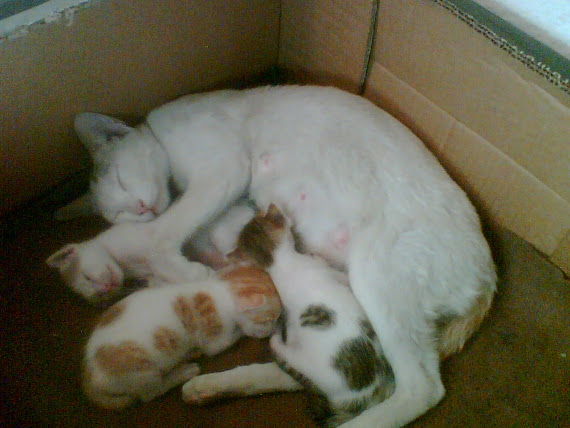
Minnu The Cat & Her Kittens Brownie, Goldie & Blackie
Someone with Nature

Syed Akbar in an island in river Godavari with Papikonda hills in the background
Recognition by World Vegetable Centre

Under the shade of Baobab tree

At Agha Khan Akademi in Kenya
Gateway to the Southern Hemisphere

Convention on Biodiversity

Syed Akbar at the 11th Conference of Parties to the United Nations Convention on Biological Diversity