Showing posts with label Genetics. Show all posts

Monday, 4 February 2013

Sequencing the genome of pigeon pea: Icrisat novel programme on chana dal helps fight hunger and poverty


First ‘orphan legume’ genome sequence to be translated to crop breeding to boost food, nutrition and income security of dryland poor
By Syed Akbar
Hyderabad: A comprehensive, three-year, US$2-million pigeonpea molecular breeding project was launched yesterday aimed at improving the food, nutrition and income security of millions of poor people in the drylands.

The project "Pigeonpea Improvement using Molecular Breeding" supported by the United States Agency for International Development (USAID) India Mission, aims to assist pigeonpea breeders to develop improved cultivars more efficiently using genomic tools. It will be implemented by the International Crops Research Institute for the Semi-Arid Tropics (ICRISAT) headquartered in Hyderabad, India, along with the National Bureau of Plant Genetic Resources (NBPGR), New Delhi; the University of Agricultural Sciences (UAS), Raichur, Karnataka; Acharya NG Ranga Agricultural University (ANGRAU), Hyderabad; and other partners in India and Africa.

In the fight against poverty and hunger amid the threat of climate change, highly nutritious, drought-tolerant crops are the best bets for smallholder farmers in marginal environments to survive and improve their livelihoods. Pigeonpea, grown on about 5 million hectares in Asia, sub-Saharan Africa and South-Central America, is a very important food legume for millions of poor in the semi-arid regions of the world. Known as the “poor people’s meat” because of its high protein content, it provides a well-balanced diet when accompanied with cereals.

"I am very pleased to announce here today this new partnership between the governments of India and the United States, and ICRISAT – a partnership that will take new studies in pigeonpea genomics to the next stage of scientific research. This collaboration will improve the agricultural productivity of pigeonpea, a main source of protein for more than a billion people in Asia, Africa, Latin America, and the Caribbean," said Ms Elizabeth Warfield, Deputy Mission Director, USAID, New Delhi during the project launch.

Dr William Dar, Director General, ICRISAT, acknowledged USAID’s commitment to the project. “USAID has always been an advocate of the agricultural research-for-development continuum. Thus, this project has a research component in Phase I and an application component in Phase II. This project is another testament to USAID’s commitment to improve the lot of resource-poor farmers particularly in the pigeonpea growing countries of the world."

“Under the CGIAR Research Program (CRP) on Grain Legumes led by ICRISAT along with other CGIAR Consortium members and program as well as national partners, genomics research will play a crucial role in speeding up the development of improved varieties for smallholder farmer crops such as pigeonpea,” Dr Dar added.

Dr Swapan Datta, Deputy Director General (Crop Science), ICAR acknowledged ICRISAT’s efforts in decoding the genome sequence of pigeonpea in 2011, and now that of chickpea in 2013. He said, "A scientific breakthrough like genome sequencing excites and motivates the scientific community to find grand solutions for grand challenges. We are very excited to see the launch of this USAID project.”

“The primary objective of the project is to translate genome information into the farmers’ fields. The project team is quite confident and looks forward to working with different partners and stakeholders in enhancing pigeonpea crop productivity that will eventually help ensure food security in India and generate more incomes for farmers in Africa", said Dr Rajeev Varshney, Project Coordinator and Director, Center of Excellence in Genomics,ICRISAT.

The project launch meeting held on 30 January at the ICRISAT headquarters in Patancheru near Hyderabad brought together about 70 delegates from India, Ghana, Mozambique, Uganda, Tanzania and Malawi and private sectors.

Pigeonpea is an important crop for India’s food security, consumed in the form of dal in regular diets of majority of the country’s vegetarian population. India is the largest producer of pigeonpea in the world, largest consumer of pigeonpea and largest importer of pigeonpea. This opens great opportunities to further develop the industry in the country.

Meanwhile, sub-Saharan African countries like Tanzania, Kenya and Uganda grow pigeonpea to export to India, making pigeonpea production critical in increasing incomes and improving the livelihoods of resource-poor farmers. As the crop is generally grown in marginal environments, crop productivity is heavily challenged by several biotic and abiotic stresses.

Although traditional breeding has generated some hybrids to enhance yield, there is an urgent need to deploy molecular breeding approaches for improving varieties and hybrids. Because of limited genetic diversity and non-availability of genomic tools, molecular breeding has not been used in pigeonpea breeding programs. With the decoding of the pigeonpea genome sequence by an ICRISAT-led global research team in November 2011, the Ministry of Agriculture, Government of India (GoI) together with ICAR and ICRISAT started to develop a road map for pigeonpea improvement using molecular breeding. That road map has led to the implementation of this USAID India Mission sanctioned project.

Friday, 21 December 2012

Inside the mind of a rapist: Genes, environment and anti-social personality disorder make a deadly concoction of a criminal brain

By Syed Akbar
Hyderabad, Dec 20: What makes a man rapist? As the nation debates the
need for death sentence for rapists, geneticists and psychiatrists
point out that it is a deadly concoction of genes, anti-social
personality disorder and environment that brings out the animal in a
man to commit serious crimes like rape.

The environment factor adds fuel to the fire hidden in people with
crime genes and anti-social personality disorder. Medication and
counselling can check people carrying crime genes or affected by
personality disorder from committing crimes. The environment factor
can only be controlled through stringent laws and fear of severe
punishment.

Research studies conducted by the city-based Centre for Cellular and
Molecular Biology (CCMB) revealed that certain people carry certain
changes in the gene called androgen receptors (AR). It is the short
repeat of CAG (cytosine, adenosine and guanine) in the gene that makes
a person prone to crimes like murder and rape. Psychogenetic analysis
of a rapist’s mind reveals that it is the environment that plays a key
role in activating the genes and anti-social personality disorder in
the person.

On an average, the CAG repeats 21 times in normal people and 18 or
less number of times in those with criminal bent of mind. CCMB senior
scientist Dr K Thangaraj conducted the first-ever study on criminals
from Indian subcontinent involving about 400 people convicted for rape
or murder and both. “Our study suggested that reduced CAG repeats in
the AR gene are associated with criminal behaviour,” he pointed out.

Senior psychiatrist Dr MS Reddy of Asha Hospital told this
correspondent that environmental factors like alcohol and drug abuse
give a potent combination to people carrying the crime genes or
anti-social personality disorder. “They also hold the notion that they
can easily get away with the crime. When a human is alone, he is a
gentleman. But in a mob, he takes to mob mentality, particularly if he
is under the influence of intoxicants,” Dr Reddy added explaining the
factors behind the gang rapes.

Dr Minhaj Nasirabadi, consultant psychiatrist and professor of
psychiatry, Apollo Hospitals, blames incidents of rapes and other
crimes on what he called “modelling” wherein those with a criminal
bent of mind watch other criminals go scot-free. “There should be the
fear of law. When people with anti-social personality disorder see
influential people like politicians subverting law, they become bold
and commit the crime,” he said.

Experts argue that the confidence of not being caught should be
defeated with strong legislations and stringent punishments to rein in
people with crime genes and anti-social personality disorder.
Medication and counselling works only to some extent and unless the
environment factor is controlled, crimes continue to take place, they
warn.

Wednesday, 17 October 2012

Certain genetic changes in Dravidian women make them more susceptible to breast cancer than their counterparts living in north India

By Syed Akbar
Hyderabad:  Certain genetic changes in Dravidian women make them
more susceptible to breast cancer than their counterparts living in
north India.

A team of researchers from the city-based Centre for Cellular and
Molecular Biology (CCMB) and the Central Drug Research Institute,
Lucknow, has observed that ethnic variations in some genes in
Dravidian women are linked to the increased incidence of breast cancer.

“Genetic polymorphisms are created by errors during DNA replication.
Polymorphisms exist in all populations at little or large frequency.
Therefore, the polymorphism might exist in a population with or
without influence on disease susceptibility. If we talk about why
these polymorphisms increased breast cancer risk in Dravidian women,
we have to stress on differences in the genetic make up between north
Indian and south Indian populations,” Dr Rituraj Konwar of CDRI told
this correspondent.

He said susceptibility to a disease is defined by thousands of
polymorphisms (variations) in the entire human genome and not by a
single polymorphism. Therefore, it is possible that the genetic risk
factors between north and south Indian populations are different. The
present study identifies one such factor for south Indian populations.

“South Indian women’s breast cancer risk may partly be explained by
TNF (tumour necrosis factor) polymorphisms. North Indian women may
have equal risk of breast cancer, but it is possible that the
underlying genetic risk factor is different,” Dr Rituraj pointed out.

The study identified one of the several possible genetic risk factors
for breast cancer. The risk with this polymorphism seems strong in the
south Indian population and it does not seem to affect breast cancer
risk in north Indian women. However, it needs to be stressed that this
does not suggest increased breast cancer risk in south Indian women,
he explained.

The overall risk of a disease is affected by several variations and
the risk due to a particular polymorphism may be aggravated or
alleviated by other polymorphisms in related or un-related genes. The
researchers recruited subjects from Andhra Pradesh, Tamil Nadu and
Karnataka for the study.

Wednesday, 10 October 2012

COP 11: Deccan Development Society - The genetic dangers of genetically engineered crops


By Syed Akbar

"Bt Cotton is symbolic of the trap that genetically engineered crops are laying around the food sovereignty in Africa and Asia as well as the USA," argue experts on environment and genetics.

The experts were participating in a media event organised by the Deccan Development Society as a precursor to the Side Event called  Bt Cotton Web Around Food, Farming and Livestock Systems: Continental Perspectives From Africa and Asia as part of the CBD COP 11.
 
Painting the context, Mr P V Satheesh, Director, Deccan Development Society and National Convenor, Southern Action on Genetic Engineering [SAGE] referred to the crisis of Bt Cotton in Andhra Pradesh itself wherein 30% of food production areas have been occupied by Bt Cotton in the last ten years. This was symptomatic of a trend of the domination of GM Crops over food crops which eventually would drive out all ecological, organic and safe foods produced by communities in India in order to achieve their food sovereignty.

Mr Satheesh pointed to the various recent happenings starting from the Indo US Knowledge Initiative in Agriculture to the recent FDI in retail as a sequence very well designed and crafted to subordinate India’s food sovereignty to the global agrochemical MNCs. The fact that the KIA Board had Walmart, Monsanto and the Archer Daniel Midlands alongside the Confederation of Indian Industry in it was no accident but a carefully executed strategy to keep farmers out of food production and hand it over to the industry. GM crops would be the final tool of the agro industry to accomplish it, he said and pointed to the efforts to rubbish the recent report of the Parliamentary Committee which had rejected the need to even conduct field trials on GM crops and had declared that they were not needed for the food security of India.

Ultimately the faulty policies government which is in cahoots with the international agribusiness such as Walmart and Monsanto, will turn India into a net food importing country, he said.

Endorsing Mr Satheesh’s views Dr Nammalwar the reputed organic farming expert from Tamil Nadu and the Chairman of the Vanagam Foundation, accused the government of being totally blind to the repeated failures of Bt Cotton in Tamil Nadu and serving the industry interests. Most millet areas are getting converted into Bt Cotton producing lands which in turn has badly impacted the food and fodder production. Cattle rearing in the absence of fodder was becoming unviable, forcing the farmers to drive their animals into slaughterhouse and depend upon chemical fertilisers for their farming. This vicious cycle is very difficult to be halted and farmers will be inexorably driven to the production of Bt Cotton, Bt Corn and other crops, he said.

Dr Francis Moore Lappe of the USA,  a writer-researcher and the winner of the Alternative Nobel Prize referred to the spread of GM crops in the USA and said that this had resulted in the loss of biodiversity, family farms and the nation’s health.


Wednesday, 22 August 2012

Designer rice plans in trouble as environment activists oppose any tinkering of rice genes

By Syed Akbar
Hyderabad: The efforts of a group of scientists in the city
to develop designer rice, a genetically modified variety with greater
yields and higher resistance to pests and climatic stress, have come
in for sharp criticism with biodiversity activists expressing concern
that it will kill the natural rice varieties.


Andhra Pradesh is the rice bowl of India and any tinkering with the
genetic makeup of rice will affect the naturally occurring ones, thus
damaging the local biodiversity.

Dr PV Satheesh, national convener of Southern Action on Genetic
Engineering, demanded that Dr EA Siddiq, chair of the expert committee
on Agro-biodiversity of the National Biodiversity Authority, should
step down for allegedly supporting genetically engineered designer rice.

Designer rice is being touted as the future rice variety that will
solve the problem of hunger of ever-growing population on the earth.
Recently, scientists involved in the proposed project on designer rice
held a meeting in the city to emphasise the need for introduction of
genetic engineering in paddy.

“Support to the designer rice is a grave threat to the local
biodiversity, which is already under the aggression of the GE
technology. It is now concluded all over the world that GE and
agro-biodiversity (which is a product of ecological farming systems)
cannot coexist. The phenomenal capacity of GE crops to contaminate
organic crops in general and agro-biodiversity in particular is now
globally too well known to need fresh argument,” Dr Satheesh said.

He said while one is quite used to the machinations of the biotech
industry by making important scientists to make pro GE statements,
that it has been able to use the very Chair of the NBA’s
Agro-biodiversity Expert Committee comes as a real shocker. The NBA
should make its stand clear on genetic engineering in agriculture.

Tuesday, 26 June 2012

Human monkeys? If rogue scientists have their way, there could be monkeys with human brain and grass-feeding lions and tigers

 Work on “tamed lions” is going on clandestinely and if it succeeds, the big cats will besimply herbivorous or small carnivores.
By Syed Akbar
Super intelligent monkeys and tamed lions will become a reality soon, if 
scientists working on genetic engineering have they say.
Experts in stem cell technology and genetic engineering believe that the
day is not far off when the Earth will be populated by monkeys with human
brains and lions that simply “meow” without harming others.
Scientists are now looking beyond genes and genetic engineering.

But if this is misused, there could be animals who could compete with
human beings. Unscrupulous scientists may develop monkeys with human
brains or humanlike monkeys.
Nobel laureate Dr Roger Kornberg says monkeys with human intelligence has
almost become a reality but such creations will lead to debate on human
ethics. “There are two sides of genetic engineering and stem cell
technology. Good and bad. Use of the technology for therapeutic uses will
result in saving the lives of millions. But a small misuse of the facility
will lead to ethical issues,” he pointed out.
What’s all about this conceptualized human-monkey? It’s nothing but a
reversal of the Darwin’s theory which believes that human beings have
evolved from monkeys. If the researchers have their say, there will
monkeys evolving virtually from the modern man. This can be achieved by
injecting human brain cells into monkey brains or through transplantation
of embryonic stem cells of a human embryo into the womb of a monkey. As
the stem cells grow in the womb of a monkey, the resultant offspring will
be a monkey with human intelligence, the scientists hope.
The concept of super monkeys gains significance in the backdrop of
creation of genetically-engineered cats, by Korean scientists, which glow
in the dark. The scientists have also created rats that have no “fear
genes” in them and can roam freely in front of a cat. Work on “tamed
lions” is going on clandestinely and if it succeeds, the big cats will be
simply herbivorous or small carnivores.
While it is quite “easier” to create super monkeys with human qualities,
the major ethical problem that crops up before society is should such
creatures be considered “human subjects” or simply “intelligent animals”,
he argues. If such creatures are considered human subjects then they will
have to be protected by ethical guidelines that govern research on human
beings.
And more importantly, when a monkey turns “human” will it be subjected to
all legal rules. If yes, can it sue the “rogue” scientists who created it
through “unethical” genetic engineering?


Wednesday, 6 June 2012

Tomato genome: Hyderabad plays a key role in sequencing of tomato genome

By Syed Akbar
Hyderabad:  Hyderabad played a crucial role in the decoding of
the biological secrets of tomato.

The international conference on tomato genome project, held in
November 2006 in Hyderabad, laid down the path for the successful
research on tomato genome. Scientists from different countries had
then descended on Hyderabad to chalk out the scientific path to study
and sequence the genome of tomato. The University of Hyderabad, which
hosted the conference, also played a key role in the sequence of
tomato genome by providing vital clues to the three other national
institutes involved in the project from the Indian side.

The HCU is involved in the in several areas of tomato research
including sequencing of its chromosome No. 5, and functional genomics
activities related to “tilling”, disease resistance, and fruit
ripening. Tilling (Targeting Induced Local lesions IN Genomes)
involves reverse genetics methods to improve the genetic make-up of
tomato.

The talks presented at the Hyderabad conference helped to outline and
address several emerging issues. Moreover, the University of Hyderabad
has a vibrant group on tomato functional genomics, which is also
involved in mutagenesis and proteomics.

It also employs reverse genetics to isolate tomato mutants delayed in
ripening, improve the content of lycopene and folate content in tomato
and analyse light and hormonal signal transduction pathways.

Saturday, 3 March 2012

Tomato varieties that outsmart the global warming

Syed Akbar
Hyderabad: With climate change affecting important vegetable
crops, researchers from Kakatiya and Osmania Universities have
successfully developed tomato varieties that outsmart the global
warming and withstand the onslaught of various pests.

Climate change is turning semi arid areas into arid zones affecting
productivity of vegetable and fruit crops that are sensitive to
drought and pest stress. Using transgenic technology, researchers from
Kakatiya University, Warangal, have produced climate smart tomatoes
that can survive in drought conditions and in soils affected by
salinity.

Mr N Rama Swamy of Kakatiya University teamed up with M Praveen of
Ohio State University, Ohio, USA, to develop salt tolerant tomato.
Thanks to persistent drought and indiscriminate use of chemical
fertilizers and pesticides, fields in many places have turned either
saline or alkaline. The climate change has only added to the problem,
affecting the over all production of horticultural crops.

They selected tomato because it is a model species for introduction of
agronomically important genes. It contains vitamin A, rich in vitamin
C and source for lycopene, which is the most powerful antioxidant that
could fight cancers. Though it has importance in the daily food, as
vegetable and medicine, the crop cannot be grown in drought prone areas.

The researchers induced salt tolerance in tomato after molecular
cloning. The tomato variety is capable of growing in saline and
drought prone areas.

In a separate research, a team comprising S Anil Kumar, P Hima Kumari
and PB Kavi Kishor from the department of genetics, Osmania
University, induced resistance in tomato to various fungal pathogens
through transgenic engineering. Tomatoes are usually attacked by
various fungal pathogens causing wilt and early blight. They used
Osmotin and Chitinase genes to make tomato resistant to pests. This
will reduce use of artificial pesticides. The borrowed genes from
bacterium, Agrobacterium tumefaciens.

Wednesday, 29 February 2012

With climate change affecting important vegetable crops, researchers from Kakatiya and Osmania Universities have successfully developed tomato varieties that outsmart the global warming and withstand the onslaught of various pests

Syed Akbar
Hyderabad: With climate change affecting important vegetable
crops, researchers from Kakatiya and Osmania Universities have
successfully developed tomato varieties that outsmart the global
warming and withstand the onslaught of various pests.
Climate change is turning semi arid areas into arid zones affecting
productivity of vegetable and fruit crops that are sensitive to
drought and pest stress. Using transgenic technology, researchers from
Kakatiya University, Warangal, have produced tomatoes that can survive
in drought conditions and in soils affected by salinity. Mr N Rama
Swamy of Kakatiya University teamed up with M Praveen of Ohio State
University, Ohio, USA, to develop salt tolerant tomato. Thanks to
persistent drought and indiscriminate use of chemical fertilizers and
pesticides, fields in many places have turned either saline or
alkaline. The climate change has only added to the problem, affecting
the over all production of horticultural crops.
They selected tomato because it is a model species for introduction of
agronomically important genes. It contains vitamin A, rich in vitamin
C and source for lycopene, which is the most powerful antioxidant that
could fight cancers. Though it has importance in the daily food, as
vegetable and medicine, the crop cannot be grown in drought prone areas.
The researchers induced salt tolerance in tomato after molecular
cloning. The tomato variety is capable of growing in saline and
drought prone areas.
In a separate research, a team comprising S Anil Kumar, P Hima Kumari
and PB Kavi Kishor from the department of genetics, Osmania
University, induced resistance in tomato to various fungal pathogens
through transgenic engineering. Tomatoes are usually attacked by
various fungal pathogens causing wilt and early blight. They used
Osmotin and Chitinase genes to make tomato resistant to pests. This
will reduce use of artificial pesticides. The borrowed genes from
bacterium, Agrobacterium tumefaciens.

Saturday, 29 October 2011

XX maleness a rare syndrome


By Syed Akbar

It is a common knowledge that a person with XX chromosomes is a 
woman and the one with XY chromosomes is a man. The sex 
chromosomes XX determine the female sex of a foetus while XY 
determine the male sex of the unborn in the womb.
There are men with XX chromosomes but they do not have fully 
developed male genital organs. However, a team of scientists in 
Hyderabad recently came across with a XX man with normal genitals 
and complete masculinity. This is a very rare medical phenomenon.
The scientists' team at the Centre for Cellular and Molecular Biology 
conducted a research on this XX man with gene SRY-negative and 46 
chromosomes.
According to CCMB senior scientist Kumarasamy Thangaraj, XX 
maleness is a rare syndrome with a frequency of one in 20,000-25,000 
males. XX males exist in different clinical categories with ambiguous 
genitalia or partially to fully mature male genitalia, in combination with 
complete or incomplete masculinisation. But in the present study the 
team reported a case of SRY-negative XX male with complete 
masculinisation. The "man", however, was infertility and unable to 
conceive.
The patient had fully mature male genitalia with descended but small 
testes and no signs of undervirilisation. Polymerase chain reaction 
analysis for SRY (sex determining region Y gene) and other sex 
determination genes ZFY, amelogenin, AZFa, AZFb and AZFc as also 
other tests showed the absence of any Y-chromosome-derived material.
Genotyping with X-STR (short tandem repeat) of the chromosome 
ruled out the possibility of any deletion on X chromosome. 
"Development of the male phenotype in the absence of SRY probably 
resulted from the loss of function mutation in some unknown sex-
determining gene, which normally inhibits the male pathway, or from a 
gain of function mutation in a gene downstream to SRY in male 
pathway," Dr Thangaraj points out.
We all know that the presence or absence of Y chromosome, SRY gene 
in particular, determines the sex in human beings and other mammals. 
SRY is thought to direct the sex-determination pathway towards male 
development. The fortuitous finding of chromosomal rearrangements in 
association with a sex-reversed phenotype has led to the isolation of 
SRY gene. Careful genetic analysis of cases with abnormal sexual 
development, presented with chromosomal translocations or deletions/
duplications, has resulted in the identification of many genes playing 
role in sex determination, Dr Thangaraj says.
"Despite the identification of SRY almost 15 years ago, the pathway 
downstream to SRY remains largely unknown, although SOX9 and 
DAX1 have recently been proposed to function downstream to SRY 
gene in male sex-determination pathway," he adds.
According to the CCMB study, an increasing number of reports suggest 
that the male phenotype can develop even in the absence of SRY gene. 
Till date, many cases of XX males with or without SRY and apparently 
with no other Y-chromosome sequences have been reported.
Such persons exist in three clinical categories: XX males with normal 
genitalia; XX males with ambiguous genitalia; and XX true 
hermaphrodites with ovarian and testicular tissues.
"Based on the presence or absence of the Y-chromosome sequences, 
XX males can be divided into two categories. Approximately 90 per 
cent of the cases carry varying amount of the Y sequences due to an 
illegitimate recombination between X and Y chromosomes, whereas 10 
per cent do not have any Y-chromosome sequences. Most of the XX 
males with SRY have normal genitalia, whereas most SRY-negative 
cases have ambiguous genitalia," says Dr Thangaraj.
The cause (aetiology) of development of male phenotype in most of the 
SRY-negative 46,XX males (like the present case study) remains 
unexplained. 
He points out that development of the testis and normal male genitals in 
a significant number of SRY-negative 46,XX males gives clue to the 
existence of other autosomal or X-linked genes in the sex-determining 
pathway. Comprehensive genetic analysis of these cases may help to 
decipher new gene(s) involved in the sex-determining pathway.
A 34-year-old man attended the genetic clinic of the Institute of 
Reproductive Medicine, Kolkata, with complaints of infertility. His 
height was 156 cm and weight 64 kg. The patient had fully mature 
normal male genitalia with no symptom of undervirilisation.
The testicles were descended in the scrotum but small in size with 
volumes 4.8 ml and 5.1 ml (normal range 18-30 ml). Axillary (under 
arm) and pubic hairs were of normal pattern and density. Serum 
concentrations of reproductive hormones (LH and FSH) were elevated 
at 15.8 mIU/ml (normal range 2.0-14.0 mIU/ml) and 25.8 mIU/ml 
(normal range 1.5-12.0 mIU/ml), respectively. Testosterone hormones 
level was normal at 580 ng/dl (normal adult male range, 437-707 
ng/dl).
DNA was extracted from peripheral blood leukocytes of the patient, a 
normal fertile male and a female for analysis. Absence of PCR 
amplification of Y-STR markers further confirmed the lack of Y-
chromosome sequences in the patient DNA. X-STR analysis showed 
heterozygous alleles for 42 of 53 markers, suggesting the presence of 
two X chromosomes.
According to him, majority of the XX males carry SRY gene 
translocated to the X chromosome due to an illegitimate recombination 
between X and Y chromosomes. These patients are sterile males and 
usually have normal male genitalia.
Dr Thangaraj says XX males without SRY gene have ambiguous to 
normal genitalia, show incomplete to complete masculinisation and are 
infertile. The existence of SRY-negative males ruled out the prevailing 
notion that the mere presence of SRY determines maleness. The most 
common observation that the individuals with SRY are male shows that 
it is the presence or absence of a normal SRY gene which determines 
maleness, provided all downstream genes are functionally intact. 
In majority of the cases, XX maleness should result either from the loss 
of function mutations in a gene normally inhibiting testes formation in 
genotypic females or from the gain of function mutations in a gene 
downstream to SRY in testis determining pathway. The hypothetical 
gene may be X-linked or autosomal. If the gene is autosomal, the 
degree of the male phenotype will be dependent on the extent of the 
loss or gain of function in the mutant gene, he says.
"Because the present case had normal male phenotype, it should 
either be homozygous mutant for this hypothetical autosomal gene or 
a result of preferential inactivation of the normal copy of the X-linked 
heterozygous mutant gene," Dr Thangaraj concludes.

Mother's Care

Mother's Care
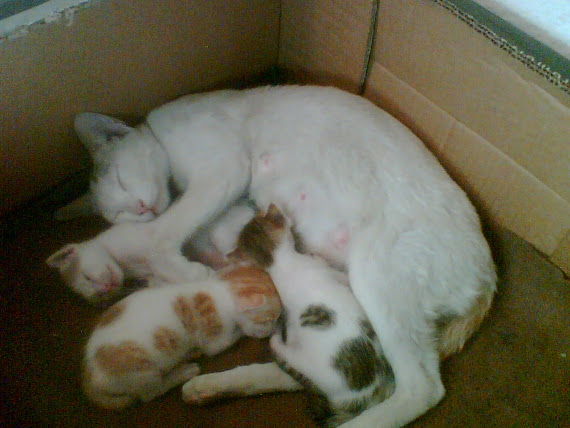
Minnu The Cat & Her Kittens Brownie, Goldie & Blackie

Someone with Nature

Someone with Nature
Syed Akbar in an island in river Godavari with Papikonda hills in the background

Recognition by World Vegetable Centre

Recognition by World Vegetable Centre

Under the shade of Baobab tree

Under the shade of Baobab tree
At Agha Khan Akademi in Kenya

Gateway to the Southern Hemisphere

Gateway to the Southern Hemisphere

Convention on Biodiversity

Convention on Biodiversity
Syed Akbar at the 11th Conference of Parties to the United Nations Convention on Biological Diversity