Showing posts with label People. Show all posts

Wednesday, 9 January 2013

Delhi Gang Rape Case: India has emerged as a torchbearer nation for global awakening on sexual violence against women, says Lancet

By Syed Akbar
Hyderabad, Jan 4: India has emerged as a torchbearer nation for global
awakening on sexual violence against women.

Leading science and medical research journal, Lancet, has published an
editorial, “Sexual violence: a global awakening, from India”, in its
latest issue. Though there is agreement that India has failed to
address a pervasive culture of sexual violence and gender injustice,
the Delhi incident has come as a global awakening.

Stating that the Delhi rape incident has “rightly caused outrage and
anguish across India”, the Lancet said, “Immediately after her death,
following treatment in a hospital in Singapore, Delhi was locked down
by police to prevent outbreaks of public protest. Despite these
measures, thousands of Indian citizens took part in peaceful vigils to
express their anger at the violence inflicted against this young
student, as well as the harassment experienced daily by thousands of
Indian women”.

The eminent medical journal noted that there is agreement that India
has failed to address a pervasive culture of sexual violence and
gender injustice. This political neglect has created a permissive
environment where men can rape, beat, and kill a woman with impunity.

“India is a respected democracy that has delivered phenomenal economic
success for its growing middle class. But the country’s inattention to
fundamental protections and liberties for its citizens reveals a
nation facing a moral turning point. Yet it would be a grievous error
to conclude that sexual violence is a predicament confined to India.
It is not. Rape and other forms of violence against women and girls
are a feature of all societies. In South Africa, for example, as many
as a third of men have taken part in acts of rape”.

It suggested that as a first step, sexual violence must be
acknowledged as a “reality by all of us, and its causes discussed”. We
must support the creation of safe systems for preventing, reporting,
and remedying acts of sexual violence.

As advocates for women’s health, health professionals have a special
role in defeating rape. “It is time we exercised our voice more
strongly. The greatest respect we can give to the memory of the Indian
student who died on Dec 29 is by protecting and strengthening the
political and social rights of women worldwide,” the Lancet editorial
said.

Delhi Gang Rape Case: Asaram Bapu invites the wrath of people, social media

By Syed Akbar
Hyderabad, Jan 7: Godman Asaram Bapu on Monday invited the wrath of
netizens for his comments that the Delhi gang rape victim should have
addressed her assaulters as brothers and begged them to let her go.

Asaram Bapu trended top on microblogging site, Twitter, with netizens
criticizing him in the strongest terms. Raj Thackeray and Akbaruddin
Owaisi too trended on twitter, the former for his bad comments against
Biharis and the latter for his hate speak. #Owaisimovies too trended
with some members suggesting names for the imaginary movie the MIM
leader would act in.

“The only way to teach Asaram Bapu a lesson is by putting him on a bus
carrying Mayawati and Jayalalithaa: Watch how they beat him up! And
that bus will be driven by Mamata and Renuka C will be the conductor!
Asaram Bapu will then know what some women will do to Bhaiyas!,” said
Suhel Seth.

Chetan Bhagat tweeted, “according to Asaram Bapu logic, there can be
no underworld crimes in Mumbai. After all, here everybody calls them
bhai.” In another tweet, he said, “Inspired by Asaram Bapu: Dear
critics, please, please spare me. You are like my brother.”

“Blood curdling. Should all of us leave India??” wondered Sucheta
Dalal, while Pranav Sapra wrote, “Mom: Asaram Bapu is right, women can
carry Rakhis in their handbags for defending themselves.”

Here are some tweets:

Bilal Nazki ‏tweeted, “Asaram kis kis ko hum condemn kartay rahainge”.

Taslima Nasreen ‏wrote “Misogynist spiritual gurus brainwash their
disciples to become more ignorant and more stupid”.

Gabbar Singh: “Dear Asaram bapu, This "Bhaiyya" trick doesn't even
work with Auto-walas. "Bhaiyya, Juhu chaloge?" "No"

Barkha Dutt: Will the followers of Asaram Bapu continue to defend his
gross, tasteless sexism? What does it say about them?

Joy: Honey Singh must be happy! Thanx to Mohan Bhagwat, Asaram Bapu
etc people have forgot him

Vinay Biradar: Apparently Bhaiya is the problem for Raj Thackeray and
the solution for Asaram Bapu. One word. Many meanings.

Nandita Iyer: How adorable is the innocence of Asaram Bapu - he thinks
calling the rapist 'brother' will stop rape in its tracks. *slow claps*

Kris Sreekanth: Raj Thackeray says 'Bhaiyyas' are the problem. Asaram
Bapu says calling 'Bhaiyya' is the solution. All the morons pls form a
united front.

Justice Jagdish Sharan Verma Commission: Nalsar University suggests that "medical rape" be criminalised

By Syed Akbar
Hyderabad, Jan 8: NALSAR University of Law has recommended against
imposition of death penalty for the crime of rape and emphasized on
‘real consent’ of victim in determining rape.

NALSAR submitted a paper to Justice Jagdish Sharan Verma Commission,
(with two members Mrs Leila Seth and Mr Gopal Subrahmanian),
constituted after recent Delhi gang rape incident, to suggest changes
in laws to provide better security to women.

The University of Law pleaded for legal reforms besides some community
oriented changes such as making safe public spaces available for women
with freedom of dress and neighbourhood policing. The paper opposed
blaming victims for rape.

According to Prof Madabhushi Sridhar of NALSAR, the paper from the
university reminded the need for immediate health care response
systems, especially trauma care for the victim, which should be
independent of the investigative and judicial process, yet be mandated
by law as a non-negotiable.

It suggested expansion of definition of rape, from present limited
scope of peno-vaginal penetration of a female by a male, to include
penetration by any body part or object of a person of any sex. NALSAR
recognized a need to extend ‘sexual assault’ to other sexualized forms
of violence such as molestation. It laid stress on the need to
consider whether there real consent of victim.

Strongly recommending criminalization of ‘marital rape’, the NALSAR
paper said that the marriage should not mean all time consent to
husband for sexual intercourse.
The Law University has also sought criminalization of medical rape,
which is permitted by legal exceptions facilitating the infamous
‘two-finger’ test in medical investigation. Relying on such a test was
criticized as another rape of the victim.

The Juvenile Justice Act 2000 is the result of deep research and study
of jurisprudence and experience of various countries. The Act follows
universal standards of juvenile justice and NALSAR did not recommend
that this legislation be changed to reduce the age of juvenile from 18
to 16, because a 17-year young person was involved in ghastly gang rape.

He said the NALSAR supported introduction of new provisions in law
dealing with aggravated forms of rape, perpetuating power structures
and hierarchies including caste, class and religious dominance. NALSAR
recommended punishing rape committed by person who is known to victim
with rigorous punishment of not less than 10 years.

It has recommended speedy adoption of the sexual harassment at
workplace bill and also punishing refusal to register a crime as
dereliction of the duty as an independent offence introducing command
responsibility.

Another significant suggestion was about safe walk and safe rides as
service that can be effective in university campuses. Law enforcement
along with the university should set up a system wherein students can
phone a hotline seeking dispatch walking buddies to accompany that
student from a place to destination.

Tuesday, 1 January 2013

Haemoglobinopathies: Tribals living in Andhra Pradesh suffer from hereditary blood disorders, which rob them of their physical strength. Research studies on Konda Kammara, an endangered tribal group living in the Agency areas of north coastal Andhra, reveals that one in every seven tribals carries a gene that makes them susceptible to rare genetic blood problems like sickle cell disease and beta-thalassemia

By Syed Akbar
Hyderabad: Tribals living in the State suffer from hereditary
blood disorders, which rob them of their physical strength. Research
studies on Konda Kammara, an endangered tribal group living in the
Agency areas of north coastal Andhra, reveals that one in every seven
tribals carries a gene that makes them susceptible to rare genetic
blood problems like sickle cell disease and beta-thalassemia.

Since these blood disorders (haemoglobinopathies) are hereditary in
nature, they can be prevented through counselling and medical
interventions. Konda Kammara is a highly backward tribal group with
about 50,000 population. The overall prevalence of haemoglobinopathies
among Konda Kammaras is 14.56 per cent with 13.59 per cent of sickle
cell trait and 0.97 per cent suffering from beta-thalassemia.

Researchers from the department of human genetics, Andhra University,
Visakhapatnam, the Anthropological Survey of India, Kolkata, and the
department of Anthropology, Delhi University conducted the research in
the tribal areas of Visakhapatnam. Dr VR Rao, P Haritha, V Lakshmi, P
Veerraju and BN Sarkar were part of the research team.

“Blood disorders are rampant among tribals in south India. Since these
are genetic in nature, supplementation from outside will not help.
They carry a recessive gene, which means one in four children born
carries the risk. However, prevention of these disorders is possible
through population screening and counseling,” senior anthropologist Dr
VR Rao of Delhi University told this correspondent.

A little over 100 tribals from Konda Kammara community were screened
as part of the study. They were aged between 22 and 58 years. These
blood disorders result in acute shortage of iron in the blood (chronic
haemolytic anaemia), jaundice, high susceptibility to infectious
diseases, liver and kidney problems, ulcers on the skin and stunted
growth.

India has the world’s second largest tribal populations in the world.
Every fourth tribal person on the earth is an Indian.

“There is no comprehensive data on the interaction of thalassemias and
abnormal haemoglobins in the tribal populations,” Dr Rao said adding
that there was the first study, which showed beta-thalassemia mutation
prevalent among Konda Kammara tribe of Andhra Pradesh

Besides Visakhapatnam, Konda Kammaras live in Srikakulam,
Vizianagaram, and East Godavari and West Godavari districts.

Delhi girl rape case: International ramifications - United Nations offers technical expertise in strengthening critical services for rape victims

By Syed Akbar
Hyderabad: The United Nations has offered technical expertise
and support to India in strengthening critical services for rape
victims and reforms in rape laws.

This is the first time that the United Nations has responded to a rape
incident in India. The gang rape and subsequent death of a girl in
Delhi triggered international outrage forcing the United Nations to
call on the Indian government to take further steps and reforms to
deter such crimes and bring perpetrators to justice.

UN secretary-general Ban Ki-moon on Sunday expressed “deep sorrow” at
the death of the 23-year-old girl, who was gang-raped by six men in a
moving bus in Delhi on December 16. A statement by an official
spokesperson said the secretary-general offered his sincerest
condolences to her parents, family and friends, and utterly condemned
this brutal crime.

“Violence against women must never be accepted, never excused, never
tolerated. Every girl and woman has the right to be respected, valued
and protected,” Ban Ki-moon said, welcoming the efforts of the Indian
government to take urgent action.

He called for further steps and reforms to deter such crimes and bring
perpetrators to justice. He also encouraged the Government of India to
strengthen critical services for rape victims. “UN Women and other
parts of the United Nations stand ready to support such reform efforts
with technical expertise and other support as required,” he said.

Anne F Stenhammer, regional programme director, UN Women South Asia,
also called for the perpetrators to be brought to justice. “This
attack is an attack against all women in India. Violence against women
is not a women’s issue but a human rights issue. UN Women joins the
Government and people of India in recognizing that we need to take
tougher action together to change the present reality and culture of
impunity,” she said.

The UN Women urged political to translate into concrete action and
stronger implementation of already existing laws and regulations.

A 2010 study by the Government of New Delhi, JAGORI and UN Women
showed that 54 per cent women and 69 per cent men who see women
getting harassed prefer to not get involved. “Public apathy needs to
be converted into public empathy. We need communities and individuals
to be a part of this change in mindsets, attitudes and beliefs,” she
added.

Chemical castration for rapists: The issues involved make it difficult to implement

By Syed Akbar
Hyderabad: The Central government may have scored a political
point by proposing chemical castration for rape convicts, but medical
experts feel that it easily said than implemented. It is also wrought
with human rights and legal and health issues that will only
complicate matters for the government. In a free country, the consent
of the convict is must, irrespective of what the legislation says.

Simply put, chemical castration is injecting female hormone into male
body. The female hormone called progesterone, when injected in high
doses, fights against the male hormone, androgen, and nullifies the
attraction of a man towards a woman. Since chemical castration
inhibits the masculinity, the man loses interest in the opposite sex.

India will be the first country to go in for chemical castration
legislation in 2013, if the Centre has its way. During 2012, two
countries (Moldova and Estonia) legalized chemical castration and
before that, Russia and South Korea made similar legislation but
involving paedophiles.

The drugs used for chemical castration work for just 90 days, and the
person has to take the fresh dose every three months. Unlike the
surgical castration, which involves removal of the testes, chemical
castration is a reversible process. Stop the dose and the person
becomes normal with male hormones regaining their vigour. And here
lies the major problem: tracing the person every three months and
injecting him anti-androgen drug once he is out of jail. Incidentally,
this drug does not work if the convict secretly takes male hormonal
injections. Moreover, forceful administration of the drug is a
violation of human rights and the convict’s consent has to be obtained
before going in for chemical castration.

“In a hugely populous country like India where corruption is common,
follow up of rape convicts out of jail every three months though out
life is next to impossible. Thus, drug compliant is difficult.
Generally, drugs like medroxyprogesterone acetate and cyproterone
acetate are injected into the buttocks. These drugs also serve as
female contraceptives for those women, who do not want to go in for
other methods like oral pills or copper T. They cause severe health
issues including cardiac problems in men. They are also not safe for
post-menopausal women,” said Dr Kammela Sreedhar, senior urologist and
micro-surgical andrologists.

Dr Hari Kishan Boorugu, consultant physician, Apollo Hospitals,
Hyderguda, argues that the effect of chemical castration is reversible
and “may not be 100 per cent effective”.

“It is not a one-time solution. The drug has many complications,
though life-threatening side effects are rare,” points out
cardiologist Dr Sai Sudhakar. It will create feminine characteristics
in men and damage bones. The drug will also affect the heart. However,
some studies, he added have showed no adverse side effects.
Medroxyprogesterone acetate is a successful method for those involved
in repeated sexual offences.

According to Dr K Subramanyam, consultant urologist, the drugs are
used for advanced prostrate cancer treatment. They reduce testosterone
or male hormone to negligible levels, which results in libido or urge
for sex receding. “Long term usage can lead to symptoms typically
exhibited by women attaining menopause like calcium levels coming down
in bones, muscle wasting and hot flushes leading to temporary sweating.

Internal medicine expert Dr SP Singh said only 0.01 per cent of men
are hyperactive. Chemical castration is the physiological suppression
of libido using anti-androgen drugs, but it has to be used very
cautiously.

“These drugs generally suppress the hormones but physical
characteristics may be altered. There could be several complications
including psychological disorders like alcohol abuse or so on,” he
warns.

Friday, 21 December 2012

Decoding the Mayan Calendar: Why the world did not end today - December 21, 2012

By Syed Akbar
Hyderabad, Dec 20: For sure, the world will not end on December 21.
This is for the simple reason that major communities and groups in the
world have their own calendar, and the end or beginning of a
particular calendar will not spell doom for the world.

Some calendars are perpetual without an end, while others are cyclic,
repeating at a particular interval. For instance, the Telugu calendar
is sexageneric, repeating every 60 years. Then there are calendars
purely based on the moon phases (lunar), sun (solar) and based on both
moon and sun (luni-solar). A few calendars follow the planet Venus.

“The Hindu calendar is still long way to end. The Kaliyuga, the last
epoch of the universe, began only recently if we consider the total
age of the earth. There are many millennia left for the Kaliyuga to
end. How can there be a doomsday without the end of Kaliyuga. There
cannot be an abrupt end,” points out Mudigonda Gopi Krishna of MGK
Numerology and Research Centre.

According to senior astro-psychologist Dr SV Nagnath, the end of the
calendar of some community or group will not have any impact on other
communities. “A calendar is meant for counting days, months and years.
In fact, the Mayan calendar will not end on December 21. Like the
Telugu calendar they have a periodicity, but with a longer cycle of
more than 5000 years. One such cycle ends now and a new cycle begins
for the Mayans,” he clarified.

Muslim scholars too do not believe that the world will end with the
conclusion of the Mayan calendar. “No doubt, Muslims believe in the
doomsday. But we do not know when it comes. Only God has the knowledge
of the doomsday. We cannot predict or guess it,” clarifies Islamic
scholar Hafiz Syed Shujath Hussain.

Dr John Carlson, director of the Centre for Archaeoastronomy, USA,
refutes the stories about the Mayan prophecies. A NASA statement
quotes Dr John saying, “The whole thing was a misconception from the
very beginning. The Maya calendar did not end on December. 21, 2012,
and there were no Maya prophecies foretelling the end of the world on
that date."

The Mayan civilisation once flourished in the rain forests of the
present day Mesoamerica. According to Maya theology, the world was
created 5125 years ago, on a date, modern people would write "August
11, 3114  BC."  At the time, the Maya calendar looked like this:
13.0.0.0.0. On December 21, 2012, it is exactly the same: 13.0.0.0.0,
the NASA statement said, adding in the language of Maya scholars, 13
Bak'tuns or 13 times 144,000 days elapsed between the two dates.

Wednesday, 19 December 2012

Tell your own story through maps: New mapping system to allow you to report Hyderabadi issues

By Syed Akbar
Hyderabad:  Hyderabadis will soon have an online mapping system
to tell the story of their shrinking lakes, uncleared garbage spots,
overflowing sewage, forgotten landmarks and the culinary joys hidden
in the bylanes of the city.

They can also add maps to their city tales and share them with others
thanks to an innovative project, Hyderabad Urban Lab, a community hub
designed for researchers, activists, students and the common citizens.
It is a highly customised mapping system for Hyderabad and enables
people of common interest to form into a community and highlight their
problems and suggestions with the help of localized maps.

Though Google maps allow much of this, the interactive platform
developed by a team of city entrepreneurs serves as the medium for
social change. The map stories could be about virtually anything that
concerns the people.

The mapping platform enables user groups to enter and retrieve spatial
data about the city, and comment on it. “Maps are tools.  They help us
see the city and show it to others. They help us tell stories about
the city. We are making a tool for us to tell map stories in mailing
groups and on blogs. We are building a platform for people to make
maps of their own and share them with others with similar interests
and what’s more, put text and images and audio and video on the maps,”
says Anant Maringanti, a city-based geographer involved in the project.

On an experimental basis, a group of students of the University of
Hyderabad in the last two months collected spatial information on
around 400 data points on trash and sewage sites on campus. The data
points are supported by photos and videos uploaded by students.

“The University of Hyderabad literally sits on three major watersheds.
There is the problem of sewage leaking out from the hostel and the
nearby Gachibowli stadium. The data collected by the students will
help in knowing the exact damage caused to the campus environment. We
can thus initiate remedial steps,” Anant pointed out.

Friday, 14 December 2012

12-12-12: Something special to remember the human bonds and love across the globe

By Syed Akbar
Hyderabad: This December 12 (12-12-12) may not have any
scientific significance, but scores of people around the globe
including Hyderabad made the day memorable through short video
films on their experiences with fellow human beings, animals and
nature. It was a 24-hour time capsule of human moments on the
earth on this numerically special day.

A number of Hyderabadis registered with the www.onedayonearth.org
that provides a unique platform to document the world’s story for
short-filmmakers, students and other inspired citizens and to record
the human experience over a 24-hour period on December 12. Hundreds of
people from across the world participated in similar two events
earlier on 11-11-11 and 10-10-10.

This time Hyderabadis, who have registered with the “One day on earth”
project, documented education, human bonds, labour, begging,
sanitation and city’s water bodies. This December 12 was the third
simultaneous filing event occurring in every country of the world. The
United Nations and over 100 nonprofit organisations are also part of
this unique programme.

“One Day on Earth, a grassroots online community of filmmakers,
creates a unique geo-tagged video archive as well as an annual feature
film. Together, we showcased the amazing diversity, conflict,
tragedy, and triumph that occur in one day,” said the event organisers.

The global collaborations result in a feature length documentary and a
shared archive of diverse media, detailing both the joys and struggles
of everyday life. The past two events yielded a combined 7,000 hours
of footage in over 90 languages and created a growing online community
that now has 30,000 members. The worldwide community has also been
activated to distribute the final film, including the production of
screening events in over 160 countries, breaking a world record for
movie premieres.

Subhash Rawat, one of the Hyderabadis involved in the project, said
“I filmed it for the first time. I was not clear what to shoot but showed love

and relation”. Sashikanth Pochimcharla will film nature
while A Sridhar Kumar concentrated on friendship. S Mujeeb
launched a campaign through his short video film on the need to
adopt beggars and end begging.

Another Hyderabadi, Amar Mitra, focussed his film on truth and
beauty. “It is a perspective and if we do not change our attitudes,
and be the same selfish… and do not fight evil, worse things will
happen,” wrote Vikas Krishna in his post.

Daksh 'Duck' Srivastava of Delhi captured culture but since it is
not a festival time, he looked for something different in the
outskirts of the national capital. “Fusion of old and new... hmmm…
something to ponder on”, he added. On the other hand, Tina Mukerji
Mehta filmed the temples of Maharashtra.

Pandit Ravi Shankar: Priests recall the marriage of the Sitar maestro with Sukanya in 1989 at Chilkur Balaji temple

By Syed Akbar
Hyderabad: Sitar maestro Pandit Ravi Shankar cherished strong ties with Hyderabad. It was in Hyderabad on January 24, 1989 he married Sukanya Shankar, his disciple. Sukanya was 34 and the Pandit 69 years old. The wedding ceremony was performed in secrecy at Sri Balaji temple at Chilkur in the city outskirts. But the music legend could not keep the wedding secret for long. Within an hour of the wedding ceremony, city reporters fanned out, spoke to his close aides and friends and broke the news to the world.


Recalling the event, CM Srinivasaraghavachary Swamy, then head priest of Chilkur Balaji temple, told this correspondent that it was a quite afternoon and a group of about 20 people visited the temple. They brought their own priest, who solemnised the wedding of Pandit Ravi Shankar and Sukanya. They did not make any offering, but prayed the Lord. "The entire event lasted about two hours. The bride was young," said Srinivasaraghavachary, who turned 99 three days ago.

His grandson and temple priest S Rangarajan said the marriage ceremony was quite simple. "I was in early 20s and remember a few Bengali people accompanying Pandit Ravi Shankar. The temple was not famous those days. Hardly 20 people used to visit the temple weekly. I could have recorded the marriage ceremony. But I did not realise the importance then," Rangajan pointed out.

Mohan Hemmady, who served as the tour manager of Pandit Ravi Shankar, recalled that the maestro wanted to marry at Tirupati. "I told him Tirupati is a busy place and Chilkur Balaji temple will be ideal location for a quiet marriage ceremony. I took video of Chikur village and the temple surroundings and showed it to him. He liked the place and agreed for the marriage ceremony there. The marriage was performed on Monday (January 24, 1989) and a day before, I took him to the place". Since it was his second marriage, everything was kept a secret.

The Pandit loved Hyderabad and he promoted Hindustani music in the city. Mohan Hemmady, who now heads Surmandal, said Ravi Shankar used to perform free for Surmandal to keep alive the tradition of Hindustani music.

Incidentally the marriage was solemnised a day after Ravi Shankar celebrated in Hyderabad the completion of his 50 years of stage performance. His disciples Daya Shankar and Abhimaan played shehnai and table welcoming him at the temple. After the marriage it was announced that Anoushka, born in 1981, was the issue of Ravi Shankar and Sukanya. 

His last visit to Hyderabad was on January 11, 2009. He gave a musical concert with his daughter Anoushka for the first time in the city. The Andhra Pradesh Tourism Development Corporation, which organised a cultural festival, had invited him. The event in 2009 came after a 20 year lull. Music lovers recall that it was a memorable event with the father-daughter duo enthralling the audience with their soulful music.

Wednesday, 12 December 2012

Nizam's grandson collecting data on the properties of the former ruler of Hyderabad State

By Syed Akbar
Hyderabad: A grandson of the Nizam VII, Mir Osman Ali Khan, is
now busy collecting data on the properties of the former ruler of
Hyderabad. Most of the properties of the Nizam are under encroachment
or taken over by the government. Compensation still eludes the Nizam’s
descendants.

Nawab Najaf Ali Khan, grandson of Mir Osman Ali Khan, said the Nizam
had vast properties in Andhra Pradesh, Tamil Nadu, Karnataka and
Maharashtra. The ownership is still in the name of the Nizam, he said
adding that State governments had not paid compensation to the family
for the properties acquired by them.

Mir Osman Ali Khan was the richest man of his times in the world. Even
today, he is the richest Indian of all times, if the value of his vast
wealth is adjusted to modern day inflated prices.

Nawab Najaf Ali called on Union Minister of Health and Family Welfare
Ghulam Nabi Azad seeking his personal intervention in resolving the
issues related to the Nizam’s properties. “The minister assured his
support,” he said.

The Nizam’s grandson has also been fighting with the Income Tax
department for the return of excess tax collected from the family
members over the ruler’s jewellery collection sold to the Centre.

Tuesday, 11 December 2012

Justice Markandey Katju clarifies his remark that 90 per cent Indians are fools was not intended to hurt anyone but to awaken people to the realities

By Syed Akbar
Hyderabad, Dec 10: Press Council of India Chairman Justice Markandey
Katju on Monday clarified that his remark that 90 per cent Indians are
fools was not intended to hurt anyone but to awaken people to the
realities.

In a blog post in reply to the legal notice issued by two young law
students Tanya and Aditya, he said he was misquoted in the press
reports but it was true that he had said that 90 per cent Indians are
fools. “My intention in saying so was not to hurt anyone but to awaken
people to the realities, that is, the widespread casteism,
communalism, superstitions, and other backward traits in the mindset
of a large section of our people which is blocking our progress and
keeping us poor,” he said.

Justice Markandey clarified that the figure 90 per cent was not a
mathematical figure, it simply meant that in his opinion a large
proportion of Indians (not all) are fools.

“I made the statement not to harm the Indian people, whom I love, but
to benefit them. The truth is sometimes bitter, but sometimes bitter
medicine has to be given to an ailing person. I do not regard Indians
as inherently stupid or foolish. It is only at present that large
parts of our people are foolish. But there was a time when we were
leading the whole world in science and technology, and India was
perhaps the most prosperous country in the world,” he pointed out.

Recalling India’s glorious past, he said with the aid of science
Indians had built mighty civilizations thousands of years ago when
most people in Europe (except in Greece and Rome) were living in
forests. Before the coming of the British India was a prosperous
country. Its share in world trade in 1700 was about 30 per cent, which
fell to 2 per cent by the end of British rule and is still not more
than 3 per cent.

Friday, 24 August 2012

The story of Irish "Reddys"


These "Reddys" are different

By Syed Akbar

Hyderabad: Helen Reddy, William Reddy, James Reddy, Jacob Reddy… If you think these 
Reddys are from Andhra Pradesh, you are mistaken. They are Irish Reddys, and except for 
their common surname, they do not have anything remotely connected to Andhra Pradesh or 
India.

Irish Reddys are not Reddys by caste, and cultural anthropologists say the Irish family 
name, Reddy, is a corrupt form of O’Roidigh or O’Reddy and dates back to the 12th century 
Ireland.

“My family name is from Ireland. My family’s ancestors came to the United States during 
the Great Famine, when there was a disease that killed the potato crop in 1849, and about 
two million Irish people died. Many immigrated at that time to North America,” points out 
Dr William M Reddy, professor of cultural anthropology, Duke University, Durham.

Explaining how Reddy became an Irish surname, Dr William Reddy, who is also the chair at 
the department of history in Duke University, says, “When my ancestors were in Ireland, I 
am told, their name was O’Reddy. But they dropped the “O” in the United States, because 
they did not want people to know they were Irish. At that time, the Irish were regarded 
as inferior.”

The Irish name “Reddy” is rare, but there is one famous singer in the United States, 
named Helen Reddy, known to many.  “There is no connection to Andhra Pradesh, another 
part of the old empire,” he clarifies to this correspondent.

According to researchers, some of the Irish people migrated to New York via Ellis Island. 
At the checkpoint, their surname was wrongly entered as Reddy instead of O’Roidigh or 
O’Rodagh. The Dictionary of American Family Names points out that Reddy is the reduced 
Anglicised form of Gaelic O’Roidigh or Roddy.

Though Irish Reddys have nothing to do with the Reddys in Andhra Pradesh either 
culturally or historically, they have one thing in common: its meaning. In Middle English 
(when the Irish surname Reddy supposedly came into existence) “readi” means a person 
quick in action. In Andhra Pradesh Reddys were tax collectors and known for their valour 
and quickness of action.

“Reddys were a ruling class in Andhra Pradesh. Reddy kings had their own coat of arms. 
Similarly, Irish Reddys also have coat of arms,” says sociologist V Satyanarayana.

How false advertising cheats people: Tall claims, little benefits, and a hole in the pocket

By Syed Akbar
Hyderabad: “Zero cholesterol”, “Keeps your heart healthy”, “No hair breakage and 
split ends”, “Get rid of dull, dry skin”, “Fights germs”, “Kills viruses and bacteria in 
water”, “Get slimmer and lose fat”, “Fights common cold”, “Sharper brains and stronger 
bones”, “Immediate relief from arthritis and joint pains”, “Fair, glowing skin”, “No bad 
breath and fights 99 per cent plaque”, “Milk does not give your child the energy he 
needs” “Healthy organic, natural food”, “Tar free cigarettes”, and “Something light to 
eat”.

The list of advertising claims, many of them false or unverified, is endless. So are the 
health problems these deceptive or misleading advertisements cause to the common man, 
apart from the big hole they make in one’s pocket. The Advertising Standards Council of 
India (ASCI), the apex advertising regulatory body in the country, received 144 
complaints against false advertising claims including by several multinational companies 
during the last financial year. Of these, it upheld 82 complaints following which the 
companies had either withdrawn or modified their claims.

“Attractive claims influence people particularly children and affects the temperament of 
their behaviour. False claims on health benefits cause more harm to people. They may lead 
to malnutrition and severe health complications. Claims like zero cholesterol make people 
eat more and this causes excess fat, which is converted to cholesterol. There is no truth 
is claims of losing or gaining weight within weeks or making the skin fairer in a few 
days,” warns senior physician Dr N Papa Rao of Apollo Hospitals.

Nutritionists and health experts point out that there is no shortcut to health. Those who 
want to keep themselves fit should include a variety of fresh fruits and vegetables in 
their diet, besides milk. There is no magic pill or health formula, which fights obesity 
or increases weight. Oils contain fat and they are essential like carbohydrates and 
proteins, but to claim that particular oil keeps the heart functioning well is a 
misleading claim.

“Heart problems are not caused by excessive use of oils alone. There are several factors. 
Vegetable oils do not contain cholesterol, but excessive consumption of these oils leads
to increase in high cholesterol synthesis specifically bad cholesterol in our body,” 
argues clinical nutritionist Charita Adikane.

Most of the claims are made using partial information and presenting half-truths as a 
complete solution for any problem. There are various products, which are very expensive 
and there is lot of hype created about their benefits, cautions Suneetha Sapur of 
Akkshaya Foundation, an organisation involved in promoting healthy life and nutrition.

“Sometime back I remember someone selling a normal bed for Rs 1 lakh by inserting two 
magnets, supported by studies about the benefits of sleeping in the magnetic field. If 
people can question and use common sense, how to get the benefit of the magnet, all we 
need to do is lying down on the ground. Is there any bigger and stronger magnet than 
Mother Earth,” adds Sapur.

Most of the products uses this punch line "fresh/ natural", be it be a beauty product or 
a health drink. Is it not wise to drink, eat or use those natural products than depending 
on the commercial products, which make the natural products artificial and unnatural?

“We need to be wise in choosing appropriate drink which will provide balance of all macro 
and micro nutrients for us and our children,” suggests Charita.

How to lodge complaints


* You may lodge complaint with the Advertising Standards Council of India if you feel an 
advertisement misleading or offensive. Give details about the advertisement including a 
print copy or recorded TV clipping. ASCI can be reached on telephone (022) 23521066, 
23516863. Toll free number: 1-800-22-2724. Fax: 23516863. E-mail: asci@vsnl.com

Wednesday, 22 August 2012

The magic of holography: Life-size images that look human real

By Syed Akbar

Year: 2014.
Place: Hyderabad.
Event: road shows for general elections.
Star campaigners: Indira Gandhi, Rajiv Gandhi, NT Rama Rao and YS
Rajasekhar Reddy.

Indira Gandhi accompanied by her son Rajiv Gandhi stands atop a
specially decked up open-top jeep, waving hands at a huge crowd and
seeking votes for the Congress. A few streets away, NT Rama Rao
campaigns on his famous Chaitanya Rath, delivering power-packed
political dialogues much to the enthusiasm of thousands of his
clapping supporters. At another election road show, YS Rajasekhar
Reddy hugs his son YS Jaganmohan Reddy telling people that injustice
had been done to Jagan.

Elsewhere, an enterprising politician treats his voters to a free live
show by none other than the king of pop music, Michael Jackson. For
the benefit of his young voters, he also invites Albert Einstein to
explain first hand what the theory of relativity is. And outsmarting
political parties, a leading city cardiologist, with an eye on vote
bank, gets appointment for his patients with William Harvey, who
discovered that blood circulates in the body.

Sounds like something straight out of a sci-fi on time-teleportation!
But, this may well turnout to be the politico-electoral scenario in
the next general election, if the political parties are willing to
spend a few more bucks. Thanks to the holographic technology, any dead
person can be “resurrected” and brought back in virtual flesh and
blood, talking, walking, dancing and singing to the latest filmi
tunes. They can also multi-present themselves simultaneously making
the task of organizers quite easier.

Company CEOs, expert doctors, senior defence authorities, eminent
educationists and even spiritual personalities can address their
officials, clients, students and followers across the globe
simultaneously, giving a “physical” appearance everywhere.

Holographic projection, which was highly prohibitive in cost, is now
within the reach of even small corporate offices. Two Hyderabadis,
businessman-industrialist Raj Kasu and film director Mani Shankar have
tied up with the world’s sole creator of life size holograms and
created a technology-base in the city. Their innovative designing and
manufacturing technique has brought down the cost of holographic
projection by almost 80 per cent.

“We love movies, love gadgets and all kinds of mind blowing stuff. We
thought this is the coolest idea of the decade, so we created a
holding company called Kasu-Mani and an administrative corporation
called Nchant - and we went ahead and got the exclusive licence for
India and eight countries,” says Mani Shankar.

“The emotion is pure wow. It is Star Wars technology finding its way
into our daily lives,” adds Mani Shankar. “You walk into a store and
find a walking talking avatar of a super star trying on suits, and
even advising you which one looks best on you! Or imagine yourself
appearing simultaneously in 10 places at one time, and conversing with
people in all the places,” he points out explaining how this
technology could change the very concept of our functioning.

A person could also make his avatar so real that if he stood next to
it, no one could tell who was who. Several doctors, businessmen, film
actors and educationists have expressed interest in the project, and
some of them have already ordered their holographs to be set up.

Eminent eye specialist Dr Kasu Prasad Reddy would be the first doctor
in the country to possess the technology when he gets his holograph
made next month. “I have planned to have it installed at my hospital,”
he says adding, “I may be the first doctor in the country to interact
with other doctors, medical students and patients through holography.”

Dr Prasad Reddy, who saw a few holographs, explains, “It is a 3D model
and looks real”. It becomes easier for patients to know what and where
exactly the problem is. For instance, the patient will be able to see
through the holographic heart the flow of the blood and the narrowing
down of the blood vessels, if any. The innovative part about this
technology is that the participants in a conference will get the feel
of physical presence of the expert.

Chips in Raj Kasu “holography can be used virtually in any field. It
is an exciting technology with a great future. Anyone in any field –
medicine, politics, spirituality, showbiz, corporate world and
education – can use it with ease and good results. The initial
response from the industry, markets and potential users has been
fantastic and we are rapidly moving to create several verticals, each
with a huge business potential. It can also address shortage of expert
teachers or lack of transport facilities in rural areas. For instance,
an expert sitting in a major city can `appear’ himself or herself in a
class room in a remote village and interact with students, answering
their questions.”

“You can say Raj is the business and finance end while I am the techno
and creative end. Now that we have an exclusive licence for
London-based Musion System's holographic projection technology, we
plan to enchant the whole of South Asia,” points out Mani Shankar.

Raj’s daughter Dhruthi and son-in-law Sunil, and Mani’s son Bhairav
and daughter Rohini assist Raj and Mani. Raj’s second daughter Jyotsna
too is part of the team.

Rajendra Prasad Maganti, chairman Soma Infrastructure, is so thrilled
after he saw a demo that he had made up his mind to utilise it to
interact with his employees in branch offices. “This is a wonderful
technology, which will be of great help to the corporate world,” he
says. Rajendra Prasad feels that it will enable a corporate head like
him to interact with teams located at different places in almost
`flesh and blood’. This is far greater than videoconferencing where
the participants do not feel the physical presence of the person
interacting with them. ”We are exploring the technology on how best it
suits us in regular communication with our offices,” he observes.

Film actor Allu Arjun is said to be interested in using holograph
technology. During a
recent presentation the actor was excited and readily agreed to have
it set up for him. Sri Ganapathi Sachchidananda Ashram in Mysore too
is excited after it was briefed to some of the ashram devotees.

HV Prasad, executive trustee, Sri Ganapathi Sachchidananda Ashram,
says “we are excited about this new technology. We are planning to
visit London for a first
hand feel”.

According to him, the Swamiji is happy that the technology has been
brought to India.
”Holography, I feel, will be of immense use to all the devotees
staying in far off places
as they can see the Swamiji delivering discourse, performing pooja,
and healing patients
through music therapy. The devotees can seek the blessings of the
Swamiji even though
they are not present in the Mysore ashram.” The Kasu-Mani team has
proposed to set up a huge hologram of Lord Sri Venkateswara in
Tirumala for the benefit of devotees.

Explaining how holography can be utilised in commercial
establishments, Mani Shankar says a film hero can replace the
traditional mannequin wearing a suit. “You will see your favourite
star or celebrity standing there by a corner, chatting up people and
showcasing all the latest suits one by one”. In marriage functions
too, holography can be handy. Holography will enable you to treat
guests with special shows by celebrities. The bride and groom will
dance with three of the hottest celebrities, all holograms of course,
but looking so real the guests would not guess they were not there.

Observes Ian O’Connell, director of Musion, “With India experiencing
phenomenal growth and the market opening up to the possibilities of
Musion, we are extremely excited to be expanding our presence in the
territory. By working with Kasu Mani Enterprises, we have chosen the
perfect partner. The development and creativity already being
displayed demonstrates the vast potential for harnessing Musion in new
and remarkable ways.”

==================

The Radical Change

------------------------------

Holography has radically changed the simple tele-presence technique.
If you are a CEO, a business or political leader, you can be beamed up
and your avatar created in every office or location in the country,
live!

Kasu-Mani team will not only manufacture and market Musion's
holographic projection systems but we will also create its own unique
designs. In fact, the team has pioneered the idea of creating an
8-foot cube hologram. It is an indigenous design. It will find its way
into European and US markets soon. The cube can be dismantled into
flight cases and assembled anywhere. It is wireless, except for a
single power source. It looks like a hollow box. But when you press
the button on a remote controller, in a flash a film star, a
politician, a doctor, a professor or anyone we desire can suddenly
appear and talk to you, and even answer your questions.

Holographic technology hinges on a special foil which is stretched and
placed in a manner that can convert a projected image into a three
dimensional virtual image. The original image is first converted into
a digital signal and transmitted using 4G Internet technologies to any
part of the world before it is recreated as a hologram.

Current technologies can make 100-foot wide 80-feet high hologram. The
Kasu-Mani team is pitching to make one for an air show next year. It
will create several life-size fighter aircraft as holograms.

Mother's Care

Mother's Care
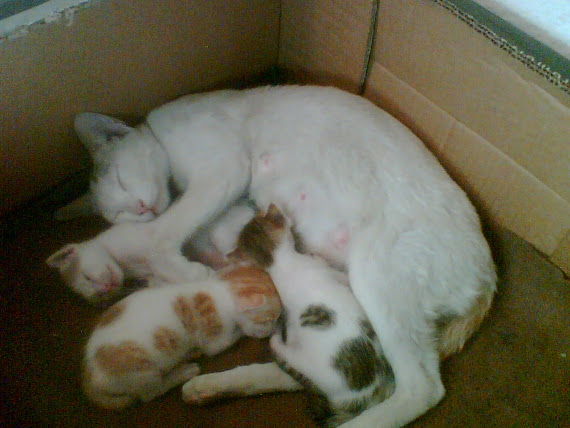
Minnu The Cat & Her Kittens Brownie, Goldie & Blackie

Someone with Nature

Someone with Nature
Syed Akbar in an island in river Godavari with Papikonda hills in the background

Recognition by World Vegetable Centre

Recognition by World Vegetable Centre

Under the shade of Baobab tree

Under the shade of Baobab tree
At Agha Khan Akademi in Kenya

Gateway to the Southern Hemisphere

Gateway to the Southern Hemisphere

Convention on Biodiversity

Convention on Biodiversity
Syed Akbar at the 11th Conference of Parties to the United Nations Convention on Biological Diversity