Id is an occasion to celebrate. Many mouth-watering dishes are
prepared on Id-ul-Adha, the second most important Muslim festival.
Though biryani and other meat-based dishes are prepared on Id-ul-
Adha or Bakrid, traditional Hyderabadi homes do not miss the Kaleji
Kabab (grilled liver) and Rogni Roti. It has been a long tradition to
prepare Kaleji Kabab and Rogni Roti and offer Fateha to Prophet
Abraham (Hazrat Ibrahim). This special Id dish is consumed after the
Id congregational prayers.
Recipe:
Rotis:
1 kg whole atta
1 cup milk
1/2 cup pure ghee
Pinch of salt
1/2 teaspoon elaichi powder
Method: Mix all these in the atta. Then mix milk and ghee and knead
the entire atta to make a dough. The dough should be formed after a
well kneading. The ingredients should be mixed well. cover with a wet
cloth. Keep it aside for 40 minutes at least.
Kababs:
Cut whole lamb liver into one inch cubes. Mix one table spoon of
garlic paste and one table spoon of red chilli powder. Salt as required.
After mixing, take one table spoon of olive oil. Marinate the entire liver
in olive oil. Keep it in a cool place for two hours.
Now prepare the rotis.
Make small balls with the dough, just bigger than a lemon. Roll out
into round rotis. They should at least 1/8 to 1/4 inch in thickness. Now
heat the tawa. Put the rotis on the heated tawa. Using a cloth ball, rotate
the rotis in clock-wise motion. After some time, turn the rotis and
continue the process until they are done.
Remove them and put them in a plate and apply liberal quantity of pure
ghee on the rotis. Make sure the ghee is applied only one side.
Kababs:
Light a charcoal fire. Allow the charcoal to burn until a white ash is
formed on the charcoal. Tread the liver cubes on a kabab stick or rod.
Put it on the fire, at least four inches above the fire. Keep on rolling the
stick for an even cooking of the liver. Check the liver if it is cooked by
a fine sharp knife point. The juice should run clean. The liver is done.
Serve the rotis with liver cubes on the top. Accompany it with spring
onion, lemon and mint leaves.
Saturday, 29 October 2011


UNEP against use of mercury in vaccines
Syed Akbar
Hyderabad, Oct 29: Vaccine industry lobbyists have been bringing
pressure on the United Nations Environment Programme (UNEP) to defer
its decision to ban use of mercury in vaccines. The UNEP has set
October-end as the deadline for prohibiting the use of mercury as a
preservative in vaccines meant for children and adults.
Many vaccines also contain aluminium slats and formaldehyde which
leads to synergistic toxicity, particularly in infants and children.
If the UNEP has its way, vaccines available all over the world
including India will be free of mercury, aluminium salts and
formaldehyde.
According to Dr Venkatesh Thuppil of the National Referral Centre for
Lead Poisoning in India, Bengaluru, use of mercury in vaccines is
highly toxic and is potentially dangerous particularly for pregnant
women and foetus/child. Dr Venkatesh, popularly known as the "lead man
of India" for his fight against the use of lead in paints, told this
correspondent that when autism was on rise the question doctors faced
with was whether uncontrolled use of mercury in vaccines was the cause.
"Some people with sensitivity to mercury are more vulnerable and may
react even to doses considered to be safe, less than 0.1mcg per kg of
body weight. This standard does not apply to children as Thiomersal,
the mercury containing preservative in vaccines, has never been
clinically tested on children," Dr Venkatesh warned.
The decision of the UNEP to ban mercury containing vaccines worldwide
has alarmed the vaccine industry and its lobbyists, who argue that
this would make vaccine unaffordable in poor countries and the move
will endanger the lives of children. The final decision will be taken
this month-end and the goal is to bring sufficient pressure on the
UNEP to help reverse the decision.
"It is difficult to understand the motive behind resisting the move to
remove mercury from vaccines used in developing countries where
children may be more at risk due to their low birth weight and
undernourished conditions. Each thiomersal containing vaccine contains
0.25mcg of mercury and more than one vaccine may be injected in one
visit," he added.
In developed countries like the USA, the percentage of mercury has
been reduced to 0.05 to 0.1 mcg per shot. But in India and other
developing countries, mercury continues to be used in relatively large
proportions in vaccines.
Hyderabad, Oct 29: Vaccine industry lobbyists have been bringing
pressure on the United Nations Environment Programme (UNEP) to defer
its decision to ban use of mercury in vaccines. The UNEP has set
October-end as the deadline for prohibiting the use of mercury as a
preservative in vaccines meant for children and adults.
Many vaccines also contain aluminium slats and formaldehyde which
leads to synergistic toxicity, particularly in infants and children.
If the UNEP has its way, vaccines available all over the world
including India will be free of mercury, aluminium salts and
formaldehyde.
According to Dr Venkatesh Thuppil of the National Referral Centre for
Lead Poisoning in India, Bengaluru, use of mercury in vaccines is
highly toxic and is potentially dangerous particularly for pregnant
women and foetus/child. Dr Venkatesh, popularly known as the "lead man
of India" for his fight against the use of lead in paints, told this
correspondent that when autism was on rise the question doctors faced
with was whether uncontrolled use of mercury in vaccines was the cause.
"Some people with sensitivity to mercury are more vulnerable and may
react even to doses considered to be safe, less than 0.1mcg per kg of
body weight. This standard does not apply to children as Thiomersal,
the mercury containing preservative in vaccines, has never been
clinically tested on children," Dr Venkatesh warned.
The decision of the UNEP to ban mercury containing vaccines worldwide
has alarmed the vaccine industry and its lobbyists, who argue that
this would make vaccine unaffordable in poor countries and the move
will endanger the lives of children. The final decision will be taken
this month-end and the goal is to bring sufficient pressure on the
UNEP to help reverse the decision.
"It is difficult to understand the motive behind resisting the move to
remove mercury from vaccines used in developing countries where
children may be more at risk due to their low birth weight and
undernourished conditions. Each thiomersal containing vaccine contains
0.25mcg of mercury and more than one vaccine may be injected in one
visit," he added.
In developed countries like the USA, the percentage of mercury has
been reduced to 0.05 to 0.1 mcg per shot. But in India and other
developing countries, mercury continues to be used in relatively large
proportions in vaccines.
Tulasi controls complications in diabetics
Syed Akbar
Hyderabad: Tulasi has always been recognised for its unique
health properties, and now a team of biotechnologists from Guntur has
proved that it is also useful in controlling complications related to
diabetes.
Diabetic complications often turn out to be quite dangerous if not
attended to in their initial stages. The complications may relate to
the heart, eyes, kidneys, nerves, and feet. Using extract obtained
from Tulasi the biotechnologists team from Vignan University in Guntur
successfully treated diabetic rats and prevented the common
complications associated with diabetes.
Earlier studies have pointed out to the blood sugar (glucose) reducing
properties of Tulasi in diabetics, and its ability to fight the damage
caused due to ionising radiation. But the Vignan study for the first
time proves that Tulasi possesses properties that can prevent
complications related to diabetes.
The research was conducted by Dr G Muralikrishnan of Vignan University
and co-researchers SK Pillai and F Shakeel. They fed the rat model
with aqueous extract of Tulasi or Ocimum sanctum once daily for 30
days. Earlier, they induced diabetes in the rats using streptozocin.
Once diabetes developed in the rats, the biotechnologists fed them
with Tulasi preparation. Tulasi helped in significant reduction of
plasma level of thiobarbituric acid reacting substances (TBARS) and
antioxidant enzymes in liver and kidneys.
The team which evaluated the antioxidant effects of Tulasi noted that
this Indian herb is capable of controlling complications resulting
from diabetes.
"The aqueous solution of Tulasi was orally fed to the rats for a
month. At the end of the experiment it was noticed that Tulasi has a
protective effect on vital organs including liver and kidneys in those
suffering from diabetes," the researchers pointed out.
Tulasi also fights oxidative stress which may cause harm to DNA bases,
besides damaging other protein products in the body, they noted.
Hyderabad: Tulasi has always been recognised for its unique
health properties, and now a team of biotechnologists from Guntur has
proved that it is also useful in controlling complications related to
diabetes.
Diabetic complications often turn out to be quite dangerous if not
attended to in their initial stages. The complications may relate to
the heart, eyes, kidneys, nerves, and feet. Using extract obtained
from Tulasi the biotechnologists team from Vignan University in Guntur
successfully treated diabetic rats and prevented the common
complications associated with diabetes.
Earlier studies have pointed out to the blood sugar (glucose) reducing
properties of Tulasi in diabetics, and its ability to fight the damage
caused due to ionising radiation. But the Vignan study for the first
time proves that Tulasi possesses properties that can prevent
complications related to diabetes.
The research was conducted by Dr G Muralikrishnan of Vignan University
and co-researchers SK Pillai and F Shakeel. They fed the rat model
with aqueous extract of Tulasi or Ocimum sanctum once daily for 30
days. Earlier, they induced diabetes in the rats using streptozocin.
Once diabetes developed in the rats, the biotechnologists fed them
with Tulasi preparation. Tulasi helped in significant reduction of
plasma level of thiobarbituric acid reacting substances (TBARS) and
antioxidant enzymes in liver and kidneys.
The team which evaluated the antioxidant effects of Tulasi noted that
this Indian herb is capable of controlling complications resulting
from diabetes.
"The aqueous solution of Tulasi was orally fed to the rats for a
month. At the end of the experiment it was noticed that Tulasi has a
protective effect on vital organs including liver and kidneys in those
suffering from diabetes," the researchers pointed out.
Tulasi also fights oxidative stress which may cause harm to DNA bases,
besides damaging other protein products in the body, they noted.
National Chemical Laboratory: Anti-cancer peptide obtained from a bacterium that lives in the soil and on decaying vegetation
By Syed Akbar
Hyderabad: A team of Indian scientists has isolated an
anti-cancer peptide from a bacterium that lives in the soil and on
decaying vegetation.
The novel peptide obtained from a soil bacterial genus, Streptomyces,
is capable of not only killing cancer cells but also prevents
malignant growths in the body. Incidentally, this bacterial genus is
known for its antibiotics potential and is a favourite group of
organism for those searching for new antibiotics and drugs.
The team from the National Chemical Laboratory in collaboration with
scientists from the National Centre for Cell Science discovered this
new peptide called cysteine protease inhibitor while working on
Streptomyces fermentation broth.
Dr PK Ingle of the National Chemical Laboratory in Pune told this
correspondent that the pioneering work was done under the team
leadership of Dr MI Khan. "Unfortunately, Dr Khan died recently. The
peptide could play an important role in treating or preventing
cancer," he added.
The novel peptide is capable of inhibiting the migration of cancer
cells and thus it controls this major health menace. Since this
peptide molecule inhibits the activity of cysteine protease, which
play an important role in cell migration and tumour metastasis (spread
of cancer from one body area to another), it can be used as a drug to
treat cancer and other pathological conditions too.
The team also noticed that though it inhibits the spread of cancer, it
does not cause harm to healthy cells or tissues. It has the potential
to be developed as effective anti-metastatic drugs for tumour therapy,
the NCL team pointed out. It also inhibits osteoclast (bone
reabsorption process) differentiation without any toxic effect, which
in other words means it is capable of preventing bone cancers.
Hyderabad: A team of Indian scientists has isolated an
anti-cancer peptide from a bacterium that lives in the soil and on
decaying vegetation.
The novel peptide obtained from a soil bacterial genus, Streptomyces,
is capable of not only killing cancer cells but also prevents
malignant growths in the body. Incidentally, this bacterial genus is
known for its antibiotics potential and is a favourite group of
organism for those searching for new antibiotics and drugs.
The team from the National Chemical Laboratory in collaboration with
scientists from the National Centre for Cell Science discovered this
new peptide called cysteine protease inhibitor while working on
Streptomyces fermentation broth.
Dr PK Ingle of the National Chemical Laboratory in Pune told this
correspondent that the pioneering work was done under the team
leadership of Dr MI Khan. "Unfortunately, Dr Khan died recently. The
peptide could play an important role in treating or preventing
cancer," he added.
The novel peptide is capable of inhibiting the migration of cancer
cells and thus it controls this major health menace. Since this
peptide molecule inhibits the activity of cysteine protease, which
play an important role in cell migration and tumour metastasis (spread
of cancer from one body area to another), it can be used as a drug to
treat cancer and other pathological conditions too.
The team also noticed that though it inhibits the spread of cancer, it
does not cause harm to healthy cells or tissues. It has the potential
to be developed as effective anti-metastatic drugs for tumour therapy,
the NCL team pointed out. It also inhibits osteoclast (bone
reabsorption process) differentiation without any toxic effect, which
in other words means it is capable of preventing bone cancers.
Medical device that helps doctors to monitor and treat nerve damage or neuropathy in diabetes patients
By Syed Akbar
Hyderabad: In a major technological breakthrough that could
prevent amputation of legs in diabetics, a city doctor has
successfully patented a medical device that helps doctors to monitor
and treat nerve damage or neuropathy in patients.
At present there's no perfect medical device that could tell doctors
the quantum of nerve damage (diabetic neuropathy) in the feet of
diabetics.
Though glucometers tell the sugar levels in the blood, they do not
inform physicians about the damage diabetes has caused to nerves. It
is the damage to the nerves that causes diabetic sores, gangrene, or
diabetic foot, which may ultimately result in amputation.
Senior chronobiologist Dr C Jairaj Kumar, who is currently a visiting
faculty in Ludwig-Maximilians University, Germany, developed the
medical device based on "chaos science". Dr Jairaj's technology was
one of the seven indigenous technologies selected by the Central
government for presentation before US Secretary of State Hillary
Clinton in New Delhi earlier this week.
"As high salt content in water corrodes water pipes, high glucose
levels in the blood damage the blood vessels. The first to be affected
are small blood vessels. Medium and large blood vessels are affected
gradually. The damage to small blood vessels impacts the eyes and
feet, while damage to medium size blood vessels hurts kidneys and
heart. In case of heart it even causes myocardial infarction. Our
device helps in knowing the extent of damage caused to such nerves.
The problem can be treated at initial stages, preventing amputation in
case of diabetic foot, and death in case of heart muscle damage," Dr
Jairaj said.
The device works on the concept of chaos science and neuropathy. It
measures the progression of diabetic neuropathy and predicts foot
ulcer development. "It is a novel concept based on the theory of
chaotic movement of the foci in the sole of the foot," he added.
All that a diabetes patient has to do is to stand on the device for a
few minutes. The report is generated within five minutes. The
equipment studies the feet of the patient in detail and identify areas
which are prone to ulcers. It will pinpoint high risk ulcer prone
zones in the feet, thus allowing the doctor to take preventive
measures. Nerve damage as less as seven per cent can be found out
through this device.
Dr Jairaj said every year about 25 per cent of diabetics develop
ulcer-related complications. Of them 50 per cent become infected and
20 per cent of those require amputation. "Regular screening enables a
physician to assess and benchmark progression of neuropathy, then
initiate preventative measures to proactively prevent formation of
foot ulcers, gangrene development or amputation," he said.
Hyderabad: In a major technological breakthrough that could
prevent amputation of legs in diabetics, a city doctor has
successfully patented a medical device that helps doctors to monitor
and treat nerve damage or neuropathy in patients.
At present there's no perfect medical device that could tell doctors
the quantum of nerve damage (diabetic neuropathy) in the feet of
diabetics.
Though glucometers tell the sugar levels in the blood, they do not
inform physicians about the damage diabetes has caused to nerves. It
is the damage to the nerves that causes diabetic sores, gangrene, or
diabetic foot, which may ultimately result in amputation.
Senior chronobiologist Dr C Jairaj Kumar, who is currently a visiting
faculty in Ludwig-Maximilians University, Germany, developed the
medical device based on "chaos science". Dr Jairaj's technology was
one of the seven indigenous technologies selected by the Central
government for presentation before US Secretary of State Hillary
Clinton in New Delhi earlier this week.
"As high salt content in water corrodes water pipes, high glucose
levels in the blood damage the blood vessels. The first to be affected
are small blood vessels. Medium and large blood vessels are affected
gradually. The damage to small blood vessels impacts the eyes and
feet, while damage to medium size blood vessels hurts kidneys and
heart. In case of heart it even causes myocardial infarction. Our
device helps in knowing the extent of damage caused to such nerves.
The problem can be treated at initial stages, preventing amputation in
case of diabetic foot, and death in case of heart muscle damage," Dr
Jairaj said.
The device works on the concept of chaos science and neuropathy. It
measures the progression of diabetic neuropathy and predicts foot
ulcer development. "It is a novel concept based on the theory of
chaotic movement of the foci in the sole of the foot," he added.
All that a diabetes patient has to do is to stand on the device for a
few minutes. The report is generated within five minutes. The
equipment studies the feet of the patient in detail and identify areas
which are prone to ulcers. It will pinpoint high risk ulcer prone
zones in the feet, thus allowing the doctor to take preventive
measures. Nerve damage as less as seven per cent can be found out
through this device.
Dr Jairaj said every year about 25 per cent of diabetics develop
ulcer-related complications. Of them 50 per cent become infected and
20 per cent of those require amputation. "Regular screening enables a
physician to assess and benchmark progression of neuropathy, then
initiate preventative measures to proactively prevent formation of
foot ulcers, gangrene development or amputation," he said.
Friday, 28 October 2011
India all set to become the largest collector of umbilical cord blood
By Syed Akbar
Hyderabad: India is all set to become the largest collector of
umbilical cord blood in the world thanks to its vast genetic diversity
and high number of births every year.
Scientists project cord blood as the natural source of future medical
treatment for genetic and rare diseases. Since India records around
three crore births every year, tapping cord blood is quite easier.
Already the country has about a dozen cord blood banks including three
in the public sector, which provide cord blood to even unrelated
people and non-donors.
According to S Jayesh of the Foundation for Research in Genetics and
Endocrinology, "India’s booming birth rate and genetic diversity will
help it emerge as the largest collector of umbilical cord blood in the
world". The country has already around 50,000 samples.
He said about 70 per cent of patients of Indian origin, who require
bone marrow transplantation, do not find a match within their own
family. Hence, unrelated umbilical cord blood is a widely accepted
source of progenitors for hematopoietic stem cell transplantation.
"However, to date the total number of umbilical cord blood transplants
performed in India has been very low mainly due to high cost and
limited number of such units," he added. The country needs as many as
30,000 units as against the present dozen or so. While the general
public has access to the public sector cord blood banks, the private
cord blood banks provide service to the donors.
Though the demand for cord blood has been on the rise, there are no
ethical guidelines to deal with cases of negligence in future. Also
accreditation of these units has largely been voluntary and only 20
per cent of the existing units in the country are affiliated to
internationally renowned bodies. The country does not have a public
policy on the functioning of these unit.
Hyderabad: India is all set to become the largest collector of
umbilical cord blood in the world thanks to its vast genetic diversity
and high number of births every year.
Scientists project cord blood as the natural source of future medical
treatment for genetic and rare diseases. Since India records around
three crore births every year, tapping cord blood is quite easier.
Already the country has about a dozen cord blood banks including three
in the public sector, which provide cord blood to even unrelated
people and non-donors.
According to S Jayesh of the Foundation for Research in Genetics and
Endocrinology, "India’s booming birth rate and genetic diversity will
help it emerge as the largest collector of umbilical cord blood in the
world". The country has already around 50,000 samples.
He said about 70 per cent of patients of Indian origin, who require
bone marrow transplantation, do not find a match within their own
family. Hence, unrelated umbilical cord blood is a widely accepted
source of progenitors for hematopoietic stem cell transplantation.
"However, to date the total number of umbilical cord blood transplants
performed in India has been very low mainly due to high cost and
limited number of such units," he added. The country needs as many as
30,000 units as against the present dozen or so. While the general
public has access to the public sector cord blood banks, the private
cord blood banks provide service to the donors.
Though the demand for cord blood has been on the rise, there are no
ethical guidelines to deal with cases of negligence in future. Also
accreditation of these units has largely been voluntary and only 20
per cent of the existing units in the country are affiliated to
internationally renowned bodies. The country does not have a public
policy on the functioning of these unit.
Second dose of measles, mumps and rubella vaccine is must to boost immunity
By Syed Akbar
Hyderabad: Vaccination for measles, mumps and rubella (MMR)
should be followed up by a second dose to provide strong immunity to
children against these troublesome diseases. A single dose of MMR
vaccine does not provide the required immunity leaving the vaccinated
child vulnerable.
According to a research study by senior researchers Dr G Sunil, Dr
Shukla Das, Dr VG Ramachandran and Dr SK Arora, children who receive
single dose MMR vaccine get only 20.4 per cent protection against
measles, 87.4 per cent against mumps and 75.7 per cent against
rubella. These children, when given the second dose of MMR vaccine,
showed increased immunity. The protection percentage went up to 72.6
for measles and 100 per cent for mumps and rubella.
MMR vaccine is not covered under the universal immunisation programme
in the country. But many parents immunise their children against these
diseases with a single dose vaccine between 15 and 18 months. The
research study revealed that a booster dose would give sure protection
to children.
"The percentage of children protected against measles was found to be
alarmingly low. Though the observed protection against mumps and
rubella was adequate, its durability was not known. The need for
re-appraisal of the current MMR immunisation policy is called for by
carrying out longitudinal studies on a larger sample," they pointed
out in the Indian Council of Medical Research journal.
According to the team, infants who receive measles vaccine before 12
months of age should be given two additional doses of measles antigen
containing vaccine at 12-15 months and 4-6 year of age. As far as
protection against mumps is concerned, accumulated global experience
has shown that two doses of mumps antigen containing vaccine are
required for a long-lasting protection.
The vaccine for rubella is considered as highly efficacious and the
immunity following a single dose is assumed to be life long, although
rubella antibodies may fall below detectable levels with time.
"Over a period of time the pool of susceptible children accumulates,
including the children who missed the opportunity of being vaccinated
with the first dose, serving as a fertile ground for an epidemic to
take place," they warned.
Hyderabad: Vaccination for measles, mumps and rubella (MMR)
should be followed up by a second dose to provide strong immunity to
children against these troublesome diseases. A single dose of MMR
vaccine does not provide the required immunity leaving the vaccinated
child vulnerable.
According to a research study by senior researchers Dr G Sunil, Dr
Shukla Das, Dr VG Ramachandran and Dr SK Arora, children who receive
single dose MMR vaccine get only 20.4 per cent protection against
measles, 87.4 per cent against mumps and 75.7 per cent against
rubella. These children, when given the second dose of MMR vaccine,
showed increased immunity. The protection percentage went up to 72.6
for measles and 100 per cent for mumps and rubella.
MMR vaccine is not covered under the universal immunisation programme
in the country. But many parents immunise their children against these
diseases with a single dose vaccine between 15 and 18 months. The
research study revealed that a booster dose would give sure protection
to children.
"The percentage of children protected against measles was found to be
alarmingly low. Though the observed protection against mumps and
rubella was adequate, its durability was not known. The need for
re-appraisal of the current MMR immunisation policy is called for by
carrying out longitudinal studies on a larger sample," they pointed
out in the Indian Council of Medical Research journal.
According to the team, infants who receive measles vaccine before 12
months of age should be given two additional doses of measles antigen
containing vaccine at 12-15 months and 4-6 year of age. As far as
protection against mumps is concerned, accumulated global experience
has shown that two doses of mumps antigen containing vaccine are
required for a long-lasting protection.
The vaccine for rubella is considered as highly efficacious and the
immunity following a single dose is assumed to be life long, although
rubella antibodies may fall below detectable levels with time.
"Over a period of time the pool of susceptible children accumulates,
including the children who missed the opportunity of being vaccinated
with the first dose, serving as a fertile ground for an epidemic to
take place," they warned.
Streptomyces hyderabadensis & Streptomyces osmaniensis: Hyderabad botanists discover new bacterial species
By Syed Akbar
Hyderabad: A team of city researchers has discovered a new
bacterium that lives in the soil and has the potential for development
of new antibiotics. The bacterium species belonging to the genus
Streptomyces has been named hyderabadensis in honour of Hyderabad.
The team from the department of botany, Osmania University, has
discovered the new bacterium, Streptomyces hyderabadensis, while
collecting soil samples in the city. It is similar in features to
other Streptomyces species like pactum, olivaceus and parvulus. These
bacterial species yield powerful antibiotics like pactamycin and
Elloramycin, which fight tumours. They are also anti-microbial (fights
germs) and anti-angiogenesis (prevents formation of tumours) in nature.
Earlier, the OU team discovered a similar bacterium from the soil in
the campus of Osmania University. It was named after the university as
Streptomyces osmaniensis. Streptomyces group of bacteria is famous for
its antibiotics potential and the discovery of two species by the OU
team has further boosted the prospects of development of new
medicines, particularly when pathogens are increasingly turning
resistant to existing antibiotics.
The research group comprised TV Reddy, S Mahmood, YH Reddy, EM
Wellington and MM Idris. They analysed the new bacterium for gene
sequences to arrive at the decision that it is a novel strain and
named it after Hyderabad. "It could be distinguished from the type
strains of its closest relatives based on levels of DNA-DNA
relatedness and comparison of morphological and phenotypic data," the
team pointed out.
The bacterial strain named after Osmania university is closely related
to the species Streptomyces chartreusis, which is famous for its
anti-tumour antibiotic chartreusin. Almost 70 per cent of bacteria
belonging to Streptomyces yield antibiotics used for various diseases.
An interesting feature of these bacteria is that they can inhibit
formation of tumours in the body.
Hyderabad: A team of city researchers has discovered a new
bacterium that lives in the soil and has the potential for development
of new antibiotics. The bacterium species belonging to the genus
Streptomyces has been named hyderabadensis in honour of Hyderabad.
The team from the department of botany, Osmania University, has
discovered the new bacterium, Streptomyces hyderabadensis, while
collecting soil samples in the city. It is similar in features to
other Streptomyces species like pactum, olivaceus and parvulus. These
bacterial species yield powerful antibiotics like pactamycin and
Elloramycin, which fight tumours. They are also anti-microbial (fights
germs) and anti-angiogenesis (prevents formation of tumours) in nature.
Earlier, the OU team discovered a similar bacterium from the soil in
the campus of Osmania University. It was named after the university as
Streptomyces osmaniensis. Streptomyces group of bacteria is famous for
its antibiotics potential and the discovery of two species by the OU
team has further boosted the prospects of development of new
medicines, particularly when pathogens are increasingly turning
resistant to existing antibiotics.
The research group comprised TV Reddy, S Mahmood, YH Reddy, EM
Wellington and MM Idris. They analysed the new bacterium for gene
sequences to arrive at the decision that it is a novel strain and
named it after Hyderabad. "It could be distinguished from the type
strains of its closest relatives based on levels of DNA-DNA
relatedness and comparison of morphological and phenotypic data," the
team pointed out.
The bacterial strain named after Osmania university is closely related
to the species Streptomyces chartreusis, which is famous for its
anti-tumour antibiotic chartreusin. Almost 70 per cent of bacteria
belonging to Streptomyces yield antibiotics used for various diseases.
An interesting feature of these bacteria is that they can inhibit
formation of tumours in the body.
Clinical trials: Pharma companies do not follow post-trial obligations; assent of children not taken
By Syed Akbar
Hyderabad: A majority of pharma companies and hospitals
conducting clinical trials in the country fail to observe ethical
aspects like assent from minors and post-trial obligations towards the
volunteer.
Many of them resort to what is called "selective reporting" wherein
only good results are reported to the Clinical Trials Registry-India
(CRTI), while adverse results are kept under the wraps.
A group of pharmacologists, which dug into the records of the CRTI,
found that the quality of reporting of clinical trials "is less than
satisfactory". A little over 500 clinical trials were studied by the
team comprising Preeti Yadav, Jaykaran, Mayur Chaudhari and Deepak
Saxena. They noticed that there was no system of post-trial
obligations in most of the cases. Post-trial obligations describe a
duty by research sponsors to provide a successfully tested drug to
research participants, who took part in the relevant clinical trials
after the trial has been conducted.
"There is a discrepancy in disease burden of India and areas of
clinical trials registered in clinical trial registry, particularly in
case of infectious diseases that are very common in the country, but
clinical trials addressing this issue are very less. Informed consent
was mentioned in 67.5 per cent clinical trials. Assent taken from
children was not mentioned in any clinical trial although 8.6 per cent
clinical trials studied related to childhood diseases," the
researchers noted. They suggested that assent should be taken from
children if they are above seven years of age.
In many cases there was no information to patients regarding
availability of drugs to them after completion of clinical trial. The
study revealed that a majority of clinical trials in the country are
sponsored by multinational pharmaceutical companies. This is one of
the reasons for neglect of clinical trials in the case of infectious
diseases and neglected tropical diseases. They also observed that
disease to be explored in clinical trials by pharmaceutical companies
was not based on healthcare need of that region but based on expected
commercial gain.
Hyderabad: A majority of pharma companies and hospitals
conducting clinical trials in the country fail to observe ethical
aspects like assent from minors and post-trial obligations towards the
volunteer.
Many of them resort to what is called "selective reporting" wherein
only good results are reported to the Clinical Trials Registry-India
(CRTI), while adverse results are kept under the wraps.
A group of pharmacologists, which dug into the records of the CRTI,
found that the quality of reporting of clinical trials "is less than
satisfactory". A little over 500 clinical trials were studied by the
team comprising Preeti Yadav, Jaykaran, Mayur Chaudhari and Deepak
Saxena. They noticed that there was no system of post-trial
obligations in most of the cases. Post-trial obligations describe a
duty by research sponsors to provide a successfully tested drug to
research participants, who took part in the relevant clinical trials
after the trial has been conducted.
"There is a discrepancy in disease burden of India and areas of
clinical trials registered in clinical trial registry, particularly in
case of infectious diseases that are very common in the country, but
clinical trials addressing this issue are very less. Informed consent
was mentioned in 67.5 per cent clinical trials. Assent taken from
children was not mentioned in any clinical trial although 8.6 per cent
clinical trials studied related to childhood diseases," the
researchers noted. They suggested that assent should be taken from
children if they are above seven years of age.
In many cases there was no information to patients regarding
availability of drugs to them after completion of clinical trial. The
study revealed that a majority of clinical trials in the country are
sponsored by multinational pharmaceutical companies. This is one of
the reasons for neglect of clinical trials in the case of infectious
diseases and neglected tropical diseases. They also observed that
disease to be explored in clinical trials by pharmaceutical companies
was not based on healthcare need of that region but based on expected
commercial gain.
Indian astrophysicist misses the Nobel for physics 2011 by a whisker
By Syed Akbar
Hyderabad: A group of Indian scientists and academics is
planning to approach the Royal Swedish Academy of Sciences with
documentary evidence to prove that a city scientist had reported on
the accelerated expansion of the universe a year before the US team,
which won this year's Nobel in Physics, had published its work.
Dr BG Sidharth, senior astrophysicist and director of BM Birla Science
Centre here, had published his mathematical and theoretical
observation on the "dark energy driven accelerating universe", in the
International Journal of Modern Physics A in May 1997. He sent the
research work for publication on April 14, 1997, which was accepted by
the Journal a month later.
A year later in 1998, the US team comprising astronomers Perlmutter,
Reiss and Schmidt published their work after they observed the
accelerated expansion of the universe through telescope.
"Mine is a theoretical work based on mathematical calculations. The US
team's work is based on observation. Besides publication of my
research work in the International Journal of Modern Physcis A, I
presented it before an international conference held in Israel in
1997," Dr Sidharth told this correspondent.
Asked if he was planning to approach the Royal Swedish Academy of
Sciences, Dr Sidharth answered in the negative. "Others are planning
to approach them about my work," he added.
"The contents of my paper went diametrically opposite to accepted
ideas, that the universe, dominated by dark matter was actually
decelerating. Rather, driven by dark energy, the universe would be
expanding and accelerating, though slowly. I was quite sure that this
paper would be rejected outright by any reputable scientific journal.
So I presented these ideas at the prestigious Marcell Grossmann meet
in Jerusalem and another International Conference on Quantum Physics.
But, not giving into pessimism, I shot off the paper to a standard
International journal, anyway. To my great surprise, it was accepted
immediately," Dr Sidharth said.
There is a further cosmic foot print of this model: a residual
minuscule energy in the Cosmic Microwave Background, less than a
billion billion billion billionth of the energy of an electron. Latest
data has confirmed the presence of such an energy. All this is in the
spirit of the manifest universe springing out of an unmanifest
background, as described in the Bhagvad Gita.
Hyderabad: A group of Indian scientists and academics is
planning to approach the Royal Swedish Academy of Sciences with
documentary evidence to prove that a city scientist had reported on
the accelerated expansion of the universe a year before the US team,
which won this year's Nobel in Physics, had published its work.
Dr BG Sidharth, senior astrophysicist and director of BM Birla Science
Centre here, had published his mathematical and theoretical
observation on the "dark energy driven accelerating universe", in the
International Journal of Modern Physics A in May 1997. He sent the
research work for publication on April 14, 1997, which was accepted by
the Journal a month later.
A year later in 1998, the US team comprising astronomers Perlmutter,
Reiss and Schmidt published their work after they observed the
accelerated expansion of the universe through telescope.
"Mine is a theoretical work based on mathematical calculations. The US
team's work is based on observation. Besides publication of my
research work in the International Journal of Modern Physcis A, I
presented it before an international conference held in Israel in
1997," Dr Sidharth told this correspondent.
Asked if he was planning to approach the Royal Swedish Academy of
Sciences, Dr Sidharth answered in the negative. "Others are planning
to approach them about my work," he added.
"The contents of my paper went diametrically opposite to accepted
ideas, that the universe, dominated by dark matter was actually
decelerating. Rather, driven by dark energy, the universe would be
expanding and accelerating, though slowly. I was quite sure that this
paper would be rejected outright by any reputable scientific journal.
So I presented these ideas at the prestigious Marcell Grossmann meet
in Jerusalem and another International Conference on Quantum Physics.
But, not giving into pessimism, I shot off the paper to a standard
International journal, anyway. To my great surprise, it was accepted
immediately," Dr Sidharth said.
There is a further cosmic foot print of this model: a residual
minuscule energy in the Cosmic Microwave Background, less than a
billion billion billion billionth of the energy of an electron. Latest
data has confirmed the presence of such an energy. All this is in the
spirit of the manifest universe springing out of an unmanifest
background, as described in the Bhagvad Gita.
Subscribe to:
Posts (Atom)
Mother's Care
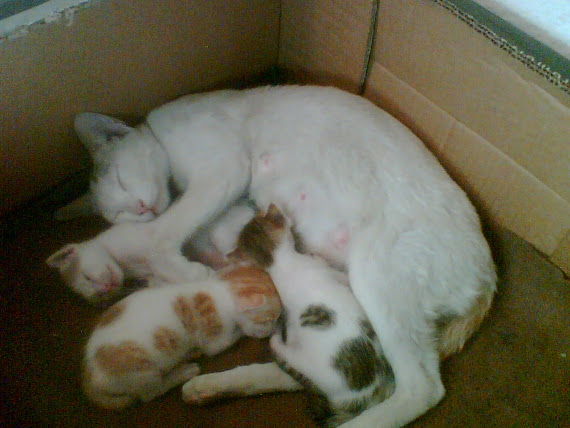
Minnu The Cat & Her Kittens Brownie, Goldie & Blackie
Someone with Nature

Syed Akbar in an island in river Godavari with Papikonda hills in the background
Recognition by World Vegetable Centre

Under the shade of Baobab tree

At Agha Khan Akademi in Kenya
Gateway to the Southern Hemisphere

Convention on Biodiversity

Syed Akbar at the 11th Conference of Parties to the United Nations Convention on Biological Diversity