By Syed Akbar
Parkinson's disease can be identified at an early stage with the help of biomarkers or early predictors. This helps in early diagnosis and treatment for this neurological problem that affects mostly the old. But
the major task before researchers is how to identify those biomarkers or early predictors.
Health researchers world wide are now busy in finding out those molecules or substances inside cells or body fluids that tell us how severe is the problem.
If researchers succeed in identifying those biomarkers, it will be easier to predict whether a person may get Parkinson’s disease. In case of those already suffering from the problem, the biomarkers will help in
monitoring the progression of the condition. The other important therapeutic use of biomarkers is to test drugs that can slow or stop the development of Parkinson’s.
===============
What is Parkinson's disease ?
----------------------
Parkinson’s disease is a neurological disorder that affects the central nervous system. It is a degenerative disorder and progresses with time. Parkinson's or PD is the most common movement disorder with a
median age of onset of about 55 years. The symptoms include impaired ability to adjust the body position, rigidity and tremor. Some of the patients also suffer from non-motor symptoms like cognitive (thinking
ability) decline and disturbances of autonomic nervous functions.
About 40 lakh people in India suffer from Parkinson's disease. It is not clear what triggers Parkinson's in a person. And scientists are yet to understand the cause and pathogenic mechanisms behind Parkinson's
disease, though some vital information on the problem has been obtained in the last two decades. Some attribute it to genetic factors.
Researchers are now moving to the next step after finding genes that influence the risk for a condition. Work is now on to piece together the picture of what those genes do, and how variations in these genes may
lead to a process which causes the disease.
Wednesday, 13 October 2010


Parkinson's disease - part three: Parkinson's Disease leads to loss of memory
By Syed AkbarAt least one in three people with Parkinson’s will develop some form of dementia (memory loss). Each person experiences dementia in his or her own way and the symptoms usually come on gradually and get
worse over several years.
According to Prof David Burn of New Castle University, the problems associated with dementia linked to Parkinson's disease include trouble with memory, thinking and language, such as forgetting words for
things or people, or not understanding what's being said.
"Memory problems can lead to confusion. For example, someone with dementia might get lost in a familiar place. Or they might forget they've done something, or keep asking the same questions again and again.
Problems with doing day-to-day things, such as getting dressed, eating and going to the toilet. People with dementia can find it difficult to follow instructions and they can have problems using money," he said.
People with dementia can become agitated, irritable and restless. They may start pacing the room or wandering. They may shout at their family or lash out physically. They might also feel anxious or
depressed. Or they may laugh out loud or start crying at the wrong times.
He said some people get delusions (imagining that something is happening when it isn't). For example, they might think somebody is trying to steal their belongings. Some may get hallucinations (seeing or
hearing things that aren't there).
"We still don’t fully understand why some people with Parkinson’s get dementia or why others don’t, but there are some risk factors. Dementia usually affects older people so it’s rare that someone with Parkinson’s
under the age of 65 will develop the condition," Prof Burn said.
Prof Burn's team is testing whether it is possible to identify people with Parkinson’s who have a high risk of developing dementia. Over five years, they will follow around 300 people who are newly diagnosed
with Parkinson’s and carry out different studies. The research team will keep track of which people develop the symptoms of dementia.
"We will find out if getting dementia can be predicted by brain scans, genetic tests and the presence of certain proteins in a person’s blood or cerebrospinal fluid. Identifying which people with Parkinson’s are at
risk of developing dementia would allow doctors to prescribe anti-dementia drugs earlier. We will also understand more about dementia and this knowledge can help develop new treatments that ultimately
slow down, stop or even reverse dementia," he said.
worse over several years.
According to Prof David Burn of New Castle University, the problems associated with dementia linked to Parkinson's disease include trouble with memory, thinking and language, such as forgetting words for
things or people, or not understanding what's being said.
"Memory problems can lead to confusion. For example, someone with dementia might get lost in a familiar place. Or they might forget they've done something, or keep asking the same questions again and again.
Problems with doing day-to-day things, such as getting dressed, eating and going to the toilet. People with dementia can find it difficult to follow instructions and they can have problems using money," he said.
People with dementia can become agitated, irritable and restless. They may start pacing the room or wandering. They may shout at their family or lash out physically. They might also feel anxious or
depressed. Or they may laugh out loud or start crying at the wrong times.
He said some people get delusions (imagining that something is happening when it isn't). For example, they might think somebody is trying to steal their belongings. Some may get hallucinations (seeing or
hearing things that aren't there).
"We still don’t fully understand why some people with Parkinson’s get dementia or why others don’t, but there are some risk factors. Dementia usually affects older people so it’s rare that someone with Parkinson’s
under the age of 65 will develop the condition," Prof Burn said.
Prof Burn's team is testing whether it is possible to identify people with Parkinson’s who have a high risk of developing dementia. Over five years, they will follow around 300 people who are newly diagnosed
with Parkinson’s and carry out different studies. The research team will keep track of which people develop the symptoms of dementia.
"We will find out if getting dementia can be predicted by brain scans, genetic tests and the presence of certain proteins in a person’s blood or cerebrospinal fluid. Identifying which people with Parkinson’s are at
risk of developing dementia would allow doctors to prescribe anti-dementia drugs earlier. We will also understand more about dementia and this knowledge can help develop new treatments that ultimately
slow down, stop or even reverse dementia," he said.
Calotropis: Milk weed is good natural expectorant

Calotropis procera, commonly called milk weed, is recognised as a wonder herb in Unani and Ayurveda systems of medicine. This medicinal herb grows in waste lands and is often neglected as a useless weed.
But Indian systems of medicine regard Calotropis procera, also known as swallow-wort, as the herb that heals a number of health problems ranging from simple cough to bowel discomfort and from eczema to elephantiasis. This herb is known as "aak" among Unani doctors.
Calotropis procera also finds a mention as "mandara" or "surya patra" in ancient Ayurvedic texts. Other traditional systems of medicine like homoeopathy also use Calotropis as a herbal prescription.
Generally, only the root of Calotropis procera is used in medical formulations. The latex (milky secretion from which it derives the name milk weed) is poisonous. In no case the latex should be used as medicine. Extreme care has to be observed while using Calotropis formulations at home. It's always better to purchase readily available Calotropis root powder from a good herbal store (dawasaaz), instead of preparing the formulation at home.
---------------------
Home remedies
---------------------
The dried and powdered roots of Calotropis may be consumed in small quantities as a general health booster. Unani and Ayurveda doctors regard it as a natural health tonic.
The root powder, when consumed in a small quantity, helps in removal of worms in the stomach and intestines, cleans the bowel system of all harmful parasites and keeps the disgestive system in a good condition.
The root powder of Calotropis procera is also considered good for skin problems including leprosy and filariasis.
Practitioners of traditional medical system often prescribe powder of dried leaves as a natural snuff to trigger sneezing in case of cold. Unlike the snuff obtained from tobacco, Calotropis snuff does not make
one addicted to it. This special snuff may be purchased from a noted herbal store.
Bryophyllum: Miracle leaf plant heals wounds naturally
 By Syed Akbar
Bryophyllum is a wonderful plant with reproductive leaves. New plants emerge from the leaves unlike the conventional method of plants growing from seeds or suckers. The plant is propagated mainly through vegetative methods. Since ancient times Bryophyllum has been used in folk medicines.
Though it is not a native of India, it was introduced into the country by Europeans as an ornamental plant. Gradually it started finding its use in Indian traditional systems of medicine like Ayurveda, Unani and Homoeopathy.
Bryophyllum is also called Never Die or Resurrection plant. Its leaf has been hailed as "Miracle Leaf". Bryophyllum leaves are used for treatment of problems related to skin and blood circulation, though it is also used to keep blood sugar level under check and control inflammation.
A recent study by the department of pharmacology, University of KwaZulu- Natal, Durban, has found that the aqueous extract of Bryophyllum leaf can act as a pain-killer. "Bryophyllum leaf aqueous extract possesses
antinociceptive (reduces sensitivity to pain), anti-inflammatory (reduces inflammation) and hypoglycaemic (brings down high blood sugar levels) properties," the study pointed out.
Other medicinal properties attributed to Bryophyllum include its ability to fight microbes, fungi, allergy, tumours, ulcers, bacteria, viruses and insects. It is also regarded as a natural sedative.
===========
Home Remedies
===========
If you are suffering from a nagging injury, take a fresh Bryophyllum leaf, wash it properly, crush it and apply on the wound. The wound-healing property of Bryophyllum not only cures the injury but also reduces swelling.
Bryophyllum leaf is prescribed often by herbalists to treat pain caused by rheumatism. Apply crushed leaf on knee joints and gently tie with a gauze. Its analgesic properties bring down the pain level to a large extent, giving you the much-needed relief.
Extracts of Bryophyllum available in the market are often prescribed for kidney stones. Such extracts are also recommended for degenerative neck disease where a patient experiences pain in neck and shoulders. Take a fresh leaf, wash it properly and extract its juice. Take a few drops of this juice twice every day. Repeat this for a few days.
If a wound develops pus, application of Bryophyllum extract will remove the pus and cleans the wound naturally before healing it. It also checks excessive bleeding.
Tuesday, 5 October 2010
Viewpoint: The Nobel for Robert Edwards, father of test tube baby technology
By Syed Akbar
The Nobel in medicine for British physiologist Robert Edwards, father of test tube baby, could not have come at a more opportune time. Male and female infertility rates have been going up the world over with at least one in 10 married couples unable to bear children. Worse, the levels of infertility thanks to environment pollutants like phthalate esters have come to such a stage that of late, scientists have discovered a
rare phenomenon of mothers passing on infertility to their sons at birth.
The Nobel prize has only further reinforced the inquisitive nature of man to play god in areas where research is considered a taboo by the orthodox. The IVF technology has come a long way since it was first conceived in Dr Robert Edwards lab in the United Kingdom. Today, IVF is the most sought after medical intervention when all assisted reproductive techniques fail. Though IVF has brought cheers in the otherwise
gloomy world of infertile couples, it still continues to be evasive as far as the common man is concerned. The
prohibitively high cost of IVF technology makes it out of the reach of the poor.
Almost four decades have passed since Robert Edwards successfully discovered the medical miracle of growing life outside the body. It took him and fellow researcher Patrick Steptoe a few more years to
put it into a reality in theform of Louise Brown, the world's first human baby conceived outside a mother's womb.
Thanks to Robert Edwards, infertility, particularly female sterility, is no longer the so-called curse. The miracle of test tube baby or in vitro fertilisation has brought smiles in a little over 40 lakh families across the globe. This medical art has been perfected over the years so much so that the success rate of an IVF couple conceiving a child has equalled that of a normal, healthy couple, who conceive naturally. The success ratio
now stands at 5:1; in other words one in five attempts ends in a successful pregnancy.
Kudos to the never-give-up spirit of Robert Edwards, who despite being forced to the corner by religious
fundamentalists opposed to test tube technology, carried on his research till he achieved it to silence the critics. His challenging spirit inspired doctors around the world to practice the IVF technology more
vigorously. In a developing nation like India, deep rooted in religious beliefs and cultural traditions, IVF is no
longer looked upon as a taboo. In fact India is one of the few nations where this top form of assisted reproductive technology has reached its zenith. Of the four million children born through IVF and allied technology India accounts for almost half a million. No doubt, IVF has brought hope to millions of couples, who would have had no chance of bearing children.
The task now before researchers is to bring down the cost of IVF technology to an affordable level so that the "joy of offspring" can be shared by the poor couples too. While this can be achieved sooner or later, what poses a major challenge is fighting environment pollution that leads to female infertility. Endometriosis, mostly linked to chemical pollutants, has emerged as an important cause of infertility in women. Unless the growing
environmental root cause of infertility is arrested, no quantum of advancement in IVF technology will help in
furthering the human race.
The Nobel in medicine for British physiologist Robert Edwards, father of test tube baby, could not have come at a more opportune time. Male and female infertility rates have been going up the world over with at least one in 10 married couples unable to bear children. Worse, the levels of infertility thanks to environment pollutants like phthalate esters have come to such a stage that of late, scientists have discovered a
rare phenomenon of mothers passing on infertility to their sons at birth.
The Nobel prize has only further reinforced the inquisitive nature of man to play god in areas where research is considered a taboo by the orthodox. The IVF technology has come a long way since it was first conceived in Dr Robert Edwards lab in the United Kingdom. Today, IVF is the most sought after medical intervention when all assisted reproductive techniques fail. Though IVF has brought cheers in the otherwise
gloomy world of infertile couples, it still continues to be evasive as far as the common man is concerned. The
prohibitively high cost of IVF technology makes it out of the reach of the poor.
Almost four decades have passed since Robert Edwards successfully discovered the medical miracle of growing life outside the body. It took him and fellow researcher Patrick Steptoe a few more years to
put it into a reality in theform of Louise Brown, the world's first human baby conceived outside a mother's womb.
Thanks to Robert Edwards, infertility, particularly female sterility, is no longer the so-called curse. The miracle of test tube baby or in vitro fertilisation has brought smiles in a little over 40 lakh families across the globe. This medical art has been perfected over the years so much so that the success rate of an IVF couple conceiving a child has equalled that of a normal, healthy couple, who conceive naturally. The success ratio
now stands at 5:1; in other words one in five attempts ends in a successful pregnancy.
Kudos to the never-give-up spirit of Robert Edwards, who despite being forced to the corner by religious
fundamentalists opposed to test tube technology, carried on his research till he achieved it to silence the critics. His challenging spirit inspired doctors around the world to practice the IVF technology more
vigorously. In a developing nation like India, deep rooted in religious beliefs and cultural traditions, IVF is no
longer looked upon as a taboo. In fact India is one of the few nations where this top form of assisted reproductive technology has reached its zenith. Of the four million children born through IVF and allied technology India accounts for almost half a million. No doubt, IVF has brought hope to millions of couples, who would have had no chance of bearing children.
The task now before researchers is to bring down the cost of IVF technology to an affordable level so that the "joy of offspring" can be shared by the poor couples too. While this can be achieved sooner or later, what poses a major challenge is fighting environment pollution that leads to female infertility. Endometriosis, mostly linked to chemical pollutants, has emerged as an important cause of infertility in women. Unless the growing
environmental root cause of infertility is arrested, no quantum of advancement in IVF technology will help in
furthering the human race.
Wednesday, 29 September 2010
The medicinal power of keekar or babul: Acacia, the herb of health

By Syed Akbar
Acacia or babul is one of the oldest known medicinal herbs known to man.Its medical history goes back to at least 4000 years and practically all systems of medicine recognise its importance in pharmacological formulations.Ayurveda recognises it as an aphrodisiac that checks premature ejaculation, while Unani recommends Acacia for good dental health and urino-genital problems.
Allopathy too utilises this wonder herb for various health issues including as an astringent and pain killer. It is recognised by pharmacopoeias of various developed nations including the US and the UK. It is used even in health drinks.
Babul sticks have long been considered good for dental and oral hygiene and health. Regular brushing of teeth with a babul twig prevents bleeding from gums, gingivitis, and strengthens loose teeth. Practitioners of herbal medicine consider babul twigs on par with those of the neem and the miswak, as far as oral health is concerned.
The bark and gum obtained from Acacia species particularly those of Acacia arabica (gum Arabic) are used for control of diarrhoea, microbial infections particularly of the skin and control of high body temperatures (fever). It is also often recommended for eye problems including cataract.
---------------------
Home remedies
---------------------
Acacia gum is considered good for controlling loose motions. Take a little quantity of gum Arabic, wash it and soak it in potable water. The softened gum may be consumed to control diarrhoea and even dysentery.
Soak the bark of Acacia in a glass of clean water after properly washing it. The infusion thus collected after overnight soaking may be also be used for treating loose motions.
Take a little of Acacia bark and make it a habit to chew it daily. It will strengthen teeth and kills oral germs. Alternatively, you may use Acacia twig for brushing.
Formulations prepared from Acacia readily available in the market can be used for good reproductive health in men. The Acacia formulations help premature ejaculation.
A paste made from fresh and clean Acacia leaves may be applied near the eyes for treatment of problems like itching and redness in eyes.
For those suffering from high blood cholesterol and diabetes, Acacia bark is considered one of the best natural remedies.
Subscribe to:
Posts (Atom)
Mother's Care
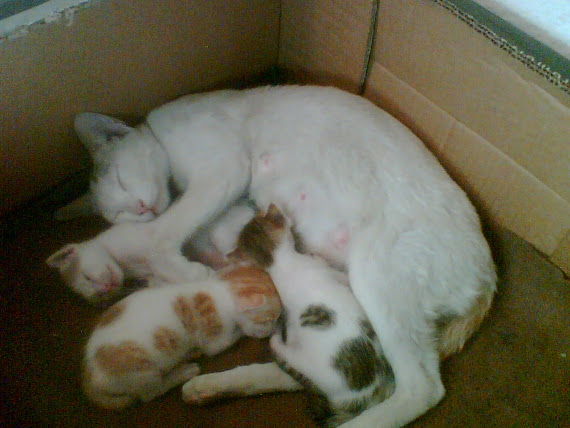
Minnu The Cat & Her Kittens Brownie, Goldie & Blackie
Someone with Nature

Syed Akbar in an island in river Godavari with Papikonda hills in the background
Recognition by World Vegetable Centre

Under the shade of Baobab tree

At Agha Khan Akademi in Kenya
Gateway to the Southern Hemisphere

Convention on Biodiversity

Syed Akbar at the 11th Conference of Parties to the United Nations Convention on Biological Diversity