Friday, 30 April 2010

Monsoons went erratic 18,000 years ago

2010
Syed Akbar
Hyderabad, April 30: Erratic rainfall during present day monsoons is not a new phenomenon, but a result of climatic changes that occurred in the Arabian sea some 18,000 years ago.

The Arabian sea, from which emerge the monsoons bringing in rainfall to the Indian sub-continent, turned warmer by 4 degrees Celsius about 18 millennia ago, leading to reduced rainfall in the region. The phenomenon continues till day causing erratic monsoons.

Researchers at the National Institute of Oceanography and the National Centre for Antarctic and Ocean Research have reconstructed the rainfall viability over thousands of years to study what went wrong with the monsoon system, since the Indian sub-continent largely depends on the monsoon for rainfall.

The joint research team of NIO-NCAOR has found that the Arabian sea was 4 degrees C cooler during 18,000 years ago, while the general belief is that the sea was cooler by just 2 degrees C. "In our study we have demonstrated that Arabian sea was 4 degrees C cooler during 18 kilo annum (18,000 years), which had a strong bearing in the initiation of monsoon rainfall in the Asian sub-continent," Dr Pothuri Divakar Naidu of NIO, Goa.

He told this reporter that the reconstruction of rainfall viability over thousands of years reveal that from 10.5 to 3.5 ka (10,500 years to 3,500 years ago) there was good amount of rainfall in the subcontinent. "But from about 3,500 years onwards descending phase of monsoon rainfall started due to arid climatic conditions in the Indian  subcontinent," Dr Divakar pointed out.

The team studied variations in sea surface temperature, sea water and salinity in the Arabian sea. They reconstructed the atmospheric model for the past 68,000 years using a sediment core from the Eastern Arabian Sea to understand the changes in evaporation and precipitation associated with the monsoon system.

The southwest monsoon emanates from the temperature and pressure gradients that occur between the Indian Ocean and Tibet Plateau during summer. The upper ocean heat supplies the necessary evaporation and atmospheric moisture transport during this phenomenon. Thus, a strong link exists between ocean dynamics and the atmospheric heat and moisture transfer behind the monsoon

"The socio-economic and agriculture development of southeast Asia depend on the monsoon precipitation from June through September,
which contributes about 70 to 90 per cent of the annual precipitation in the region. Therefore, an understanding of the monsoon system beyond historical records is desired," he said.

Friday, 23 April 2010

Tiny nanotubes to deliver biomaterials like DNA and RNA for effective gene therapy

2010
Syed Akbar
Hyderabad, April 23: A group of city scientists has developed tiny nanotubes that could serve as next generation micro pills to deliver biomaterials like DNA and RNA for effective gene therapy.

Researchers at the Indian Institute of Chemical Technology and the Centre for Cellular and Molecular Biology have already patented this unique technology. The nanotubes developed from organic material, for the first time in the world, could be useful not only to deliver small regulatory RNA and DNA as therapeutic materials but also to optimise pill-like properties for orally ingested materials.

"This beautiful technology may help in making the next-generation micro pills to deliver biomaterials for effective gene therapy and novel cargoes for molecular diagnostics. It can also be used for mass delivery of therapeutic biomolecules via food in various animal populations for the improvement of animal husbandry," Dr Utpal Bhadra of CCMB told this correspondent.

The IICT-CCMB team comprising JS Yadav, MP Lavanya, PP Das,
Manika Pal Bhadra and Utpal Bhadra zeroed in on a special material for construction of nano tubes. They selected p-aminobenzoic acid
or PABA in short. This is a natural material that forms part of folic acid and the vitamin B complex present in the human liver. Since it is a natural non-protein amino acid, it has little side effects on animals or human beings. Moreover, PABA is also known to support folic acid production by intestinal bacteria.

The PABA nano tubes will also help in increase of PABA concentration in the intestine during oral ingestion, which might help intestinal bacteria to convert it into folic acids, and protect against strokes, cardiovascular diseases and even certain cancers. Therefore, ingestion of PABA nano tubes plays a dual role, directly as a delivery vehicle of therapeutic agents and indirectly by preventing different diseases as a therapeutic agent itself.

"These nano structures minimise many obstacles including absorption in body fluids, systemic spreading and the reduction of immunogenetic symptoms. The tubes also maintain their fluorescent activity for a long period of time and do not suffer from dissociation or decay of fluorescence," Dr Bhadra said.

The advantage of nano tubes is that they spontaneously adsorb onto the membrane and later accumulate within intracellular compartments.

Referring to the safety of the new technology, the team points out that in drosophila studies no difference in size or any abnormalities in their sexual behaviour were observed. The egg laying capacity of adult females for six consecutive days after hatching and the sex of hatched flies were counted. No significant difference was detected in egg laying capacity and male/female ratios in nano tube-fed females as compared to the wild type.

Friday, 9 April 2010

Sania Mirza-Shoaib Malik marriage: Qazis seek police clearance certificate

2010
Syed Akbar
Hyderabad, April 9: The chief qazis of Hyderabad and Secunderabad on Friday arrived at a consensus that they should insist on production of police clearance and no objection certificates, besides the passport in original, to solemnise the marriage of Pakistani cricket player Shoaib Malik with Indian tennis player Sania Mirza.

The chief qazis took up the issue of marriage of Shoaib Malik-Sania Mirza, as some enthusiastic deputy qazis vied with one another to solemnise the celebrity wedding. They made it clear that since Shoaib Malik is a foreigner, the deputy qazis should not rush in to perform his marriage, without duly verifying his credentials.

Moreover, it is in the interest of Sania Mirza that the passport details of Shoaib Malik are entered in the Nikahnamah. Based on the Nikahnama, the State Wakf Board will issue a marriage certificate, which will be revalidated by the Union Ministry of External Affairs. If the passport details of Shoaib Malik are not entered in the marriage certificate, Sania Mirza will not travel to Lahore for the grand reception, as the wife of the Pakistani cricketer. Without the details, she will get the visa as just a companion or visitor and not as a legal wife.

Ever since the news of Sania-Shoaib broke out, there has been a virtual fight among deputy qazis. It is this fight that led to rumours of advancement of Sania-Shoaib marriage on Friday. A deputy qazi attached to Golconda jurisdiction announced that he had been invited to perform the marriage on Friday evening. The deputy qazi stuck to his word throughout the day, only to backtrack in the evening.

"Our marriage records are incomplete if we do not make entry, in the Nikahnama, of passport details and the duration of the stay as granted in the visa. We have instructed our deputy qazis not to perform the marriage of local girls with foreigners without physically verifying the passport and NOC obtained from respective national governments," Qazi Lateef Ali Quadri, one of the three government-appointed chief qazis of Golconda (Qila Muhammad Nagar), that covers a major portion of new city of Hyderabad.

According to sources, the chief qazis of Secunderabad, Hyderabad old city (Shariat Panah Balda Hyderabad) and Golconda (Qila Muhammad Nagar Bara Mahal) discussed the issue of Shoaib Malik's NOC and passport. Incidentally, Shoaib Malik reportedly did not keep a photocopy of his passport, which is now in judicial custody.

The rumours are also linked to the infighting in the institution of Golconda Qazi, under whose jurisdiction the residence of Sania Mirza falls. Golconda Darul Qazat is controlled by four chief qazis, three of whom are appointed by the State government. The fourth one is continuing in office on AP High Court stay orders.

Deputy Qazi Azmatullah Jafri told this correspondent that he had spoken to the media only after he got a call from Sania's family. "I was told that the Nikah will be held on Friday evening insha Allah. I have been waiting, but they have not confirmed it," he said clarifying that he had not floated the rumours.

Sunday, 28 March 2010

Telangana agitation - part I: The genesis of Telangana Movement, what triggers the sentiments?

Five decades of Telangana struggle
2010
By Syed Akbar
The five decade-old Telangana struggle has now metamorphosed into a movement for self-respect and self-rule. The struggle no longer revolves around the backwardness of the region. The new slogan that's becoming popular these days is "exploitation by settlers".
And this talk of exploitation incidentally revolves around the emotions and sentiments attached to the land. The Telangana movement has finally assumed the shape of a land struggle, a fight against the "occupation" of
agricultural lands and the "unrealistic" real estate business that has allegedly deprived the locals of an opportunity to own a house.
"It is now an emotional issue, much more to do with the sentiments of the locals, peasants and the poor," argues Prof Papi Reddy of Kakatiya University.
Like many struggles around the world, the movement for a separate Telangana state is fuelled by the argument that people from other parts of the country, those from coastal Andhra and Rayalaseema to be precise, have "occupied" agricultural lands, denying the not-so-fortunate local farmers the opportunity to till their very fields. The real estate too "fell into the hands of the settlers", who jacked up the prices to unrealistic levels. This is said to be one of the reasons for the present "heartburn" among the Telanganaites. The
Andhraites, however, have their own tale to tell.
Initially Telangana farmers and land owners benefited from the sale proceeds of their lands, but soon they realised that what they had been paid for their property was a "pittance", given the enormous farm benefits reaped by the so-called settlers. "While the farmers remained poor, those who came in from other areas became rich. This disparity has grown to such an extent that the local farmers now want their lands back," explains senior TRS leader T Harish Rao.
Those who purchased the lands, on the other hand, argue that they invested heavily to make the otherwise barren lands cultivable. Telangana region is at a geographical disadvantage as far as gravitational flow of water is concerned. The only way to make the lands fit for cultivation is through bore well irrigation. The poor Telangana farmers could not invest in bore well irrigation.
"The Andhra farmers pumped in money to create the facility. They did not cheat anyone. They paid the money the local farmers demanded. It is a clear land transaction and no deceit is involved in it," says Prof N Samuel, who heads the United AP Joint Action Committee.
Like many others in Telangana, TRS floor leader Etala Rajender, however does not buy Prof Samuel's argument. "We lost lands, jobs, self-respect under Andhra rulers. The fight for separate Telangana is over five decades old. Unless people of Telangana have self-rule, this region cannot be developed. If we continue to stay in a united Andhra Pradesh, the condition of the people will further deteriorate. Its better we part as friends. The people of Telangana region have realised it is now or never. We have 1000 reasons to separate,
land being the main reason," he argues.


The so-called settlements began in Telangana in two phases. One during 1948-1952 and another after 1982, after the Telugu Desam was formed. Even during the Nizam's regime there was an influx of people from coastal Andhra, but it was limited to some villages and towns. Heavy investments poured into in Hyderabad and neighbouring Ranga Reddy district as also in agricultural lands in Nizamabad, Karimnagar, Medak and Mahbubnagar districts in the last 30 years.
According to sociologists, the first influx (1984-52) of people from other two regions was mainly in search of jobs, though there were quite a considerable number of farm land transactions too. Since people from coastal Andhra, under Madras presidency, were educated in English, they were preferred in Telangana for local jobs that require knowledge of English. They got jobs in government, banks, educational institutions and important companies. Many of them sold away their agricultural lands to purchase lands in Telangana, which were relatively cheaper.
There are allegations that the mulki rule (jobs and education for locals) was observed more in breach, to accommodate people from coastal Andhra and Rayalaseema. Under the mulki rule the Nizam ensured that 80 per cent of seats in educational institutions and jobs in government sector are reserved for the locals. The 80 per cent rule was for jobs at district level. At divisional level, which has higher jobs, a 60 per cent quota was fixed for the locals under mulki regime. The Nizam implemented the rules all through his rule, since 1928.
Harish Rao could not hide his displeasure over the "continued violation of the locals only rule" when he says, "people of Telangana region have been victims of loot in every sphere. It’s not just land. It’s in every sphere".
The second influx (after 1982) revolved mainly around real estate. Many individuals came to Hyderabad and surrounding areas in search of employment, while the rich and influential invested heavily in real estate and
industries. Moreover, the political equations too changed in the State, allegedly facilitating the influx. In the last three decades, only one leader from Telangana became the chief minister (Dr M Chenna Reddy ruled for a year).
Prof Papi Reddy points out that several public representatives including ministers, MLAs, MLCs and capitalists "grabbed" valuable land and acquired assets in Telangana region. Their alleged clout over political and official machinery enabled them to purchase lands from the poor Telangana people at "throwaway prices". They did not leave even the Wakf properties, he adds.
"They constructed entertainment parks and five star hotels. Subsequently, they inflated the land prices and earned thousands of crores of rupees in profits. The government machinery failed to curb ‘land mafia’ and instead facilitated them with regularisation of encroached lands. Our struggle is basically for land and exploitation of our people. There is a gentlemen's agreement signed in 1956 on how much land to buy. But people from other regions have violated the agreement. Thousands of acres of land was given away to corporates and film studios for Rs 2,000 an acre. These are our resources and lands," says OU student leader J Kalyan.
Tracing the genesis of the Telangana struggle, writer Durgam Ravinder observes that "when people of Telangana realised how those from coastal Andhra were taking over their agricultural lands and jobs, they came up with the slogan against the non-locals".
Differing with the Telangana argument, Prof Samuel observes Andhra people are in an advantageous position due to historical and geographical reasons. "Andhra people have more access to English education because the region was under the rule of the British. One should be inspired by the success of Andhra people settled in and around Hyderabad".
Emphasing that the present pro-Telangana and anti-Telangana movements are emotionally linked to the land, SS Shiv Shankar, who is spearheading the movement for a separate north Andhra state, seeks to clarify that while people of Telangana are angry over the alleged occupation of their lands by "settlers", coastal Andhra people, who had invested heavily in and around Hyderabad over the years, do not want to let Hyderabad go as they too are "sentimentally attached to the city".
"Whether it is the people of Telangana or coastal Andhra, the issue is the emotional and sentimental attachment to the land. If Telanganaites are attached to their region, others who have made Hyderabad their home, are also similarly attached to Hyderabad," he argues.

Telangana agitation - part II: Land is more than just stones and rubble

Why People Are Attached to their Native Place
2010
By Syed Akbar
Land is not just a piece of the earth. It is more than stones, mud, rubble, plantation and buildings. Land is part of the human emotions and entiments. In a nutshell, land is part of human life and struggle.
People have been emotionally attached to their lands, native villages, cities and towns and their territories. What makes human beings so emotionally attached to land?
Scientists have now unravelled this mystery. It's all in the brain, they say. The human brain releases certain chemicals, as one approaches his native place or the city he has spent a major portion of his life in. This makes the person sentimental and highly joyous. It refreshes him. Even people, who spent quite a considerable time in a foreign land, feel this sense of pride and happiness,the moment they land in their country.
This natural human attachment to land has resulted in several bloody wars down the ages. It led to  innumerable land struggles, giving rise to the "us vs.they" talk. Still several parts of the world witness bloodshed and violence over the claim of land by various groups of people. Not only land claim has sociological basis, it has scientific reasoning too, as a recent study by two professors of University of Pennsylvania shows.
The Pennsylvania team comprising senior psychologists Paul Rozin and Sharon Wolf, selected the emotional issue of land in Israel-Palestine. The subjects were all Jews.
The idea was to find out whether human beings imbue land with positive or negative associations. At the end of the study they found out that land could be perceived as having either good or bad essences. The Jewish subjects told the researchers that they would not trade or forfeit their land, even for an equivalent plot of land elsewhere. And so would a study of Palestinians reveal. That's the power of emotions attached to land.

Telangana agitation - part III: Emotional attachment to land down the ages

Emotional attachment to land

2010
By Syed Akbar
Bhoodhan or land donation has always occupied a pride of place in India. Down the centuries emperors, kings and local nobles donated cultivable lands to the landless poor. Land donation was considered one of the best means of providing sustenance and livelihood to the have-nots. This ancient philosophy continues even to this day. The democratically elected governments have assumed the role of kings, donating lands to the landless poor.
Andhra Pradesh leads India in terms of land donation by the State. In the last four years, the State government has distributed five lakh acres of land to the landless poor under its "land for the poor" campaign. Incidentally, land distribution to the poor was one of the contentious issues during the peace talks between Maoists and the AP government during 2004. The talks failed, but the State government took up the land distribution campaign.
Indian kings and nobles distributed lands to religious places too. There had been instances of Hindu kings donating lands to Muslim charities and Muslim kings offering lands to temples and Hindu endowments.
India, where land is often equated with mother (Bhoo mata or Zameen Ma), is perhaps the only nation in the world where people came up with voluntary donation of millions of acres of land. Acharya Vinobha
Bhave, through his Bhoodan movement in 1951, could inspire people holding lands to donate to the landless poor. In all five million acres or 20,000 sq km of land (a little larger than Anantapur, the biggest district in Andhra Pradesh) was donated as part of the movement.
Political parties, particularly the Communists, have launched a number of movements with the argument that land belongs to the tiller. The BJP too made it a national issue some time ago.

Telangana agitation - part IV: Influx of people from coastal Andhra, Rayalaseema to Hyderabad

Some Quick Facts

2010
By Syed Akbar
1. With influx of people from coastal Andhra and Rayalaseema to Hyderabad and surrounding districts in search of employment, thenumber of Assembly segments in Telangana region went up by 12 from 107 to 119.
2. In the delimitation of Assembly constituencies during 1978, Andhra region had 134 seats, Telangana 107 and Rayalaseema 53. In the recent exercise Andhra lost 11 seats while Rayalaseema lost one. Telangana
gained by 12 constituencies. It shows influx of people from coastal Andhra region to Hyderabad and surrounding areas in the last three decades.
3. The migration from coastal districts is mainly in search of jobs. There's no employment potential in any of the nine districts in coastal Andhra or four districts in Rayalaseema. The only place in the State that offers employment other than Hyderabad is Visakhapatnam. The State government failed to develop industries and corporate offices in equally important places like Vijayawada, Guntur, Kurnool, Rajahmundry, Karimnagar, Nizamabad, Warangal, Nellore and Tirupati. This explains the influx.

The lemony way to lose extra weight

2010
By Syed Akbar
No one can resist a glass of chilled lemon water on a hot summer afternoon. While lemon (as also its cousins from the citrus family) is the best fruit to quench one's thirst and beat the heat during this summer, this natural repository of vitamin C has several medicinal and health properties including losing weight and fighting fatigue.
Lemon acts good on the stomach, helping against constipation and assisting in easy digestion. It is also a natural way of keeping the skin glowing and in healthy condition.
This fruit from the citrus family contains five per cent citric acid, which is quite sufficient to meet the vitamin c requirement of an individual. It also contains minerals like calcium, phosphorous and magnesium,
besides vitamins of the B group. As lemon contains bioflavonoids, regular consumption of this fruit makes the blood vessels strong. It also improves the overall functioning of the heart.
More importantly, slimming experts the world over have been suggesting intake of lemon juice mixed with honey and hot water to fight excessive weight. Though modern doctors (allopaths) do not agree with this lemon-honey-hot water formula for obesity treatment, practitioners of traditional medicines still prescribe it for those who want to burn away those extra calories.
Home remedies
Suffering from headache and nausea? Why don't you try this simple health recipe. A glass of hot water mixed with juice from a lemon fruit. It not only gives relief from headache and nausea, but also clears the
bowels.
For those conscious of their beauty and skin health, nothing beats a glass of water mixed with lemon extract, taken everyday in the early morning.
As said earlier, obese people as also those mildly overweight may consume a glass of honey-lemon juice-hot water concoction every morning.
For instant energy, take a glass of lemon juice mixed with water, salt and sugar. It fights dehydration by providing the much needed salts to the body.

Sunday, 21 March 2010

Tamarind controls fever, cools body

2010
By Syed Akbar
South Indian meal is incomplete without rasam and sambar. And as we all know, tamarind forms an essential ingredient in the preparation of palate-stimulating rasam and mouth-watering sambar.
Tamarind, though not a native tree of Asia, has become an important constituent of the Indian kitchen over the centuries, thanks to the health benefits it offers. Tamarind fruit, leaves and bark are recommended for
various ailments in Ayurveda, Unani and Siddha. Pulihora (tamarind rice) and tender tamarind leaves curry are also popular items on the South Indian menu card.
Tamarind is a natural body coolant. While it keeps the body cool in the healthy, it brings down the body temperature (fever) in patients suffering from various ailments including malaria and typhoid. Tamarind leaves and fruit (pod) not only provide the much needed vitamin C to the body, but also fight away skin diseases, rashes, freckles (melanin concentration marks) and itches. Since tamarind is a good source of vitamin C, it helps in preventing scurvy (spots on skin and spongy gums).
Home remedies
If you are suffering from cold and resultant blockage of nose, a glass of hot tamarind rasam is the best bet.
Tamarind is a mild laxative and those suffering from simple constipation or slow bowel movement may consume two tablespoons of tamarind paste mixed with water. This mixture will also bring down the body temperature in case you suffer from fever.
For quick relief from sore throat, you may gargle with tamarind water (tamarind paste mixed with water).
A decoction prepared from tamarind leaves will kill harmful worms in the stomach and intestines.
Apply tamarind pulp on the affected portion of the skin for immediate relief from itching.

Control your BP through Sarpagandha


2010
By Syed Akbar
Rauwolfia serpentina, popularly known as Sarpagandha, is the Nature's gift to man against high blood pressure, snake bites, sleeplessness, hysteria, paranoia and schizophrenia. But Rauwolfia is considered a wonder drug as far as its anti-hypertension
properties are concerned. It was once used as a front-line drug against high blood pressure, but because of its certain side effects, Sarpagandha is now used as a second line medicine to treat hypertension. Since pure alkaloids extracted from Rauwolfia act quickly on the human
body including the circulatory, reproductive and nervous systems, it is better to use the powdered raw roots of the plants for home remedies. Its extracts are sold in the form of differently branded drugs, but for the purpose of home remedies, one should take the raw roots, powder them and consume with either honey, milk or oil. In this way, one can reduce the highly dangerous side effects. A word of caution. Only those with high blood pressure should consume Sarpagandha as it will further bring down the blood pressure in normal
persons, leading to hypotension or low BP. Pregnant women and people with gastric ulcers better avoid the plant or its extracts.
The roots contain a chemical called reserpine, which is widely used in antihypertensive drugs. As its name suggests (Sarpa, snake; gandha, smell), Sarpagandha works against snake bites. It is also widely used in treatment of reptile bites.
Home remedies
For sound sleep and quick relief from insomnia or mental stress, take 500 mg of Sarpagandha root. Powder it and mix it with a teaspoon of sesame (gingelly or til) oil. Consume it before going to bed. To beat severe skin red rashes (hives), take a few fresh leaves of Sarpagandha. Crush them and apply the paste on the affected portions of the skin.
Those suffering from high BP may take Sarpagandha root preparation to keep the blood pressure under check. Take 500 mg of root, powder it and mix it with water or honey. The preparation may be taken twice daily. One should avoid extra dosage as it will lead to drastic fall in blood pressure, causing severe health trouble. Pregnant women should avoid it.

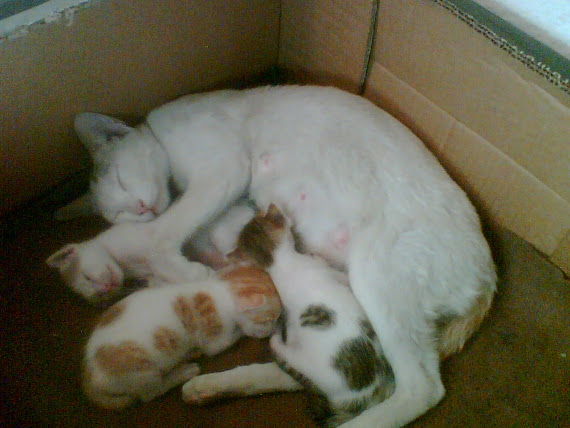
Mother's Care

Mother's Care
Minnu The Cat & Her Kittens Brownie, Goldie & Blackie

Someone with Nature

Someone with Nature
Syed Akbar in an island in river Godavari with Papikonda hills in the background

Recognition by World Vegetable Centre

Recognition by World Vegetable Centre

Under the shade of Baobab tree

Under the shade of Baobab tree
At Agha Khan Akademi in Kenya

Gateway to the Southern Hemisphere

Gateway to the Southern Hemisphere

Convention on Biodiversity

Convention on Biodiversity
Syed Akbar at the 11th Conference of Parties to the United Nations Convention on Biological Diversity