By Syed Akbar
Hyderabad: Life is not rosy for lakhs of Indians employed in the Gulf Cooperation Council countries as only five per cent of the NRIs there earn enough to lead a normal life on return to India.
An on-line and field survey conducted by Pravasi Bandhu Welfare Trust, a Dubai-based non-governmental organisation working for bettering the lives of Indian workers in GCC countries, a whopping 95 per cent of NRIs in the Gulf do not save anything and return empty handed to India even after working for a decade. Only five per cent of the Indian labour force including the white collared bring enough money to live happily back home.
Trust chairman KV Shamsuddin told this correspondent that though only 10 per cent of Indian workers in GCC nations live with families, a majority of them fail to save sufficient money due to low wages and high expenditure on medical treatment. Contrary to the popular belief that Indian workers earn high salaries in the Gulf, a minuscule 15 per cent of NRIs get salaries upward of 4500 Dirhams. As many as 34 per cent of employees do not save at all while only two per cent of NRI families back home save something for future. The salary is as low as 350 Dirhams which works out to just 100 US dollars or Rs 4,500 a month.
"We have conducted a survey among middle and low income expatriate Indians in GCC and found only 5 per cent had some financial resources to have some monthly income back home when they return," Shamshuddin said.
The regular remittance to families in India is spent on domestic needs, acquiring a house or on marriage of sisters/daughters. And when they return home, there's hardly anything left. So they once again leave India for the Gulf for re-employment, the survey pointed out.
The most important observation of the survey is that the middle income NRIs in the Gulf sacrifice even basic necessities leading a life of deprivation for their families back home. They work hard in extreme climates, saving and remitting maximum possible funds to give good life to their families.
But only two percent of the families save from the remittance. Even though 98 per cent had agreed that the lifestyle of their families had improved, only 5 per cent felt they could lead a comfortable life if they go back for permanent settlement in India.
Sunday, 28 June 2009


Muscular Dystrophy: The need to fight this crippling disease
By Syed Akbar
Hyderabad: Nipun Loya was bubbling with energy and vigour till a few years ago. Today at 14, Nipun cannot stand, write or even wipe out the sweat from his face. And he could barely utter a few words.
Nipun is one of the 50 and odd muscular dystrophy patients who have gathered in the city from different parts of the country to dissolve their sorrow in a unique fun camp. Nipun no longer feels he is alone in suffering. He has found quite a few new friends from places as far away as Solan in Himachal Pradesh.
"Muscular Dystrophy patients do not generally move out of their homes. Most of them are caged in their living rooms for months together. An outing once in a while makes a big difference to them. The present fun-cum-picnic camp is programmed on the lines of "Jerry Kids" camps being held regularly by Hollywood comedian Jerry Lewis for MD patients", says Vipul Goel, himself a victim of the crippling genetic ailment. Vipul's brother Atul and sister Sanjana are also MD patients. Muscular Dystrophy is a common disease affecting mostly children progressively distroying their muscular system. Patients generally die before they attain the age of 25.
The city's fun camp is incidentally the first outdoor programme for MD patients in south India. With 52 patients in attendance, it is also the second biggest fun camp in the country after the Solan's camp held last year in which 92 patients participated. Points out Sanjana, president of Indian Association of Muscular Dystrophy, "no where in the world not even in the USA more than three dozen MD patients turn up for such programmes. Indeed it is an achievement".
The child patients participated in several fun events including infotainment competitions like word building, Antakshari, throw ball and lucky names. According to Sanjana and Vipul, chess player Venkatesh, who died from MD after his euthanasia plea was rejected by government, had inspired them to hold fun camps all over India. "We have made a beginning in Hyderabad and it will continue every year", they said.
Unmindful of what the cruel fate has in store for them, young MD patients spent time in sharing their dreams. "I want to be doctor", says 14-year-old G Srikrishna, who is good at sciences and social but not so good at mathematics. Srikrishna is now studying in 9th class and goes to school in his father's car.
Like Nipun, O Rahul and K Bharadwaja have stopped studying. "It is quite difficult to physically lift the child and put him in the classroom. He cannot maintain personal hygiene and so we have stopped sending him to school", says Nipun's father Narayan Loya. "He eats only one chapathi in the morning and one in the evening. He does not feel hungry. He even cannot change sides on the bed. We have to attend to his every need", he says.
The grown-up patients, however, want to spend the rest of their life in happiness. "We do not want to die early. We want to live and enjoy life to its fullest. We are against mercy killing. Why should one ask for it. Why the desperation" argues Vipul. Our picnic programmes are with a purpose and we want to bridge the gap between normal and disabled people, he adds.
According to Dr R Janardhan Rao, the association has an enrolment of about 3000 patients all over the country. Though the exact number of MD patients in the country is not known, it is believed that there are at least 3.5 lakh people affected by the disease.
Hyderabad: Nipun Loya was bubbling with energy and vigour till a few years ago. Today at 14, Nipun cannot stand, write or even wipe out the sweat from his face. And he could barely utter a few words.
Nipun is one of the 50 and odd muscular dystrophy patients who have gathered in the city from different parts of the country to dissolve their sorrow in a unique fun camp. Nipun no longer feels he is alone in suffering. He has found quite a few new friends from places as far away as Solan in Himachal Pradesh.
"Muscular Dystrophy patients do not generally move out of their homes. Most of them are caged in their living rooms for months together. An outing once in a while makes a big difference to them. The present fun-cum-picnic camp is programmed on the lines of "Jerry Kids" camps being held regularly by Hollywood comedian Jerry Lewis for MD patients", says Vipul Goel, himself a victim of the crippling genetic ailment. Vipul's brother Atul and sister Sanjana are also MD patients. Muscular Dystrophy is a common disease affecting mostly children progressively distroying their muscular system. Patients generally die before they attain the age of 25.
The city's fun camp is incidentally the first outdoor programme for MD patients in south India. With 52 patients in attendance, it is also the second biggest fun camp in the country after the Solan's camp held last year in which 92 patients participated. Points out Sanjana, president of Indian Association of Muscular Dystrophy, "no where in the world not even in the USA more than three dozen MD patients turn up for such programmes. Indeed it is an achievement".
The child patients participated in several fun events including infotainment competitions like word building, Antakshari, throw ball and lucky names. According to Sanjana and Vipul, chess player Venkatesh, who died from MD after his euthanasia plea was rejected by government, had inspired them to hold fun camps all over India. "We have made a beginning in Hyderabad and it will continue every year", they said.
Unmindful of what the cruel fate has in store for them, young MD patients spent time in sharing their dreams. "I want to be doctor", says 14-year-old G Srikrishna, who is good at sciences and social but not so good at mathematics. Srikrishna is now studying in 9th class and goes to school in his father's car.
Like Nipun, O Rahul and K Bharadwaja have stopped studying. "It is quite difficult to physically lift the child and put him in the classroom. He cannot maintain personal hygiene and so we have stopped sending him to school", says Nipun's father Narayan Loya. "He eats only one chapathi in the morning and one in the evening. He does not feel hungry. He even cannot change sides on the bed. We have to attend to his every need", he says.
The grown-up patients, however, want to spend the rest of their life in happiness. "We do not want to die early. We want to live and enjoy life to its fullest. We are against mercy killing. Why should one ask for it. Why the desperation" argues Vipul. Our picnic programmes are with a purpose and we want to bridge the gap between normal and disabled people, he adds.
According to Dr R Janardhan Rao, the association has an enrolment of about 3000 patients all over the country. Though the exact number of MD patients in the country is not known, it is believed that there are at least 3.5 lakh people affected by the disease.
Muscular Dystrophy – How To Tackle It?
By Syed Akbar
Muscular dystrophy is a crippling genetic disease. It continues to be an enigma to scientists and researchers all around the world. There is no cure as yet to muscular dystrophy. Clinically speaking, muscular dystrophy falls under the broad category of motor neuron disorders.
In patients affected with muscular dystrophy muscles stop synthesizing a particular type of protein called dystrophin. This protein is vital for all muscles to work perfectly. Unlike polio where disability stops soon after the attack, muscular dystrophy is a progressive disease crippling muscles throughout the life of the patient. Patients, if afflicted with the disease in early childhood, do not generally live beyond 25 years of age.
At present, there is no medicine to treat muscular dystrophy. It is advisable that those with the history of the disease in family should go for genetic counseling before the marriage. They may also prefer amniocentesis and go for abortion if the foetus carries the defective gene. This is the only way to avoid a muscular dystrophy patient from taking birth.
Muscular dystrophy may attack at any age. However, it generally attacks children at young age. The first symptoms of the disease include faulty gait and frequent falls. The calf muscles are bulged and the child cannot stand on its own.
The suffering caused by the disorder is considerable. First, it cause long-lasting disability, secondly there is no definitive treatment, and thirdly it may affect other family members because of its hereditary nature.
Untill a couple of decade ago virtually nothing was known about its pathogenesis. Now we know that it is a genetic disease.
In muscular dystrophy, the muscle fibres are gradually replaced by fatty tissue and the normal function of the muscle is impaired. The rate at which this happens, and therefore the rate at which weakness occurs, varies somewhat between children with the same condition. It is important to realize that some muscles are affected earlier than others, and this upsets the normal balance of strength between the muscle groups.
In children with muscular dystrophy the most frequently seen contractures occur at the ankles, knees and hips. These are partly caused by the child walking on his toes, with the knees at little bent and the feet apart, a position he adopts in order to balance in standing and walking as weakness of the hip. Knee and trunk muscles make it more difficult to keep his balance. The contractures are aggravated by the fact that children in latter stages of the condition spend more time sitting.
It is important to seek advice about physiotherapy and to start treatment aimed at preventing contractures as soon as possible after diagnosis, before there is any tightness. Do not wait untill there is an obvious deformity.
Increasing weakness makes tasks like walking and dressing more difficult but there are ways in which your child can be helped to make the most of his abilities and retain as much independence as possible, either causing distress or disrupting education or recreation.
Remember that worldwide search for a cure is on all the time, but when a therapy is found it will not make stiff or twisted joints move again. So this is another reason for trying to prevent deformities and keeping muscles supple and strong for as long as possible.
Exercises should be done regularly. It helps enormously if the exercises are done in an atmosphere of fun. They can be combined with singing, story telling and a general sense of enjoyment.
The child should not be stressed during exercises. Making the exercises into a game or having a chart of achievement might help towards a cooperative attitude.
It is important to keep a happy balance between encouragement and demand.
Praise and emphasise all the positives. Everything the child does successfully must be complimented and rewarded with a hug or on some other appropriate way.
Breathing exercises should be conducted for older children.
The child should be encouraged to attend school as long as possible. The teachers should be told about the problem in the child as their help is essential to provide the child greater and easier mobility in the school premises.
Muscular dystrophy is a crippling genetic disease. It continues to be an enigma to scientists and researchers all around the world. There is no cure as yet to muscular dystrophy. Clinically speaking, muscular dystrophy falls under the broad category of motor neuron disorders.
In patients affected with muscular dystrophy muscles stop synthesizing a particular type of protein called dystrophin. This protein is vital for all muscles to work perfectly. Unlike polio where disability stops soon after the attack, muscular dystrophy is a progressive disease crippling muscles throughout the life of the patient. Patients, if afflicted with the disease in early childhood, do not generally live beyond 25 years of age.
At present, there is no medicine to treat muscular dystrophy. It is advisable that those with the history of the disease in family should go for genetic counseling before the marriage. They may also prefer amniocentesis and go for abortion if the foetus carries the defective gene. This is the only way to avoid a muscular dystrophy patient from taking birth.
Muscular dystrophy may attack at any age. However, it generally attacks children at young age. The first symptoms of the disease include faulty gait and frequent falls. The calf muscles are bulged and the child cannot stand on its own.
The suffering caused by the disorder is considerable. First, it cause long-lasting disability, secondly there is no definitive treatment, and thirdly it may affect other family members because of its hereditary nature.
Untill a couple of decade ago virtually nothing was known about its pathogenesis. Now we know that it is a genetic disease.
In muscular dystrophy, the muscle fibres are gradually replaced by fatty tissue and the normal function of the muscle is impaired. The rate at which this happens, and therefore the rate at which weakness occurs, varies somewhat between children with the same condition. It is important to realize that some muscles are affected earlier than others, and this upsets the normal balance of strength between the muscle groups.
In children with muscular dystrophy the most frequently seen contractures occur at the ankles, knees and hips. These are partly caused by the child walking on his toes, with the knees at little bent and the feet apart, a position he adopts in order to balance in standing and walking as weakness of the hip. Knee and trunk muscles make it more difficult to keep his balance. The contractures are aggravated by the fact that children in latter stages of the condition spend more time sitting.
It is important to seek advice about physiotherapy and to start treatment aimed at preventing contractures as soon as possible after diagnosis, before there is any tightness. Do not wait untill there is an obvious deformity.
Increasing weakness makes tasks like walking and dressing more difficult but there are ways in which your child can be helped to make the most of his abilities and retain as much independence as possible, either causing distress or disrupting education or recreation.
Remember that worldwide search for a cure is on all the time, but when a therapy is found it will not make stiff or twisted joints move again. So this is another reason for trying to prevent deformities and keeping muscles supple and strong for as long as possible.
Exercises should be done regularly. It helps enormously if the exercises are done in an atmosphere of fun. They can be combined with singing, story telling and a general sense of enjoyment.
The child should not be stressed during exercises. Making the exercises into a game or having a chart of achievement might help towards a cooperative attitude.
It is important to keep a happy balance between encouragement and demand.
Praise and emphasise all the positives. Everything the child does successfully must be complimented and rewarded with a hug or on some other appropriate way.
Breathing exercises should be conducted for older children.
The child should be encouraged to attend school as long as possible. The teachers should be told about the problem in the child as their help is essential to provide the child greater and easier mobility in the school premises.
Sunday, 21 June 2009
Swine flu: A deadly cocktail of Human Influenza A and HIV?
Syed Akbar
Hyderabad, June 17: With swine flu gradually turning deadly in many parts of the world, health experts and scientists fear that a mix of swine flu virus with human immunodeficiency virus (HIV) may lead to a cocktail of a severely potent viral strain that could wreak havoc.
The HIV-H1N1 co-infection risk is more in Andhra Pradesh as it has a large number of people living with HIV. The State has 5.4 lakh HIV positive cases, the highest number for any State in India. Since half of the 31 swine flu cases reported in the country are from Hyderabad and other parts of the State, any lax on the part
of health and quarantine authorities may spell a doom.
Since people with HIV have suppressed immunity, it takes quite a long period for swine flu virus to subside. The virus may develop into a potent viral strain by being a co-pathogen with the human immunodeficiency virus.
"People suffering from HIV, particularly those with low CD4 cell counts in their blood, are at higher risk of contacting swine flu. While swine flu may not develop pneumonia in ordinary people, chances are higher among people living with HIV," warns senior researcher Dr MN Khaja, who formed part of the team that
sequenced Hepatitis C virus.
Moreover, the swine flu or novel influenza A (H1N1) virus may emerge into a more potent viral strain in PLWH as in the case of tuberculosis bacteria. The TB bacteria has turned more potent in people with TB and HIV co-infection, causing resistance to available drugs.
"Though we do not have sufficient research data on H1N1 and HIV co-infection and how severe the human influenza virus would behave in people with low or compromised immunity, the World Health Organisation and the Centers for Disease Control and Prevention, USA, have preliminary data that suggests the severity of the problem. The virus may turn more lethal and a new strain may emerge in HIV hosts," Dr Khaja told this correspondent.
Health officials point out that adults and adolescents with HIV infection are known to be at higher risk for viral and bacterial lower respiratory tract infections and for different types of recurrent pneumonia. Evidence that influenza can be more severe for HIV-infected adults and adolescents comes from studies among HIV-infected persons who had seasonal influenza.
The novel influenza A virus has been found to be sensitive to the neuraminidase inhibitor anti viral medications zanamivir and oseltamivir. But whether it works in people living with HIV is not yet clear.
Hyderabad, June 17: With swine flu gradually turning deadly in many parts of the world, health experts and scientists fear that a mix of swine flu virus with human immunodeficiency virus (HIV) may lead to a cocktail of a severely potent viral strain that could wreak havoc.
The HIV-H1N1 co-infection risk is more in Andhra Pradesh as it has a large number of people living with HIV. The State has 5.4 lakh HIV positive cases, the highest number for any State in India. Since half of the 31 swine flu cases reported in the country are from Hyderabad and other parts of the State, any lax on the part
of health and quarantine authorities may spell a doom.
Since people with HIV have suppressed immunity, it takes quite a long period for swine flu virus to subside. The virus may develop into a potent viral strain by being a co-pathogen with the human immunodeficiency virus.
"People suffering from HIV, particularly those with low CD4 cell counts in their blood, are at higher risk of contacting swine flu. While swine flu may not develop pneumonia in ordinary people, chances are higher among people living with HIV," warns senior researcher Dr MN Khaja, who formed part of the team that
sequenced Hepatitis C virus.
Moreover, the swine flu or novel influenza A (H1N1) virus may emerge into a more potent viral strain in PLWH as in the case of tuberculosis bacteria. The TB bacteria has turned more potent in people with TB and HIV co-infection, causing resistance to available drugs.
"Though we do not have sufficient research data on H1N1 and HIV co-infection and how severe the human influenza virus would behave in people with low or compromised immunity, the World Health Organisation and the Centers for Disease Control and Prevention, USA, have preliminary data that suggests the severity of the problem. The virus may turn more lethal and a new strain may emerge in HIV hosts," Dr Khaja told this correspondent.
Health officials point out that adults and adolescents with HIV infection are known to be at higher risk for viral and bacterial lower respiratory tract infections and for different types of recurrent pneumonia. Evidence that influenza can be more severe for HIV-infected adults and adolescents comes from studies among HIV-infected persons who had seasonal influenza.
The novel influenza A virus has been found to be sensitive to the neuraminidase inhibitor anti viral medications zanamivir and oseltamivir. But whether it works in people living with HIV is not yet clear.
Saturday, 20 June 2009
Indian cars will soon have a "star" rating on their fuel efficiency
Syed Akbar
Hyderabad, June 19: Indian cars will soon have a "star" rating on their fuel efficiency so that those intending to buy a four-wheeler will have the option of the selecting the best one in the market.
The Bureau of Energy Efficiency of the Union Ministry of Power has decided in principle to star rate the automobile brands based on their fuel efficiency and performance on road. To begin with, the star rating system will be implemented for cars. A vehicle rated "5 star" is the best in the market. The lower the number of stars the less the fuel efficiency of the vehicle.
Presently star rating is implemented for air conditioners and refrigerators on a pilot basis. Given the tremendous response the star rating system has generated from consumers, the BEE has decided to go in for more products from January 1 next year. They include fans, distribution transformers and tubelights.
"Air conditioners, fridges, fans, tubelights and distribution transformers will invariably have to get star rating from January 1, 2010. These products without star rating will be banned for sale in the country.
Ultimately we will bring 21 products including cell phone chargers, washing machines, computers and geysers," said Sandeep Garg, energy economist from the Bureau of Energy Efficiency, New Delhi.
The Central government plans to save about 10,000 mw of power by going in for star rating for electric and electronic consumer products. Star rating for card will help save consumption of fossil fuels.
Referring to high transmission and distribution losses in the country, Sandeep Garg said the Chief Ministers' meeting in New Delhi on January 23 would discuss the issue, including the need for star rated distributing transformers. Already five States including neighbouring Karnataka have made star rated transformers
mandatory for their power distribution companies and electricity boards.
Hyderabad, June 19: Indian cars will soon have a "star" rating on their fuel efficiency so that those intending to buy a four-wheeler will have the option of the selecting the best one in the market.
The Bureau of Energy Efficiency of the Union Ministry of Power has decided in principle to star rate the automobile brands based on their fuel efficiency and performance on road. To begin with, the star rating system will be implemented for cars. A vehicle rated "5 star" is the best in the market. The lower the number of stars the less the fuel efficiency of the vehicle.
Presently star rating is implemented for air conditioners and refrigerators on a pilot basis. Given the tremendous response the star rating system has generated from consumers, the BEE has decided to go in for more products from January 1 next year. They include fans, distribution transformers and tubelights.
"Air conditioners, fridges, fans, tubelights and distribution transformers will invariably have to get star rating from January 1, 2010. These products without star rating will be banned for sale in the country.
Ultimately we will bring 21 products including cell phone chargers, washing machines, computers and geysers," said Sandeep Garg, energy economist from the Bureau of Energy Efficiency, New Delhi.
The Central government plans to save about 10,000 mw of power by going in for star rating for electric and electronic consumer products. Star rating for card will help save consumption of fossil fuels.
Referring to high transmission and distribution losses in the country, Sandeep Garg said the Chief Ministers' meeting in New Delhi on January 23 would discuss the issue, including the need for star rated distributing transformers. Already five States including neighbouring Karnataka have made star rated transformers
mandatory for their power distribution companies and electricity boards.
Tuesday, 16 June 2009
New guidelines issued: Registration must for human clinical trials in India

2009
Syed Akbar
Hyderabad, June 15: The Central government's new guidelines on compulsory registration of clinical trials involving human beings came into force on Monday.
From now onwards all clinical trials involving human subjects will have to be invariably registered with the Central drug control authorities. The move comes in the wake of reports of gross misuse of clinical trials. Hyderabad, which has of late emerged as the pharma hub of India, virtually leads the country in terms of drug research. There have been instances of deaths of human subjects involved in
laboratory trials of new drugs.
Registration of clinical trial has to be made in ICMR Clinical Trial Registry at www.ctri.in
However, the new guidelines will be applicable to all new clinical trials that will be taken up after June 15. Pharma and research institutions, who want to involve research on human subjects, will have to register themselves with the Clinical Trial Registry controlled by the Indian Council of Medical Research. Those failing to register will be prosecuted, according to a Government of India Gazette notification.
Meanwhile, the State Human Rights Commission has posted for hearing on June 22 the human trial death case involving GVK Bio. The SHRC has issued notices to the State Drug Control Administration. Now that the new guidelines have come into effect, the State Drug department wants to wash its hands off the responsibility in the GVK Bio case.
According to sources, the State Drug department will plead with the SHRC that the Central government be made a party to the GVK Bio clinical trial death case.
State Drug Control Administration director-general RP Meena welcomed the new guidelines and demanded that the State body too be given powers under the new legislation. "We do not have the power of licencing and thus no power of regulation. We will request the Central government to give us equal powers on par with the Central drug authority," he said.
Several multinational pharma companies have been outsourcing clinical research trials to India and the Central government has put the market at around Rs 1500 crore. The new regulations will rein in the erring pharma firms which do not follow the established ethical guidelines where human subjects are involved.
R Uday Bhaskar, general secretary of All India Drug Controllers' Federation, said the government should come out with stringent punishment for those misusing the trials. "Unless we have severe penal provisions, we cannot curb malpractice," he warned.
=====================================
All About the Clinical Trial Registry
Clinical trials hold enormous potential for benefiting patients, improving therapeutic regimens and ensuring advancement in medical practice that is evidence based. However, the data and reports of various trials are often difficult to find and in some cases do not even exist as many trials abandoned or are not published due to "negative" or equivocal results.

However, this tendency for availability of only selective information from the myriad clinical trials conducted is not commensurate with the practice of "evidence-based medicine". Today, world over, a need has been felt on the imperative for transparency, accountability and accessibility in order to re-establish public trust in clinical trial data. And this would be feasible only if all clinical trials conducted are registered in a centralized clinical trials registry.
Hence, a registry for clinical trials has been set up by the ICMR's National Institute of Medical Statistics (NIMS) and anybody who wishes to conduct a clinical trial in the country would have to declare not only the twenty items of the Trial Registration Data Set as required by the WHO's ICTRP, but also a few more items relevant to the Indian scenario such as Ethics committee Approval Status, Regulatory Clearance by the DCGI, etc, before the enrolment of the first patient.
Thus, the Registry will collect information on all prospective clinical trials to be undertaken in India and make this information available to the public. The Indian Registry is planned to be a freely available and searchable Primary register. To register a study, trialists will submit information including the basic data required by the ICTRP and will receive a WHO assigned unique identification number. In addition, CTRI will encourage trialists to include subsequent protocol amendments and give regular updates on the status of trial.
Thus, setting up a Clinical Trials Registry would ensure that all clinical trials conducted in India are publicly declared and identifiable and a minimum set of information of all clinical trials is freely available to physicians, health researchers, academicians, pharmaceutical industries as well as the common man.
Mission
The mission of the Clinical Trials Registry-India (CTRI) is to encourage all clinical trials conducted in India to be prospectively registered before the enrolment of the first participant and to disclose details of the 20 mandatory items of the WHO International Clinical Trials Registry Platform (ICTRP) dataset. In this manner the CTRI hopes to become a WHO ICTRP ICMJE compliant Primary Register for India.
While registration is voluntary, only trials that disclose details of the 20 mandatory items of the WHO/ ICMJE dataset will receive a full registration number that satisfies WHO/ICMJE requirements. While 20 item dataset comprise the majority of the items required for a full registration number, a few additional items are required for registration in the ICTRP, particularly items describing clearance from ethics committees and regulatory agencies.
Vision
The vision of the CTRI is to ensure that every clinical trial conducted in the region is prospectively registered with full disclosure of the 20-item WHO ICTRP dataset, as well all items of the CTRI dataset. While this register is meant primarily for trials conducted in India, the CTRI will also accept registration of trials conducted in other countries in the region.
Trials registered in CTRI will be monitored to ensure increasing voluntary disclosure of all items in the register. These items have been selected in order to:
Improve transparency and accountability: By disclosing all required details of the protocol of trials, public confidence in clinical trials is likely to be enhanced.
Improve the internal validity of trials:
Empirical research has shown that some aspect of the methods of the trial are particularly important to produce reliable results by minimizing biases, confounders and the effects of chance or coincidence. These include the method of random sequence generation, adequate concealment of allocation of participants to interventions, adequate blinding of participants, investigators and outcome assessors, and inclusion of all participants' results.
The CTRI hopes that these items, though not mandatory at present, will be disclosed by all registrants, as incorporating such elements at the protocol stage is likely to increase the internal validity of the trial and also increase the chances of publication in a high impact journal that endorses the ICMJE requirement of reporting trials in accordance with the CONSORT statement.
Conform to accepted ethical standards: The Indian Council of Medical Research through its Bio-ethics initiative has developed ethical guidelines for the conduct of trials and for ethics committees.
Clearance by local ethics committees is mandatory for all clinical trials and the CTRI hopes that making disclosure of ethical clearance a mandatory field for registration, it will lead to better links with the ICMR's bio-ethics initiative.
Lead to reporting of all relevant results of all clinical trials in India and the region: The WHO ICTRP is also working towards full reporting of all relevant results from clinical trials and the CTRI will work with the WHO ICTRP to ensure reporting of results of all trials registered with the CTRI.
Gold nanoparticles to help better delivery of drugs, reduce drug resistance

2009
Syed Akbar
Hyderabad, June 15: Gold does not just glitter, it also delivers
medicines effectively and solves the problem of drug resistance for
various diseases.
Using gold nanoparticles, a group of scientists has devised an
innovative method of delivering antibiotics, overcoming the problem of
drug side-effects. The new technology will also solve the problem of
multi-drug resistant micro-organism, which have developed immunity
against certain drugs because of their prolonged and excessive use.
Dr Pankaj Poddar, who led the team of scientists at the Pune-based
National Chemical Laboratory, told this correspondent that the idea of
"dressing up or capping nanoparticles with antibiotics had worked
well".
The team used cephalexin, a broad-spectrum betalactam antibiotic, for
the in situ reduction and capping of gold nanoparticles. According to
Dr Pankaj, gold nanoparticles also helped in effective delivery of the
medicine.
"Many diseases have become resistant to certain drugs. This makes
things complicated for health planners and doctors. We have to
overcome the problem of drug resistance to make the medicine work
effectively. Gold nanoparticles have been successful on certain drugs.
We are continuing with the research on some more medicines," he said.
The NCL study will serve as an excellent model system to relook at the
growth of nanocrystals in solution phase. The antibiotics
capped gold nanoparticles can be further used in biomedical
applications and cellular biology, where the desired target molecule can
be tagged on the surface of the drug.
Monday, 15 June 2009
Children with kidney problems increasing in India

By Syed Akbar
Hyderabad: Ten-year-old Obaid Ahmed shudders to drink water. For, the more he drinks water the more he has to go to toilet. Suffering from a congenital urological defect, he cannot fully empty his urinary bladder. He has to undergo the trauma of inserting a plastic catheter to clear the urine accumulated in the bladder.
Obaid is one of the 48 lakh children in the State suffering from one or other renal or kidney-related health problem, needing immediate medical attention. Like Obaid, a majority of these children hail from the lower strata of society and their parents are too poor to bear the cost of treatment.
According to Dr Ramesh Ramayya, director of Dr Ramayya's Urology Nephrology Services, more children are born with defects in kidneys, ureters and bladder than that of the heart or any other organ. "These children, if not treated early and followed up regularly until adolescence, may end up with permanent kidney damage", he warns.
Dr Ramesh recently set up the Image Hospitals - Dr GP Ramayya Medical and Research Foundation to take care of poor children with kidney problems. The Foundation has applied for IT exemption and is in the process of enrolling children with kidney defects.
It has also reimbursed the cost of treatment to three children including Obaid. "We have just started the foundation. Our project is to save children with kidney problems", he said.
He said several studies in India have suggested the acuteness of the problem and financial constraints to treat these children. "Based on demographic data, there are 48 lakh children in Andhra Pradesh alone with renal problems requiring treatment. Unfortunately, the number is going up", he adds.
Obaid was born with posterior urethral valves. His incomplete emptying of bladder led to weakening of his bladder and back-pressure changes in the kidneys resulting in damage to his kidneys. The problem was first diagnosed when Obaid was two years old. He has since been visiting Dr Ramayya's hospital with persistent urinary tract infection every three-four months proven microbilogically for which he is on a long-term antibiotic prophylaxis. His present condition is stable chronic renal failure.
Says Dr Ramayya, "if we have to prevent further damage to Obaid's kidneys, the boy needs monthly blood tests and urine culture, ultrasonic scan of the kidneys and bladder every three months and renogram every six months. Our aim is to keep close surveillance to prevent further damage to the kidneys called end-stage renal disease. Presently, the boy needs Rs 1500 to Rs 2000 every month and his father with a meagre salary is not in a position to afford treatment".
The child may need a kidney transplant which involves an expenditure of about Rs three lakh.
People who sit for long hours in office and those who travel long distances quite frequently are more susceptible to impotency

By Syed Akbar
Hyderabad: Sedentary employees and frequent travellers beware! According to a research study by a team of city doctors, people who sit for long hours in office and those who travel long distances quite frequently are more susceptible to impotency or loss of sexual vigour than the people on the move.
The study conducted by the Assisted Conception Services Unit of Mahavir Hospital and Research Centre and the Institute of Genetics and Hospital for Genetic Diseases revealed that the sperm count had come down by about 45 per cent in sedentary employees (47.9 mill/ml) as compared with the control group (80.75 mill/ml). In case of frequent travellers the count recorded was 66.23 mill/ml.
The doctors took three groups of men for the study - a controlled group with just 0.5 hrs of mean seated hours in travel per day, people who travel for 4.25 hrs a day and sedentary employees with sit in offices for 7.9 hrs a day on an average. The normal morphology of semen was 57.25 per cent in the control group, 39.75 in long distance travellers and 38.67 in sedentary workers. The hypo-osmotic swelling test showed a percentage of 56, 54 and 50 in these groups respectively.
"Thermo-regulation in testis is important for normal development and maturation of spermatozoa. Semen is produced at a temperature lower than that of the normal body temperature. Even slight elevations in testicular temperature may have a profound impact on sperm quantity, quality and its fertilising potential. Those who remain seated for long hours have increased scrotal temperature and hence defect in semen quality", says fertility expert Roya Roazati who conducted the research study along with eminent geneticist PP Reddy and Rubina Mujtaba.
Frequent long distance travellers and sedentary workers showed significant impairment in spermatogenesis, percentage sperm motility and normal morphology, particularly sperm head morphology. The sperm quality of sedentary employees is worse than that of the long distance travellers as the former spend more hours in chairs. However, the impact of environmental pollution is more on travellers than on sedentary employees.
According to her, the increased testicular temperatures, a result of prolonged seating, may be a factor directly responsible for the deterioration of semen quality and consequently infertility.
Testis is more vulnerable to heat than any other part of the body. The importance of precise thermo-regulation of the testis is evidenced by the fact that even slight elevations in scrotal temperature are associatied with infertility.
"Long distance sedentary travellers, travelling for more than 200 km or more than three hours a day and sedentary workers spending more than six hours a day seated at work could be victims of impotency", the study pointed out.
The doctors took a detailed history of couples attending the Assisted Conception Services Unit and those couples with a male factor problem but normal female profile. Normospermic men with no evidence of male factor infertility, a non sedentary occupation and time lesser than one hour in travel were taken as controls. All men underwent a thorough clinical evaluation by an urologist to rule out any associated clinical pathology. In all 45 cases were studies and semen samples were analysed after a prescribed three day period of abstinence, for sperm count, motility, morphology, vitality, hypo-osmotic swelling test and the presence of immature germ cells as part of the investigation into their infertility.
Men exposed to industrial fumes are at risk of losing their reproductive strength

By Syed Akbar
Hyderabad: Men exposed to industrial fumes are at risk of losing their reproductive strength with the quality and count of their sperm being significantly affected.
According to a joint research study by city-based Institute of Genetics, Mahavir Hospital, Indian Institute of Chemical Technology and Owaisi Hospital and Research Centre, men exposed to industrial fumes containing nickel and chromium, showed decreased vitality and significantly higher percentage of defects in sperm.
The study, however, found that smoking did not show any effect on semen parameters in industrial workers and welders as also in the control group. Though there was no significant difference in the volume of ejaculated semen of men exposed to fumes and those in the control group, the former had a lower sperm count (almost half), rapid linear progressive motility, and slow progressive motility when compared to control men.
The percentage of normal sperm was also low in the exposed group. They also showed higher percentage of defects in the head and mid-piece of sperm.
Research team member Dr Roya Rozati points out that men exposed to nickel and chromium had a large number of morphologically abnormal spermatozoa in their ejaculates. The levels of these metals in blood was also higher than that of the control group.
"There was a significant positive correlation between the percentage of tail defects and blood nickel and chromium concentration in male welders. Sperm vitality decreased with increasing chromium concentration", Dr Roya told this correspondent.
The study covered 57 employees of an industrial welding plant. The workers have been exposed to two to 21 years to welding fumes. The control group also consisted of 57 subjects, not exposed to known harmful chemicals. Forty-five per cent of the men in the study were smokers and 32 were alcohol consumers. Sperm samples were obtained after a three-day period of sexual abstinence.
Heavy metals nickel and chromium are widely distributed in the work place. Nickel is extensively used in the plating industry, sometimes in combination with other metals. It is also used in electroplating, welding, flame cutting, flame spraying, and mould making. Nickel is also used in the manufacture of jewellery, coinage, cutlery, cooking utensils and dental or surgical prostheses. Chromium is used in metallurgy, chrome plating, welding, chemical industry, textile manufacture, wood preservation, photography and photoengraving, refractory industry and cooling system.
Nickel crosses the placental barrier, directly affecting the developing embryo or foetus in experimental animals. Spermatotoxic effects of nickel in mice have also been observed.
Subscribe to:
Posts (Atom)
Mother's Care
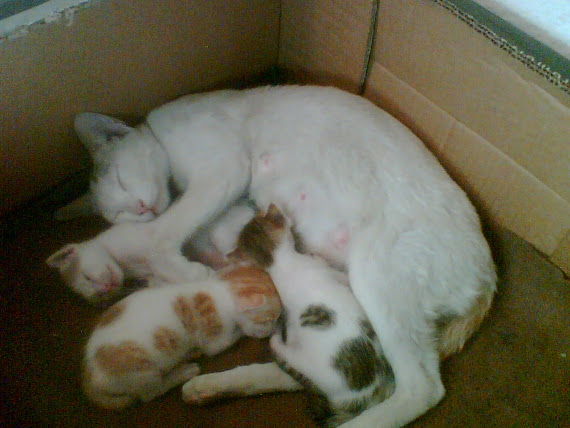
Minnu The Cat & Her Kittens Brownie, Goldie & Blackie
Someone with Nature

Syed Akbar in an island in river Godavari with Papikonda hills in the background
Recognition by World Vegetable Centre

Under the shade of Baobab tree

At Agha Khan Akademi in Kenya
Gateway to the Southern Hemisphere

Convention on Biodiversity

Syed Akbar at the 11th Conference of Parties to the United Nations Convention on Biological Diversity