Syed Akbar
Hyderabad: Heart diseases are responsible for about one-third of all deaths in rural India while only 13 per cent of deaths are related to accidents including suicide.
An international research study conducted jointly by the George Institute for International Health and the University of Queensland revealed that heart related problems constituted the "major killer" of human beings in the countryside. The findings were published in the International Journal of Epidemiology and the research was carried out in East and West Godavari districts of Andhra Pradesh. The study emphasised the need for India to improve its health services besides creating new health avenues to fight against chronic ailments.
While the incidence of diseases related to heart are on the rise in the country, interestingly enough cases of infectious diseases are on the decline. This, according to the study, is the result of change in social and economic scenario in villages.
The study pointed out that death from injury, both accidents and self-inflicted as in suicide, was the second most common cause of death in rural India contributing to 13 per cent of total deaths. Infectious diseases, including tuberculosis, intestinal infections and HIV/AIDS, are responsible for 12 per cent of deaths, while cancer is contributing to 7 per cent of deaths.
According to Dr Rohina Joshi, the data on the causes of death is an indicator of the health problems now facing the rural India. The spurt in heart related diseases is linked to high rate of smoking, diabetes and high blood pressure among villagers.
The study was conducted in 45 villages spread over East and West Godavari districts covering a total population of 1.80 lakh.
Sunday, 10 May 2009


Link between infertility and female genital tuberculosis
Syed Akbar
Hyderabad: A team of city doctors has established a link between infertility and female genital tuberculosis, which is fast spreading in South India after lying low for many years.
The team has also found easy diagnostic methods to detect genital tuberculosis in women with 100 per cent accuracy. Currently diagnosing female genital tuberculosis is nothing short of a Herculean task. In many countries diagnosis is mainly limited to clinical suspicion based on symptoms. The problem is further compounded as abdominal and vaginal examinations reveal nothing.
Dr Roya Rozati, Dr Sreenivasagari Roopa and Dr Cheruvu Naga Rajashwari of the department of reproductive medicine at Mahavir Hospital and Research Centre have not only solved the diagnosis problem by identifying mycobacterial DNA tests through polymerase chain reaction but also established a link between the disease and infertility.
Genital tuberculosis is an important cause of infertility, more so in endemic zones such as South India. The proportion of extra-pulmonary TB is increasing down the Vindhyas and currently stands slightly higher than smear-positive pulmonary TB. Effective chemotherapy had reduced all forms of TB including FGTB until the HIV epidemic reversed the trend over the last decade.
However, the true epidemiology of this disease remains unknown due to lack of highly sensitive and specific tests. Genital tuberculosis not only causes tubal obstruction and dysfunction but also impairs implantation due to endometrial involvement and ovulatory failure from ovarian involvement.
The prevalence of FGTB in infertility clinics shows marked variations in different countries ranging between 15 and 25 per cent. In India in 80 to 90 per cent of cases, FGTB affects young women between 18 and 38 years of age, besides being an important cause of infertility.
"A high erythrocyte sedimentation rate and a positive mantoux test are non-specific. AFB staining is not sensitive enough and both culdoscopy and laparascopy carry a significant risk of bowel injury. Surgery is disadvantageous as it is highly invasive and carries a risk of activating silent infection. Only histopathological evidence in biopsy of premenstrual endometrial tissue or demonstration of tubercle bacilli in culture of menstrual blood or endometrial curetting can provide diagnosis with certainty," says Dr Roya Rozati.
The doctors investigated biopsy or curettage samples from 65 women clinically suspected to have genital tuberculosis for mycobacterium.
Genital tuberculosis is often a secondary complication as a result of reactivation of a silent bacillemia, primarily from lungs, affecting most commonly the fallopian tubes, ovaries, cervix, endometrium and vagina and vulva, and in some instances also from kidney and intestines.
"Direct inoculation of tubercle bacilli can also take place over vulva or vagina during sexual intercourse with a partner suffering from tuberculous lesions of genitalia," she said.
Hyderabad: A team of city doctors has established a link between infertility and female genital tuberculosis, which is fast spreading in South India after lying low for many years.
The team has also found easy diagnostic methods to detect genital tuberculosis in women with 100 per cent accuracy. Currently diagnosing female genital tuberculosis is nothing short of a Herculean task. In many countries diagnosis is mainly limited to clinical suspicion based on symptoms. The problem is further compounded as abdominal and vaginal examinations reveal nothing.
Dr Roya Rozati, Dr Sreenivasagari Roopa and Dr Cheruvu Naga Rajashwari of the department of reproductive medicine at Mahavir Hospital and Research Centre have not only solved the diagnosis problem by identifying mycobacterial DNA tests through polymerase chain reaction but also established a link between the disease and infertility.
Genital tuberculosis is an important cause of infertility, more so in endemic zones such as South India. The proportion of extra-pulmonary TB is increasing down the Vindhyas and currently stands slightly higher than smear-positive pulmonary TB. Effective chemotherapy had reduced all forms of TB including FGTB until the HIV epidemic reversed the trend over the last decade.
However, the true epidemiology of this disease remains unknown due to lack of highly sensitive and specific tests. Genital tuberculosis not only causes tubal obstruction and dysfunction but also impairs implantation due to endometrial involvement and ovulatory failure from ovarian involvement.
The prevalence of FGTB in infertility clinics shows marked variations in different countries ranging between 15 and 25 per cent. In India in 80 to 90 per cent of cases, FGTB affects young women between 18 and 38 years of age, besides being an important cause of infertility.
"A high erythrocyte sedimentation rate and a positive mantoux test are non-specific. AFB staining is not sensitive enough and both culdoscopy and laparascopy carry a significant risk of bowel injury. Surgery is disadvantageous as it is highly invasive and carries a risk of activating silent infection. Only histopathological evidence in biopsy of premenstrual endometrial tissue or demonstration of tubercle bacilli in culture of menstrual blood or endometrial curetting can provide diagnosis with certainty," says Dr Roya Rozati.
The doctors investigated biopsy or curettage samples from 65 women clinically suspected to have genital tuberculosis for mycobacterium.
Genital tuberculosis is often a secondary complication as a result of reactivation of a silent bacillemia, primarily from lungs, affecting most commonly the fallopian tubes, ovaries, cervix, endometrium and vagina and vulva, and in some instances also from kidney and intestines.
"Direct inoculation of tubercle bacilli can also take place over vulva or vagina during sexual intercourse with a partner suffering from tuberculous lesions of genitalia," she said.
When stones speak history: GSI lists exotic geological monuments
Syed Akbar
Hyderabad: The exotic geological monuments that dot the country giving a peep into the prehistoric past will now bustle with international tourists thanks to a grand plan to resurrect these natural structures.
The Geological Survey of India has now drawn up an ambitious plan to develop natural rock and other formations into attractive tourist spots. India has several imprints of varied geological processes through ages and is a storehouse of interesting geological features.
To tap these geological formations into international tourist destinations, the GSI has declared some of these natural locales as national geological monuments. The tourists visiting these places will have an insight in the real past like the formation of the subcontinent, the orogeny (mountain formation), the palaeoenvironment and the exotic collection of paleoflora and paleofauna.
According to GSI sources, one of the the geo-tourism destination identified by GSI is the "Natural Arch" near Tirupati, a unique geological marvel in the country. The arch, measuring eight metres in width and three metres in height, has been curved out of quartzite of Cuddapah Supergroup of Middle to Upper Proterozoic (1600 to 570 million aeons) by collective action of weathering agents like water and wind over a long period of several thousands of years.
Natural arches of this kind are a rarity. The Rainbow Arch of Utah in the USA and the one in the Dalradian Quartzite are the other examples.
Even the serene Tirumala Hills are of geo-tourism destination because of their "Eparchaean Unconformity" (precambrian era), which separates the proterozoic Nagari quartzite from the oldest archaean granite representing a time gap of over 800 million aeons. "The unconformity is supposed to be a period of remarkable quiescence without much structural disturbance and igneous activity in the history of earth," GSI sources point out.
The Kadapa district has one of the largest baryte deposits of the world and is considered to have formed through precipitation from volcanic vapours under submarine conditions and sub aerial showering of ash and molten baryte lapilli (volcanic hail). The deposit occurs in the Pullampet Formation of the Nallamalai Group of the Cuddapah Supergroup. The lower beds of Mangampeta Barytes are of the highest grade and often occur as pure barium sulphate.
Other geological sites selected by the GSI are Marine Gondwana Fossil Park at Manendragarh in Chattisgarh, Akal Fossil Wood Park in Jaisalmer of Rajastan, National Fossil Wood Park in Villupuram district of Tamil Nadu, Siwalik Fossil Park in Sirmur district of Himachal Pradesh, Stromatolite Park (structures produced by blue-green algae) in Chittaurgarh district of Rajasthan and Columnar Basaltic Lava in Coconut Island of Udupi district in Karnataka.
Hyderabad: The exotic geological monuments that dot the country giving a peep into the prehistoric past will now bustle with international tourists thanks to a grand plan to resurrect these natural structures.
The Geological Survey of India has now drawn up an ambitious plan to develop natural rock and other formations into attractive tourist spots. India has several imprints of varied geological processes through ages and is a storehouse of interesting geological features.
To tap these geological formations into international tourist destinations, the GSI has declared some of these natural locales as national geological monuments. The tourists visiting these places will have an insight in the real past like the formation of the subcontinent, the orogeny (mountain formation), the palaeoenvironment and the exotic collection of paleoflora and paleofauna.
According to GSI sources, one of the the geo-tourism destination identified by GSI is the "Natural Arch" near Tirupati, a unique geological marvel in the country. The arch, measuring eight metres in width and three metres in height, has been curved out of quartzite of Cuddapah Supergroup of Middle to Upper Proterozoic (1600 to 570 million aeons) by collective action of weathering agents like water and wind over a long period of several thousands of years.
Natural arches of this kind are a rarity. The Rainbow Arch of Utah in the USA and the one in the Dalradian Quartzite are the other examples.
Even the serene Tirumala Hills are of geo-tourism destination because of their "Eparchaean Unconformity" (precambrian era), which separates the proterozoic Nagari quartzite from the oldest archaean granite representing a time gap of over 800 million aeons. "The unconformity is supposed to be a period of remarkable quiescence without much structural disturbance and igneous activity in the history of earth," GSI sources point out.
The Kadapa district has one of the largest baryte deposits of the world and is considered to have formed through precipitation from volcanic vapours under submarine conditions and sub aerial showering of ash and molten baryte lapilli (volcanic hail). The deposit occurs in the Pullampet Formation of the Nallamalai Group of the Cuddapah Supergroup. The lower beds of Mangampeta Barytes are of the highest grade and often occur as pure barium sulphate.
Other geological sites selected by the GSI are Marine Gondwana Fossil Park at Manendragarh in Chattisgarh, Akal Fossil Wood Park in Jaisalmer of Rajastan, National Fossil Wood Park in Villupuram district of Tamil Nadu, Siwalik Fossil Park in Sirmur district of Himachal Pradesh, Stromatolite Park (structures produced by blue-green algae) in Chittaurgarh district of Rajasthan and Columnar Basaltic Lava in Coconut Island of Udupi district in Karnataka.
Friday, 8 May 2009
Global warming hits mango production, taste

2009
Syed Akbar
Hyderabad: For the first time the "king of fruits" has lost its sheen, both in terms of colour and taste and overall output. Mango production is expected to be down by about 20 per cent over last year's yield across the country.
Though there's no full-fledged scientific study as yet, environmentalists and those in mango production blame global warming for mango woes. Like many fruits, mango is a seasonal crop, which in other words means dependent on optimum temperatures for yield. Any major change in the optimum temperature, which in the case of mango is between 15 and 18 degrees Celsius, will affect flowering (inflorescence)
and thus the total production.
According to Insram Ali, president of All-India Mango Growers' Association, global
warming has affected mango production this time. "The inflorescence was hit by increase in temperature during the flowering period in November-December. This explains a considerable fall in the overall production this season," he said. The temperature has also affected the texture, sugar content and taste of the fruit
in many parts of the country, including Andhra Pradesh.
AP has the highest per acreage mango production in India, though Uttar Pradesh leads the country in terms of total acreage under mango cultivation. In Krishna district, the epicentre of mango crop in Andhra Pradesh, production is expected at 5000 tons this season, as against 6,000 tons last season.
B Suhasini, deputy director of horticulture, Vijayawada, said though good quality mangoes are expected this season due to no pests and untimely rains, there will be a fall in the overall production by 20 per cent. Agrees senior entomologist Dr NBV Chalapathi Rao of Mango Research Centre, Nuzvid. He said the fall was due to
global warming and sudden change or fluctuation in temperatures.
Though global warming is blamed for fall in production, principal scientist Dr Y
Satyanarayana Reddy of Fruit Research Centre, Sangareddy, finds fault with growers and traders for lack of sweetness in the fruit. "It takes between 116 to 120 days for the mango fruit to ripe. The best and tasty fruit is expected only in the
fourth week of April or the first week of May. The fruit should have nine per cent sugar content to tastegood," he said.
The total acreage under mango in the State is 2.76 lakhs hectares with an annual
production of 3.25 lakhs tonnes.
Asian Institute of Gastroenterology: Doctors keep themselves fit through exercise
2009
Syed Akbar
Hyderabad: It's six in the morning. A group of people in track suits enters a gymnasium, complete with state-of-the-art equipment including the mandatory thread mills, weight benches and height adjusters.
After a hectic 30 minutes of exercise, they check their weight on the nearby portable weighing scale. Having lost some weight and calories, they disperse, allowing others to continue with the exercise.
This is a general routine at any hitech gymnasium in the city. But what makes this gym stand apart is that it is attached to a hospital. And those trimming their bodies and losing calories are physicians, surgeons and medical experts. All of them believe that a good body gives a good mind and when both combines the results are wonderful. Patients get good attention, proper treatment and care. It's a win-win situation for both.
The modern gymnasium attached to the Asian Institute of Gastroenterology in Hyderabad stands
testimony to the latest fad among doctors to stay fit, eat fit and serve patients well. The AIG is perhaps one of the few medical institutions of repute to provide gym facility to its medical staff. Almost every doctor in the institute makes it a point to shed a few calories to ensure that they are attentive to the needs of patients.
"It all began with the concept that a fit doctor is the best doctor. A few minutes of exercise regularly keeps us healthy. Many doctors because of their busy and untimely schedules do not find enough time to do exercise. So we have opened a gym in the hospital premises. Doctors come here and burn their calories without disturbing their tight schedule. Those on morning surgeries exercise in the evening and vice versa," says Dr D Nageshwar Reddy, chairman and chief of gastroenterology, Asian Institute of Gastroenterology.
Many doctors in the city have now included exercise in their daily routine. While those not so busy prefer to burn calories every day, seven days a week, the busybees make it a point to exercise at least for 35 minutes, four days a week.
"I have been in favour of optimum exercise, not too long or too short. But I do vigorous exercise as it is the best form of shedding weight. What is important is quantification of exercise. This keeps the circulation of blood in good condition," observes surgeon Dr GV Rao.
There are some in the medical fraternity who believe that regular exercise will prevent major health risks like cardio vascular strokes, cerebro vascular strokes, diabetes and fatty liver. Argues Dr Manu Tandon "those in the top position should show the way to the juniors. If the seniors are not healthy, they set a bad trend. So our war is against obesity".
Dr Rupa, a regular at the gym, suggests isometric exercises for people, particularly those in the medical profession. "It is a sort of strength training," she says.
Syed Akbar
Hyderabad: It's six in the morning. A group of people in track suits enters a gymnasium, complete with state-of-the-art equipment including the mandatory thread mills, weight benches and height adjusters.
After a hectic 30 minutes of exercise, they check their weight on the nearby portable weighing scale. Having lost some weight and calories, they disperse, allowing others to continue with the exercise.
This is a general routine at any hitech gymnasium in the city. But what makes this gym stand apart is that it is attached to a hospital. And those trimming their bodies and losing calories are physicians, surgeons and medical experts. All of them believe that a good body gives a good mind and when both combines the results are wonderful. Patients get good attention, proper treatment and care. It's a win-win situation for both.
The modern gymnasium attached to the Asian Institute of Gastroenterology in Hyderabad stands
testimony to the latest fad among doctors to stay fit, eat fit and serve patients well. The AIG is perhaps one of the few medical institutions of repute to provide gym facility to its medical staff. Almost every doctor in the institute makes it a point to shed a few calories to ensure that they are attentive to the needs of patients.
"It all began with the concept that a fit doctor is the best doctor. A few minutes of exercise regularly keeps us healthy. Many doctors because of their busy and untimely schedules do not find enough time to do exercise. So we have opened a gym in the hospital premises. Doctors come here and burn their calories without disturbing their tight schedule. Those on morning surgeries exercise in the evening and vice versa," says Dr D Nageshwar Reddy, chairman and chief of gastroenterology, Asian Institute of Gastroenterology.
Many doctors in the city have now included exercise in their daily routine. While those not so busy prefer to burn calories every day, seven days a week, the busybees make it a point to exercise at least for 35 minutes, four days a week.
"I have been in favour of optimum exercise, not too long or too short. But I do vigorous exercise as it is the best form of shedding weight. What is important is quantification of exercise. This keeps the circulation of blood in good condition," observes surgeon Dr GV Rao.
There are some in the medical fraternity who believe that regular exercise will prevent major health risks like cardio vascular strokes, cerebro vascular strokes, diabetes and fatty liver. Argues Dr Manu Tandon "those in the top position should show the way to the juniors. If the seniors are not healthy, they set a bad trend. So our war is against obesity".
Dr Rupa, a regular at the gym, suggests isometric exercises for people, particularly those in the medical profession. "It is a sort of strength training," she says.
Tuesday, 5 May 2009
Post harvest losses: AP farmers suffer Rs 10,000 crore every year
Syed Akbar
Hyderabad: Farmers in the State lose a whopping Rs 10,000 crore worth food grains and commercial crop in the form of post harvest losses even before the produce is transported to market yards.
The total post harvest lossess of paddy alone works out to be around Rs 3000 crore. In the absence of proper post-harvest facilities, farmers face the problem of heavy wastage at the "production level" (i.e in transport from field to threshing floor, threshing and winnowing and transportation to market yards). The losses are in addition to those suffered by farmers growing horticultural crops in the absence of cold storage facilities.
The Sharad Pawar Committee on suicide of farmers has recommended better farm extension methods to help farmers get more revenue from their hard-earned produce. Heavy losses of food grains and commercial crop at the field level itself is one of the reasons for the spurt in the suicide of farmers.
According to a survey conducted by the Directorate of Marketing and Inspection, farmers in the State lose 5,34,000 tonnes of paddy even before they transport it to market yards or traders. The post harvest loss for the State works out to be around 3.22 per cent of total paddy production as against the all India average of just 2.71 per cent. Only four States - Gujarat (4.86 per cent), Bihar (4.80 per cent), Tirupura (4.42 per cent) and Assam (3.90 per cent) are ahead of Andhra Pradesh in production loss at farm level.
The survey points out that Andhra Pradesh has been losing 330 tonnes (3.62 per cent of total production) of wheat, 10,000 tonnes (1.9 per cent) of jowar, 3,200 tonnes (3.07 per cent) of bajra, 7,700 tonnes (0.84 per cent) of maize, 5,100 tonnes (3.83 per cent) of ragi, 2,500 tonnes (2.67 per cent) of red gram, 3,700 tonnes (2.67 per cent) of black gram, 4,700 tonnes (2.55 per cent) of green gram and 6,300 tonnes (2.35 per cent) of Bengal gram during winnowing and transport operations.
On average farmers lose 0.89 per cent of food grains during threshing, 0.48 per cent during winnowing and 0.79 per cent during transport.
The survey report finds fault with cooperatives and the Food Coporation of India for not properly concentrating on purchases from farmers to save them from distress sales at market yards and to middlemen. The share of direct sales by farmers to consumers (ryotu bazar concept) was a mere 3.64 per cent of total production. Cooperative societies The co-operatives purchased only 3.90 per cent while the share of the Food Corporation of India was around 9.73 per cent.
"It is a matter of introspection for the co-operative sector and the FCI to evaluate their role in marketing for the benefit of the farming community. It is also imperative to open up avenues through marketing reforms for promoting direct sales by the producer to the target group in order to enhance producer’s share in consumer's rupee," the report suggested.
Hyderabad: Farmers in the State lose a whopping Rs 10,000 crore worth food grains and commercial crop in the form of post harvest losses even before the produce is transported to market yards.
The total post harvest lossess of paddy alone works out to be around Rs 3000 crore. In the absence of proper post-harvest facilities, farmers face the problem of heavy wastage at the "production level" (i.e in transport from field to threshing floor, threshing and winnowing and transportation to market yards). The losses are in addition to those suffered by farmers growing horticultural crops in the absence of cold storage facilities.
The Sharad Pawar Committee on suicide of farmers has recommended better farm extension methods to help farmers get more revenue from their hard-earned produce. Heavy losses of food grains and commercial crop at the field level itself is one of the reasons for the spurt in the suicide of farmers.
According to a survey conducted by the Directorate of Marketing and Inspection, farmers in the State lose 5,34,000 tonnes of paddy even before they transport it to market yards or traders. The post harvest loss for the State works out to be around 3.22 per cent of total paddy production as against the all India average of just 2.71 per cent. Only four States - Gujarat (4.86 per cent), Bihar (4.80 per cent), Tirupura (4.42 per cent) and Assam (3.90 per cent) are ahead of Andhra Pradesh in production loss at farm level.
The survey points out that Andhra Pradesh has been losing 330 tonnes (3.62 per cent of total production) of wheat, 10,000 tonnes (1.9 per cent) of jowar, 3,200 tonnes (3.07 per cent) of bajra, 7,700 tonnes (0.84 per cent) of maize, 5,100 tonnes (3.83 per cent) of ragi, 2,500 tonnes (2.67 per cent) of red gram, 3,700 tonnes (2.67 per cent) of black gram, 4,700 tonnes (2.55 per cent) of green gram and 6,300 tonnes (2.35 per cent) of Bengal gram during winnowing and transport operations.
On average farmers lose 0.89 per cent of food grains during threshing, 0.48 per cent during winnowing and 0.79 per cent during transport.
The survey report finds fault with cooperatives and the Food Coporation of India for not properly concentrating on purchases from farmers to save them from distress sales at market yards and to middlemen. The share of direct sales by farmers to consumers (ryotu bazar concept) was a mere 3.64 per cent of total production. Cooperative societies The co-operatives purchased only 3.90 per cent while the share of the Food Corporation of India was around 9.73 per cent.
"It is a matter of introspection for the co-operative sector and the FCI to evaluate their role in marketing for the benefit of the farming community. It is also imperative to open up avenues through marketing reforms for promoting direct sales by the producer to the target group in order to enhance producer’s share in consumer's rupee," the report suggested.
Traffic cops losing their fertility levels due to pollution
By Syed Akbar
Hyderabad: Traffic cops beware! An increasing number of policemen on traffic duty are losing their fertility levels thanks to their prolonged exposure to vehicular pollutants everyday.
According to a research study conducted by a team of city-based fertility experts in association with the All-India Institute of Medical Sciences, Hyderabadi traffic cops have significantly lower total sperm motility and high extent of damage to sperm DNA. The fertility levels in traffic policemen are almost 20 to 30 per cent lower than that of people from other occupations.
Even the volume of semen ejaculated by traffic cops (2.35 ml) is lower than the men in the control group (2.41 ml). The total progressive motility is 57.64 and 65.28 per cent respectively in traffic police personnel and those from other occupations that do not require constant exposure to vehicular pollutants.
Traffic policemen also showed significantly lower forward progression of sperm. There was a significant increase in basal DNA damage in the cops as compared with that of the control group. This increase is due to the presence of lead, nitric oxide and toxic substances present in environment.
The study was carried out by fertility experts R Rozati, K Shankarappa, Sugana Reddy and Satyanarayana Reddy in collaboration with Prof A Kriplani of AIIMS. Fifteen traffic policemen and 15 people from other occupations were selected for the study. They were screened for their fertility levels. A detailed semen analysis was carried out for any genotoxic effect of traffic pollutants on sperm DNA through single cell gell electrophoresis method.
In traffic police personnel, the result showed 50 cells per treatment with comet tail length, which in other words means damage to the sperm DNA. A significant increase in basal DNA damage and deranged in sperm count and its morphology was observed in cops.
Says Dr Rozati, "pollutants have adverse effect on male reproductive function. Occupational exposure to traffic pollution reduces the semen quality. Traffic policemen, street sweepers, postal workers, salespersons, taxi drivers, city bus drivers and newspaper vendors experience the highest exposure to airborne pollutants. Traffic cops in big cities like Hyderabad are at a high risk".
Policing is among the top three occupations most commonly reported by both occupational physicians and psychiatrists in the Occupational disease Intelligence Network (ODIN) system for Surveillance of Occupational Stress and mental Illness (SOSMI).
Hyderabad: Traffic cops beware! An increasing number of policemen on traffic duty are losing their fertility levels thanks to their prolonged exposure to vehicular pollutants everyday.
According to a research study conducted by a team of city-based fertility experts in association with the All-India Institute of Medical Sciences, Hyderabadi traffic cops have significantly lower total sperm motility and high extent of damage to sperm DNA. The fertility levels in traffic policemen are almost 20 to 30 per cent lower than that of people from other occupations.
Even the volume of semen ejaculated by traffic cops (2.35 ml) is lower than the men in the control group (2.41 ml). The total progressive motility is 57.64 and 65.28 per cent respectively in traffic police personnel and those from other occupations that do not require constant exposure to vehicular pollutants.
Traffic policemen also showed significantly lower forward progression of sperm. There was a significant increase in basal DNA damage in the cops as compared with that of the control group. This increase is due to the presence of lead, nitric oxide and toxic substances present in environment.
The study was carried out by fertility experts R Rozati, K Shankarappa, Sugana Reddy and Satyanarayana Reddy in collaboration with Prof A Kriplani of AIIMS. Fifteen traffic policemen and 15 people from other occupations were selected for the study. They were screened for their fertility levels. A detailed semen analysis was carried out for any genotoxic effect of traffic pollutants on sperm DNA through single cell gell electrophoresis method.
In traffic police personnel, the result showed 50 cells per treatment with comet tail length, which in other words means damage to the sperm DNA. A significant increase in basal DNA damage and deranged in sperm count and its morphology was observed in cops.
Says Dr Rozati, "pollutants have adverse effect on male reproductive function. Occupational exposure to traffic pollution reduces the semen quality. Traffic policemen, street sweepers, postal workers, salespersons, taxi drivers, city bus drivers and newspaper vendors experience the highest exposure to airborne pollutants. Traffic cops in big cities like Hyderabad are at a high risk".
Policing is among the top three occupations most commonly reported by both occupational physicians and psychiatrists in the Occupational disease Intelligence Network (ODIN) system for Surveillance of Occupational Stress and mental Illness (SOSMI).
Swine flu and HIV/AIDS: Influenza A may make HIV patients an easy target
2009
Syed Akbar
Hyderabad, May 2: The Andhra Pradesh State government has been sitting on the
proposal to set up a specialised virology laboratory in Hyderabad, even
as the World Health Organisation said people suffering from
HIV/AIDS are at high risk of contacting swine flu or Influenza A.
Andhra Pradesh ranks high in HIV/AIDS cases with a large number of
persons carrying the immuno-deficiency virus and the present threat of
Influenza A makes them vulnerable to the new problem. With no
specialised testing facility for viral diseases in the State, health
authorities are forced to send the samples to the National Institute of
Virology in Pune.
The State government proposed to set up a virology lab two years ago
after the outbreak of bird flu in parts of the country. Since then the
proposal has been gathering dust and health officials point out that they
are awaiting the specialised equipment. "We are expecting the
equipment in a couple of months. Once it arrives, the lab will be
operational. It may be set up at Sir Ronald Ross Institute of Tropical
and Communicable Diseases," said principal secretary (health) LV
Subrahmanyam.
"The need for a specialised lab to test viral cases is now felt more than
ever. The State has a large population of pigs and birds. There are also
large number of HIV/AIDS cases. This makes the State vulnerable to
cases of bird and swine flu, though such cases have not been reported
earlier. The WHO's assertion that HIV/AIDS carriers are more
susceptible to influenza A should force the government to hurry up
with the lab," said senior zoologist D Srinivas.
According to a WHO report, age and other groups with increased risk
for complications of seasonal influenza include persons with
immunodeficiency diseases, including HIV infection. The risk of
mortality from seasonal influenza is increased among HIV-infected
individuals compared with the general population.
Studies have shown an increased risk for heart- and lung-related
hospitalisations in people infected with HIV during influenza seasons
as opposed to other times of the year, and a higher risk of influenza-
related death in HIV-infected people.
Syed Akbar
Hyderabad, May 2: The Andhra Pradesh State government has been sitting on the
proposal to set up a specialised virology laboratory in Hyderabad, even
as the World Health Organisation said people suffering from
HIV/AIDS are at high risk of contacting swine flu or Influenza A.
Andhra Pradesh ranks high in HIV/AIDS cases with a large number of
persons carrying the immuno-deficiency virus and the present threat of
Influenza A makes them vulnerable to the new problem. With no
specialised testing facility for viral diseases in the State, health
authorities are forced to send the samples to the National Institute of
Virology in Pune.
The State government proposed to set up a virology lab two years ago
after the outbreak of bird flu in parts of the country. Since then the
proposal has been gathering dust and health officials point out that they
are awaiting the specialised equipment. "We are expecting the
equipment in a couple of months. Once it arrives, the lab will be
operational. It may be set up at Sir Ronald Ross Institute of Tropical
and Communicable Diseases," said principal secretary (health) LV
Subrahmanyam.
"The need for a specialised lab to test viral cases is now felt more than
ever. The State has a large population of pigs and birds. There are also
large number of HIV/AIDS cases. This makes the State vulnerable to
cases of bird and swine flu, though such cases have not been reported
earlier. The WHO's assertion that HIV/AIDS carriers are more
susceptible to influenza A should force the government to hurry up
with the lab," said senior zoologist D Srinivas.
According to a WHO report, age and other groups with increased risk
for complications of seasonal influenza include persons with
immunodeficiency diseases, including HIV infection. The risk of
mortality from seasonal influenza is increased among HIV-infected
individuals compared with the general population.
Studies have shown an increased risk for heart- and lung-related
hospitalisations in people infected with HIV during influenza seasons
as opposed to other times of the year, and a higher risk of influenza-
related death in HIV-infected people.
Monday, 4 May 2009
The Mahatma and the Poetess
Syed Akbar
The struggle for India’s Independence is replete with innumerable heroic deeds and inspiring anecdotes left behind by our great freedom fighters. While some sacrificed their lives for the freedom of the country, others donated their property to aid the struggle against the alien rulers. MK Gandhi and Sarojini Naidu are two great leaders who stand apart in the country’s freedom movement. One is a Mahatma and the other a poetess. They inspired the nation during the British regime and continue to inspire the present-day generation, six decades after India gained Independence.
“The Mahatma and the Poetess”, an English play based on the exchange of letters between Father of Nation Mahatma Gandhi and Nightingale of India Sarojini Naidu over a period of 23 years, brings to life the vivid memories of our long-forgotten freedom heroes even while throwing light on several little known aspects of the struggle for Independence. Veteran film and stage artiste Tom Alter and eminent danseuse Mrinalini V Sarabhai, who feature in the two-person play, captivated the audience and held them spell-bound for about 80 minutes during their appearance in Hyderabad recently.
The play, presented by Qadir Ali Baig Theatre Foundation, is based on a compilation of letters in English exchanged between Mahatma Gandhi and Sarojini Naidu. The nightingale of India met the Mahatma in August 1914. Mahatma Gandhi directed her energy towards the country's fight for independence resulting in a series of letters exchanged between them until his death in 1948. The Mahatma and the Poetess is a simple reading of letters and yet Tom and Mrinalini poured life into the play with a rare display of art.
But for these two great artistes, the play would have remained just a letter reading session full of boredom. Tom and Mrinalini included patriotism, emotion and took letter reading to the level of an art. The letters exchanged are not simple alphabets but words of amazing honesty, beauty, humour and truth. They are the letters that tell the tale of the freedom struggle, and the tale of a deep, probing relationship. They shed new light not only on the relationship between two great children of India, but also on their vision and their dedication and most of all on their love for the country and its people for which they made great sacrifices, as Mrinalini rightly observes.
The beauty of the play is that Tom Alter does not play Mahatma Gandhi, or Mrinalini Sarabhai Sarojini Naidu. They are just two common people and friends, one reading out to the other the letters exchanged between Mahatma Gandhi and Sarojini Naidu. Tom reads out the Gandhi’s letters and Mrinalini those of Sarojini Naidu. The setting is quite simple, an ordinary drawing room with a table fitted with a reading lamp.
"We are people in the here and now. The computer on the stage is an indication that it is 2005 not 1915," says Tom Alter. Before beginning the show, he briefly interacts with the audience recalling how the play has taken its birth. "I received a registered parcel. In this day of Internet and courier, the registered parcel was a harkening back to an earlier time. The parcel contained this book with these truly magnificent letters between these two great people and a note from Mrinalini."
Mrinalini wanted Tom to translate the book into a stage play. There was no reply from Tom for a full one year. And when Tom finally converted the book full of letters to an English play full of inspiration, he came up with a rare facet of Mahatma Gandhi and Sarojini Naidu. Though the play was originally planned for 50 minutes, sensing the mood of the audience, the characters dragged it on for full 80 minutes and none in the audience knew how the time simply flew away.
Adds Mrinalini, “ES Reddy, a Gandhian scholar, sought my help in putting the letters together. Once that was done, I thought it would be nice to read the letters to Tom and so I sent him the book. When I did not hear from him for more than a year, I thought that was the end of it, but then Tom got back and here we are."
The letters between Mahatma Gandhi and Sarojini Naidu show a human, tender side of the father of nation. His sense of humour is another thing that comes through like when Sarojini Naidu writes about dogs and daughters, Gandhi writes that one must mention dogs first as they cause less trouble. At times the two leaders go so personal that Sarojini Naidu talks of the many gifts she received from South Africa - so many jewel boxes and not enough jewels to fill one and so many combs and not enough hair. Even the signing off moves from MK Gandhi in one letter to "mystic spinner" in another and finally to "Bapu."
The Mahatma and the Poetess is the third in the series of stage plays brought to Hyderabad by Qadir Ali Baig Foundation. The immense popularity the show commanded during the two days it was staged in Hyderabad proved beyond doubt that given an opportunity people would like to witness stage plays, the multiplexes and soap operas notwithstanding. Says Muhammad Ali Baig of the Foundation, "we chose the play, though in English, because it has its roots in Hyderabad. The message of social and communal harmony it conveys, is simply great and quite relevant for our strife-torn society of today".
Hyderabadi audience were reminded at least half a dozen times in the letters that the city has always been the “centre for Hindu-Muslim unity”. Mahatma Gandhi expresses his special love for Hyderabad when he chooses to call Sarojini Naidu as the “ daughter of Bengal and the daughter-in-law of Andhra."
If Mahatma and his devoted disciple, a unique and rare relationship, is brought alive and meaningful in their letters, Tom and Mrinalini succeeds in revealing to the audience a side of the great personality that perhaps very few people in the country knew. There was a marvellous rapport between them, based on a deep understanding of each other.
Tom turns a bit emotional as he reads out the deeply moving letter of Mahatma Gandhi to Sarojini on the eve of his fast against the communal award in 1932: "It may be that this is my last letter to you. I have always known and treasured your love. I think that I understood you when I first saw you and heard you at the Criterion (in London) in 1914. If I die I shall die in the faith that comrades like you, with whom God has blessed me, will continue the work of the country which is also fully the work of humanity in the same spirit in which it was begun."
And in the same letter, he conveyed two of his most deeply felt convictions, which deserve our constant and complete attention. "If Hinduism is to live, untouchability must die. "If the interests of country are to be one with those of humanity, if the good of the one faith is to be the good of all faiths, it will come only by the strictest adherence to truth and non-violence in thought, world and deed."
The Hyderabadi audience had definitely missed the flowery Urdu from the tongue of Tom Alter. The Qadir Ali Baig Foundation, however, promised a stage play soon with Tom speaking his favourite Urdu. Tom is enamoured by Urdu language. Speaking about one of his recent shows in Gujarat, he says, Gulzar Saheb and myself were supposed to do the readings of the letters written by Mirza Ghalib to one of his friends. The play was for a shorter period and the reading was done at an open place where people climb up the trees to watch the reading.
"We had to abandon the script and go extempore extending the reading to two hours wondering whether it was the same Gujarat where communal riots took place," he says.
Recalls Mrinalini, “for me as a child whenever she visited our home, always dressed in bright South Indian saris, a flower in her hair, talking and laughing
with my mother, it was as though a rainbow lit by the sunlight entered
the room. It is a privilege to be able to present her correspondence with
Gandhiji to the public”.
The struggle for India’s Independence is replete with innumerable heroic deeds and inspiring anecdotes left behind by our great freedom fighters. While some sacrificed their lives for the freedom of the country, others donated their property to aid the struggle against the alien rulers. MK Gandhi and Sarojini Naidu are two great leaders who stand apart in the country’s freedom movement. One is a Mahatma and the other a poetess. They inspired the nation during the British regime and continue to inspire the present-day generation, six decades after India gained Independence.
“The Mahatma and the Poetess”, an English play based on the exchange of letters between Father of Nation Mahatma Gandhi and Nightingale of India Sarojini Naidu over a period of 23 years, brings to life the vivid memories of our long-forgotten freedom heroes even while throwing light on several little known aspects of the struggle for Independence. Veteran film and stage artiste Tom Alter and eminent danseuse Mrinalini V Sarabhai, who feature in the two-person play, captivated the audience and held them spell-bound for about 80 minutes during their appearance in Hyderabad recently.
The play, presented by Qadir Ali Baig Theatre Foundation, is based on a compilation of letters in English exchanged between Mahatma Gandhi and Sarojini Naidu. The nightingale of India met the Mahatma in August 1914. Mahatma Gandhi directed her energy towards the country's fight for independence resulting in a series of letters exchanged between them until his death in 1948. The Mahatma and the Poetess is a simple reading of letters and yet Tom and Mrinalini poured life into the play with a rare display of art.
But for these two great artistes, the play would have remained just a letter reading session full of boredom. Tom and Mrinalini included patriotism, emotion and took letter reading to the level of an art. The letters exchanged are not simple alphabets but words of amazing honesty, beauty, humour and truth. They are the letters that tell the tale of the freedom struggle, and the tale of a deep, probing relationship. They shed new light not only on the relationship between two great children of India, but also on their vision and their dedication and most of all on their love for the country and its people for which they made great sacrifices, as Mrinalini rightly observes.
The beauty of the play is that Tom Alter does not play Mahatma Gandhi, or Mrinalini Sarabhai Sarojini Naidu. They are just two common people and friends, one reading out to the other the letters exchanged between Mahatma Gandhi and Sarojini Naidu. Tom reads out the Gandhi’s letters and Mrinalini those of Sarojini Naidu. The setting is quite simple, an ordinary drawing room with a table fitted with a reading lamp.
"We are people in the here and now. The computer on the stage is an indication that it is 2005 not 1915," says Tom Alter. Before beginning the show, he briefly interacts with the audience recalling how the play has taken its birth. "I received a registered parcel. In this day of Internet and courier, the registered parcel was a harkening back to an earlier time. The parcel contained this book with these truly magnificent letters between these two great people and a note from Mrinalini."
Mrinalini wanted Tom to translate the book into a stage play. There was no reply from Tom for a full one year. And when Tom finally converted the book full of letters to an English play full of inspiration, he came up with a rare facet of Mahatma Gandhi and Sarojini Naidu. Though the play was originally planned for 50 minutes, sensing the mood of the audience, the characters dragged it on for full 80 minutes and none in the audience knew how the time simply flew away.
Adds Mrinalini, “ES Reddy, a Gandhian scholar, sought my help in putting the letters together. Once that was done, I thought it would be nice to read the letters to Tom and so I sent him the book. When I did not hear from him for more than a year, I thought that was the end of it, but then Tom got back and here we are."
The letters between Mahatma Gandhi and Sarojini Naidu show a human, tender side of the father of nation. His sense of humour is another thing that comes through like when Sarojini Naidu writes about dogs and daughters, Gandhi writes that one must mention dogs first as they cause less trouble. At times the two leaders go so personal that Sarojini Naidu talks of the many gifts she received from South Africa - so many jewel boxes and not enough jewels to fill one and so many combs and not enough hair. Even the signing off moves from MK Gandhi in one letter to "mystic spinner" in another and finally to "Bapu."
The Mahatma and the Poetess is the third in the series of stage plays brought to Hyderabad by Qadir Ali Baig Foundation. The immense popularity the show commanded during the two days it was staged in Hyderabad proved beyond doubt that given an opportunity people would like to witness stage plays, the multiplexes and soap operas notwithstanding. Says Muhammad Ali Baig of the Foundation, "we chose the play, though in English, because it has its roots in Hyderabad. The message of social and communal harmony it conveys, is simply great and quite relevant for our strife-torn society of today".
Hyderabadi audience were reminded at least half a dozen times in the letters that the city has always been the “centre for Hindu-Muslim unity”. Mahatma Gandhi expresses his special love for Hyderabad when he chooses to call Sarojini Naidu as the “ daughter of Bengal and the daughter-in-law of Andhra."
If Mahatma and his devoted disciple, a unique and rare relationship, is brought alive and meaningful in their letters, Tom and Mrinalini succeeds in revealing to the audience a side of the great personality that perhaps very few people in the country knew. There was a marvellous rapport between them, based on a deep understanding of each other.
Tom turns a bit emotional as he reads out the deeply moving letter of Mahatma Gandhi to Sarojini on the eve of his fast against the communal award in 1932: "It may be that this is my last letter to you. I have always known and treasured your love. I think that I understood you when I first saw you and heard you at the Criterion (in London) in 1914. If I die I shall die in the faith that comrades like you, with whom God has blessed me, will continue the work of the country which is also fully the work of humanity in the same spirit in which it was begun."
And in the same letter, he conveyed two of his most deeply felt convictions, which deserve our constant and complete attention. "If Hinduism is to live, untouchability must die. "If the interests of country are to be one with those of humanity, if the good of the one faith is to be the good of all faiths, it will come only by the strictest adherence to truth and non-violence in thought, world and deed."
The Hyderabadi audience had definitely missed the flowery Urdu from the tongue of Tom Alter. The Qadir Ali Baig Foundation, however, promised a stage play soon with Tom speaking his favourite Urdu. Tom is enamoured by Urdu language. Speaking about one of his recent shows in Gujarat, he says, Gulzar Saheb and myself were supposed to do the readings of the letters written by Mirza Ghalib to one of his friends. The play was for a shorter period and the reading was done at an open place where people climb up the trees to watch the reading.
"We had to abandon the script and go extempore extending the reading to two hours wondering whether it was the same Gujarat where communal riots took place," he says.
Recalls Mrinalini, “for me as a child whenever she visited our home, always dressed in bright South Indian saris, a flower in her hair, talking and laughing
with my mother, it was as though a rainbow lit by the sunlight entered
the room. It is a privilege to be able to present her correspondence with
Gandhiji to the public”.
Saturday, 2 May 2009
A strange eye problem called cone dystrophy: Can't tolerate glare
Syed Akbar
Five-year-old Asma Sultana has a pathetic tale to tell. Like her two elder sisters Rehana Sultana (6) and Najma Sultana (7), she can't tolerate light. Bright light makes her virtually blind. The three girls were diagnosed by doctors at LV Prasad Eye Institute in Hyderabad as suffering from a strange eye problem called cone dystrophy.
Their father, a daily labourer, deserted the girls after he noticed that the eye defect could not be rectified. The girls' mother took care of them and admitted in a local government school. But soon the problems began for the girls as they could not see the black board or move freely in the open.
The mother then took the girls to LV Prasad Eye Institute where doctors prescribed some simple techniques to reduce the problem. The girls now have an improved vision and play with other children. The doctors helped the girls overcome the defect by advising sunglasses. The girls were given absorptive or tinted lenses that reduce glare. They were also advised to wear hat for shade from sunlight.
"There is no permanent treatment or cure to photophobia but better eye management and eye care techniques will reduce the trouble. Lubricant eye drops will also help. Patients find it difficult to drive during night because of headlights glare. Even during the day time they feel uncomfortable in the sunlight," says senior ophthalmologist Dr Sreekumar Reddy.
The problem with these three girls was that they are extremely sensitive to light and lower their gaze while walking. They squint and blink at the slightest glare. Cone dystrophy in their eyes has led to this rare condition called photophobia or hyper sensitivity to light.
Andhra Pradesh has thousands of children and adults with photophobia and the number is increasing with the each passing year. Neglect of ophthalmic care by parents in case of young children is said to be one of the causes for low vision coupled with sensitivity of light. As many as five crore people suffer from the low vision problem in the country and quite a considerable number of them complains of photophobia.
Though there are no official statistics on the number of photophobia patients in the country, the problem is quite common in albinos or "moon-children" and those with low vision. People who suffer from various eye diseases like ocular albinism, cataract, retinitis pigmentosa and diabetic retinopathy also complain of sensitivity to light like these girls. "For a clear image to appear on the retina a clear medium is needed. In case of opacity in the eye the intraocular light gets scattered bringing down the vision levels. Such eyes become extremely sensitive to light and glare. People with photophobia see glare in light that appears normal for healthy people," says ophthalmologist Dr Altaf Akbar.
Eyecare specialists suggest that coloured lenses with specific tints to restrict different wavelengths of light will do wonders. The patient may choose from a wide range of colours that suit his or her eyes.
Filters, that come in different tints at various levels of absorption and different cut-off points, provide contrast enhancement and help in light adaptation. Corning photochromic filters are also useful since short wavelength light has been shown to cause hazy vision, reduced contrast and discomfort. The photochromic filters filtering out blue light in the visible portion of the spectrum, at the wavelengths that create problems for the photophobic patients. They are specially designed to filter short wavelength light.
Some ophthalmologists are of the view that ultra violet shields (of blue spectrum) provide protection for 100 per cent UV and visible light. The filter in the shields eliminates near infrared 100 per cent UV and provides visible light protection.
For those who find it a problem while reading because of reflection from white pages may go in for typoscope (a black, non-reflective plastic card with a rectangle cut out of it).
A hat with a wide brim or a sun visor can help cut down glare and facilitate mobility outdoors.
When photophobic patients move between places of different lighting levels (say from sunlight to a closed room or vice versa), doctors suggest that they pause a while, take off or put on the sunglasses depending whether they are moving in or out of sunlight. This allows their eyes to adjust without causing any visual discomfort.
Five-year-old Asma Sultana has a pathetic tale to tell. Like her two elder sisters Rehana Sultana (6) and Najma Sultana (7), she can't tolerate light. Bright light makes her virtually blind. The three girls were diagnosed by doctors at LV Prasad Eye Institute in Hyderabad as suffering from a strange eye problem called cone dystrophy.
Their father, a daily labourer, deserted the girls after he noticed that the eye defect could not be rectified. The girls' mother took care of them and admitted in a local government school. But soon the problems began for the girls as they could not see the black board or move freely in the open.
The mother then took the girls to LV Prasad Eye Institute where doctors prescribed some simple techniques to reduce the problem. The girls now have an improved vision and play with other children. The doctors helped the girls overcome the defect by advising sunglasses. The girls were given absorptive or tinted lenses that reduce glare. They were also advised to wear hat for shade from sunlight.
"There is no permanent treatment or cure to photophobia but better eye management and eye care techniques will reduce the trouble. Lubricant eye drops will also help. Patients find it difficult to drive during night because of headlights glare. Even during the day time they feel uncomfortable in the sunlight," says senior ophthalmologist Dr Sreekumar Reddy.
The problem with these three girls was that they are extremely sensitive to light and lower their gaze while walking. They squint and blink at the slightest glare. Cone dystrophy in their eyes has led to this rare condition called photophobia or hyper sensitivity to light.
Andhra Pradesh has thousands of children and adults with photophobia and the number is increasing with the each passing year. Neglect of ophthalmic care by parents in case of young children is said to be one of the causes for low vision coupled with sensitivity of light. As many as five crore people suffer from the low vision problem in the country and quite a considerable number of them complains of photophobia.
Though there are no official statistics on the number of photophobia patients in the country, the problem is quite common in albinos or "moon-children" and those with low vision. People who suffer from various eye diseases like ocular albinism, cataract, retinitis pigmentosa and diabetic retinopathy also complain of sensitivity to light like these girls. "For a clear image to appear on the retina a clear medium is needed. In case of opacity in the eye the intraocular light gets scattered bringing down the vision levels. Such eyes become extremely sensitive to light and glare. People with photophobia see glare in light that appears normal for healthy people," says ophthalmologist Dr Altaf Akbar.
Eyecare specialists suggest that coloured lenses with specific tints to restrict different wavelengths of light will do wonders. The patient may choose from a wide range of colours that suit his or her eyes.
Filters, that come in different tints at various levels of absorption and different cut-off points, provide contrast enhancement and help in light adaptation. Corning photochromic filters are also useful since short wavelength light has been shown to cause hazy vision, reduced contrast and discomfort. The photochromic filters filtering out blue light in the visible portion of the spectrum, at the wavelengths that create problems for the photophobic patients. They are specially designed to filter short wavelength light.
Some ophthalmologists are of the view that ultra violet shields (of blue spectrum) provide protection for 100 per cent UV and visible light. The filter in the shields eliminates near infrared 100 per cent UV and provides visible light protection.
For those who find it a problem while reading because of reflection from white pages may go in for typoscope (a black, non-reflective plastic card with a rectangle cut out of it).
A hat with a wide brim or a sun visor can help cut down glare and facilitate mobility outdoors.
When photophobic patients move between places of different lighting levels (say from sunlight to a closed room or vice versa), doctors suggest that they pause a while, take off or put on the sunglasses depending whether they are moving in or out of sunlight. This allows their eyes to adjust without causing any visual discomfort.
Subscribe to:
Posts (Atom)
Mother's Care
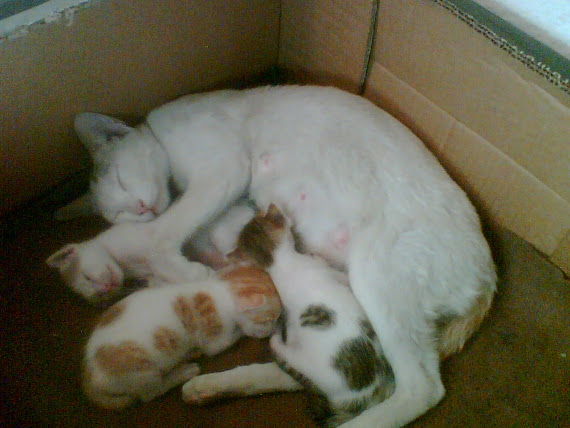
Minnu The Cat & Her Kittens Brownie, Goldie & Blackie
Someone with Nature

Syed Akbar in an island in river Godavari with Papikonda hills in the background
Recognition by World Vegetable Centre

Under the shade of Baobab tree

At Agha Khan Akademi in Kenya
Gateway to the Southern Hemisphere

Convention on Biodiversity

Syed Akbar at the 11th Conference of Parties to the United Nations Convention on Biological Diversity