Syed Akbar
Hyderabad: Going back to the basics, nutritionists now
recommend that food should be cooked in iron utensils to beat the
ever-growing health problem of anaemia, particularly in young
children, adolescents and pregnant women.
Studies on the iron content in food, cooked in iron utensils and those
made of other metals, revealed that the food prepared in iron “tavva”
and “kadai” contained relatively higher content of iron, deficiency of
which in the body leads to anaemia. Anaemia not only robs agility and
ability of a person, but also makes him or her prone to a number of
health issues including poor absorption of food and deficiency in
oxygen intake.
Researchers from Jehangir Medical Research Institute, Pune, gave a
presentation at the Institute of Nutrition here on the medical
benefits of cooking food in iron kitchenware. According to Surabhi
Shah, as part of the research they selected pre-school children,
between 2.9 years and 3.1 years, to find out whether food cooked in
iron utensils improved the haemoglobin content in their blood.
“Iron deficiency anaemia is seen among preschoolers mainly due to
meagre consumption of iron rich foods. Four iron rich snacks with
about 3.7 mg of iron per serving were prepared and served to two
batches of children. While one group got the food prepared in iron
utensils, the other group had the food from non-iron utensil. They
were fed for five days a week for 16 weeks,” she pointed out, adding
that the group that had the food cooked in iron utensils got
relatively higher content of iron.
Average increase of 17 per cent in iron content was recorded in
recipes after cooking in iron pots. Those who received food cooked in
iron utensils showed increase in serum iron by 69.3 per cent,
transferring saturation by 78.3 per cent and haemoglobin by 6.93 per
cent. The rate of anaemia decreased by about 10 per cent. “A positive
correlation of supplemented iron intake was noted with haemoglobin.
Thus, supplementation of iron rich recipes with contaminated iron
(cooking in iron utensils) has a positive effect on iron status,” she
added.
Wednesday, 16 November 2011


India needs more clinician-scientists to explore diseases, pathogens, understand the mechanism of health issues
Syed Akbar
Hyderabad: 13: If the recent suspected cases of hantavirus in the
State remained a scientific mystery, it is because of the poor concept
of clinical scientists in the country. Mostly general scientists
without medical background man all the research laboratories in India.
While countries like the USA have a high percentage of clinical
scientists, ironically it’s not even one per cent in India. This is
because medical doctors in the country do not like to join research
laboratories and the research work is largely carried out by those
holding degrees in pure or applied sciences.
Amidst claims and denials by hospitals and government respectively,
the truth about the hantavirus in Andhra Pradesh will never come out.
The need for clinical scientists is felt more now as newer pathogens
and diseases are emerging thanks to change in climate, local
environment, abuse of antibiotics and wrong diagnosis of infectious
diseases. A clinical scientist (medical doctor doing research in
science) is equipped with the knowledge of medicine and science and
this helps him in the better understanding of the host (patient) and
the pathogen (disease-causing organism).
“A general scientist deals exclusively with the pathogens. Though he
has knowledge of the disease-causing organism and the disease, he does
not have sufficient info about the human physiology and pathology. On
the other hand, a clinician (doctor) knows well about the human system
but he does not know much about the pathogen. But a clinical scientist
has the knowledge of both the host and the parasite,” observes senior
geneticist Dr MN Khaja.
In the case of suspected hantavirus reported in Karimnagar and Nellore
districts, the doctors attending on the patients treated them from the
point of medicine and not from the point of science. The doctors
declared the cases as those of hantavirus based on antibodies present
in the blood samples. They did not send the samples for serotype
examination. As a result, the doctors could not find out which of the
about two dozen hantaviruses now in circulation had “caused” the
disease.
“We have followed the standard medical procedure of identifying the
disease through antibodies,” says senior physician Dr MV Rao, who
dealt with one of the suspected hantavirus patients.
Though identifying the disease though antibodies is important as the
results are obtained quickly providing medicare in time, the study of
the nature of the pathogen will help in prevention of the spread of
the disease. Laboratories in advanced nations have around 20 to 30 per
cent of clinical scientists manning them. However, in India it’s not
even one per cent of the scientific manpower.
Hyderabad: 13: If the recent suspected cases of hantavirus in the
State remained a scientific mystery, it is because of the poor concept
of clinical scientists in the country. Mostly general scientists
without medical background man all the research laboratories in India.
While countries like the USA have a high percentage of clinical
scientists, ironically it’s not even one per cent in India. This is
because medical doctors in the country do not like to join research
laboratories and the research work is largely carried out by those
holding degrees in pure or applied sciences.
Amidst claims and denials by hospitals and government respectively,
the truth about the hantavirus in Andhra Pradesh will never come out.
The need for clinical scientists is felt more now as newer pathogens
and diseases are emerging thanks to change in climate, local
environment, abuse of antibiotics and wrong diagnosis of infectious
diseases. A clinical scientist (medical doctor doing research in
science) is equipped with the knowledge of medicine and science and
this helps him in the better understanding of the host (patient) and
the pathogen (disease-causing organism).
“A general scientist deals exclusively with the pathogens. Though he
has knowledge of the disease-causing organism and the disease, he does
not have sufficient info about the human physiology and pathology. On
the other hand, a clinician (doctor) knows well about the human system
but he does not know much about the pathogen. But a clinical scientist
has the knowledge of both the host and the parasite,” observes senior
geneticist Dr MN Khaja.
In the case of suspected hantavirus reported in Karimnagar and Nellore
districts, the doctors attending on the patients treated them from the
point of medicine and not from the point of science. The doctors
declared the cases as those of hantavirus based on antibodies present
in the blood samples. They did not send the samples for serotype
examination. As a result, the doctors could not find out which of the
about two dozen hantaviruses now in circulation had “caused” the
disease.
“We have followed the standard medical procedure of identifying the
disease through antibodies,” says senior physician Dr MV Rao, who
dealt with one of the suspected hantavirus patients.
Though identifying the disease though antibodies is important as the
results are obtained quickly providing medicare in time, the study of
the nature of the pathogen will help in prevention of the spread of
the disease. Laboratories in advanced nations have around 20 to 30 per
cent of clinical scientists manning them. However, in India it’s not
even one per cent of the scientific manpower.
Wednesday, 2 November 2011
Hantavirus in Andhra Pradesh: Mystery shrouds over the strain of Hantavirus infection
Syed Akbar
Hyderabad, Oct 31: The Hantavirus cases reported from Karimnagar and
Nellore districts will remain a "scientific mystery" as no virus
culture or polymerase chain reaction (PCR) tests were conducted on the
blood samples obtained from the patients.
Laboratory tests of blood samples from three patients in Nellore and
one patient from Karimnagar were limited to just identifying the
anti-Hantavirus IgM. No tests were conducted to identify the serotype
or strain of the Hantavirus. Though the disease was "clinically"
identified, it could not be reconfirmed "scientifically" as by the
time blood samples were collected from the patients, the virus had
died, leaving behind traces of antibodies.
Hantaviruses are broadly divided into two groups and as many as two
dozen strains have been identified so far. Those circulating in Asia
are different from those in the USA and other American countries.
Identification of the strain will help to understand the nature of
Hantavirus and plan medical treatment accordingly. While some
Hantaviruses cause renal failure, others attack the lungs.
When a virus or any pathogen attacks a person or animal, the body
responds to repel the attack by producing what are called antibodies.
The virus dies after a specific period. If blood samples are collected
during the period when the virus is alive, its serotype or strain can
be identified. But in all the four cases of Hantavirus infections
reported in the State, blood samples were sent for anti-Hantavirus IgM
tests only after the virus had died. Since anti-Hantavirus IgM
antibodies were noticed by the laboratories which conducted the tests,
the cases were declared as Hantavirus infection.
Dr K Ramesh, research fellow from the National Institute of
Epidemiology, Chennai, said they did not send the samples for virus
strain identification. “We diagnosed the disease through antibodies,”
he added.
Thus the strain or serotype of Hantavirus that had infected these four
persons will remain a mystery. Senior virologist Dr Yogesh K Gurav
from the National Institute of Virology, who visited Hyderabad and
other places, could not collect the blood samples from the patient as
it would not help in identification of the virus. The only way to
identify the strain is to catch infected rodents from the areas where
the patients live and analyse the blood, urine and faecal samples of
rats/mice for virus culture or PCR tests.
"We have been advised to collect blood samples from patients with
fever reporting from Karimnagar and surrounding areas. Analysis of
these samples by NIV will help in identification of the strain of the
virus. As many as 21 strains of Hantaviruses circulate in the world
and which type has caused the disease in Karimnagar patient will be
known only after a through analysis," said Dr MV Rao, senior physician
in Yashoda Hospital. Dr Rao had diagnosed the Karimnagar case as that
of Hantavirus after he sent the blood samples to a lab in Mumbai for
IgM test.
Dr Veera Pratap, epidemiologist from Nellore who collected blood
samples from suspected areas, said they had not identified the strain
but doctors in a corporate hospital in Chennai, where the patients
were treated, had diagnosed the disease as one caused by Hantavirus.
Hyderabad, Oct 31: The Hantavirus cases reported from Karimnagar and
Nellore districts will remain a "scientific mystery" as no virus
culture or polymerase chain reaction (PCR) tests were conducted on the
blood samples obtained from the patients.
Laboratory tests of blood samples from three patients in Nellore and
one patient from Karimnagar were limited to just identifying the
anti-Hantavirus IgM. No tests were conducted to identify the serotype
or strain of the Hantavirus. Though the disease was "clinically"
identified, it could not be reconfirmed "scientifically" as by the
time blood samples were collected from the patients, the virus had
died, leaving behind traces of antibodies.
Hantaviruses are broadly divided into two groups and as many as two
dozen strains have been identified so far. Those circulating in Asia
are different from those in the USA and other American countries.
Identification of the strain will help to understand the nature of
Hantavirus and plan medical treatment accordingly. While some
Hantaviruses cause renal failure, others attack the lungs.
When a virus or any pathogen attacks a person or animal, the body
responds to repel the attack by producing what are called antibodies.
The virus dies after a specific period. If blood samples are collected
during the period when the virus is alive, its serotype or strain can
be identified. But in all the four cases of Hantavirus infections
reported in the State, blood samples were sent for anti-Hantavirus IgM
tests only after the virus had died. Since anti-Hantavirus IgM
antibodies were noticed by the laboratories which conducted the tests,
the cases were declared as Hantavirus infection.
Dr K Ramesh, research fellow from the National Institute of
Epidemiology, Chennai, said they did not send the samples for virus
strain identification. “We diagnosed the disease through antibodies,”
he added.
Thus the strain or serotype of Hantavirus that had infected these four
persons will remain a mystery. Senior virologist Dr Yogesh K Gurav
from the National Institute of Virology, who visited Hyderabad and
other places, could not collect the blood samples from the patient as
it would not help in identification of the virus. The only way to
identify the strain is to catch infected rodents from the areas where
the patients live and analyse the blood, urine and faecal samples of
rats/mice for virus culture or PCR tests.
"We have been advised to collect blood samples from patients with
fever reporting from Karimnagar and surrounding areas. Analysis of
these samples by NIV will help in identification of the strain of the
virus. As many as 21 strains of Hantaviruses circulate in the world
and which type has caused the disease in Karimnagar patient will be
known only after a through analysis," said Dr MV Rao, senior physician
in Yashoda Hospital. Dr Rao had diagnosed the Karimnagar case as that
of Hantavirus after he sent the blood samples to a lab in Mumbai for
IgM test.
Dr Veera Pratap, epidemiologist from Nellore who collected blood
samples from suspected areas, said they had not identified the strain
but doctors in a corporate hospital in Chennai, where the patients
were treated, had diagnosed the disease as one caused by Hantavirus.
Hantavirus: Possibility of human-to-human transmission cannot be ruled out
Syed Akbar
Hyderabad, Nov 1: The identification of the serotype of the Hantavirus
that is reported from parts of the State is essential to know if the
virus is capable of causing infection from person to person. There are
instances of a few of the Hantaviruses circulating in South American
countries spreading person-to-person infection. But there are no
medical records of the Hantaviruses present in North America causing
such infection.
The types present in Asian countries are quite different from those
circulating in the Americas. Whether the Hantavirus that had
reportedly infected a person in Karimnagar and three others in Nellore
is one of those already identified and belong to the Asian group or
had undergone mutation to become more virulent is not known. There are
no records of Asian groups spreading from person-to-person.
Scientists, however are divided over the person-to-person transmission
of the Hantavirus. They do not rule out the possibility, in case the
virus had mutated to achieve such capability.
For instance swine flu virus, which was originally transmitted between
pigs, became mutant to infect human beings and then it gain the power
to transmit from person to person. But scientists do not want to jump
to conclusion before studying the virus in detail. They however, agree
that the Hantavirus did not yet had its word, since it is a new and
emerging pathogen.
"Person-to-person transmission of Hantavirus has not been commonly
reported so far. About 21 species have been described in the
literature. Hantaviruses are described as emerging pathogens as newer
serotypes are being discovered in many areas non-endemic to them. The
Hantaviruses are the RNA viruses. The probability of mutation is
always higher in the
RNA viruses. Such mutational events help these viruses in their immune
evasion capacity," said Dr Sunit K Singh, senior scientist from the
Centre for Cellular and Molecular Biology.
A report in Lancet refers to a dentist in Bosnia and Herzegovina, who
developed HFRS after being injured with contaminated forceps during
tooth extraction in a patient with HFRS. The dentist had never been in
a forest and denied any contact with rodents. This case could be the
first evidence of possible human-to-human transmission of Hantavirus
in Europe.
A team of Argentine and US researchers investigating the 1996 Argentine
outbreak has found epidemiological evidence that "strongly suggests"
person-to-person transmission. Person-to-person transmission in North
America has not been reported. A few situations of Hantavirus
pulmonary syndrome in South America suggests person-to-person
transmission is possible.
The Centers for Disease Control and Diagnosis, USA, points out
"although person-to-person spread has not been documented with any of
the other
known Hantaviruses, we were concerned because we were dealing with a
new agent".
Hyderabad, Nov 1: The identification of the serotype of the Hantavirus
that is reported from parts of the State is essential to know if the
virus is capable of causing infection from person to person. There are
instances of a few of the Hantaviruses circulating in South American
countries spreading person-to-person infection. But there are no
medical records of the Hantaviruses present in North America causing
such infection.
The types present in Asian countries are quite different from those
circulating in the Americas. Whether the Hantavirus that had
reportedly infected a person in Karimnagar and three others in Nellore
is one of those already identified and belong to the Asian group or
had undergone mutation to become more virulent is not known. There are
no records of Asian groups spreading from person-to-person.
Scientists, however are divided over the person-to-person transmission
of the Hantavirus. They do not rule out the possibility, in case the
virus had mutated to achieve such capability.
For instance swine flu virus, which was originally transmitted between
pigs, became mutant to infect human beings and then it gain the power
to transmit from person to person. But scientists do not want to jump
to conclusion before studying the virus in detail. They however, agree
that the Hantavirus did not yet had its word, since it is a new and
emerging pathogen.
"Person-to-person transmission of Hantavirus has not been commonly
reported so far. About 21 species have been described in the
literature. Hantaviruses are described as emerging pathogens as newer
serotypes are being discovered in many areas non-endemic to them. The
Hantaviruses are the RNA viruses. The probability of mutation is
always higher in the
RNA viruses. Such mutational events help these viruses in their immune
evasion capacity," said Dr Sunit K Singh, senior scientist from the
Centre for Cellular and Molecular Biology.
A report in Lancet refers to a dentist in Bosnia and Herzegovina, who
developed HFRS after being injured with contaminated forceps during
tooth extraction in a patient with HFRS. The dentist had never been in
a forest and denied any contact with rodents. This case could be the
first evidence of possible human-to-human transmission of Hantavirus
in Europe.
A team of Argentine and US researchers investigating the 1996 Argentine
outbreak has found epidemiological evidence that "strongly suggests"
person-to-person transmission. Person-to-person transmission in North
America has not been reported. A few situations of Hantavirus
pulmonary syndrome in South America suggests person-to-person
transmission is possible.
The Centers for Disease Control and Diagnosis, USA, points out
"although person-to-person spread has not been documented with any of
the other
known Hantaviruses, we were concerned because we were dealing with a
new agent".
Indian researchers develop herbal formulation that could repel the malaria mosquito
Syed Akbar
Hyderabad: A group of Indian researchers has developed a
herbal formulation that could not only repel the malaria mosquito, but
also kill its eggs and larvae. The herbal extract gains significance
as various species of Anopheles mosquito that transmit different forms
of malaria to human beings have developed resistance of synthetic
insecticides.
The research group comprising Dr G Elango Dr A Abduz Zahir, Dr A
Bagavan and others the Postgraduate and Research Department of
Zoology, CA Hakeem College, Vellore, obtained extract from the leaves
of the trees, Andrographis paniculata, Eclipta prostrata and Tagetes
erecta and used them against the Anopheles species subpictus Grassi.
As many as 30 species of Anopheles mosquito transmit malarial
parasites - Plasmodium species - to humans. The species, Anopheles
subpictus Grassi transmit Plasmodium vivax, causes the vivax type of
malaria. Both the vector (mosquito) and the parasite (Plasmodium) have
turned resistant to insecticides and anti-biotics respectively.
Tackling Anopheles subpictus mosquito will also help in the control of
filariasis, as it is known to carry the filaria worm too.
"Mosquito control is facing a threat due to the emergence of
resistance to synthetic insecticides. We obtained the ethyl acetate,
acetone and methanol extracts of Andrographis paniculata, Eclipta
prostrata and Tagetes erecta leaves and found that the herbal
formulation repels the adult mosquito from both biting people and
laying eggs in water. The mortality i.e killing of eggs was 100 per
cent if about 1000 mg of the herbal extract was mixed with one litre
of water and sprayed," the researchers pointed out.
According to them, the extract also deters the mosquito from laying
eggs in water. This eco-friendly formulation will not only prevent
malaria spread, but also check mosquito menace. In India, malaria is
one of the most important causes of direct or indirect infant, child,
and adult mortality with about 1.50 crore people affected annually.
About 20,000 people succumb to malarial fevers.
Synthetic insecticides leave residual effects behind both on
environment and human health, besides helping in vectors and pathogens
generating resistance to chemicals and medicines.
Hyderabad: A group of Indian researchers has developed a
herbal formulation that could not only repel the malaria mosquito, but
also kill its eggs and larvae. The herbal extract gains significance
as various species of Anopheles mosquito that transmit different forms
of malaria to human beings have developed resistance of synthetic
insecticides.
The research group comprising Dr G Elango Dr A Abduz Zahir, Dr A
Bagavan and others the Postgraduate and Research Department of
Zoology, CA Hakeem College, Vellore, obtained extract from the leaves
of the trees, Andrographis paniculata, Eclipta prostrata and Tagetes
erecta and used them against the Anopheles species subpictus Grassi.
As many as 30 species of Anopheles mosquito transmit malarial
parasites - Plasmodium species - to humans. The species, Anopheles
subpictus Grassi transmit Plasmodium vivax, causes the vivax type of
malaria. Both the vector (mosquito) and the parasite (Plasmodium) have
turned resistant to insecticides and anti-biotics respectively.
Tackling Anopheles subpictus mosquito will also help in the control of
filariasis, as it is known to carry the filaria worm too.
"Mosquito control is facing a threat due to the emergence of
resistance to synthetic insecticides. We obtained the ethyl acetate,
acetone and methanol extracts of Andrographis paniculata, Eclipta
prostrata and Tagetes erecta leaves and found that the herbal
formulation repels the adult mosquito from both biting people and
laying eggs in water. The mortality i.e killing of eggs was 100 per
cent if about 1000 mg of the herbal extract was mixed with one litre
of water and sprayed," the researchers pointed out.
According to them, the extract also deters the mosquito from laying
eggs in water. This eco-friendly formulation will not only prevent
malaria spread, but also check mosquito menace. In India, malaria is
one of the most important causes of direct or indirect infant, child,
and adult mortality with about 1.50 crore people affected annually.
About 20,000 people succumb to malarial fevers.
Synthetic insecticides leave residual effects behind both on
environment and human health, besides helping in vectors and pathogens
generating resistance to chemicals and medicines.
India Working Group of Global Antibiotic Resistance Partnership: Use of antibiotics in agriculture may be banned
Syed Akbar
Hyderabad: The Centre may ban use of antibiotics for growth
promotion in agriculture, if the India Working Group of Global
Antibiotic Resistance Partnership has its way. The GARP has submitted
a report to the Central government on eliminating antibiotic use for
growth promotion in agriculture and lowering resistance-enhancing drug
pressure through improved antibiotic targeting.
The GARP, headed by Dr NK Ganguly of the National Institute of
Immunology, regrets that in India the burden of infectious disease is
high but healthcare spending is low. In the last five years the use of
antibiotics has increased by 40 per cent and powerful antibiotics like
cephalosporins by 60 per cent.
Antibiotics are increasingly used in agriculture and veterinary to
boost production, but their residue enters the food chain ultimately
leading to antibiotic resistance in human beings and animals. This
also explains the spurt in hospital acquired diseases, and the
emergence of new pathogens resistance to antibiotics.
"The bacterial disease burden in India is among the highest in the
world. Antibiotics will play a critical role in limiting morbidity and
mortality in the country. As a marker of disease burden, pneumonia
causes an estimated 4.10 lakh deaths in the country each year, and it
is the No. 1 killer of children," Dr Ganguly said.
Many of these deaths occur because patients do not have access to
life-saving antibiotics when and where these are needed. At the other
extreme, antibiotics are used in situations where these cannot be
expected to improve the patient’s condition, particularly as treatment
for the common cold and uncomplicated cases of diarrhoea, the GARP
report submitted to the Centre pointed out.
Hyderabad: The Centre may ban use of antibiotics for growth
promotion in agriculture, if the India Working Group of Global
Antibiotic Resistance Partnership has its way. The GARP has submitted
a report to the Central government on eliminating antibiotic use for
growth promotion in agriculture and lowering resistance-enhancing drug
pressure through improved antibiotic targeting.
The GARP, headed by Dr NK Ganguly of the National Institute of
Immunology, regrets that in India the burden of infectious disease is
high but healthcare spending is low. In the last five years the use of
antibiotics has increased by 40 per cent and powerful antibiotics like
cephalosporins by 60 per cent.
Antibiotics are increasingly used in agriculture and veterinary to
boost production, but their residue enters the food chain ultimately
leading to antibiotic resistance in human beings and animals. This
also explains the spurt in hospital acquired diseases, and the
emergence of new pathogens resistance to antibiotics.
"The bacterial disease burden in India is among the highest in the
world. Antibiotics will play a critical role in limiting morbidity and
mortality in the country. As a marker of disease burden, pneumonia
causes an estimated 4.10 lakh deaths in the country each year, and it
is the No. 1 killer of children," Dr Ganguly said.
Many of these deaths occur because patients do not have access to
life-saving antibiotics when and where these are needed. At the other
extreme, antibiotics are used in situations where these cannot be
expected to improve the patient’s condition, particularly as treatment
for the common cold and uncomplicated cases of diarrhoea, the GARP
report submitted to the Centre pointed out.
The power of Dhania: Feeling anxiety or nervous? Take a few coriander seeds and chew them for relief from mental tensions
Syed Akbar
Hyderabad: Feeling anxiety or nervous? Take a few coriander
seeds and chew them for relief from mental tensions.
According to a research study by a team of pharmacologists led by
Poonam Mahendra, coriander seeds or dhania influences the mind, calms
it down and provides relief from mental tensions and anxiety.
"The anti-anxiety activity of coriander seeds is similar to the action
of diazepam or anti-depressant drugs," Poonam said, adding that while
drugs have side-effects, coriander seeds are natural and safe.
As part of the experiment, the team fed hydro-alcoholic extract of
coriander seeds to a set of mice and cross-checked the results
obtained from another set of mice fed with diazepam. The action
exerted by coriander was similar to diazepam, but without any
side-effects. For results to be positive, coriander seeds should be
taken in sufficient quantity.
"Anxiety affects one-eighth of the total population in the world. It
is characterised by a state of excessive fear, motor tension,
sympathetic hyperactivity and apprehension. The drugs available in the
market have unwanted side effects like sedation, muscle relaxation and
temporary loss of memory," Poonam said adding that coriander is the
natural way of finding relief from mental tension and anxiety.
This is the first time that coriander has been linked to the state of
the mind. Earlier research indicated coriander has medicinal
properties that helps in controlling the disorders of digestive,
respiratory and urinary systems. The essential oils and flavonoids,
particularly linalool, gives coriander the property to act on the
central nervous system, and thus soothing the mind. It may also be
used in the management of disorders related to the central nervous
system.
Hyderabad: Feeling anxiety or nervous? Take a few coriander
seeds and chew them for relief from mental tensions.
According to a research study by a team of pharmacologists led by
Poonam Mahendra, coriander seeds or dhania influences the mind, calms
it down and provides relief from mental tensions and anxiety.
"The anti-anxiety activity of coriander seeds is similar to the action
of diazepam or anti-depressant drugs," Poonam said, adding that while
drugs have side-effects, coriander seeds are natural and safe.
As part of the experiment, the team fed hydro-alcoholic extract of
coriander seeds to a set of mice and cross-checked the results
obtained from another set of mice fed with diazepam. The action
exerted by coriander was similar to diazepam, but without any
side-effects. For results to be positive, coriander seeds should be
taken in sufficient quantity.
"Anxiety affects one-eighth of the total population in the world. It
is characterised by a state of excessive fear, motor tension,
sympathetic hyperactivity and apprehension. The drugs available in the
market have unwanted side effects like sedation, muscle relaxation and
temporary loss of memory," Poonam said adding that coriander is the
natural way of finding relief from mental tension and anxiety.
This is the first time that coriander has been linked to the state of
the mind. Earlier research indicated coriander has medicinal
properties that helps in controlling the disorders of digestive,
respiratory and urinary systems. The essential oils and flavonoids,
particularly linalool, gives coriander the property to act on the
central nervous system, and thus soothing the mind. It may also be
used in the management of disorders related to the central nervous
system.
Climate change leading to emergence of new infections and pathogens
Syed Akbar
Hyderabad: Climate change is leading to emergence of new
infectious diseases and increase in insensitivity of new pathogens.
According to Dr Seyed E Hasnain, chairman of the Committee on Climate
Change and Impact on Human Health, department of health research,
Government of India, infectious diseases particularly those
transmitted by vectors like mosquitoes and flies are likely to be
impacted by climate change.
"Climate change is a reality. The change in disease pattern is also a
reality. We are establishing a link between the two so that steps
could be taken to minimise the impact. We cannot stop or undue the
damage of climate change. But we can stop the link between climate
change and infectious diseases," Dr Hasnain said.
He said due to climate change there had been erratic rainfalls leading
to water logging and spurt in the mosquito menace resulting in
largescale cases of dengue and malaria. "Further, insensitivity in new
pathogens is going up. There have been a sudden spurt in flu,
chikungunya and other viral cases," he added.
Dr Hasnain, who recently published a research study on climate change,
pointed out that climate change and associated increases in climate
variability will likely further exacerbate health disparities in the
world. Global warming may directly influence the distribution of
arthropod and rodent vectors expanding or shifting their habitats into
new areas.
Extreme weather conditions, in particular the frequency and duration
of rainfalls, alter seasonal patterns of emergence and expansion of
diseases. Basically every infectious disease with a seasonal pattern
can be influenced by changes in climate. "However, direct proof for
the influence of climate change on the emergence of new or frequency
of established infections is difficult to obtain. We need further
research in the area," Dr Hasnain observed.
In India climate change is believed to have exacerbated endemic
malaria, dengue, yellow fever, cholera, and chikungunya, as well as
chronic diseases.
Hyderabad: Climate change is leading to emergence of new
infectious diseases and increase in insensitivity of new pathogens.
According to Dr Seyed E Hasnain, chairman of the Committee on Climate
Change and Impact on Human Health, department of health research,
Government of India, infectious diseases particularly those
transmitted by vectors like mosquitoes and flies are likely to be
impacted by climate change.
"Climate change is a reality. The change in disease pattern is also a
reality. We are establishing a link between the two so that steps
could be taken to minimise the impact. We cannot stop or undue the
damage of climate change. But we can stop the link between climate
change and infectious diseases," Dr Hasnain said.
He said due to climate change there had been erratic rainfalls leading
to water logging and spurt in the mosquito menace resulting in
largescale cases of dengue and malaria. "Further, insensitivity in new
pathogens is going up. There have been a sudden spurt in flu,
chikungunya and other viral cases," he added.
Dr Hasnain, who recently published a research study on climate change,
pointed out that climate change and associated increases in climate
variability will likely further exacerbate health disparities in the
world. Global warming may directly influence the distribution of
arthropod and rodent vectors expanding or shifting their habitats into
new areas.
Extreme weather conditions, in particular the frequency and duration
of rainfalls, alter seasonal patterns of emergence and expansion of
diseases. Basically every infectious disease with a seasonal pattern
can be influenced by changes in climate. "However, direct proof for
the influence of climate change on the emergence of new or frequency
of established infections is difficult to obtain. We need further
research in the area," Dr Hasnain observed.
In India climate change is believed to have exacerbated endemic
malaria, dengue, yellow fever, cholera, and chikungunya, as well as
chronic diseases.
Hantavirus: Researchers blame increased travel and trade and changes in land use patterns
Syed Akbar
Hyderabad, Nov 1: Researchers blame increased travel and trade, and
changes in land use patterns for the emergence of Hantavirus and other
pathogens.
"Increased travel and trade and changes in land use patterns has given
the chance to these viruses to evolve and emerge now and then," said
Dr Sunit K Singh, senior scientist at the Centre for Cellular and
Molecular Biology.
He said Hantavirus are classified into two main groups: Old World and
New World Hantaviruses. The Old World Hantaviruses include species
which cause Haemorrhagic Fever with Renal Syndrome (HFRS) in Asia and
Europe while the New World Hantaviruses cause Hantavirus Pulmonary
Syndrome mostly in the Americas.
Dr Sunit Singh pointed out that since the Hantaviruses are the RNA
viruses, the probability of mutation is always higher. Such mutational
events help these viruses in their immune evasion capacity. "It is
very important to increase the awareness of these emerging pathogens
and their
impact on public health system in society," he added.
According to him, people get sick one to five weeks after the
Hantavirus infection. In beginning people have the symptoms of fever,
severe muscle aches, headaches and fatigue. Usually, people do not
have a runny nose, sore throat, or a rash. Hemorrhagic manifestations
may be seen as
flushing of the face, hemorrhagic manifestations of the conjunctiva
and mucous membranes.
"Since it is hard to tell if a mouse or a rat carries a Hantavirus, it
is best to avoid all wild mice and rats and to safely clean up any
rodent urine, droppings, or nests in your home. Keep mice and rats out
of your home. Clean up mouse and rat urine, droppings, and nesting
materials with a disinfectant or a mixture of bleach and water. Wash
the hand carefully
after such cleanings," Dr Sunit Singh said.
Hyderabad, Nov 1: Researchers blame increased travel and trade, and
changes in land use patterns for the emergence of Hantavirus and other
pathogens.
"Increased travel and trade and changes in land use patterns has given
the chance to these viruses to evolve and emerge now and then," said
Dr Sunit K Singh, senior scientist at the Centre for Cellular and
Molecular Biology.
He said Hantavirus are classified into two main groups: Old World and
New World Hantaviruses. The Old World Hantaviruses include species
which cause Haemorrhagic Fever with Renal Syndrome (HFRS) in Asia and
Europe while the New World Hantaviruses cause Hantavirus Pulmonary
Syndrome mostly in the Americas.
Dr Sunit Singh pointed out that since the Hantaviruses are the RNA
viruses, the probability of mutation is always higher. Such mutational
events help these viruses in their immune evasion capacity. "It is
very important to increase the awareness of these emerging pathogens
and their
impact on public health system in society," he added.
According to him, people get sick one to five weeks after the
Hantavirus infection. In beginning people have the symptoms of fever,
severe muscle aches, headaches and fatigue. Usually, people do not
have a runny nose, sore throat, or a rash. Hemorrhagic manifestations
may be seen as
flushing of the face, hemorrhagic manifestations of the conjunctiva
and mucous membranes.
"Since it is hard to tell if a mouse or a rat carries a Hantavirus, it
is best to avoid all wild mice and rats and to safely clean up any
rodent urine, droppings, or nests in your home. Keep mice and rats out
of your home. Clean up mouse and rat urine, droppings, and nesting
materials with a disinfectant or a mixture of bleach and water. Wash
the hand carefully
after such cleanings," Dr Sunit Singh said.
Nag Missiles: Bharat Dynamics Limited acquires capability to produce imaging infra red (IIR) seekers
Syed Akbar
Hyderabad, Nov 1: The city-based Bharat Dynamics Ltd has acquired the
capability to produce Imaging Infra Red (IIR) Seekers for the third
generation Nag anti-tank guided missile.
The technology was developed by the Defence Research and Development
Organisation for Nag missiles. The IIR Seeker is a very sophisticated
system used for missile guidance and gives the missile the " fire and
forget" capability.
With this, BDL has joined an elite group of companies across the globe
producing seekers and is the first in the country with the requisite
skills.
The first lot of Seekers made by BDL was handed over at a brief
ceremony to Dr P Venugopalan, director, DRDL, by Major General Ravi
Khetarpal, chairman and managing director of BDL.
These Seekers will be used for the forthcoming developmental trials of
helicopter-launched Nag (Helina), the other variant of the Nag missile
being developed by DRDO. Mr PK Srivastava,
director (production), Mr Emani Krishna, general manager,
Mr K Laxmi Rajam, general manager from BDL, and senior scientists and
engineers from DRDO and BDL were also present on this occasion.
Hyderabad, Nov 1: The city-based Bharat Dynamics Ltd has acquired the
capability to produce Imaging Infra Red (IIR) Seekers for the third
generation Nag anti-tank guided missile.
The technology was developed by the Defence Research and Development
Organisation for Nag missiles. The IIR Seeker is a very sophisticated
system used for missile guidance and gives the missile the " fire and
forget" capability.
With this, BDL has joined an elite group of companies across the globe
producing seekers and is the first in the country with the requisite
skills.
The first lot of Seekers made by BDL was handed over at a brief
ceremony to Dr P Venugopalan, director, DRDL, by Major General Ravi
Khetarpal, chairman and managing director of BDL.
These Seekers will be used for the forthcoming developmental trials of
helicopter-launched Nag (Helina), the other variant of the Nag missile
being developed by DRDO. Mr PK Srivastava,
director (production), Mr Emani Krishna, general manager,
Mr K Laxmi Rajam, general manager from BDL, and senior scientists and
engineers from DRDO and BDL were also present on this occasion.
Subscribe to:
Posts (Atom)
Mother's Care
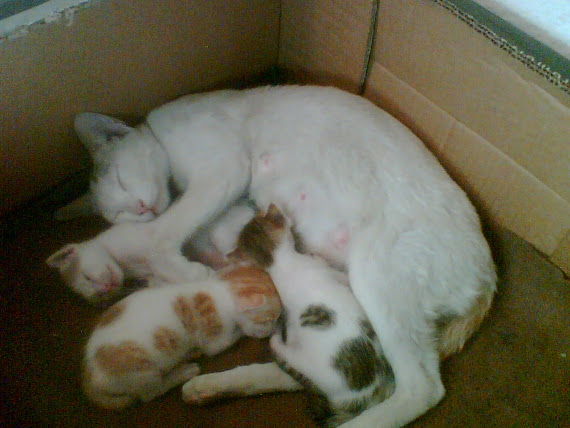
Minnu The Cat & Her Kittens Brownie, Goldie & Blackie
Someone with Nature

Syed Akbar in an island in river Godavari with Papikonda hills in the background
Recognition by World Vegetable Centre

Under the shade of Baobab tree

At Agha Khan Akademi in Kenya
Gateway to the Southern Hemisphere

Convention on Biodiversity

Syed Akbar at the 11th Conference of Parties to the United Nations Convention on Biological Diversity