By Syed AkbarTribulus terrestris or Gokshura is a highly neglected weed that grows in dry and waste lands. Many consider it as an invasive weed and there have been several attempts in different parts of the world to eradicate it altogether. However, ancient Indian and Chinese herbalists had recognised its medicinal importance and used it as an herbal formulation to treat a number of health issues. More importantly, Ayurveda and Unani
doctors prescribe it as a natural aphrodisiac that improves the testosterone levels and fights infertility and erectile dysfunction in men. With its secret medicinal values being revealed of late, Tribulus is increasingly used even in allopathy and sports medicine.
Tribulus, also called puncture vine because its spiny seeds are capable of causing flat tyres in bicycles, increases the body muscles making one look stronger and highly muscular. This herb is not prescribed for pregnant women as it is capable of causing severe complications including miscarriage. Gokshura is often prescribed as an appetizer, laxative, general tonic, to fight common cold and cough, intestinal worms, asthma,
urinary problems, and ulcers in the stomach. Tribulus is a good diuretic (promotes urine) and applied externally for relief from joint pains in arthritis.
There have been several instances of sportspersons using Tribulus to improve their performance in national and international sporting events. Tribulus is available as powder or alcoholic extract in any leading herbal shop. Gokshura is known to promote gynaecomastia (increase in breast size in men). It is used in combination with other herbs to treat itching, high blood pressure and to maintain hormone levels in women suffer from hormonal imbalance due to premenstrual or menopausal syndromes.
--------------------------
Home remedies
--------------------------
Gokshura, also popular as caltrops, can be used as an herbal tea to tone up the body system. Gokshura powder available in herbal shops can be used to prepare Gokshura tea at home. Since it stimulates testosterone, the male hormone, problems like sexual weakness can be over come through Gokshura tea. Alternatively one can prepare infusion from the Gokshura powder.
Gokshura powder can be prepared at home. Take the Gokshura plant, wash it properly and dry it. Once it is dry and free of impurities, make it into fine powder in a mixer and sieve it to remove any rough particles. The decoction obtained from it can be used for relief from kidney stones.
Ayurvedic and Unani doctors prescribe a particular daily intake limit of Gokshura powder or extract if it is taken as a home remedy. You may try readily available formulations to ensure that correct dosage is taken for the given problem.
Body-builders may try Gokshura preparation to tone up muscles and obtain the athletic look.
Gokshura churnam is available in the market. Those who cannot make Gokshura powder at home, may purchase readymade Gokshura churnam. The churnam is made combining other herbs in prescribed quantities for quick results.
Sunday, 19 December 2010


Indian beech: Pongamia pinnata fights stomach problems
By Syed Akbar
Pongamia pinnata or Indian beech is a wildly grown tree found on canal bunds, road margins, wastelands, and in TB sanatoria. The tree is a sort of invasive plant species because it grows wildly even in harsh conditions including sandy soils. Pongamia is widely used in Ayurveda and Unani for many centuries for problems relating to the stomach, particularly in treatment of cholera and its associated loose motions often with
blood.
There have been several studies to revalidate the claims of Ayurveda and Unani on the medicinal properties of Pongamia and all of them confirmed that this herb is effective for treatment of a number of health complications and conditions including severe joint pains, eczema, diabetes, fever and anaemia, and for strengthening of gums and teeth. However, Pongamia is hailed for its unique properties that help in maintenance of the digestive system and its ability to fight problems related to stomach and intestines.
Pongamia is a good natural choice for treatment of flatulence, ulcers and damage to the delicate lining of the stomach and intestines. Ayurveda and Unani doctors often prescribe Pongamia for diabetes, swelling, treatment of wounds, cold and cough, and as an anti-bacterial agent.
----------------------
Home remedies
----------------------
Pongamia is considered a natural home remedy for cholera and common diarrhoea. Decoction obtained from the shade dried leaves of Pongamia is given to patients for relief. Take a gram of shade dried leaves of Pongamia and boil them in half a tea cup of water till the quantity is reduced by one-fourth. Cool the decoction and filter it before consuming a tablespoon full.
Oil obtained from Pongamia is prescribed for rheumatism. Take a small quantity of Pongamia oil and gently massage it against the affected portion for relief.
Roots of Pongamia are used as tooth stick to brush teeth. Brushing with Pongamia root helps not only in fighting harmful agents in the mouth, but also keeps the gums and teeth strong and healthy.
Ash obtained from Pongamia is used for gently rubbing against the teeth for prevention of cavities, bad odour and mouth ulcers.
In case of inflammation of sinus, take a few leaves of Pongamia, dry them and obtain powder. Take a small quantity of the leaf powder and boil it in water. Filter the decoction and drink it two times a day for relief from painful sinusitis.
Those suffering from joint paints (arthralgia) may try Pongamia decoction obtained from leaves. Leaf extract of Pongamia is available in market and it can also be used. Drinking Pongamia leaf extract twice a day for about a week will provide the much needed relief from pains and inflammation.
Eczema patients may apply emulsion, made from the seeds of Pongamia and lemon juice, on the affected portion of the skin.
Pongamia pinnata or Indian beech is a wildly grown tree found on canal bunds, road margins, wastelands, and in TB sanatoria. The tree is a sort of invasive plant species because it grows wildly even in harsh conditions including sandy soils. Pongamia is widely used in Ayurveda and Unani for many centuries for problems relating to the stomach, particularly in treatment of cholera and its associated loose motions often with
blood.
There have been several studies to revalidate the claims of Ayurveda and Unani on the medicinal properties of Pongamia and all of them confirmed that this herb is effective for treatment of a number of health complications and conditions including severe joint pains, eczema, diabetes, fever and anaemia, and for strengthening of gums and teeth. However, Pongamia is hailed for its unique properties that help in maintenance of the digestive system and its ability to fight problems related to stomach and intestines.
Pongamia is a good natural choice for treatment of flatulence, ulcers and damage to the delicate lining of the stomach and intestines. Ayurveda and Unani doctors often prescribe Pongamia for diabetes, swelling, treatment of wounds, cold and cough, and as an anti-bacterial agent.
----------------------
Home remedies
----------------------
Pongamia is considered a natural home remedy for cholera and common diarrhoea. Decoction obtained from the shade dried leaves of Pongamia is given to patients for relief. Take a gram of shade dried leaves of Pongamia and boil them in half a tea cup of water till the quantity is reduced by one-fourth. Cool the decoction and filter it before consuming a tablespoon full.
Oil obtained from Pongamia is prescribed for rheumatism. Take a small quantity of Pongamia oil and gently massage it against the affected portion for relief.
Roots of Pongamia are used as tooth stick to brush teeth. Brushing with Pongamia root helps not only in fighting harmful agents in the mouth, but also keeps the gums and teeth strong and healthy.
Ash obtained from Pongamia is used for gently rubbing against the teeth for prevention of cavities, bad odour and mouth ulcers.
In case of inflammation of sinus, take a few leaves of Pongamia, dry them and obtain powder. Take a small quantity of the leaf powder and boil it in water. Filter the decoction and drink it two times a day for relief from painful sinusitis.
Those suffering from joint paints (arthralgia) may try Pongamia decoction obtained from leaves. Leaf extract of Pongamia is available in market and it can also be used. Drinking Pongamia leaf extract twice a day for about a week will provide the much needed relief from pains and inflammation.
Eczema patients may apply emulsion, made from the seeds of Pongamia and lemon juice, on the affected portion of the skin.
Glycyrrhiza galbra: Sweet root cures stomach ulcers
By Syed AkbarGlycyrrhiza glabra or sweet root, as its name suggests, is indeed very sweet to taste. It is almost 50 times sweeter than cane sugar. Also popular as licorice, Glycyrrhiza has a number of medicinal properties, the important being its ability to fight ulcers in the mouth, intestines and stomach, and provide relief from eczema and cough, asthma and other respiratory issues. The root of licorice is used in medicinal preparations. Root
decoction, extract, infusion and powder can be consumed. They are readily available in herbal shops or can be prepared at home from fresh licorice roots. Sweet root controls digestive acid levels in the stomach and fights acidity and GERD.
Sweet root has been in use in traditional systems of medicine for almost 2000 years. It is quite popular with Ayurveda and Unani physicians as also with other herbalists around the world. Since it contains high content of sweetness, it is not recommended for patients of diabetes. It has certain chemicals which are not good for people suffering from heart, kidney and liver problems. Pregnant women and lactating mothers should avoid
this herb. For others, sweet root works wonders.
This herb is prescribed in a little quantity and for the maximum period of 30 days. Sweet root should not be taken beyond a month consecutively. Apart from its medicinal value, sweet root provides flavours to soft drinks and other food items.
Licorice is prescribed for common cold as an expectorant to remove the mucous and provide a soothing effect to the sore throat.
-------------------
Home remedies
-------------------
Those suffering from eczema may apply a little quantity of licorice root extract to the affected portion for relief. Repeat it twice a day. Before applying the herbal extract, clean the affected portion with warm water. Licorice gel, available in the market, can also be applied externally.
Chewing a little quantity (two grams) of licorice root every day for a week will help in fighting peptic ulcers.
If you are suffering from mouth ulcers, you may try licorice extract for relief from pain. Take a little quantity of licorice root extract available in market, mix it in warm water and gargle three times a day.
Sweet root has been found to be highly effective in fighting indigestion. You may try licorice tea from an herbal shop.
Licorice has also been found to control cholesterol. Licorice root powder mixed with warm water will help in controlling the cholesterol level.
Ayurveda and Unani doctors often prescribe licorice for control of inflammation, allergy and joint pains.
decoction, extract, infusion and powder can be consumed. They are readily available in herbal shops or can be prepared at home from fresh licorice roots. Sweet root controls digestive acid levels in the stomach and fights acidity and GERD.
Sweet root has been in use in traditional systems of medicine for almost 2000 years. It is quite popular with Ayurveda and Unani physicians as also with other herbalists around the world. Since it contains high content of sweetness, it is not recommended for patients of diabetes. It has certain chemicals which are not good for people suffering from heart, kidney and liver problems. Pregnant women and lactating mothers should avoid
this herb. For others, sweet root works wonders.
This herb is prescribed in a little quantity and for the maximum period of 30 days. Sweet root should not be taken beyond a month consecutively. Apart from its medicinal value, sweet root provides flavours to soft drinks and other food items.
Licorice is prescribed for common cold as an expectorant to remove the mucous and provide a soothing effect to the sore throat.
-------------------
Home remedies
-------------------
Those suffering from eczema may apply a little quantity of licorice root extract to the affected portion for relief. Repeat it twice a day. Before applying the herbal extract, clean the affected portion with warm water. Licorice gel, available in the market, can also be applied externally.
Chewing a little quantity (two grams) of licorice root every day for a week will help in fighting peptic ulcers.
If you are suffering from mouth ulcers, you may try licorice extract for relief from pain. Take a little quantity of licorice root extract available in market, mix it in warm water and gargle three times a day.
Sweet root has been found to be highly effective in fighting indigestion. You may try licorice tea from an herbal shop.
Licorice has also been found to control cholesterol. Licorice root powder mixed with warm water will help in controlling the cholesterol level.
Ayurveda and Unani doctors often prescribe licorice for control of inflammation, allergy and joint pains.
Tuesday, 14 December 2010
All about mirror neurons: One can gain expertise in any fied by just observing experts do their work
By Syed Akbar
Hyderabad, Dec 14: One can gain expertise in any field including business and sports by just observing experts do their work, says behavioural sciences expert Prof VS Ramachandran.
According to Prof Ramachandran, the brain contains "mirror neurons" which help one learn things through observation. They also help in learning through imitation. The mirror neurons will unlock the greatest mysteries of the human mind.
Prof Ramachandran, who is the director of the Centre for Brain and Cognition, University of California, San Diego, said the mirror neurons would fire when someone does a job and this is repeated in those who closely watch the activity. In other words, if you are inclined to learn some difficult task and observe an expert perform it, your mirror neurons will help you to imitate the expert and learn expertise from him.
The mirror neurons are so powerful that a person, who observes someone pricking his hand with a needle, will feel the pain even though the observer does not actually do it.
"Cells in the brain's anterior cingulate area, which normally fire when you poke the patient with a needle ("pain neurons"), will also fire when the patient watches another patient being poked. The mirror neurons, it would seem, dissolve the barrier between self and others. I call them empathy neurons," Prof Ramachandran said.
He said the mirror neurons are responsible for why people, subconsciously, imitate others. Mirror neurons would do for psychology what DNA did for biology by providing a unifying framework and help explain a host of mental abilities that have hitherto remained mysterious and inaccessible to experiments.
The emergence of a sophisticated mirror neuron system set the stage for the emergence, in early hominids, of a number of uniquely human abilities such as proto-language, empathy, and the ability to adopt another's point of view.
He said intelligence is not linked to race, colour and nationality, though it has genetic basis. The average IQ levels in the West have increase by 15 to 20 per cent in the recent times, he said, adding that such a study was not done in India.
Wednesday, 8 December 2010
Novel human influenza virus will continue to thrive as a seasonal virus for a few more years
2010
By Syed Akbar
Hyderabad, Aug 12: The novel human influenza virus will continue to thrive as a seasonal virus for a few more years before it either dies down or mutates into a new strain.
According to city doctors, though the World Health Organisation has withdrawn its pandemic warning for swine flu, the novel human influenza virus 2009 will continue to emerge every year as a seasonal influenza virus for a few more years. There are chances of the virus losing its power gradually or emerging even more stronger in the days to come in case a mutation takes place in its genes.
"The pandemic threat has been withdrawn. But the novel influenza virus will continue to pose as a threat in thickly populated countries like India. Already the virus is claiming more lives this year as compared to that of last year. The infection rate is also higher this time. There are chances of young people falling victim to swine flu," said senior geneticist Dr MN Khaja.
Doctors also warn of the virus leading to viral pneumonia in some of the patients. If this happens, the virus will pose a major challenge to medical and health authorities. A majority of the victims of swine flu in Hyderabad and other parts of the State so far this season have been pregnant women.
"There are also chances of one of the non-human influenza viruses entering human beings," he cautioned.
According to Hyderabad District Medical and Health Officer Dr Ch Jayakumari, health authorities have been keeping a constant watch on cases of severe respiratory illness to identify whether the virus has turned relatively virulent this season.
Tuesday, 30 November 2010
Dr Omar Khalidi: An obituary
Syed Akbar
Hyderabad: Dr Omar Khalidi was born in Hyderabad and had his early education in the city. Later, he studied in the UK and the USA. He has been associated with Massachusetts Institute of Technology. He has been reflecting the views of Indian Muslims in the West, and hailed as a liberal Muslim intellectual.
A researcher, Dr Omar Khalidi had penned over two dozen books including the one on Muslim representation in armed and police forces in India. His book is said to have triggered the religion-based census in armed forces by the Congress-led UPA government. His areas of research including sociology, ethnic groups and their economic status, Islamic architecture and the history of Hyderabad.
The news of Omar Khalidi's death was received with shock in Hyderabad with several senior Muslim leaders condoling his death and describing him as a "great Hyderabadi researcher and author".
"Khalidi had pioneered research on Indian Muslims. The facts he presented in his research works were astonishing. His book on communal violence led to a furore in Parliament," said Islamic scholar Muhammad Zaheeruddin.
He carried out research on the economic and social status of Muslims in India since Independence. His famous works included "Hyderabad: After the Fall", a collection of academic papers. His books on Islamic architecture are “Approaches to Mosque Design in North America” and “Import, Adapt, Innovate: Mosque Design in the United States.”
Omar Khalidi's father, Prof Abu Nasr Khalidi, was a well known scholar of Arabic and Islamic studies.
Saturday, 27 November 2010
Mortality rate: Child born in Andhra Pradesh is expected to live 10 years shorter than a child born in Kerala
2010
Syed Akbar
Hyderabad, Nov 27: A child born in Andhra Pradesh is expected to live 10 years shorter than a child born in Kerala, if the official statistics on average life expectancy at birth is any indication.
Andhra Pradesh has the lowest life expectancy at birth among all the four Southern States in the country, though its figures are slightly better than the national average. The Union Ministry of Health and Family Welfare, in its latest report, has pointed out that a child born in Andhra Pradesh has a life expectancy of 64.4 years, against Kerala's 74. The other southern States, Tamil Nadu and Karnataka, are slightly ahead of AP with 66.2 years and 65.3 years respectively.
Kerala had achieved AP's life expectancy levels almost three decades ago. Kerala's life expectancy levels are poised to grow further in the next 10 years to 77 years.
"Life expectancy in the country doubled in the last 50 years. A child born in India before Independence was expected to live for just 30 years. It increased to 45 years in the 1960s and now to around 64 years. With improvement in health and living standards, the life expectancy is likely to cross 80 years in India by 2050," said senior geneticist Dr MN Khaja.
According to the MoHFW report, although the decadal increase in the country has slowed from 5.7 years in the 1970s to 3.2 years in the 1990s, the overall life expectancy increased by 14.1 years in the rural areas and 9.9 years in the urban areas during the period 1970-
75 to 2002-06. It is projected to increase by four to five years by 2021. Senior physicist Dr Mani Bhaumik predicts that in the next 50 to 80 years, man will achieve longevity with the average life expectancy crossing 100 years.
Though Andhra Pradesh has to go a long way on the life expectancy front, it has already reached the national goal of total fertility rate. It has a total fertility rate of 2.1 per cent which indicates population stabilisation. Delhi, Himachal Pradesh, Karnataka, Kerala, Maharashtra, Punjab, Tamil Nadu and West Bengal share the TFR honours with Andhra Pradesh.
Thursday, 25 November 2010
Viewpoint: Enter Kiran Kumar Reddy: Not a crown of roses
By Syed Akbar
N Kiran Kumar Reddy, who took over as the chief minister of Andhra Pradesh on Thursday, is faced with a plethora of daunting tasks in the days to come. Though the transition of power from K Rosaiah to Kiran
Kumar Reddy has been a smooth affair, the administration of the State may not turn out to be a bed of roses for the new incumbent.
Kiran Kumar Reddy knows that he wears the crown of thorns, given the precarious financial situation of the State exchequer, the slowdown in the industrial sector, the lethargy in the administration, dissidence in
the Congress, and above all the simmering discontentment among separate Telangana and united Andhra supporters, both within the Congress and outside. He is also fully aware that his predecessor K Rosaiah, though a veteran politician, could not fully accomplish these tasks, leaving a big vacuum in the State administration.
And with the December deadline for Srikrishna panel report approaching fast, the separate Telangana or the united Andhra agitation would prove to be a major acid test for Kiran Kumar Reddy. Trouble is certain either way the Srikrishna panel gives its recommendation. The maintenance of law and order in the next couple of months would then be a major test his administrative capabilities and political acumenship.
Kiran Kumar Reddy, no doubt, comes with a vast political experience and it's to be seen what political or social strategies he would adopt to maintain peace in the State once the T deadline ends. The Congress
high command has reposed faith in Kiran Kumar's leadership ahead of the anticipated T trouble, and it's to be seen how far he succeeds in the task.
Besides the adept tackling of the T issue, Kiran Kumar Reddy will have to take up a massive damage control exercise to keep the fair electoral image of the Congress intact. This may not be an easy task given the
strong Opposition and the internal wrangling and groupism in the State Congress, and the political missives the Jagan group would shoot occasionally, now that it's clear the Kadapa MP, YS Jaganmohan Reddy, had been sidelined during the change in the leadership. He has to take along all groups in the Congress and strike a balance between pro-Telangana and united Andhra groups in the party.
Kiran Kumar Reddy will also find it hard, like Rosaiah, in providing adequate funds for populist schemes initiated by former chief minister YS Rajasekhar Reddy. Completion of irrigation projects including the
contentious Polavaram project across the river Godavari is another major challenge before the new leader. Irrigation projects are at various stages of completion and the Rosaiah administration had in a way kept
them in cold storage for want of sufficient funds.
While the State got a young chief minister in Kiran Kumar Reddy, the exit of Rosaiah has proved that vast experience in politics might make one a good politician, but not an able administrator or team leader. In
the 14 months he ruled over the State, Rosaiah could not leave a mark of his own. Rosaiah could not have his say even in the Cabinet he headed, and he simply drove the horse-cart of YSR. And with the party
high command holding the reins, things became worse for Rosaiah in matters, be it State administration or Cabinet reshuffle.
When Rosaiah took over, the expectations were quite high and he, in a way, could not gain the confidence of people, as YSR did. As Rosaiah succeeded a highly popular leader, people compared his administration
with YSR's regime. This, in a way, turned out to be an uphill task for Rosaiah. He could not come out of the shadow of YSR's immense popularity and Rosaiah had to invariably make a reference or two to
Rajasekhar Reddy in his political speeches.
It's going to be a tight rope walk for Kiran Kumar Reddy, both in the selection of his Cabinet and tackling various administrative issues and initiating policy decisions. Kiran Kumar Reddy has to come out of the
shadow of YSR and take bold policy decisions and strong administrative steps if he has to leave a mark on the State political horizon. Any wrong step will make him another Rosaiah.
N Kiran Kumar Reddy, who took over as the chief minister of Andhra Pradesh on Thursday, is faced with a plethora of daunting tasks in the days to come. Though the transition of power from K Rosaiah to Kiran
Kumar Reddy has been a smooth affair, the administration of the State may not turn out to be a bed of roses for the new incumbent.
Kiran Kumar Reddy knows that he wears the crown of thorns, given the precarious financial situation of the State exchequer, the slowdown in the industrial sector, the lethargy in the administration, dissidence in
the Congress, and above all the simmering discontentment among separate Telangana and united Andhra supporters, both within the Congress and outside. He is also fully aware that his predecessor K Rosaiah, though a veteran politician, could not fully accomplish these tasks, leaving a big vacuum in the State administration.
And with the December deadline for Srikrishna panel report approaching fast, the separate Telangana or the united Andhra agitation would prove to be a major acid test for Kiran Kumar Reddy. Trouble is certain either way the Srikrishna panel gives its recommendation. The maintenance of law and order in the next couple of months would then be a major test his administrative capabilities and political acumenship.
Kiran Kumar Reddy, no doubt, comes with a vast political experience and it's to be seen what political or social strategies he would adopt to maintain peace in the State once the T deadline ends. The Congress
high command has reposed faith in Kiran Kumar's leadership ahead of the anticipated T trouble, and it's to be seen how far he succeeds in the task.
Besides the adept tackling of the T issue, Kiran Kumar Reddy will have to take up a massive damage control exercise to keep the fair electoral image of the Congress intact. This may not be an easy task given the
strong Opposition and the internal wrangling and groupism in the State Congress, and the political missives the Jagan group would shoot occasionally, now that it's clear the Kadapa MP, YS Jaganmohan Reddy, had been sidelined during the change in the leadership. He has to take along all groups in the Congress and strike a balance between pro-Telangana and united Andhra groups in the party.
Kiran Kumar Reddy will also find it hard, like Rosaiah, in providing adequate funds for populist schemes initiated by former chief minister YS Rajasekhar Reddy. Completion of irrigation projects including the
contentious Polavaram project across the river Godavari is another major challenge before the new leader. Irrigation projects are at various stages of completion and the Rosaiah administration had in a way kept
them in cold storage for want of sufficient funds.
While the State got a young chief minister in Kiran Kumar Reddy, the exit of Rosaiah has proved that vast experience in politics might make one a good politician, but not an able administrator or team leader. In
the 14 months he ruled over the State, Rosaiah could not leave a mark of his own. Rosaiah could not have his say even in the Cabinet he headed, and he simply drove the horse-cart of YSR. And with the party
high command holding the reins, things became worse for Rosaiah in matters, be it State administration or Cabinet reshuffle.
When Rosaiah took over, the expectations were quite high and he, in a way, could not gain the confidence of people, as YSR did. As Rosaiah succeeded a highly popular leader, people compared his administration
with YSR's regime. This, in a way, turned out to be an uphill task for Rosaiah. He could not come out of the shadow of YSR's immense popularity and Rosaiah had to invariably make a reference or two to
Rajasekhar Reddy in his political speeches.
It's going to be a tight rope walk for Kiran Kumar Reddy, both in the selection of his Cabinet and tackling various administrative issues and initiating policy decisions. Kiran Kumar Reddy has to come out of the
shadow of YSR and take bold policy decisions and strong administrative steps if he has to leave a mark on the State political horizon. Any wrong step will make him another Rosaiah.
Wednesday, 24 November 2010
Viewpoint: Exit of K Rosaiah: The veteran gets a raw deal
By Syed Akbar
The sudden exit of K Rosaiah from the Chief Minister's gaddi on Wednesday is as surprising as his elevation to the coveted post 14 months and 22 days ago. Rosaiah, though a veteran of Congress politics, may not have guessed that he would lead the State in unexpected circumstances, and would have to resign in the most
unceremonious way. His is the second shortest stint as the Congress chief minister in the State after Bhavanam Venkatram.
Though the talk of resignation of Rosaiah has been in air for quite some time, political pundits did not expect it to happen so soon. Even Rosaiah's opponents were surprised by the unexpected turn of events.
The sudden rush to Delhi by Rosaiah on Tuesday turned out to be an anti-climax to the Rosaiah-Jagan face-off. The axe fell on docile Rosaiah rather than on defiant YS Jaganmohan Reddy, MP from Kadapa.
The exit of Rosaiah has proved that vast experience in politics might make one a good politician, but not an able administrator or team leader. In the 14 months he ruled over the State, Rosaiah could not
leave a mark of his own. He even could not successfully implement the schemes his predecessor YS Rajasekhar Reddy had initiated. He could not have his say even in the Cabinet he headed. Rosaiah simply drove the horse-cart of YSR. And with the party high command holding the reins, things became worse for Rosaiah in matters, be it State administration or Cabinet reshuffle.
When Rosaiah took over, the expectations were quite high and he, in a way, could not gain the confidence of people, as YSR did. As Rosaiah succeeded a highly popular leader, people compared his administration
with YSR's regime. This, in a way, turned out to be an uphill task for Rosaiah. He could not come out of the shadow of YSR's immense popularity and Rosaiah had to invariably make a reference or two to Rajasekhar Reddy in his political speeches.
The criticism is that though Rosaiah continued with YSR's schemes, he attached too many strings to them, wining the wrath of several sections of people. The fee reimbursement and BC scholarship issue came as a
political weapon for the Opposition. Rosaiah's occasional outburst and his intolerant remarks did not go well with the Congress high command.
Nevertheless, he successfully managed to control the Telangana and the united Andhra agitations, and communal riots in the State capital, without much loss to life or property. He improved the State's financial
position through austerity, but YSR's populist schemes proved quite a burden for him.
Nature has all along been highly cooperative of Rosaiah's government through copious rainfall and bumper yields, but local politics failed to support his leadership. The criticism is that he failed to take along all
sections within the party. Right from the day he assumed office, Rosaiah faced some or other political missive from Jaganmohan Reddy or his camp. The non-cooperation to his administration reached its peak so much so that the party Central leadership had to intervene. The failing health too proved to be one of the reasons for his sudden exit.
The changeover in the leadership may be smooth, but whoever succeeds Rosaiah will have the daunting task of facing the challenges the separate Telangana and the united Andhra agitations would throw up, once Sri Krishna panel submits its report to the Centre. Besides, the successor will have to take up a massive damage control exercise to keep the fair electoral image of the Congress intact. This may not be an easy task given the internal wrangling and groupism in the State Congress, and the troubles the Jagan group would create occasionally, if the Kadapa MP gets a raw deal during the change in the leadership.
The sudden exit of K Rosaiah from the Chief Minister's gaddi on Wednesday is as surprising as his elevation to the coveted post 14 months and 22 days ago. Rosaiah, though a veteran of Congress politics, may not have guessed that he would lead the State in unexpected circumstances, and would have to resign in the most
unceremonious way. His is the second shortest stint as the Congress chief minister in the State after Bhavanam Venkatram.
Though the talk of resignation of Rosaiah has been in air for quite some time, political pundits did not expect it to happen so soon. Even Rosaiah's opponents were surprised by the unexpected turn of events.
The sudden rush to Delhi by Rosaiah on Tuesday turned out to be an anti-climax to the Rosaiah-Jagan face-off. The axe fell on docile Rosaiah rather than on defiant YS Jaganmohan Reddy, MP from Kadapa.
The exit of Rosaiah has proved that vast experience in politics might make one a good politician, but not an able administrator or team leader. In the 14 months he ruled over the State, Rosaiah could not
leave a mark of his own. He even could not successfully implement the schemes his predecessor YS Rajasekhar Reddy had initiated. He could not have his say even in the Cabinet he headed. Rosaiah simply drove the horse-cart of YSR. And with the party high command holding the reins, things became worse for Rosaiah in matters, be it State administration or Cabinet reshuffle.
When Rosaiah took over, the expectations were quite high and he, in a way, could not gain the confidence of people, as YSR did. As Rosaiah succeeded a highly popular leader, people compared his administration
with YSR's regime. This, in a way, turned out to be an uphill task for Rosaiah. He could not come out of the shadow of YSR's immense popularity and Rosaiah had to invariably make a reference or two to Rajasekhar Reddy in his political speeches.
The criticism is that though Rosaiah continued with YSR's schemes, he attached too many strings to them, wining the wrath of several sections of people. The fee reimbursement and BC scholarship issue came as a
political weapon for the Opposition. Rosaiah's occasional outburst and his intolerant remarks did not go well with the Congress high command.
Nevertheless, he successfully managed to control the Telangana and the united Andhra agitations, and communal riots in the State capital, without much loss to life or property. He improved the State's financial
position through austerity, but YSR's populist schemes proved quite a burden for him.
Nature has all along been highly cooperative of Rosaiah's government through copious rainfall and bumper yields, but local politics failed to support his leadership. The criticism is that he failed to take along all
sections within the party. Right from the day he assumed office, Rosaiah faced some or other political missive from Jaganmohan Reddy or his camp. The non-cooperation to his administration reached its peak so much so that the party Central leadership had to intervene. The failing health too proved to be one of the reasons for his sudden exit.
The changeover in the leadership may be smooth, but whoever succeeds Rosaiah will have the daunting task of facing the challenges the separate Telangana and the united Andhra agitations would throw up, once Sri Krishna panel submits its report to the Centre. Besides, the successor will have to take up a massive damage control exercise to keep the fair electoral image of the Congress intact. This may not be an easy task given the internal wrangling and groupism in the State Congress, and the troubles the Jagan group would create occasionally, if the Kadapa MP gets a raw deal during the change in the leadership.
Subscribe to:
Posts (Atom)
Mother's Care
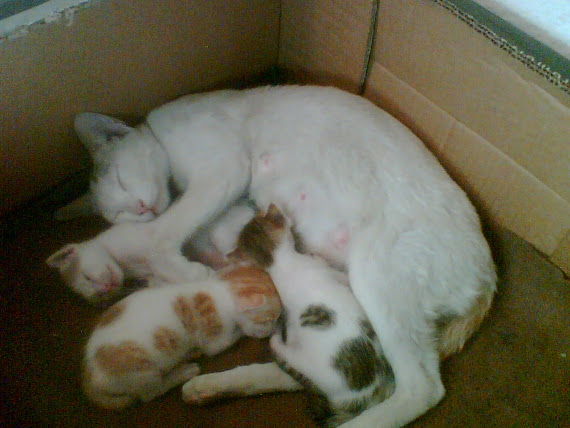
Minnu The Cat & Her Kittens Brownie, Goldie & Blackie
Someone with Nature

Syed Akbar in an island in river Godavari with Papikonda hills in the background
Recognition by World Vegetable Centre

Under the shade of Baobab tree

At Agha Khan Akademi in Kenya
Gateway to the Southern Hemisphere

Convention on Biodiversity

Syed Akbar at the 11th Conference of Parties to the United Nations Convention on Biological Diversity