Monday, 16 August 2010

New Delhi Metallobeta Lactamase-1: NDM-1 superbug survives thanks to abuse of antibiotics

2010
By Syed Akbar
Hyderabad, August 15: As they cruise infor mation super-high ways, being super heroes at their nascent careers, a whole generation of teens, university students and the young workforce are making themselves super susceptible to superbugs.
Stuck for long hours in air-conditioned offices, breathing recycled germs, nourished by re-heated food from dubious take-aways when their compromised immune systems fall apart, they usually self-diagnose or pop OTC quick-fixes putting them at serious risk of bigger illnesses.

Whether for a simple cold or a fever, these quick-fixes to deal with the `symptoms' of illness are very much part of the lifestyle mantra for the young whose rat-race has gotten faster and harsher. But scientists and health experts warn that inappropriate use of antibiotics is creating resistance in simple disease causing germs. Doctors suggest, the latest superbug, New Delhi Metallobeta-lactamase (NDM)-1, has been allowed to evolve because of a rampant overuse or rather abuse of antibiotic pills.
Indiscriminate use of antibiotics has turned into a major health nuisance. Doctors have to deal with the diseases resistant to regular drugs while researchers and scien tists are watching the emergence of a generation of superbugs. NDM-1 is capable of causing multi-organ failure and eventually death.
Dr V.K. Bhargava, senior physician, Apollo Hospitals explains, "Any drug or antibiotic has to be used only against the indication. Each fever is not bacterial.Antibiotics are only for bacterial and some fungal or viral infections. Wrong use of antibiotics for infection will lead to resistance, the antibiotic rendered ineffective."
Bacteria that develop resistance to more than one drug are called multi-drug resistant bacteria, or superbugs.
The resistant gene in a superbug is capable of spreading across bacterial species making even harmless bacteria a new superbug. Several superbugs already exist including the notorious multi-drug resistant tuberculosis bacteria and Pseudomonas which are capable of thriving even in a bottle containing antibiotic solution.

Escherichia or E. coli which causes food poisoning and gastroenteritis, has already developed a 70 per cent resistance to available drugs. The presence of the NDM-1 gene in E coli will make the bacteria even more drug resistant turning the fight against gastroenteritis into a Herculean task. India ranks high amongst countries where antibiotics use is quite high and young patients who go to doctors can be blamed.
"Bacteria are developing resistance to existing drugs, the cause of very high morbidity and mortality. Patients should not pressurise doctors to prescribe antibiotics," warns Dr Bhargava, adding that doctors must prescribe the appropriate drug for specific indication and the right dosage for the right length of time.

Infectious diseases expert Dr Suneetha Narreddy feels that doctors share the blame, "When a person develops cold/cough with or without fever and visits a doctor; the doctor may correctly diagnose a viral infection but in spite of this, the doctor prescribes an antibiotic.
Patients expect doctors to give them antibiotics for even minor symptoms and the doctor fears losing a potential client."

The situation is compounded when you consider that India faces the major challenge of veterinary drug misuse. Traces of veterinary drugs are found in dairy milk, meat and eggs, thanks to administration of large doses of antibiotics in milch cattle and poultry birds.
"A single dose of antibiotics will provide resistance in an individual for up to 12 months. Considering the fact that a person is subjected to several such doses of antibiotics in a short span of time, it's no wonder that new superbugs continue to emerge," points out senior geneti cist Dr M.N. Khaja.
Dr Suneetha says, in India antibiotic abuse is more of a problem for several reasons increase in prescriptions where not indicated, availability of antibiotics over the counter with out prescription, availability of generics which are very often substandard and may not contain the right medication in the right quantity and quality, antibiotics prescribed without diagnostic facilities and empiric treatment or treating without diagnosis.
It's time for the next generation to bolster their immunities naturally, build resistance and restrain against arbitrary pill-popping.

Sampark makes translation from one Indian language to another easy

Syed Akbar
Hyderabad, Aug 15: Translation from one Indian language to another is now just a click-of-mouse away, thanks to a machine translation system, Sampark, developed by the city-based International Institute of Information Technology.

The machine translation system is devised to translate Indian languages online. The system will be available for public use in September.

Using Sampark tools one can translate scripts in as many as 18 Indian languages from English and vice versa. Initially, the system will support only six languages and the second phase will include another 12 languages.

According to Prof Rajiv Sangal, director IIIT-Hyderabad, Sampark developed by a consortium of 11 institutions led by IIIT offers translation of Indian languages unlike Google which focuses mainly on English.

MT tools are upcoming areas of study in the field of computational linguistics. Machine translation is the application of computers to the translation of texts from one natural language into another, he said.

One needs to just copy the text one wants to translate and paste in the box provided in the Sampark system. It can also translate entire web page with pictures and graphics intact.

The content available over the web, largely in English will be automatically translated to the Indian languages. This work involves machine translation from English to Indian languages.

Providing affordable and effective education for a large number of students, in geographically distributed locations is being attempted. This has emerged as a new necessity in the networked environment. Work is done on the effective use of information technology tools for this. IT tools can also be effectively used to make primary education available in rural Indian communities in their own languages.

Sunday, 15 August 2010

Interview with Dr APJ Abdul Kalam: We need development politics and not political politics, says the former president

2010
By Syed Akbar

===========

The message that former president Dr APJ Abdul Kalam would like to send out to the people on the occasion of Independence Day is “Gain Confidence”. The scientist-teacher says the nation should have a vision to inspire people to dream, irrespective of their affiliation, and that a vision for the nation will connect people. He urges that we move away from “political politics” to “development politics”, and makes fundamental recommendations for enhancing primary education. The nuclear scientist in Dr. Kalam believes that in ten or fifteen years there could be “some good results” in the area of getting power from nuclear fusion which can take care of the world’s energy needs forever.
------------------   

Q. This Independence Day cannot raise hopes among people. The
price situation has taken its toll. Internal security has deteriorated
on account of the Maoist problem and Kashmir. The shocking state of preparations for the Commonwealth Games, otherwise an opportunity to showcase the country, is a demoralising factor. What are key governance processes and issues that can help us to gain confidence?
A. In any country, particularly in a democracy with a multi-party, multi-
cultural and multi-lingual set- up, there are bound to be some challenges
and issues. But we should not allow the problems to become our master. We
should defeat the problems and succeed.
The nation should have a vision to inspire people to dream, irrespective of their affiliation. To face these challenges, there must be a vision to ensure
focused action. A vision for the nation will connect people. The political system is nothing but political politics plus development politics.
Once elections are over, importance should be given to the politics of
development, rather than political politics. One should think of how to develop the nation. Political politics should occupy just 30 per cent of our scheme of things while 70 per cent of the time should be given to the politics of development. Both at State and the level of the Centre, importance should be given to growth and development.

Q. You have always spoken of empowering the young through
education, and your new book further elaborates this theme. Do we need to
change the type of education we impart in schools and colleges, or should we just try to expand the coverage of the present pattern of literacy and
education in the country?
A. The important milestone achieved in our education system is the
legislation on Right to Education. It will lead to free and compulsory
education for children up to 14 years of age. It will change the literacy
pattern in the country. Primary education needs reforms. There should be creative class rooms with creativity in focus. It should not be exam-oriented.
If there's high creativity at the early school level, it will have a good impact on secondary and higher education. We should have the motto of "teaching-research-teaching". Bring experienced professors to schools from universities on rotation basis to teach primary students. I feel primary education should get priority.

Q. Vision 2020 was something you liked to speak about in terms of
making India a developed country. We are only a decade from there.
Do you believe that is enough lead time? How should these 10 years be used
best? What should be the priority areas for national attention?
A. The GDP is 8.5 per cent at present. The government wants to increase
it to a minimum 10 per cent by 2011. This will have a great impact on various sectors, including agriculture, education, information and communication technology, industry and infrastructure.
My Independence Day message to our people is: "Gain Confidence". Everyone should feel ‘I can do it’. ‘I can do it’ will lead to ‘We can do it’. ‘We can do it’ will lead to ‘India can do it’. We must have the confidence to do it. We will achieve the vision 2020 goals easily. But the important factor is creating confidence.

Q. The neighbourhood we live in is both unsafe and unstable. The
internal politics in countries that are on our doorstep can easily cause
problems for us. Is domestic growth within the country possible if we don't
take steps to stop negative impetus from these countries become a road-block for us? How best can we calm our neighbours' nerves?

A. If Europe can form European Union after fighting so many wars, why
can't Saarc countries establish cordial ties? Today EU has a parliament of
23 nations. Their aim is peace and prosperity. The enemies for India, Pakistan and Sri Lanka are poverty, disease and unemployment. Just like the EU, our Saarc can emerge stronger. We should make Saarc a purposeful venue with prosperity, development and peace as focus. After all, people want peace and prosperity.

Q. How do you see the state of India's defences and the state of its
military preparedness in the light of current threat perceptions?
A. Our armed forces always stand with strength when India needs them.
I feel we should reinforce them at the right time with the right
force, so that we should not be left unprepared, when the situation demands.

Q. Many think that coalition governments have come to stay. Do you
agree?
A. I am a believer in the two- party system. At best three. We need electoral reforms. Members elected should focus on development politics. When this happens, there's little time left for political politics. Then the multi-party system will go.

Q. Do you regret not getting a second term as President? Do you think
that politicians prevented it despite the huge public support you enjoyed?
A. Before becoming president, I was a teacher. When the offer came,
I took up the task primarily with the focus on vision 2020. For five years I did the best I could. The love of teaching brought me back to teaching.

Q. Would you have accepted a second term if this were feasible?
A. I told you that I love teaching.

Q. The ultimate dream of mankind is power from nuclear fusion. Will this dream be realised and will that solve the energy crisis forever?
A. The sun is the best example of thermonuclear reaction. Nobel laureate Dr
Subrahmanyam Chandrasekhar, through his Chandra Limit, calculated that the sun will burn for 10 billion years. (Five billion years have already passed.) Such is the enormous energy present in fusion. But, fusion is a big challenge. I believe that in the next 10 to 15 years there will be some good results.

Q. And your message to the youth on the Independence Day?
A. Citizens should develop righteousness in the heart. When there is
righteousness in the heart, there's beauty in the character. When there's
beauty in the character, there's harmony in the home. Harmony at home will
create order in the nation, which will ultimately create peace in the
world. We need good citizens with righteousness in the heart.


Peepal relieves mumps pain

By Syed Akbar
Peepal has always played a key role in the religious history of India. It is considered holy by Hindus and Buddhists. It was under the Peepal tree, popularly known as the Bodh tree, that Gautama Buddha attained enlightenment. Peepal is also called the holy fig and Buddhists recognise it as Bo tree.
Apart from its religious significance, Peepal has been used in traditional systems of medicine for more than 2000 years. In fact this tree was associated with the Indus Valley civilization. The leaves and fruits of Peepal are extensively used by Ayurveda and Unani practitioners to prepare a number of medicines for problems ranging from simple boils to the control of heart beat and from treating mumps to fighting water loss due to diarrhea.
Peepal is also recommended as a general health tonic. It is considered good particularly for those suffering from constipation. Often Peepal formulations are prescribed for jaundice, to control bleeding, to arrest nocturnal emission, and relief from general body pain caused by inflammation or swelling.
Readymade herbal formulations of Peepal tree are available in the market for those who do not have the time and energy to collect its leaves or fruits and prepare medicine at home. One has to be extra cautious about the genuineness of the Peepal formulations sold in the market.  Always be moderate in taking the medicine as any excess intake may lead to health complications.
=============
Home remedies
=============
If you have troubled bowels and often suffer from constipation, you may take a few Peepal leaves, clean them and dry them. One you obtain dried Peepal leaves, make them into powder. Take a small piece of jaggery and mix it with the leaf powder. Take a small portion of the Peepal-jaggery preparation and see the results.
Mumps are rare now thanks to universal vaccination. And yet some people suffer from this highly painful problem. Peepal is a handy and readily available treatment for relief from the pain and swelling caused by mumps. Take a couple of Peepal leaves; apply a thin layer of ghee on them. Put the leaves near a flame for them to become tender. Then apply the leaves on the affected portion.
Ayurveda and Unani practitioners recommend Peepal decoction for jaundice. This home therapy is quite simple and easy. Take a small piece of Peepal bark. Wash it properly and then put it in a glass of water for about eight hours. Filter the water and consume it.

Friday, 13 August 2010

Swine flu or novel human influenza: Organ transplant patients at greater risk

Syed Akbar
Hyderabad, Aug 13: With swine flu re-emerging this season with renewed vigour, health experts have found that organ transplant patients are at greater risk of infection and even death.

People, who have undergone organ transplant, are more susceptible than ordinary patients to the novel human influenza virus 2009. The infection rate is quite high in adults, who had received organ transplants. Though the virus affected children too, the infection was not as severe as in adults.

According to Dr Deepali Kumar, expert in transplant-related infectious diseases from the University of Alberta, as many as 71 per cent of organ transplant patients had reported pneumonia and had to be admitted to ICU.
"We assessed 237 cases of medically attended influenza A H1N1 reported from 26 transplant centres. Transplant types included kidney, liver, heart and lung," she said.

Of the 237 patients examined, 73 had pneumonia, 37 were admitted to ICUs, and 10 succumbed to swine flu.

Those who had antiviral treatment within two days of onset of symptoms recovered fast indicating that organ transplant patients should be put on antiviral treatment in case they report symptoms of swine flu. Only eight per cent of patients who received antiviral drugs within two days required intensive care as against 22 per cent of patients, who had late antiviral treatment.

"Children who received transplants were less likely to present with pneumonia than adults, but rates of admission to hospital and ICU were similar," Dr Deepali said. Starting antiviral therapy early is associated with clinical benefit as measured by need for ICU admission and mechanical ventilation.

Monday, 9 August 2010

Sita-Ashoka controls excessive bleeding in women

Syed Akbar
Sita-Ashoka or true Ashoka is a highly revered tree in Indian traditions. It has been associated with the Ramayana and the life of Goutam Buddha. Ayurveda and Unani practitioners regard it as a miracle tree for women, since most of its medicinal properties solve many gynaecological issues.
Here is a word of caution. Sita-Ashoka, scientifically called Saraca indica or Saraca asoca, is a true Ashoka tree mentioned in the ancient Indian, Arab and Greek medical texts. It should not be confused with the false Ashoka tree (Polyalthia longifolia) largely grown in parks and on road dividers in cities. The true Ashoka is a small tree while the false Ashoka grows much taller.
Though the medicinal properties of Sita-Ashoka have been known for ages, it’s only recently that they have been scientifically validated. Its leaves, bark and flowers are used in traditional systems of medicine in several parts of the world. Its properties include fighting tumours, excessive or irregular bleeding in women during monthly cycles or bleeding resulting from fibroids in uterus, and controlling infections.
According to a recent study by Dr P Pradhan and others from Rajasthan, Saraca is capable of killing different organisms such as Bacillus subtilis, Escherichia coli, Salmonella typhosa, Staphylococcus aureus, (plant pathogen) and Agrobacterium tumefaciens.
The team found that the anticancer principle from Saraca flowers indicated 50 per cent cytotoxicity (in vitro), with no activity against normal lymphocytes but preferential activity for lymphocytes derived from leukemia patients.
-------------------
Quick remedies
-------------------
Readymade Ashoka extracts and tonics are available in the market, but before purchase one should make it sure that they are not adulterated with derivatives from false Ashoka tree.
Women with the problem of irregular or excessive bleeding may try the decoction obtained from the bark of Ashoka. The decoction should be prepared fresh everyday before consuming. It should be taken during the periods to check excessive loss of blood. Herbalists generally suggest that along with water a little quantity of milk can be used to obtain decoction from the bark. A teaspoon may be taken twice daily.
Dysentery is often accompanied by blood. Those who notice blood may try the Ashoka bark decoction. They may also try the dried flowers of Ashoka.Herbal medicine practitioners also recommend Ashoka dried flowers for diabetics to maintain their blood sugar levels within the prescribed limits.
More importantly, Ashoka extracts are sold as “female tonic” to keep the women reproductive system in healthy condition.
The decoction of Saraca bark is also used in treating bleeding piles.

Wednesday, 4 August 2010

CCMB finds Indibacter: First bacterial genus named after India

2010
By Syed Akbar
The first bacterial genus or for that matter
 any animal or plant genus to be named
 after India.
Jai Hind
Hyderabad, Aug 2: India has entered the bacterial domain with a new genus of bacteria, discovered recently, named after the country.
Though some plant and animal species are named after India, it is the first time that a whole genus is named after it. The Indibacter genus discovered by a team of CCMB researchers in Lonar lake of Buldhana district of Maharashtra could be useful in biotech industry for starch hydrolyses or breaking down of starch into sugars.
"We have named the bacteria in honour of our country, India," the CCMB team said. CCMB, ISRO and other research organisations in the country have earlier discovered a number of new bacteria, but they are named either after ancient Indian personalities like Aryabhata or after the unique properties the organism exhibits or the place of their
discovery.
The discovery of Indibacter will throw new insight into the complex system of breaking down of sugars. It could also be useful in the fast emerging biotechnology sector in the country.
Indibacter is a gram-stain-negative, rod-shaped, non-motile bacterium. The CCMB team isolated it from a water sample collected at a depth of 3.5 m from the Lonar, a soda lake. "The cell suspension was reddish-orange due to the presence of carotenoids. It tolerates 8 per cent salinity and high alkalinity up to 12 per cent," the CCMB team led by Dr S Shivaji pointed out.
Lonar lake is noted for its high alkalinity thanks to the presence of sodium carbonate in water. As many as 55 species of bacteria from 41 genera have been discovered so far. Indibacter is the latest addition to this group of bacteria that loves alkalinity.
Earlier, 16 genera of bacteria were discovered from the Lonar lake. The new bacteria named after India was able to reduce nitrate to nitrite and hydrolyse aesculin and starch.

Sunday, 1 August 2010

Rose hips prevent flu

2010
By Syed Akbar                                                                                                                             
For more than three millennia, rose has been a source of inspiration, for poets and doctors alike. Doctors in ancient India, Greece, Persia, Arabia and China had prescribed rose therapy for beauty as well as good health. Flowers and fruits of the rose plant have always been part of the herbal systems of medicine the world over.
Rose fruits or hips are capable of preventing and controlling human influenza or common cold. The rose hips get this flu-fighting properties from the large quantities of vitamin C present in them. They are also helpful in controlling the water content in the body and proper functioning of kidneys, urinary bladder, heart and liver.
Ayurveda and Unani doctors prescribe rose hips to prevent cardiovascular diseases, treat arthritis, skin problems and as a general tonic for a healthy living.
The importance of rose petals and rose hips can be gauged from the fact that almost all the pharmacopoeias of important nations including the USA and the UK recognise their medicinal properties. The  grandma's recipe of "gulkhand", or rose candy prepared by using dried rose petal and sugar syrup or honey,  continues to be a valid prescription in Ayurveda and Unani.Rose hips should be collected from common natural red rose plants. Hybrid roses should be avoided. Practitioners ofherbal medicine caution kidney patients, pregnant women, lactating mothers and small children against using rose hips.
Home remedies
People suffering from knee pain connected to arthritis may consume daily raw rose hips or extract for relief. Cut rose hips from rose plant grown in your garden, or purchase them from stores selling traditional herbal medicine. Clean the stuff with water. You may take the rose hips raw.
Rose hips contain chemicals like flavonoids that fight swelling and inflammation. Apply rose hip oil on the affected portion for quick relief.
For general well being and to prevent cardiovascular diseases, a daily dose of rose hips is the best natural bet.
Rainy season is the time when the flu virus is active. Herbal tea prepared from rose hips is said to fight flu. Ayurveda and Unani doctors claim that it also prevents common cold or flu.
Rose hip oil keeps the skin glowing, free from blemishes including those caused by black heads.
Aroma therapists claim that rose oil will give relief from depression and stress, by keeping the mind calm and cool.
Rose hip oil is a natural rejuvenant for those conscious of their beauty and also for those who want to hide their age. It kills the wrinkles on the skin.

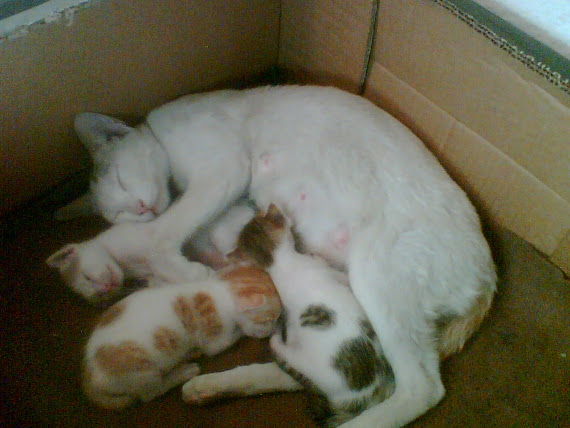
Mother's Care

Mother's Care
Minnu The Cat & Her Kittens Brownie, Goldie & Blackie

Someone with Nature

Someone with Nature
Syed Akbar in an island in river Godavari with Papikonda hills in the background

Recognition by World Vegetable Centre

Recognition by World Vegetable Centre

Under the shade of Baobab tree

Under the shade of Baobab tree
At Agha Khan Akademi in Kenya

Gateway to the Southern Hemisphere

Gateway to the Southern Hemisphere

Convention on Biodiversity

Convention on Biodiversity
Syed Akbar at the 11th Conference of Parties to the United Nations Convention on Biological Diversity