By Syed Akbar
Hyderabad, May 17: Hyderabad sits on carbon monoxide poisoning, a highly
dangerous gas that was once used by kings to execute people.
The average peak level of carbon monoxide or simply CO in the city
atmosphere for the months of January, February, March and April was 18 mg
per cubic metre per hour as against the standard level of 4 mg/cm and
permissible level of 12 mg/cm.
Worse is the case with high traffic areas like Panjagutta where the peak CO
level for the first four months of this year was 26 mg/cm, according to AP
Pollution Control Board ambient air quality studies. The recordings were as
high as 23 mg/cm in Paradise and Charminar and as low as nine mg/cm in
green areas like Nehru Zoological Park and Kasu Brahmananda Reddy
National Park.
City doctors link high incidence of breathing-related problems, nausea and
convulsions among Hyderabadis to constant exposure to vehicular CO
emissions. Carbon monoxide is a highly poisonous gas known to man as
early as 300 years before the birth of Christ and it has emerged as the
single
largest cause of accidentally poisoning among Americans. Increasing number
of vehicles and frequent traffic snarls have turned Hyderabad as one of the
few cities in the country with high CO exposure rates.
"Carbon monoxide can lead to respiratory chronic obstructive pulmonary
disease and allergic bronchitis. It can even lead to death in case of heavy
exposures. At low levels, CO leads to reduced oxygenation which may cause
forgetfulness, fatigue and insomnia. We have been receiving many such cases
of late," says Dr A Raghu, consultant physician at Apollo DRDO Hospital.
This gas has the tendency to freely mix with the blood stream leading to the
formation of carboxyl haemoglobin.
The danger from this gas can be gauged from the fact that haemoglobin
prefers CO to oxygen. The haemoglobin molecule likes to take 200 times
more CO than oxygen, he points out adding that the high levels of CO
concentration in Hyderabad atmosphere will prove disastrous to the health of
the people in the long run.
Though 2.5 per cent carboxyl haemoglobin (at a CO limit of 30 mg/cm for
one hour) is recognised as definitely harmful to health, experts around the
world have now set a standard limit of one per cent carboxyl haemoglobin
(12 mg/cm for one hour). This means in Hyderabad the peak CO level is
more than twice the standard limit.
Senior pulmonologist Dr Pradyut Waghray attributes the high levels of CO in
Hyderabad to fumes from industries and exhaust from diesel vehicles.
"Respiratory cells get affected by carbon monoxide. It also hits RBCs and
reduces oxygen carrying capacity of the blood," he says adding that constant
exposure leads to chronic persistent respiratory asthma.
Thursday, 17 May 2007


Hyderabad sits on carbon monoxide poisoning
By Syed Akbar
Hyderabad, May 17: Hyderabad sits on carbon monoxide poisoning, a highly dangerous gas that was once used by kings to execute people.
The average peak level of carbon monoxide or simply CO in the city atmosphere for the months of January, February, March and April was 18 mg per cubic metre per hour as against the standard level of 4 mg/cm and permissible level of 12 mg/cm.
Worse is the case with high traffic areas like Panjagutta where the peak CO level for the first four months of this year was 26 mg/cm, according to AP Pollution Control Board ambient air quality studies. The recordings were as high as 23 mg/cm in Paradise and Charminar and as low as nine mg/cm in green areas like Nehru Zoological Park and Kasu Brahmananda Reddy National Park.
City doctors link high incidence of breathing-related problems, nausea and convulsions among Hyderabadis to constant exposure to vehicular CO emissions. Carbon monoxide is a highly poisonous gas known to man as early as 300 years before the birth of Christ and it has emerged as the single largest cause of accidentally poisoning among Americans. Increasing number of vehicles and frequent traffic snarls have turned Hyderabad as one of the few cities in the country with high CO exposure rates.
"Carbon monoxide can lead to respiratory chronic obstructive pulmonary
disease and allergic bronchitis. It can even lead to death in case of heavy exposures. At low levels, CO leads to reduced oxygenation which may cause forgetfulness, fatigue and insomnia. We have been receiving many such cases of late," says Dr A Raghu, consultant physician at Apollo DRDO Hospital.
This gas has the tendency to freely mix with the blood stream leading to the formation of carboxyl haemoglobin.
The danger from this gas can be gauged from the fact that haemoglobin prefers CO to oxygen. The haemoglobin molecule likes to take 200 times more CO than oxygen, he points out adding that the high levels of CO concentration in Hyderabad atmosphere will prove disastrous to the health of the people in the long run.
Though 2.5 per cent carboxyl haemoglobin (at a CO limit of 30 mg/cm for one hour) is recognised as definitely harmful to health, experts around the world have now set a standard limit of one per cent carboxyl haemoglobin (12 mg/cm for one hour). This means in Hyderabad the peak CO level is more than twice the standard limit.
Senior pulmonologist Dr Pradyut Waghray attributes the high levels of CO in Hyderabad to fumes from industries and exhaust from diesel vehicles. "Respiratory cells get affected by carbon monoxide. It also hits RBCs and reduces oxygen carrying capacity of the blood," he says adding that constant exposure leads to chronic persistent respiratory asthma.
Hyderabad, May 17: Hyderabad sits on carbon monoxide poisoning, a highly dangerous gas that was once used by kings to execute people.
The average peak level of carbon monoxide or simply CO in the city atmosphere for the months of January, February, March and April was 18 mg per cubic metre per hour as against the standard level of 4 mg/cm and permissible level of 12 mg/cm.
Worse is the case with high traffic areas like Panjagutta where the peak CO level for the first four months of this year was 26 mg/cm, according to AP Pollution Control Board ambient air quality studies. The recordings were as high as 23 mg/cm in Paradise and Charminar and as low as nine mg/cm in green areas like Nehru Zoological Park and Kasu Brahmananda Reddy National Park.
City doctors link high incidence of breathing-related problems, nausea and convulsions among Hyderabadis to constant exposure to vehicular CO emissions. Carbon monoxide is a highly poisonous gas known to man as early as 300 years before the birth of Christ and it has emerged as the single largest cause of accidentally poisoning among Americans. Increasing number of vehicles and frequent traffic snarls have turned Hyderabad as one of the few cities in the country with high CO exposure rates.
"Carbon monoxide can lead to respiratory chronic obstructive pulmonary
disease and allergic bronchitis. It can even lead to death in case of heavy exposures. At low levels, CO leads to reduced oxygenation which may cause forgetfulness, fatigue and insomnia. We have been receiving many such cases of late," says Dr A Raghu, consultant physician at Apollo DRDO Hospital.
This gas has the tendency to freely mix with the blood stream leading to the formation of carboxyl haemoglobin.
The danger from this gas can be gauged from the fact that haemoglobin prefers CO to oxygen. The haemoglobin molecule likes to take 200 times more CO than oxygen, he points out adding that the high levels of CO concentration in Hyderabad atmosphere will prove disastrous to the health of the people in the long run.
Though 2.5 per cent carboxyl haemoglobin (at a CO limit of 30 mg/cm for one hour) is recognised as definitely harmful to health, experts around the world have now set a standard limit of one per cent carboxyl haemoglobin (12 mg/cm for one hour). This means in Hyderabad the peak CO level is more than twice the standard limit.
Senior pulmonologist Dr Pradyut Waghray attributes the high levels of CO in Hyderabad to fumes from industries and exhaust from diesel vehicles. "Respiratory cells get affected by carbon monoxide. It also hits RBCs and reduces oxygen carrying capacity of the blood," he says adding that constant exposure leads to chronic persistent respiratory asthma.
Friday, 11 May 2007
Dalita Govindam: Special darshan of Lord Venkateswara for Dalits in villages
By Syed Akbar
As the sun starts rising above the horizon, dozens of senior priests and
officials carrying the idols of Lord Sri Venkateswara and His two
Consorts Sri Padmavathi and Sri Lakshmi Devi enter a sleepy
Dalitwada amidst chanting of Vedic hymns. A specially decorated
chariot with the idols of the presiding deity of the Tirumala-Tirupati
Hills also enters the village.
The idols are placed on a raised platform in the middle of the
Dalitwada, the segregated habitation of so-called lower castes, and the
Vedic priests fan out inviting Dalits for a "darshan" of Lord Sri
Venkateswara, the richest Hindu deity in the world.
The Tirumala Tirupati Devasthanams, which controls the Lord
Venkateswara temple atop the Tirumala Hills, has embarked upon a
novel programme to take the processional idols of various Hindu
deities to the doorsteps of Dalits to enable them to worship the
Almighty. Aptly named, the Dalita Govindam, has been a success thus
far and the TTD plans to extend it to all the Dalitwadas across the State
in phases.
"This is just a symbolic gesture on the part of the TTD. The idea is to
create spiritual awakening among the Dalits. They generally do not get
the opportunity for darshan to their heart's content. Moreover, in some
temples they are not allowed by the orthodox. We want to break it and
provide the Dalits with an opportunity to participate in the regular
traditional rituals and offerings the deities," says TTD chairman B
Karunakar Reddy, the brain behind Dalita Govindam.
Once the Dalits gather at the village centre, three couples are selected
from among them to sit in front of the idols and participate in the
special rites (kalyanam). After the rituals are over, the priests and
officials partake lunch and dinner in the Dalitwada. They also sleep in
the village among Dalits before leaving for another Dalitwada the next
morning.
The priests later give prasadam to Dalits. They are offer the Vedic
"asirvachanams", normally an exclusive prerogative of VIPs.
The TTD started the novel programme in Vemuru village in Chittoor
district. Normally the processional idols of Sri Venkateswara and His
Consort are taken out for darshan in the traditional four Mada Streets of
Tirumala. This is the first time that the replicas of processional idols
are brought down the hill for the benefit of Dalits.
The Dalita Govindam, however, received flak from the CPM which
termed the programme as a "modern form of untouchability". CPM
State secretary BV Raghavulu demands that the TTD allow
appointment of trained Dalits as archakas of the main temple at
Tirumala and utilise their services in the traditional kitchen where the
famous laddus are prepared.
Meanwhile, in a first of its kind move, Sri Swaroopanandendra
Saraswathi Swami, head of Sri Visakha Sarada Peetham, plans to take
more than 300 Dalits, who were reconverted to Hinduism from
Christianity, on a pilgrimage of important temples spread across the
State on May 26.
He will lead the entry of reconverted Dalits into the famous Hindu
shrines in Srisailam (Sri Brahmaramba Mallikarjuna Swami), Tirupati
(Sri Venkateswara Swami), Srikalahasti (Shiva), Vijayawada (Sri
Durga Malleswara Swami) and Annavaram (Sri Satyanarayana Swami).
"The Agama Sastras do not prevent the entry of Dalits into temples or
other religious places. The centuries-old Hindu tradition also does not
prohibit it. It's only after the Britishers started ruling India that
untouchability came into being and Dalits were barred entry into
temples. We are simply reviving the ancient Hindu tradition and
practising the Agama Sastras by taking Dalits on a pilgrimage of
important temples," the Swamiji points out.
As the sun starts rising above the horizon, dozens of senior priests and
officials carrying the idols of Lord Sri Venkateswara and His two
Consorts Sri Padmavathi and Sri Lakshmi Devi enter a sleepy
Dalitwada amidst chanting of Vedic hymns. A specially decorated
chariot with the idols of the presiding deity of the Tirumala-Tirupati
Hills also enters the village.
The idols are placed on a raised platform in the middle of the
Dalitwada, the segregated habitation of so-called lower castes, and the
Vedic priests fan out inviting Dalits for a "darshan" of Lord Sri
Venkateswara, the richest Hindu deity in the world.
The Tirumala Tirupati Devasthanams, which controls the Lord
Venkateswara temple atop the Tirumala Hills, has embarked upon a
novel programme to take the processional idols of various Hindu
deities to the doorsteps of Dalits to enable them to worship the
Almighty. Aptly named, the Dalita Govindam, has been a success thus
far and the TTD plans to extend it to all the Dalitwadas across the State
in phases.
"This is just a symbolic gesture on the part of the TTD. The idea is to
create spiritual awakening among the Dalits. They generally do not get
the opportunity for darshan to their heart's content. Moreover, in some
temples they are not allowed by the orthodox. We want to break it and
provide the Dalits with an opportunity to participate in the regular
traditional rituals and offerings the deities," says TTD chairman B
Karunakar Reddy, the brain behind Dalita Govindam.
Once the Dalits gather at the village centre, three couples are selected
from among them to sit in front of the idols and participate in the
special rites (kalyanam). After the rituals are over, the priests and
officials partake lunch and dinner in the Dalitwada. They also sleep in
the village among Dalits before leaving for another Dalitwada the next
morning.
The priests later give prasadam to Dalits. They are offer the Vedic
"asirvachanams", normally an exclusive prerogative of VIPs.
The TTD started the novel programme in Vemuru village in Chittoor
district. Normally the processional idols of Sri Venkateswara and His
Consort are taken out for darshan in the traditional four Mada Streets of
Tirumala. This is the first time that the replicas of processional idols
are brought down the hill for the benefit of Dalits.
The Dalita Govindam, however, received flak from the CPM which
termed the programme as a "modern form of untouchability". CPM
State secretary BV Raghavulu demands that the TTD allow
appointment of trained Dalits as archakas of the main temple at
Tirumala and utilise their services in the traditional kitchen where the
famous laddus are prepared.
Meanwhile, in a first of its kind move, Sri Swaroopanandendra
Saraswathi Swami, head of Sri Visakha Sarada Peetham, plans to take
more than 300 Dalits, who were reconverted to Hinduism from
Christianity, on a pilgrimage of important temples spread across the
State on May 26.
He will lead the entry of reconverted Dalits into the famous Hindu
shrines in Srisailam (Sri Brahmaramba Mallikarjuna Swami), Tirupati
(Sri Venkateswara Swami), Srikalahasti (Shiva), Vijayawada (Sri
Durga Malleswara Swami) and Annavaram (Sri Satyanarayana Swami).
"The Agama Sastras do not prevent the entry of Dalits into temples or
other religious places. The centuries-old Hindu tradition also does not
prohibit it. It's only after the Britishers started ruling India that
untouchability came into being and Dalits were barred entry into
temples. We are simply reviving the ancient Hindu tradition and
practising the Agama Sastras by taking Dalits on a pilgrimage of
important temples," the Swamiji points out.
Wednesday, 9 May 2007
India is a cradle of languages
Syed Akbar
Hyderabad, May 9: India has long been known as the sojourn of early human
migration from Africa and latest research studies by city scientists based on
male sex chromosome shows that the country also served as the cradle of
languages.
The forefathers of Austro-Asiatic linguistic family originated in India and
later dispersed themselves to different places, according to a joint study by
the Hyderabad-based Centre for Cellular and Molecular Biology and
Molecular anthropology group of Biological Anthropology Unit of Indian
Statistical Institute and the Shillong-based North Eastern Hill University's
Department of Anthropology.
The Austro-Asiatic linguistic family is considered to be the oldest
in the country and people who speak these languages are scattered all over
Southeast Asia. The scientists' team analysed the male Y-chromosome
to trace the origin and historic expansion of Austro-Asiatic groups of India.
The report was published online in the latest issue of science journal of
international repute BMC Genetics. The city team studied genetic data of
1222 individuals from 25 Indian populations, covering all the three branches
of Austro-Asiatic tribes, Mundari, Khasi-Khmuic and Mon-Khmer. The
team, comprising among others Dr Lalji Singh, K Thangaraj and BM Reddy,
compared the data with the already available scientific information on 214
relevant populations from Asia and Oceania.
The results suggested a strong paternal genetic link, not only among the
subgroups of Indian Austro-Asiatic populations but also with those of
Southeast Asia. However, maternal link based on mitochondrial DNA is not
evident.
The haplogroup in the Austro-Asiatic populations had originated around
65,000 years ago and the ancestors of this linguistic family carried it
further
to Southeast Asia via the Northeast Indian corridor. "Subsequently, in the
process of expansion, the Mon-Khmer populations from Southeast Asia seem
to have migrated and colonised Andaman and Nicobar Islands at a much later
point of time," the study pointed out.
The present findings are consistent with the linguistic evidence, which
suggests that the linguistic ancestors of the Austro-Asiatic populations have
originated in India and then migrated to Southeast Asia. Four major
linguistic
groups, Austro-Asiatic, Dravidian, Indo-European and Tibeto-Burman, are
present in the Indian sub-continent and the ancestors of speakers of these
languages might have entered at different points of time.
The Austro-Asiatic languages include Mundari, spoken by a number of tribes
living in Chota-Nagpur plateau in Central and Eastern India, Mon-Khmer
(Nicobarese and Shompen tribes from Andaman and Nicobar islands) and
Khasi-Khmuic (Khasi subtribes from Northeast India).
The team sampled almost all the Austro-Asiatic populations of India covering
the entire geographic and micro-linguistic heterogeneity inherent among
them, including the molecular genetic data on the Austro-Asiatic Khasi from
Northeast India, considered as an important corridor for human
migrations to Southeast Asia.
"Austro-Asiatic populations of India are not only linguistically linked to
Southeast Asian populations but also genetically associated. It is most
likely
that these populations have come from Central Asia through the Western
Indian corridor and subsequently colonised Southeast Asia, although more
data on Y-chromosome and mtDNA are needed from other relevant
populations to draw firmer conclusions," the study pointed out.
Hyderabad, May 9: India has long been known as the sojourn of early human
migration from Africa and latest research studies by city scientists based on
male sex chromosome shows that the country also served as the cradle of
languages.
The forefathers of Austro-Asiatic linguistic family originated in India and
later dispersed themselves to different places, according to a joint study by
the Hyderabad-based Centre for Cellular and Molecular Biology and
Molecular anthropology group of Biological Anthropology Unit of Indian
Statistical Institute and the Shillong-based North Eastern Hill University's
Department of Anthropology.
The Austro-Asiatic linguistic family is considered to be the oldest
in the country and people who speak these languages are scattered all over
Southeast Asia. The scientists' team analysed the male Y-chromosome
to trace the origin and historic expansion of Austro-Asiatic groups of India.
The report was published online in the latest issue of science journal of
international repute BMC Genetics. The city team studied genetic data of
1222 individuals from 25 Indian populations, covering all the three branches
of Austro-Asiatic tribes, Mundari, Khasi-Khmuic and Mon-Khmer. The
team, comprising among others Dr Lalji Singh, K Thangaraj and BM Reddy,
compared the data with the already available scientific information on 214
relevant populations from Asia and Oceania.
The results suggested a strong paternal genetic link, not only among the
subgroups of Indian Austro-Asiatic populations but also with those of
Southeast Asia. However, maternal link based on mitochondrial DNA is not
evident.
The haplogroup in the Austro-Asiatic populations had originated around
65,000 years ago and the ancestors of this linguistic family carried it
further
to Southeast Asia via the Northeast Indian corridor. "Subsequently, in the
process of expansion, the Mon-Khmer populations from Southeast Asia seem
to have migrated and colonised Andaman and Nicobar Islands at a much later
point of time," the study pointed out.
The present findings are consistent with the linguistic evidence, which
suggests that the linguistic ancestors of the Austro-Asiatic populations have
originated in India and then migrated to Southeast Asia. Four major
linguistic
groups, Austro-Asiatic, Dravidian, Indo-European and Tibeto-Burman, are
present in the Indian sub-continent and the ancestors of speakers of these
languages might have entered at different points of time.
The Austro-Asiatic languages include Mundari, spoken by a number of tribes
living in Chota-Nagpur plateau in Central and Eastern India, Mon-Khmer
(Nicobarese and Shompen tribes from Andaman and Nicobar islands) and
Khasi-Khmuic (Khasi subtribes from Northeast India).
The team sampled almost all the Austro-Asiatic populations of India covering
the entire geographic and micro-linguistic heterogeneity inherent among
them, including the molecular genetic data on the Austro-Asiatic Khasi from
Northeast India, considered as an important corridor for human
migrations to Southeast Asia.
"Austro-Asiatic populations of India are not only linguistically linked to
Southeast Asian populations but also genetically associated. It is most
likely
that these populations have come from Central Asia through the Western
Indian corridor and subsequently colonised Southeast Asia, although more
data on Y-chromosome and mtDNA are needed from other relevant
populations to draw firmer conclusions," the study pointed out.
Saturday, 5 May 2007
Indian doctors link heart diseases to food habits
2007
Syed Akbar
Hyderabad, May 5: Aping the West in food and lifestyle is proving to be dear to people in Andhra Pradesh with heart diseases linked to food habits emerging as the leading cause of death.
According to a recent survey published by the Central Bureau of Health Intelligence, ischemic heart disease characterised by reduced blood supply to the heart has been killing 13.21 per cent of people in Andhra Pradesh. It is the cause of death in 12.2 per cent of women and 14.08 per cent of men.
Incidentally ischemic heart disease tops the 10 important causes of death in people of the State.
Doctors link the disease to smoking, diabetes, hypertension, obesity, excessive use of hydrogenated fats (vanaspathi) and foods containing high cholesterol levels. So far, ischemic heart disease has been the major cause of death in the US and Europe. That it has emerged as the top killer in Andhra Pradesh is a cause for concern, says senior cardiologist Dr PC Rath.
In patients suffering from ischemic heart disease the flow of blood to the heart is obstructed and thus the heart is deprived of oxygen. This leads to death if not attended to immediately. According to Dr Rath, a little change in lifestyle and food habits will help in controlling cardiovascular diseases.
Cerebrovascular disease (bleeding in brain or cutting supply of blood or oxygen to the brain) is the second leading cause of death in Andhra Pradesh, though it is the third leading cause of death in the West. Cancer or malignancy, which is the second leading cause of death in the West, is incidentally the 10th cause of death in Andhra Pradesh.
While lower respiratory (lung) infections is the third over all leading killer in the State, diarrhoeal diseases occupy the third position in case of women and tuberculosis in case of men. Self-inflected injury is the seventh leading killer both among men and women while asthma and stomach cancer is the eighth major cause of death among men and women respectively, according to the CBHI report.
Road accidents occupy the 10th slot in case of men and dementia (group of disorders relating to brain) is the 10th cause of deaths among women. Cirrhosis of the liver is the cause of 2.19 per cent of deaths among men but incidentally it is absent among women. Cirrhosis is linked to alcohol.
Women tend to be more prone to unintentional injuries than men. Statistics show that 4.09 per cent of deaths in women and 3.81 per cent of deaths in men are attributed to unintentional injuries.
Syed Akbar
Hyderabad, May 5: Aping the West in food and lifestyle is proving to be dear to people in Andhra Pradesh with heart diseases linked to food habits emerging as the leading cause of death.
According to a recent survey published by the Central Bureau of Health Intelligence, ischemic heart disease characterised by reduced blood supply to the heart has been killing 13.21 per cent of people in Andhra Pradesh. It is the cause of death in 12.2 per cent of women and 14.08 per cent of men.
Incidentally ischemic heart disease tops the 10 important causes of death in people of the State.
Doctors link the disease to smoking, diabetes, hypertension, obesity, excessive use of hydrogenated fats (vanaspathi) and foods containing high cholesterol levels. So far, ischemic heart disease has been the major cause of death in the US and Europe. That it has emerged as the top killer in Andhra Pradesh is a cause for concern, says senior cardiologist Dr PC Rath.
In patients suffering from ischemic heart disease the flow of blood to the heart is obstructed and thus the heart is deprived of oxygen. This leads to death if not attended to immediately. According to Dr Rath, a little change in lifestyle and food habits will help in controlling cardiovascular diseases.
Cerebrovascular disease (bleeding in brain or cutting supply of blood or oxygen to the brain) is the second leading cause of death in Andhra Pradesh, though it is the third leading cause of death in the West. Cancer or malignancy, which is the second leading cause of death in the West, is incidentally the 10th cause of death in Andhra Pradesh.
While lower respiratory (lung) infections is the third over all leading killer in the State, diarrhoeal diseases occupy the third position in case of women and tuberculosis in case of men. Self-inflected injury is the seventh leading killer both among men and women while asthma and stomach cancer is the eighth major cause of death among men and women respectively, according to the CBHI report.
Road accidents occupy the 10th slot in case of men and dementia (group of disorders relating to brain) is the 10th cause of deaths among women. Cirrhosis of the liver is the cause of 2.19 per cent of deaths among men but incidentally it is absent among women. Cirrhosis is linked to alcohol.
Women tend to be more prone to unintentional injuries than men. Statistics show that 4.09 per cent of deaths in women and 3.81 per cent of deaths in men are attributed to unintentional injuries.
Thursday, 3 May 2007
Swamiji takes Dalits into historic temples
2007
By Syed Akbar
Hyderabad, May 3: In a first of its kind move, the head of a Hindu religious mutt plans to take more than 300 Dalits, who were reconverted to Hinduism from Christianity, on a pilgrimage of important temples spread across the State on May 26.
Sri Swaroopanandendra Saraswathi Swami, head of Sri Visakha Sarada Peetham, will lead the entry of reconverted Dalits into the famous Hindu shrines in Srisailam (Sri Brahmaramba Mallikarjuna Swami), Tirupati (Sri Venkateswara Swami), Srikalahasti (Shiva), Vijayawada (Sri Durga Malleswara Swami) and Annavaram (Sri Satyanarayana Swami).
The Dalits from different parts of the State will assemble in Hyderabad on May 25 and will embark on the spiritual journey the next day. The yatra will conclude with the prayers at Sri Satyanarayana Swami temple at Annavaram in East Godavari district. From there, the Dalits will return to their respective villages.
"The Agama Sastras do not prevent the entry of Dalits into temples or other religious places. The centuries-old Hindu tradition also does not prohibit it. It's only after the Britishers started ruling India that untouchability came into being and Dalits were barred entry into temples. We are simply reviving the ancient Hindu tradition and practising the Agama Sastras by taking Dalits on a pilgrimage of important temples," the Swami told this correspondent.
Referring to the "Dalita Govindam" programme launched by the Tirumala Tirupati Devasthanams, the Swamiji said Dalits should be allowed to enter temples.
Swami Swaroopanandendra Saraswathi has been championing the cause of Dalits and fighting against religious conversions. He held a series of meetings with other Hindu religious leaders including Sankaracharyas to create religious awareness among the Dalit communities.
"We are also holding a reconversion programme for Dalits who have converted to other religions. The programme will be held at Rushigudda in Srikakulam district for three days from May 7. We will tell the Dalits that their ancestors Arundhati, Dharmavyada and Valmiki had brought laurels to the religion. We all worship them, though they are Dalits," the Swamiji said.
By Syed Akbar
Hyderabad, May 3: In a first of its kind move, the head of a Hindu religious mutt plans to take more than 300 Dalits, who were reconverted to Hinduism from Christianity, on a pilgrimage of important temples spread across the State on May 26.
Sri Swaroopanandendra Saraswathi Swami, head of Sri Visakha Sarada Peetham, will lead the entry of reconverted Dalits into the famous Hindu shrines in Srisailam (Sri Brahmaramba Mallikarjuna Swami), Tirupati (Sri Venkateswara Swami), Srikalahasti (Shiva), Vijayawada (Sri Durga Malleswara Swami) and Annavaram (Sri Satyanarayana Swami).
The Dalits from different parts of the State will assemble in Hyderabad on May 25 and will embark on the spiritual journey the next day. The yatra will conclude with the prayers at Sri Satyanarayana Swami temple at Annavaram in East Godavari district. From there, the Dalits will return to their respective villages.
"The Agama Sastras do not prevent the entry of Dalits into temples or other religious places. The centuries-old Hindu tradition also does not prohibit it. It's only after the Britishers started ruling India that untouchability came into being and Dalits were barred entry into temples. We are simply reviving the ancient Hindu tradition and practising the Agama Sastras by taking Dalits on a pilgrimage of important temples," the Swami told this correspondent.
Referring to the "Dalita Govindam" programme launched by the Tirumala Tirupati Devasthanams, the Swamiji said Dalits should be allowed to enter temples.
Swami Swaroopanandendra Saraswathi has been championing the cause of Dalits and fighting against religious conversions. He held a series of meetings with other Hindu religious leaders including Sankaracharyas to create religious awareness among the Dalit communities.
"We are also holding a reconversion programme for Dalits who have converted to other religions. The programme will be held at Rushigudda in Srikakulam district for three days from May 7. We will tell the Dalits that their ancestors Arundhati, Dharmavyada and Valmiki had brought laurels to the religion. We all worship them, though they are Dalits," the Swamiji said.
Saturday, 21 April 2007
Andhra Pradesh ranks top in chronic energy deficiency in India
2007
By Syed Akbar
Hyderabad, April 21: Andhra Pradesh, which is prone to frequent dry spells, has the highest percentage of chronic energy deficiency among States in the country both in men and women.
A survey conducted by the city-based National Institute of Nutrition in nine drought-prone States shows that Andhra Pradesh also tops the list with the dubious distinction of 29 per cent of families in drought-hit areas selling away assets to purchase food items.
The survey was conducted in Andhra Pradesh, Chattisgarh, Gujarat, Karnataka, Madhya Pradesh, Maharashtra, Orissa, Rajasthan and Tamil Nadu. The results of the study were published in the latest issue of the NIN's inhouse magazine, Nutrition News.
According to the survey, the overall prevalence of chronic energy deficiency among adult males ranged from a low 26 per cent in Tamil Nadu to a high 50 per cent in Andhra Pradesh. In case of females, it varied from a low 30 per cent in Gujarat to 56 per cent in Andhra Pradesh. The levels of CED among both men and women were relatively higher by about five to 10 per cent than the figures reported in similar surveys conducted earlier in Andhra Pradesh, Karnataka, Maharashtra and Orissa.
The report pointed out that households surveyed adopted a variety of strategies to tackle the food scarcity during drought. A majority of the households in all the States except Maharashtra, availed of assistance from government or NGOs. Some of the strategies adopted were reduction in the frequency/quantity of foods consumed, consumption of low cost foods and use of food stocks/savings.
In Andhra Pradesh, Gujarat, Karnataka and Orissa 20 per cent of the households resorted to migration. About 30 per cent of the households in Andhra Pradesh and 16 per cent in Tamil Nadu sold away household assets to buy foodstuffs during drought. This is as against none in Maharashtra, one per cent in Chattisgarh, two per cent in Gujarat, nine per cent in Orissa and three per cent in Rajasthan.
However, no starvation deaths were reported in any of the villages surveyed in the States.
The problem of severe underweight ranged from a low of 11 per cent in Tamil Nadu to a high of 25 per cent in Madhya Pradesh and in case of severe stunting (a reflection of long duration undernutrition) it was as low as 11 per cent in Tamil Nadu to as high as 39 per cent in Madhya Pradesh.
The prevalence of Kwashiokor, a severe form of protein energy malnutrition, was absent among pre-school children. However marasmus, another form of severe protein energy malnutrition, though of lower magnitude was observed in Andhra Pradesh, Chattisgarh, Maharashtra, Madhya Pradesh and Rajasthan.
Bitot spots, an objective sign of vitamin A deficiency, was more than the WHO suggested cut-off level of 0.5 per cent in all the states except Chattisgarh indicating public health significance of the problem. The rate varied from 2.5 to three in Andhra Pradesh, Gujarat and Karnataka and one to two per cent in Maharashtra, Rajasthan, Madhya Pradesh and Orissa.
By Syed Akbar
Hyderabad, April 21: Andhra Pradesh, which is prone to frequent dry spells, has the highest percentage of chronic energy deficiency among States in the country both in men and women.
A survey conducted by the city-based National Institute of Nutrition in nine drought-prone States shows that Andhra Pradesh also tops the list with the dubious distinction of 29 per cent of families in drought-hit areas selling away assets to purchase food items.
The survey was conducted in Andhra Pradesh, Chattisgarh, Gujarat, Karnataka, Madhya Pradesh, Maharashtra, Orissa, Rajasthan and Tamil Nadu. The results of the study were published in the latest issue of the NIN's inhouse magazine, Nutrition News.
According to the survey, the overall prevalence of chronic energy deficiency among adult males ranged from a low 26 per cent in Tamil Nadu to a high 50 per cent in Andhra Pradesh. In case of females, it varied from a low 30 per cent in Gujarat to 56 per cent in Andhra Pradesh. The levels of CED among both men and women were relatively higher by about five to 10 per cent than the figures reported in similar surveys conducted earlier in Andhra Pradesh, Karnataka, Maharashtra and Orissa.
The report pointed out that households surveyed adopted a variety of strategies to tackle the food scarcity during drought. A majority of the households in all the States except Maharashtra, availed of assistance from government or NGOs. Some of the strategies adopted were reduction in the frequency/quantity of foods consumed, consumption of low cost foods and use of food stocks/savings.
In Andhra Pradesh, Gujarat, Karnataka and Orissa 20 per cent of the households resorted to migration. About 30 per cent of the households in Andhra Pradesh and 16 per cent in Tamil Nadu sold away household assets to buy foodstuffs during drought. This is as against none in Maharashtra, one per cent in Chattisgarh, two per cent in Gujarat, nine per cent in Orissa and three per cent in Rajasthan.
However, no starvation deaths were reported in any of the villages surveyed in the States.
The problem of severe underweight ranged from a low of 11 per cent in Tamil Nadu to a high of 25 per cent in Madhya Pradesh and in case of severe stunting (a reflection of long duration undernutrition) it was as low as 11 per cent in Tamil Nadu to as high as 39 per cent in Madhya Pradesh.
The prevalence of Kwashiokor, a severe form of protein energy malnutrition, was absent among pre-school children. However marasmus, another form of severe protein energy malnutrition, though of lower magnitude was observed in Andhra Pradesh, Chattisgarh, Maharashtra, Madhya Pradesh and Rajasthan.
Bitot spots, an objective sign of vitamin A deficiency, was more than the WHO suggested cut-off level of 0.5 per cent in all the states except Chattisgarh indicating public health significance of the problem. The rate varied from 2.5 to three in Andhra Pradesh, Gujarat and Karnataka and one to two per cent in Maharashtra, Rajasthan, Madhya Pradesh and Orissa.
Friday, 20 April 2007
NFC develops titanium half alloy tubes for light combat aircraft
Syed Akbar
Hyderabad: The city-based Nuclear Fuel Complex has developed titanium half alloy tubes for light combat aircraft heralding a new phase in indigenous technology for production of "safety critical components" in the defence sector. Titanium half alloy tubes are difficult-to-manufacture material.
The Aeronautical Development Agency, Bangalore, requires titanium half alloy tubing for application as hydraulic piping used for power transmission in light combat aircraft for Indian Air Force.
"NFC has got rich experience and expertise in processing anisotropic materials such as zirconium and titanium, especially by hot workign coupled with cold working processes. NFC has taken up the challenging task of making these tubes for LCA project," NFC chief executive RN Jayraj observed.
The NFC formally released the product at the "NFC Day" celebrations. The first batch of these tubes were handed over to Aeronautical Development Agency for further compnent level test, leading to airworthiness certification for use in Tejas light combat aircraft.
DRDO chief controller (research and development) Dr Dipankar Banerjee the LCA technology would get the "initial operatational clearance" by 2008 from the Indian Air Force. In the second stage, weapons will be integrated with the aircraft and in the third phase it would be integrated with radar system. Four aircraft are already in use. In the next two years twin seater trainer aircraft will be ready. He said the titanium tubes are used in hydraulic pressure control in aircraft.
The NFC also developed thorium oxide powder for development of certified reference materials. Thorium oxide is going to play a vital role as a major component as fuel for advanced heavy water reactor in the third stage of India's nuclear power programme. In view of the growing importance of thorium oxide in nuclear technology, it was felt essential to develop the product as it is not readily available in the international market for sale, Jayaraj said.
Hyderabad: The city-based Nuclear Fuel Complex has developed titanium half alloy tubes for light combat aircraft heralding a new phase in indigenous technology for production of "safety critical components" in the defence sector. Titanium half alloy tubes are difficult-to-manufacture material.
The Aeronautical Development Agency, Bangalore, requires titanium half alloy tubing for application as hydraulic piping used for power transmission in light combat aircraft for Indian Air Force.
"NFC has got rich experience and expertise in processing anisotropic materials such as zirconium and titanium, especially by hot workign coupled with cold working processes. NFC has taken up the challenging task of making these tubes for LCA project," NFC chief executive RN Jayraj observed.
The NFC formally released the product at the "NFC Day" celebrations. The first batch of these tubes were handed over to Aeronautical Development Agency for further compnent level test, leading to airworthiness certification for use in Tejas light combat aircraft.
DRDO chief controller (research and development) Dr Dipankar Banerjee the LCA technology would get the "initial operatational clearance" by 2008 from the Indian Air Force. In the second stage, weapons will be integrated with the aircraft and in the third phase it would be integrated with radar system. Four aircraft are already in use. In the next two years twin seater trainer aircraft will be ready. He said the titanium tubes are used in hydraulic pressure control in aircraft.
The NFC also developed thorium oxide powder for development of certified reference materials. Thorium oxide is going to play a vital role as a major component as fuel for advanced heavy water reactor in the third stage of India's nuclear power programme. In view of the growing importance of thorium oxide in nuclear technology, it was felt essential to develop the product as it is not readily available in the international market for sale, Jayaraj said.
Tuesday, 17 April 2007
Anti-bacterial properties of Indian kitchen items, food
2007
By Syed Akbar
Hyderabad, April 17: Kali Mirch, Loung, Dhania and Jeera more than just spice up the Indian cuisine. They also kill the harmful bacteria in the stomach that cause severe health problems often leading to death.
Though the medicinal properties of Indian spices have been known for ages, it is for the first time that a group of researchers has established that pepper, clove, coriander and cumin are capable of waging a successful battle against Escherichia coli and Staphylococcus aureus, the bacteria that cause meningitis, septicaemia, pneumonia and inflammation of the inner layer of the heart, among others.
A team of biotechnologists of Prathyusha Engineering College led by Prof K Janardhanan screened the antimicrobial activity of clove, pepper, coriander and cumin using the Kirby-Bauer disc diffusion and plate dilution technique. "Among the four spices tested, the highest degree of antimicrobial effect was exhibited by the extracts of the buds of clove (Syzygium aromacticum) and the seeds of pepper (Piper nigrum). However, the seeds of coriander (Coriandrum sativum) and cumin (Cuminum cyminum) gave the least effect on Staphylococcus aureus. Escherichia coli was susceptible to all the spices extract," Janardhanan observed.
Pepper has earlier been known to stimulate appetite and avoid flatulence but with the new finding, its extracts will help in controlling harmful bacteria living in the gut of human beings. The anti-microbial properties in clove is due to the presence of beneficial chemicals like eugenol, eugenol acetate, Beta-caryophyllene and triterpene oleanolic acid.
The study showed that the essential oil present in coriander showed delay in the growth of E. coli. Earlier, scientists know that dhania as a diuretic.
E. coli is a notorious bacteria that is known to cause disease in just about every other part of the human body. Some of the more serious diseases caused by the pathogenic variety of this bacteria are pneumonia and meningitis. E. coli has beneficial forms too like those which help in the formation of vitamin K.
The natural way of killing E. coli through spices is beneficial in more than one ways, according to the team. As chemical antibiotics that kill E. coli may cause severe shock in the patient, often leading to death. This is because, when the bacteria die the harmful material present in it cause toxicity in the body.
On the other hand Staphylococcus aureus causes a variety of diseases from the simple skin rashes to the complicated pneumonia and septicaemia.
By Syed Akbar
Hyderabad, April 17: Kali Mirch, Loung, Dhania and Jeera more than just spice up the Indian cuisine. They also kill the harmful bacteria in the stomach that cause severe health problems often leading to death.
Though the medicinal properties of Indian spices have been known for ages, it is for the first time that a group of researchers has established that pepper, clove, coriander and cumin are capable of waging a successful battle against Escherichia coli and Staphylococcus aureus, the bacteria that cause meningitis, septicaemia, pneumonia and inflammation of the inner layer of the heart, among others.
A team of biotechnologists of Prathyusha Engineering College led by Prof K Janardhanan screened the antimicrobial activity of clove, pepper, coriander and cumin using the Kirby-Bauer disc diffusion and plate dilution technique. "Among the four spices tested, the highest degree of antimicrobial effect was exhibited by the extracts of the buds of clove (Syzygium aromacticum) and the seeds of pepper (Piper nigrum). However, the seeds of coriander (Coriandrum sativum) and cumin (Cuminum cyminum) gave the least effect on Staphylococcus aureus. Escherichia coli was susceptible to all the spices extract," Janardhanan observed.
Pepper has earlier been known to stimulate appetite and avoid flatulence but with the new finding, its extracts will help in controlling harmful bacteria living in the gut of human beings. The anti-microbial properties in clove is due to the presence of beneficial chemicals like eugenol, eugenol acetate, Beta-caryophyllene and triterpene oleanolic acid.
The study showed that the essential oil present in coriander showed delay in the growth of E. coli. Earlier, scientists know that dhania as a diuretic.
E. coli is a notorious bacteria that is known to cause disease in just about every other part of the human body. Some of the more serious diseases caused by the pathogenic variety of this bacteria are pneumonia and meningitis. E. coli has beneficial forms too like those which help in the formation of vitamin K.
The natural way of killing E. coli through spices is beneficial in more than one ways, according to the team. As chemical antibiotics that kill E. coli may cause severe shock in the patient, often leading to death. This is because, when the bacteria die the harmful material present in it cause toxicity in the body.
On the other hand Staphylococcus aureus causes a variety of diseases from the simple skin rashes to the complicated pneumonia and septicaemia.
Thursday, 12 April 2007
Cotrimoxazole: Basic health workers to institute oral anti-biotic treatment
2007
Syed Akbar
Hyderabad, April 12: Basic health workers have now been empowered to institute oral anti-biotic treatment with cotrimoxazole, a drug known for its side-effects, for treatment of neonatal and childhood infections, particularly sepsis and pneumonia.
The Central government last week issued orders to health secretaries of all States and Union Territories empowering health workers to give cotrimoxazole to infants and children. This in effect means, ordinary health workers with simple training will decide on the medicine and its dosage. Doctors, however, feel that the Central government's order will put the life of neonates and children under five years of age to a greater risk.
The Centre's orders come in the wake of spurt in cases of neonatal sepsis and childhood pneumonia in different parts of the country. Doctors criticise the government saying that it has been pushing the drug since it was easily available, though the side-effects are often severe. The drug institution task has been given to health workers under Integrated Management of Neonatal and Childhood Illnesses.
"We can't risk the health of a neonate by allowing health workers to give cotrimoxazole. It's not a broad spectrum antibiotic," argued Dr J Narsing Rao, assistant professor of paediatrics, Deccan College of Medical Sciences.
He pointed out that neonatal sepsis could be due to various reasons and Cotrimoxazole address only a few of these. "It is not appropriate to administer the medicine without proper study of the individual case. Moreover it should not be given routinely by health workers. It has serious side effects like rashes. Usually we never prescribe this drug for neonates, for whom there are other safer drugs," Dr Narsing Rao observed.
Cotrimoxazole or septrin is a mixture of two drugs, trimethoprim and sulphamethoxazole. It prevents reproduction of harmful bacteria in the body. The drug is excreted through the kidneys and hence doctors should be judicious in prescribing it to those with damage to kidneys. The side-effects include rash, fever, nausea, low white blood cells and liver inflammation.
Child specialist Dr Manorama Prakash said health workers were ill-equipped to administer the drug. "One has to see the condition and nature of the patient before administering the drug. Health workers, how well trained they are, cannot decide on the dosage or course. It will lead to misuse of the drug throwing the lives of children to risk," she added.
But the government wants to push the medicine to curb childhood pneumonia which has higher mortality rate than AIDS. About 19 per cent of deaths in children below five years of age is because of pneumonia.
Syed Akbar
Hyderabad, April 12: Basic health workers have now been empowered to institute oral anti-biotic treatment with cotrimoxazole, a drug known for its side-effects, for treatment of neonatal and childhood infections, particularly sepsis and pneumonia.
The Central government last week issued orders to health secretaries of all States and Union Territories empowering health workers to give cotrimoxazole to infants and children. This in effect means, ordinary health workers with simple training will decide on the medicine and its dosage. Doctors, however, feel that the Central government's order will put the life of neonates and children under five years of age to a greater risk.
The Centre's orders come in the wake of spurt in cases of neonatal sepsis and childhood pneumonia in different parts of the country. Doctors criticise the government saying that it has been pushing the drug since it was easily available, though the side-effects are often severe. The drug institution task has been given to health workers under Integrated Management of Neonatal and Childhood Illnesses.
"We can't risk the health of a neonate by allowing health workers to give cotrimoxazole. It's not a broad spectrum antibiotic," argued Dr J Narsing Rao, assistant professor of paediatrics, Deccan College of Medical Sciences.
He pointed out that neonatal sepsis could be due to various reasons and Cotrimoxazole address only a few of these. "It is not appropriate to administer the medicine without proper study of the individual case. Moreover it should not be given routinely by health workers. It has serious side effects like rashes. Usually we never prescribe this drug for neonates, for whom there are other safer drugs," Dr Narsing Rao observed.
Cotrimoxazole or septrin is a mixture of two drugs, trimethoprim and sulphamethoxazole. It prevents reproduction of harmful bacteria in the body. The drug is excreted through the kidneys and hence doctors should be judicious in prescribing it to those with damage to kidneys. The side-effects include rash, fever, nausea, low white blood cells and liver inflammation.
Child specialist Dr Manorama Prakash said health workers were ill-equipped to administer the drug. "One has to see the condition and nature of the patient before administering the drug. Health workers, how well trained they are, cannot decide on the dosage or course. It will lead to misuse of the drug throwing the lives of children to risk," she added.
But the government wants to push the medicine to curb childhood pneumonia which has higher mortality rate than AIDS. About 19 per cent of deaths in children below five years of age is because of pneumonia.
Subscribe to:
Posts (Atom)
Mother's Care
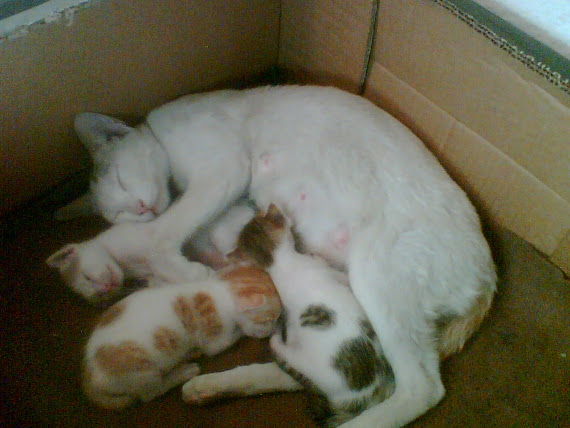
Minnu The Cat & Her Kittens Brownie, Goldie & Blackie
Someone with Nature

Syed Akbar in an island in river Godavari with Papikonda hills in the background
Recognition by World Vegetable Centre

Under the shade of Baobab tree

At Agha Khan Akademi in Kenya
Gateway to the Southern Hemisphere

Convention on Biodiversity

Syed Akbar at the 11th Conference of Parties to the United Nations Convention on Biological Diversity