August 2005
By Syed Akbar
Hyderabad, Aug 4: The Congress government's strategy to wean away rural youth from Naxalism after the failure of peace talks seems to have paid off in the past eight months.
As many as 5206 youths in interior and Naxal-infested villages have joined Youth Employment Societies formed by the State government at the district level to check Maoist influence on young minds. Of them, 1174 got jobs in Army, Air Force and BSF, while a few were absorbed in the Home Guards Organisation.
Following the State government's innovative drive, Naxal influence on rural and tribal youth particularly in the backward Telangana region came down considerably. The Naxals could not make new recruitment after the breakdown of the peace process. All the recruitment made by Maoist and Janasakhti Naxalites were only during the ceasefire period between July and December 2004.
"Unemployed youth in Naxal-hit areas can always be potential recruits to Naxal movement. Providing these youth with employment will weaken Maoists as they will not find new recruits. As a policy, we are recruiting more youth as home guards or forest guards on contract basis in disturbed and problematic areas," a senior official told this correspondent.
According to intelligence sources, Maoists and Janasakhti groups together recruited around 1000 rural youths into the Naxal movement. The Naxalite outfits even relaxed their recruitment norms to enrol as many youngsters as possible taking advantage of the ceasefire period. But once the talks process failed, the State government changed its policy deciding to wean away the rural youths from Naxalism through employment and training.
The government also strengthened the scheme of rehabilitation of surrendered extremists. District collectors have been directed to hold review meetings by 7th of every month. They will take up all applications received from surrendered Naxalites by then for financial assistance.
Thursday, 4 August 2005


Friday, 15 July 2005
People in Andhra Pradesh are nutritionally "backward"
2005
By Syed Akbar
Hyderabad, July 15: People in Andhra Pradesh are "starved" nutritionally when compared with those living in many States in the country.
According to a research study carried out by Andhra Pradesh Social Watch (Report 2005), chronic energy deficiency is observed in 37.4 per cent of men and 42 per cent of women living in villages. The scenario, however, is slightly better in towns and cities.
The average protein intake of both rural and urban Andhraites is just 62 (gm/cu/day) as against the all-India figure of 71.50. They also lag behind in fat intake. The State's average fat consumption is 50.7 gm/cu/day as compared with the all-India intake of 60.70 gm/cu/day.
Consumption of pulses in the State is 860 grams per head per month as against the all-India average of 960 grams.
The study points out that the per capita consumption of food items in the State is largely below the Indian Council of Medical Research norms. Even in urban areas, out of 10 food items examined during the survey, not a single food item is consumed according to the ICMR norms.
As many as 10.5 per cent of children in the State are severely undernourished and 28.2 per cent are moderately undernourished. The incidence of moderate malnutrition implies that the affected children may not reach their full physical and mental potential while severe malnutrition indicates that they may be functionally impaired.
No wonder then that Andhra Pradesh ranks 13 among 16 top States in the country in terms of food availability situation.
The per capita consumption of milk in the State is 3.96 litres per month as compared with 4.59 litres national average. Fish consumption is just 0.08 kgs per month in the State while the all-India average is 0.22 kgs. Break-up of other food items in the State with national average in brackets is: edible oil 0.60 kgs (0.72 kgs), vegetables 2.93 kgs (3.02 kgs), fruits 0.97 kgs (1.06 kg) and sugar 0.67 kgs (1.00 kg). Only in the case of cereals, the State is slightly ahead with just 42 grams per month. The State's per capita monthly consumption of cereals is 10.94 kgs (10.42 kgs all India).
Even in the case of production too, the State lags behind. Production of cereals in the State is only 363.35 grams per capita while ICMR norms stipulate 420 grams per head per day. The all-India average is 430.33 grams. About 40 grams of pulses are needed per head per day while the actual net production in the State is just 22.68 grams (all-India average is 31.94 grams).
"Consumption of food too provides important information about the food security status. In Andhra pradesh there's deficit in production over consumption of cereals. While net production of cereals is 381.90 grams per day the actual consumption is 442.33 grams," the report points out.
Though the Rural Food Insecurity Atlas (prepared by Dr MS Swaminathan Foundation and World Food Programme) has shown surplus net production of milk, edible oil, sugar and fruits in Andhra Pradesh, the same is not reflected in the per capita consumption in urban areas. In the case of cereals, 87 per cent of the ICMR norm is fulfilled but when it comes to pulses it is only 73 per cent. It is as low as 24 per cent in the case of eggs.
Stating that food consumption pattern across classes of consumers too demonstrates the food insecurity situation, the report points out that per capita monthly consumption for cereals is 10.94 kgs for all classes while it is only 9.67 kgs for the lowest 10 per cent.
This difference is viewed in the consumption of other food items as well. The per capita monthly consumption of pulses for all classes is 0.86 kgs but it is as low as 0.46 kgs for the lowest 10 per cent of the population.
By Syed Akbar
Hyderabad, July 15: People in Andhra Pradesh are "starved" nutritionally when compared with those living in many States in the country.
According to a research study carried out by Andhra Pradesh Social Watch (Report 2005), chronic energy deficiency is observed in 37.4 per cent of men and 42 per cent of women living in villages. The scenario, however, is slightly better in towns and cities.
The average protein intake of both rural and urban Andhraites is just 62 (gm/cu/day) as against the all-India figure of 71.50. They also lag behind in fat intake. The State's average fat consumption is 50.7 gm/cu/day as compared with the all-India intake of 60.70 gm/cu/day.
Consumption of pulses in the State is 860 grams per head per month as against the all-India average of 960 grams.
The study points out that the per capita consumption of food items in the State is largely below the Indian Council of Medical Research norms. Even in urban areas, out of 10 food items examined during the survey, not a single food item is consumed according to the ICMR norms.
As many as 10.5 per cent of children in the State are severely undernourished and 28.2 per cent are moderately undernourished. The incidence of moderate malnutrition implies that the affected children may not reach their full physical and mental potential while severe malnutrition indicates that they may be functionally impaired.
No wonder then that Andhra Pradesh ranks 13 among 16 top States in the country in terms of food availability situation.
The per capita consumption of milk in the State is 3.96 litres per month as compared with 4.59 litres national average. Fish consumption is just 0.08 kgs per month in the State while the all-India average is 0.22 kgs. Break-up of other food items in the State with national average in brackets is: edible oil 0.60 kgs (0.72 kgs), vegetables 2.93 kgs (3.02 kgs), fruits 0.97 kgs (1.06 kg) and sugar 0.67 kgs (1.00 kg). Only in the case of cereals, the State is slightly ahead with just 42 grams per month. The State's per capita monthly consumption of cereals is 10.94 kgs (10.42 kgs all India).
Even in the case of production too, the State lags behind. Production of cereals in the State is only 363.35 grams per capita while ICMR norms stipulate 420 grams per head per day. The all-India average is 430.33 grams. About 40 grams of pulses are needed per head per day while the actual net production in the State is just 22.68 grams (all-India average is 31.94 grams).
"Consumption of food too provides important information about the food security status. In Andhra pradesh there's deficit in production over consumption of cereals. While net production of cereals is 381.90 grams per day the actual consumption is 442.33 grams," the report points out.
Though the Rural Food Insecurity Atlas (prepared by Dr MS Swaminathan Foundation and World Food Programme) has shown surplus net production of milk, edible oil, sugar and fruits in Andhra Pradesh, the same is not reflected in the per capita consumption in urban areas. In the case of cereals, 87 per cent of the ICMR norm is fulfilled but when it comes to pulses it is only 73 per cent. It is as low as 24 per cent in the case of eggs.
Stating that food consumption pattern across classes of consumers too demonstrates the food insecurity situation, the report points out that per capita monthly consumption for cereals is 10.94 kgs for all classes while it is only 9.67 kgs for the lowest 10 per cent.
This difference is viewed in the consumption of other food items as well. The per capita monthly consumption of pulses for all classes is 0.86 kgs but it is as low as 0.46 kgs for the lowest 10 per cent of the population.
Wednesday, 6 July 2005
Owais Raza Quadri brings message of love from Pakistan
2005
By Syed Akbar
"We do not see anything different in India. Everything here is like in Pakistan. People here are affectionate, friendly and God-fearing. Even in culture we do not find any difference. The land must have been divided into India and Pakistan. But our hearts continue to be one," observes internationally renowned Islamic singer Muhammad Owais Raza Quadri.
Quadri and his five-member delegation from Pakistan are currently in Hyderabad to perform at a couple of places including the MIM headquarters Darus Salam. The Pakistan delegation visited India to attend the Urs celebration of Sufi saint Hazrat Khwaja Moinuddin Chisti at Ajmer. After the Urs, they came to the city on invitation from local Muslim leaders.
So moved was Quadri and his team by the hospitality they received in Hyderabad and earlier in Ajmer and Delhi that they offered a special supplication (du'a) for the progress and prosperity of India and better ties between the two neighbouring nations.
Though Quadri is visiting Hyderabad for the first time, he is quite a popular figure in Muslim homes thanks to his melodious performances on QTV, an Islamic channel telecast from London. Thousands of his audio and video cassettes are sold every month in the city. Quadri has endeared himself to the devout with his rhythmical "Allahu Allahu". He mostly sings Naat (hymns on Holy Prophet Hazrat Muhammad).
"I do not feel that I am outside Pakistan. It had been a week since I entered India and my interaction with people showed that borders cannot divide hearts, love and affection," Quadri pointed out.
Information Minister Muhammad Ali Shabbir hosted lunch in honour of the visiting delegation. Later, they called on Chief Minister YS Rajasekhar Reddy at his residence.
By Syed Akbar
"We do not see anything different in India. Everything here is like in Pakistan. People here are affectionate, friendly and God-fearing. Even in culture we do not find any difference. The land must have been divided into India and Pakistan. But our hearts continue to be one," observes internationally renowned Islamic singer Muhammad Owais Raza Quadri.
Quadri and his five-member delegation from Pakistan are currently in Hyderabad to perform at a couple of places including the MIM headquarters Darus Salam. The Pakistan delegation visited India to attend the Urs celebration of Sufi saint Hazrat Khwaja Moinuddin Chisti at Ajmer. After the Urs, they came to the city on invitation from local Muslim leaders.
So moved was Quadri and his team by the hospitality they received in Hyderabad and earlier in Ajmer and Delhi that they offered a special supplication (du'a) for the progress and prosperity of India and better ties between the two neighbouring nations.
Though Quadri is visiting Hyderabad for the first time, he is quite a popular figure in Muslim homes thanks to his melodious performances on QTV, an Islamic channel telecast from London. Thousands of his audio and video cassettes are sold every month in the city. Quadri has endeared himself to the devout with his rhythmical "Allahu Allahu". He mostly sings Naat (hymns on Holy Prophet Hazrat Muhammad).
"I do not feel that I am outside Pakistan. It had been a week since I entered India and my interaction with people showed that borders cannot divide hearts, love and affection," Quadri pointed out.
Information Minister Muhammad Ali Shabbir hosted lunch in honour of the visiting delegation. Later, they called on Chief Minister YS Rajasekhar Reddy at his residence.
"Marriage pill" to reduce the high incidence of central nervous system defects in children
2005
Syed Akbar
Hyderabad, July 6: City doctors have come out with what they call "marriage pill" to reduce the high incidence of central nervous system defects in children born in Andhra Pradesh.
The "marriage pill" is nothing but a simple combination of folic acid and vitamins which, if taken by pregnant women, will result in the birth of healthy babies. Andhra Pradesh, particularly Hyderabad has been witnessing high incidence of child births with central nervous system and spine defects.
This is linked to lack of awareness and care during pregnancy.
"The foetus with central nervous system defects have open skull. Such babies die. In foetus with spine defects the back is open with nerves being exposed. The nerves are destroyed leading to poor or lack of bladder and bowel moments. We always thought a healthy mother will give birth to a healthy baby. Which is not true, a healthy mother can still have a foetus with defects," says Dr Evita Fernandez.
The marriage pill will help solve the problem to a large extent, she pointed out. Folic acid when combined with a dose of vitamins particularly B vitamin, prevents birth defects of the brain and spinal cord. The marriage pill has to be taken very early in pregnancy.
Research studies suggest that folic acid may also protect women and men from stroke and cancers of colon and breast.
Syed Akbar
Hyderabad, July 6: City doctors have come out with what they call "marriage pill" to reduce the high incidence of central nervous system defects in children born in Andhra Pradesh.
The "marriage pill" is nothing but a simple combination of folic acid and vitamins which, if taken by pregnant women, will result in the birth of healthy babies. Andhra Pradesh, particularly Hyderabad has been witnessing high incidence of child births with central nervous system and spine defects.
This is linked to lack of awareness and care during pregnancy.
"The foetus with central nervous system defects have open skull. Such babies die. In foetus with spine defects the back is open with nerves being exposed. The nerves are destroyed leading to poor or lack of bladder and bowel moments. We always thought a healthy mother will give birth to a healthy baby. Which is not true, a healthy mother can still have a foetus with defects," says Dr Evita Fernandez.
The marriage pill will help solve the problem to a large extent, she pointed out. Folic acid when combined with a dose of vitamins particularly B vitamin, prevents birth defects of the brain and spinal cord. The marriage pill has to be taken very early in pregnancy.
Research studies suggest that folic acid may also protect women and men from stroke and cancers of colon and breast.
Monday, 4 July 2005
Moghal descendent wants Taj Mahal to be registered in his name

2005
By Syed Akbar
The "Prince" Yaqoob Habibuddin Tucy, city-based man who has claimed to be a "direct descendent of Mughal lineage" and therefore the "rightful claimant" to the Taj Mahal wants the monument to be registered in his or in the name of other members in the lineage.
In case of Uttar Pradesh Central Sunni Wakf Board not doing this, Prince Tucy has decided to move the High Court. "If it is not registered on our names, let the Taj Mahal remain under the control of Archaeological Survey of India (ASI)," he said.
"Yes, I am happy that Taj Mahal has been declared a Wakf property. It was the will of emperor Shah Jahan who had the monument built. Now prayers and other rituals, as desired by Emperor Shah Jahan, can be performed at Taj. This decision was needed for a long time now," he said.
Speaking to this correspondent, Tucy said he was aware of the landmark order passed on Wednesday by the Uttar Pradesh Central Wakf Board which declared the Taj Mahal a "Wakf or religious trust." A formal order on this was issued by the Board's chairman Hafiz Usman who told reporters that the Archaeological Survey of India (ASI) would no longer have right of possession over the 17th century monument.
Prince Tucy has decided to meet the Uttar Pradesh Central Sunni Wakf Board members and ask them to register the monument and properties attached with it on his name.
On the UP Central Sunni Wakf Board not taking cognisance of his application, Prince Tucy said: "Section 36 of the Act clearly lays down that the first right to get a property registered as a Wakf lies either with the owner of the property or his descendants. As such, I will not allow any third party interference in this. It is either me or other members of lineage or the ASI should continue with its control on the monument. I will do everything to stop Wakf Board from taking direct management of the monument," he said.
Tucy is leaving for Lucknow on Monday. "After meeting with his lawyer and members of Wakf Board, he proceed on the issue depending upon the response from the Board.
Bt seeds: Games multinationals play
2005
By Syed Akbar
Hyderabad, July 4: The State government is planning to approach the Monopoly And Restrictive Trade Practices (MRTP) Commission to end the monopoly of multinational Monsanto in the sale of Bt cotton seeds.
The State government's move follows complaints from farmers that companies marketing Bt cotton seeds with patent from Monsanto had established their monopoly in the State market jacking up the prices exorbitantly.
A 450 grams bag of Bt cotton seed, which should normally be available for about Rs 300-450, is now sold at Rs 1800. In some places the prices are jacked up to Rs 2400 per bag. Farmers in the State grow Bt cotton on four lakh acres and their seed input comes from one of the three licensed companies patented with Monsanto. Five varieties of Bt cotton seeds are now sold in the State after the Centre banned Mahyco from marketing its Bt cotton varieties that failed to deliver the promised results.
"We are now facing a monopoly situation. Only one company Monsanto is calling the shots by fixing a very high royalty per packet. Under monopoly situations, the government can intervene to regulate the prices. We have powers to regulate royalty", a senior official in the farm department told this correspondent.
The State government may also invoke the Competition Act 2002 or approach high court seeking its intervention to regulate the prices of Bt cotton seeds. Monsanto gets as high as Rs 1250 per bag of Bt cotton seeds from its patented companies. The royalty value per packet is decided by Monsanto every year.
As per the agreements the seed companies have with Monsanto, on sale of every seed packet a royalty of Rs 1250 has to be paid to the latter. Out of this royalty collected from farmers, 70 per cent will go to Monsanto and the balance 30 per cent to the seed company concerned. The conditions of the agreement provide powers to Monsanto to audit the seed company's accounts also to ascertain proper payments.
The State government's argument is that if the royalty is regulated and maintained around Rs 300-400 per packet, the seed price would be below Rs 1000. Even at this price the technology can rake in upwards of Rs 200 crore per annum to Monsanto.
"By a reasonable price if more farmers are attracted the annual returns can be even higher and can go up to Rs 400 crore on an estimated sale of 100-125 lakh seed packets a year", the official said.
By Syed Akbar
Hyderabad, July 4: The State government is planning to approach the Monopoly And Restrictive Trade Practices (MRTP) Commission to end the monopoly of multinational Monsanto in the sale of Bt cotton seeds.
The State government's move follows complaints from farmers that companies marketing Bt cotton seeds with patent from Monsanto had established their monopoly in the State market jacking up the prices exorbitantly.
A 450 grams bag of Bt cotton seed, which should normally be available for about Rs 300-450, is now sold at Rs 1800. In some places the prices are jacked up to Rs 2400 per bag. Farmers in the State grow Bt cotton on four lakh acres and their seed input comes from one of the three licensed companies patented with Monsanto. Five varieties of Bt cotton seeds are now sold in the State after the Centre banned Mahyco from marketing its Bt cotton varieties that failed to deliver the promised results.
"We are now facing a monopoly situation. Only one company Monsanto is calling the shots by fixing a very high royalty per packet. Under monopoly situations, the government can intervene to regulate the prices. We have powers to regulate royalty", a senior official in the farm department told this correspondent.
The State government may also invoke the Competition Act 2002 or approach high court seeking its intervention to regulate the prices of Bt cotton seeds. Monsanto gets as high as Rs 1250 per bag of Bt cotton seeds from its patented companies. The royalty value per packet is decided by Monsanto every year.
As per the agreements the seed companies have with Monsanto, on sale of every seed packet a royalty of Rs 1250 has to be paid to the latter. Out of this royalty collected from farmers, 70 per cent will go to Monsanto and the balance 30 per cent to the seed company concerned. The conditions of the agreement provide powers to Monsanto to audit the seed company's accounts also to ascertain proper payments.
The State government's argument is that if the royalty is regulated and maintained around Rs 300-400 per packet, the seed price would be below Rs 1000. Even at this price the technology can rake in upwards of Rs 200 crore per annum to Monsanto.
"By a reasonable price if more farmers are attracted the annual returns can be even higher and can go up to Rs 400 crore on an estimated sale of 100-125 lakh seed packets a year", the official said.
Sunday, 3 July 2005
Blind manhunt by CID
2005
By Syed Akbar
Hyderabad, July 3: The Crime Investigation Department is on a virtually blind manhunt after four top most wanted economic offenders in the State as it does not know how they look alike.
The CID does not have the photographs of the top most four of the 12 economic offenders on the run. It is no wonder then that the department has made no appreciable progress in the past nine years in the investigation. The economic offenders, who had cheated gullible people through finance companies, continue to escape the police dragnet.
The CID has announced on its official website that it will pay a "handsome reward" to those who give information on these offenders. It is not clear how the common man will pass on the information to the CID when the investigating agency does not know how the offenders look alike.
Interestingly, the CID has all the details of top most four economic offenders Raji K Verghees, Thomas K Verghees, KV Verghees and Sajan K Verghees but in the absence of their photographs, the investigating agency is unable to trace them. The CID has traced their address to Kottayam in Kerala.
These most wanted economic offenders floated Oriental Finance and Exchange Company and lured the gullible people by offering exorbitant rates of interest. They collected deposits to the tune of Rs 1.40 crore and cheated the depositors without repaying their hard earned money.
The Central Crime Station, Hyderabad, registered a case (no. 61/87) on April 13, 1987 under Sections 409, 420 and 477 of IPC and Section 45 (s) of RBI Act.
Krushi Bank former chief K Venkateshwar Rao used to occupy the No. 1 slot in the list of wanted economic offenders in the State. But with Venkateswara Rao's arrest, Raji K Verghees has occupied his slot.
The other most wanted economic offenders in the CID list are Kulwinder Singh, G Ravinder, Idureddy Venkat Reddy, Pothubattula Seshagiri Rao, LT Ratna Paul, Manmohan Monga, Panchiparvala Kanya Nageswara Rao and Huzefa Ibrahim Bahroin (Charminar Bank).
By Syed Akbar
Hyderabad, July 3: The Crime Investigation Department is on a virtually blind manhunt after four top most wanted economic offenders in the State as it does not know how they look alike.
The CID does not have the photographs of the top most four of the 12 economic offenders on the run. It is no wonder then that the department has made no appreciable progress in the past nine years in the investigation. The economic offenders, who had cheated gullible people through finance companies, continue to escape the police dragnet.
The CID has announced on its official website that it will pay a "handsome reward" to those who give information on these offenders. It is not clear how the common man will pass on the information to the CID when the investigating agency does not know how the offenders look alike.
Interestingly, the CID has all the details of top most four economic offenders Raji K Verghees, Thomas K Verghees, KV Verghees and Sajan K Verghees but in the absence of their photographs, the investigating agency is unable to trace them. The CID has traced their address to Kottayam in Kerala.
These most wanted economic offenders floated Oriental Finance and Exchange Company and lured the gullible people by offering exorbitant rates of interest. They collected deposits to the tune of Rs 1.40 crore and cheated the depositors without repaying their hard earned money.
The Central Crime Station, Hyderabad, registered a case (no. 61/87) on April 13, 1987 under Sections 409, 420 and 477 of IPC and Section 45 (s) of RBI Act.
Krushi Bank former chief K Venkateshwar Rao used to occupy the No. 1 slot in the list of wanted economic offenders in the State. But with Venkateswara Rao's arrest, Raji K Verghees has occupied his slot.
The other most wanted economic offenders in the CID list are Kulwinder Singh, G Ravinder, Idureddy Venkat Reddy, Pothubattula Seshagiri Rao, LT Ratna Paul, Manmohan Monga, Panchiparvala Kanya Nageswara Rao and Huzefa Ibrahim Bahroin (Charminar Bank).
Tuesday, 28 June 2005
Imrana case: Hyderabad muftis differ with their counterparts in the North
A wife continues to be wife even after she is raped by a close relative or an outsider and sexual assualt on a woman will not nullify her wedlock
2005
By Syed Akbar
Hyderabad, June 28: A wife continues to be wife even after she is raped by a close relative or an outsider and sexual assualt on a woman will not nullify her wedlock, says a noted city mufti.
Reacting sharply to a fatwa (religious decree) issued by Darul Uloom, Deoband, against a woman raped by her father-in-law, Mufti Muhammad Omar Abedin told this correspondent that a victim of rape would continue to enjoy all legal rights as a wife, since she is not at fault. The Deoband fatwa declared that the woman was illegal for her husband and he should divorce her.
"Islam is silent on the issue. There's no reference in the Holy Quran or in the Hadith (sayings of the Holy Prophet). The common opinion among Islamic scholars is that a victim of rape should not be denied her rights. In case of rape, the woman is not a fault. The issue is quite different if she commits adultery", observes Mufti Omar, who is also the general secretary of the Centre for Peace and True Message.
Dealing with the rape case of housewife Imrana, Mufti Habibur Rahman of Darul Uloom held that since she was raped by her father-in-law she had become "haram" (prohibited) to her husband Noor Ilahi. The fatwa ironically comes in the wake of Imrana's decision to live with her husband.
According to Mufti Omar, scholars adhering to Shafai and Maliki schools of Islamic jurisprudence do not nullify a wedlock even if the rapist is a close relative. Imrana's case falls under this category. Even in the Hanafi and Hanbali schools, the opinion is divided.
He also found fault with some scholars referring the case to the All-India Muslim Personal Law Board. "How can they refer it to the board. The issue invoved is of Islamic jurisprudence and nothing to do with the personal law", he pointed out.
The Mufti denies allegations that Islam is anti-woman. Muslim women are allowed to do "tawaf" (circumambulation) around the Holy Kaba in Mecca along with men. They are also allowed inside Masjid-al-Haram, Islam's holiest shrine. Same is the case with the Prophet's mosque in Madina. There is no bar on women offering prayers in mosques and many mosques in twin cities have provided special facilities for women.
Referring to the Nikahnama, he said since marriage is an agreement between man and wife, all that is agreed upon at the time of Nikah will hold good.
Sunday, 19 June 2005
Indian Hajis put to trouble in the holy city of Mecca
2005
By Syed Akbar
Hyderabad, Dec 19: About 18,000 Indian Hajis have been put to inconvenience in the Islamic holy city of Mecca in Saudi Arabia with the Central Haj Committee denying them accommodation as promised.
The Hajis, who opted for Category-A accommodation, were given buildings at Sheesha about three to four km away from the Grand Mosque in Mecca. The cost of Category-A accommodation is Rs 89,000 and for stay at Sheesha is Rs 69,000.
The Indian Hajis on Monday held a demonstration in the holy city demanding accommodation as promised as stay at Sheesha will make it difficult for them to walk to the Grand Mosque for prayers five times a day. The Haj Committee simply washed off its hands saying that its duty had ended with the Hajis boarding the flight to Mecca.
"There is not much a problem. The Hajis who opted for Category-A could not be accommodated near the Sacred Mosque due to unforeseen circumstances," State Haj Committee chairman Hafiz Peer Shabbir Ahmed. He said the difference in accommodation fee would be refunded on return to India.
The problem arose because of the delay in paying the rentals to the building owners in Mecca. While Haj panels of other countries make on the spot payment to building owners, Indian Haj Mission makes delayed payment i.e. after collecting the money from the Hajis. With other countries booking buildings in the vicinity of Ka'ba, Indian Hajis were left with no choice other than taking shelter in Sheesha and Azizia.
According to sources, Chief Minister YS Rajasekhar Reddy has dashed off a letter to Union Minister of State for External Affairs E Ahmed and following this the Centre has agreed to make the payments first on its behalf and then take the reimbursement from the Haj Committee of India.
Indian Consul-General in Jeddah Dr Ausaf Sayeed said minor hiccups in transportation on December 17 have since been sorted out with the Saudi authorities and transport providers and the round-the-clock transportation service is now running very smoothly.
Dr Ausaf Sayeed and Dr Suhel Ajaz Khan, Haj consul, are now camping in Mecca to closely monitor the transportation and other arrangements along with other senior officials of Indian Haj Mission.
"The situation is absolutely under control and there is no reason to panic.
A large number of buildings nearby Haram Sharif (Grand Mosque) have been demolished in the past few years in order to expand the praying area for the growing number of pilgrims visiting the Holy city. The number of pilgrims this year is expected to be 3.5 million. As a result of this, there is acute shortage of accommodation in the immediate vicinity of the Haram Sharif," Dr Ausaf told this correspondent in an email message.
This year about 18000 pilgrims from all the Indian States, who had applied for Category A or I accommodation, have been reallocated in Sheesha area.
Another 9,159 pilgrims of category-B or II have been reassigned to the nearby Azizia area. After the incident, the Indian Haj Mission has ensured that transportation is provided from the place of the stay to the Holy Mosque.
The Consul-General admitted that there have been some congestion and minor delays in transportation during the peak hours, especially after the Isha (night) prayers. "This is unavoidable as a result of the movement of a large number of pilgrims of several countries to and fro from the Holy mosque. More than 2,50,000 pilgrims are living in the Sheesha and Azizia areas, including pilgrims from Turkey, Iran, Iraq, Qatar, Indonesia, Morocco, Bahran and UAE," he pointed out.
Senior officials of the Consulate General of India are in touch with officials of the South Asian Moassasa to work out the "stoning of the devil" schedule for the Indian pilgrims assigned to various Saudi Maktabs.
By Syed Akbar
Hyderabad, Dec 19: About 18,000 Indian Hajis have been put to inconvenience in the Islamic holy city of Mecca in Saudi Arabia with the Central Haj Committee denying them accommodation as promised.
The Hajis, who opted for Category-A accommodation, were given buildings at Sheesha about three to four km away from the Grand Mosque in Mecca. The cost of Category-A accommodation is Rs 89,000 and for stay at Sheesha is Rs 69,000.
The Indian Hajis on Monday held a demonstration in the holy city demanding accommodation as promised as stay at Sheesha will make it difficult for them to walk to the Grand Mosque for prayers five times a day. The Haj Committee simply washed off its hands saying that its duty had ended with the Hajis boarding the flight to Mecca.
"There is not much a problem. The Hajis who opted for Category-A could not be accommodated near the Sacred Mosque due to unforeseen circumstances," State Haj Committee chairman Hafiz Peer Shabbir Ahmed. He said the difference in accommodation fee would be refunded on return to India.
The problem arose because of the delay in paying the rentals to the building owners in Mecca. While Haj panels of other countries make on the spot payment to building owners, Indian Haj Mission makes delayed payment i.e. after collecting the money from the Hajis. With other countries booking buildings in the vicinity of Ka'ba, Indian Hajis were left with no choice other than taking shelter in Sheesha and Azizia.
According to sources, Chief Minister YS Rajasekhar Reddy has dashed off a letter to Union Minister of State for External Affairs E Ahmed and following this the Centre has agreed to make the payments first on its behalf and then take the reimbursement from the Haj Committee of India.
Indian Consul-General in Jeddah Dr Ausaf Sayeed said minor hiccups in transportation on December 17 have since been sorted out with the Saudi authorities and transport providers and the round-the-clock transportation service is now running very smoothly.
Dr Ausaf Sayeed and Dr Suhel Ajaz Khan, Haj consul, are now camping in Mecca to closely monitor the transportation and other arrangements along with other senior officials of Indian Haj Mission.
"The situation is absolutely under control and there is no reason to panic.
A large number of buildings nearby Haram Sharif (Grand Mosque) have been demolished in the past few years in order to expand the praying area for the growing number of pilgrims visiting the Holy city. The number of pilgrims this year is expected to be 3.5 million. As a result of this, there is acute shortage of accommodation in the immediate vicinity of the Haram Sharif," Dr Ausaf told this correspondent in an email message.
This year about 18000 pilgrims from all the Indian States, who had applied for Category A or I accommodation, have been reallocated in Sheesha area.
Another 9,159 pilgrims of category-B or II have been reassigned to the nearby Azizia area. After the incident, the Indian Haj Mission has ensured that transportation is provided from the place of the stay to the Holy Mosque.
The Consul-General admitted that there have been some congestion and minor delays in transportation during the peak hours, especially after the Isha (night) prayers. "This is unavoidable as a result of the movement of a large number of pilgrims of several countries to and fro from the Holy mosque. More than 2,50,000 pilgrims are living in the Sheesha and Azizia areas, including pilgrims from Turkey, Iran, Iraq, Qatar, Indonesia, Morocco, Bahran and UAE," he pointed out.
Senior officials of the Consulate General of India are in touch with officials of the South Asian Moassasa to work out the "stoning of the devil" schedule for the Indian pilgrims assigned to various Saudi Maktabs.
Friday, 17 June 2005
Maoist violence: Centre chalks out strategy
2005
By Syed Akbar
Hyderabad, June 17: Chief Ministers of all the 13 Naxal-infested States in the country will form themselves into a standing committee to devise strategies from time to time to fight Maoist and other Left wing extremist violence.
Union Home Minister Shivraj Patil will be the chairperson of the standing committee of chief ministers. Joint task force operations will be conducted by affected States to prevent movement of Naxalites from one State to another. This in effect means police of one Naxal infested State can enter the territory of another Naxal-infested State without prior permission of the State concerned.
Chief Secretaries and directors-general of police of Naxal-hit States met in the city on Friday under the chairmanship of Union Home Secretary VK Duggal to discuss the problem of and find solution to Naxalism. Andhra Pradesh Chief Minister YS Rajasekhar Reddy participated in the inaugural function.
The meeting categorised Naxal-infested States into two categories based on the scale of violence by Maoists and other Naxal bodies. The States where the Naxal movement is active and violence quite frequent are Andhra Pradesh, Chattisgarh, Jharkhand, Bihar, Orissa and Maharashtra. States like West Bengal, Uttar Pradesh, Tamil Nadu, Uttaranchal, Kerala, Karnataka and Madhya Pradesh have been classified as "States with sporadic violence".
Briefing reporters after the meeting, Duggal said none of the States suggested a nation-wide ban on Naxalites as they saw Naxalism more of a socio-economic problem rather than a police or unidemensional or internal security issue. The meeting discussed the socio-economic steps taken up by various States and the Centre's intervention in development of backward areas, land reforms, forest rights, employment and education. "We would like to treat Naxals as a misguided lot", he said.
Duggal said Naxal violence had come down considerably in the country in the past one year. There were only 768 Naxal violent incident during 2004-2005 as against 884 incidents during 2003-2004.
The meeting decided to go in for joint operations, sharing of intelligence and joint task forces in active naxal belts. Mine protective and bullet proof vehicles will be procured for combing operations.
To a question, he said local people might be involved in fighting against Naxalites. The State government will take up development of neglected areas and take up economic programmes involving the local population to wean them away from the movement.
He said a common model could not be evolved for the entire country as the problem differs from State to State. It has to be tackled at the State level.
Duggal pointed out that State governments might utilise the services of jungle warfare from the Army to train their police force. At present 24 battalions of central forces consisting of 24,000 police personnel are on anti-Naxal duty in the country. Andhra Pradesh will get one more battalion. It has at present four battalions fighting against Naxalites in the State.
By Syed Akbar
Hyderabad, June 17: Chief Ministers of all the 13 Naxal-infested States in the country will form themselves into a standing committee to devise strategies from time to time to fight Maoist and other Left wing extremist violence.
Union Home Minister Shivraj Patil will be the chairperson of the standing committee of chief ministers. Joint task force operations will be conducted by affected States to prevent movement of Naxalites from one State to another. This in effect means police of one Naxal infested State can enter the territory of another Naxal-infested State without prior permission of the State concerned.
Chief Secretaries and directors-general of police of Naxal-hit States met in the city on Friday under the chairmanship of Union Home Secretary VK Duggal to discuss the problem of and find solution to Naxalism. Andhra Pradesh Chief Minister YS Rajasekhar Reddy participated in the inaugural function.
The meeting categorised Naxal-infested States into two categories based on the scale of violence by Maoists and other Naxal bodies. The States where the Naxal movement is active and violence quite frequent are Andhra Pradesh, Chattisgarh, Jharkhand, Bihar, Orissa and Maharashtra. States like West Bengal, Uttar Pradesh, Tamil Nadu, Uttaranchal, Kerala, Karnataka and Madhya Pradesh have been classified as "States with sporadic violence".
Briefing reporters after the meeting, Duggal said none of the States suggested a nation-wide ban on Naxalites as they saw Naxalism more of a socio-economic problem rather than a police or unidemensional or internal security issue. The meeting discussed the socio-economic steps taken up by various States and the Centre's intervention in development of backward areas, land reforms, forest rights, employment and education. "We would like to treat Naxals as a misguided lot", he said.
Duggal said Naxal violence had come down considerably in the country in the past one year. There were only 768 Naxal violent incident during 2004-2005 as against 884 incidents during 2003-2004.
The meeting decided to go in for joint operations, sharing of intelligence and joint task forces in active naxal belts. Mine protective and bullet proof vehicles will be procured for combing operations.
To a question, he said local people might be involved in fighting against Naxalites. The State government will take up development of neglected areas and take up economic programmes involving the local population to wean them away from the movement.
He said a common model could not be evolved for the entire country as the problem differs from State to State. It has to be tackled at the State level.
Duggal pointed out that State governments might utilise the services of jungle warfare from the Army to train their police force. At present 24 battalions of central forces consisting of 24,000 police personnel are on anti-Naxal duty in the country. Andhra Pradesh will get one more battalion. It has at present four battalions fighting against Naxalites in the State.
Subscribe to:
Posts (Atom)
Mother's Care
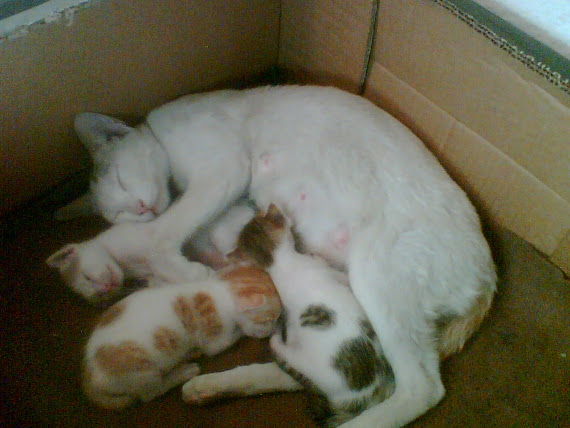
Minnu The Cat & Her Kittens Brownie, Goldie & Blackie
Someone with Nature

Syed Akbar in an island in river Godavari with Papikonda hills in the background
Recognition by World Vegetable Centre

Under the shade of Baobab tree

At Agha Khan Akademi in Kenya
Gateway to the Southern Hemisphere

Convention on Biodiversity

Syed Akbar at the 11th Conference of Parties to the United Nations Convention on Biological Diversity