2004
By Syed Akbar
Hyderabad, Oct 4: Ramadhan is round the corner and so is the controversy over the sighting of the new moon.
A group of Islamic scholars gather at Husaini Building, the office of the Ruhiyat Hilal (Moon-sighting) Committee in the city, after the Maghrib prayers to decide whether the Crescent of the holy month of Ramadhan has been sighted. Holding telescopes and powerful binoculars the Muslim elders scan the sky and after an hour of discussions and arguments they decide that there's no trace of the Ramadhan moon.
And to be doubly sure, they make a number of calls to local Ruhiyat Hilal committees in Mumbai, Delhi, Lucknow, Kochi, Kolkata, Ahmedabad and Chennai. After a cross check with the Islamic scholars from around the country, the Hussaini Building puts out an announcement that Ramadhan will begin on Thursday and the Taraweeh prayers will be held from Wednesday night in all mosques. Scores of people gather outside eagerly waiting for the announcement.
The Muslim clergy in Hyderabad, Deoband, Rai Bareli, Chennai, Mumbai, Delhi and Lucknow are aware that the holy Islamic month had already begun in Saudi Arabia, which houses two of the holiest Muslim shrines. But they do not want to follow Saudi Arabia or any Arab nation "blindly".
"Do not believe the Saudis. They do not follow the traditional Islamic lunar calendar. They have evolved a fixed calendar based on astronomical calculations. We have not sighted the moon in India. Even Pakistan, Bangladesh, Afghanistan and Malaysia have not reported the sighting of the moon. For us Ramadhan will begin only after we spot the new moon," says Abdur Raheem Qureshi, secretary of All-India Muslim Personal Law Board.
The Islamic calendar is based on lunar months, which begin when the thin crescent Moon is actually sighted in the western sky after sunset within a day or so after new moon. The Islamic dates begin at sunset on the previous evening and end at sunset the next day.
These dates may or may not correspond to the evenings on which the crescent moon is first visible, and it is the visibility of the crescent moon that determines when the religious observance begins. The moon's visibility at these times varies with location; generally, the visibility increases to the west, and locations in the tropics are favoured over those in middle or high latitudes.
"For Islamic calendar purposes, the sighting must be made with the unaided eye," argues Moulana Syed Yusufuddin Al Madani, president of Sunni Ulema Board. There are two opinions on the sighting of the moon. The first is Ittehadul Matale (unity of the crescent). According to this opinion, when a new crescent moon is declared as sighted, in any part of the world, that declaration could be used as the basis of local declarations for the start of the Islamic month, at other parts of the world. The other equally valid opinion is Iktelaf-ul-Matale (different crescents) which acknowledges that there could be different days on which the crescent moon is first sighted in different parts of the world and consequently the start of the Islamic month could be on different days, he points out.
"We do not follow Pakistan or Saudi Arabia or any other country. If the moon is sighted in any part of India, we will start our new month. Our report is that there has been no moon sighting on Tuesday," says Moulana Qubool Pasha Shuttari, secretary of Ruhiyat Hilal Committee.
What these Islamic scholars overlook is that the visibility of the young lunar crescent depends on sky conditions and the location, experience, and preparation of the observer. The moonrise in Hyderabad was at 6.40 am on Tuesday and so there's no scope for its sighting.
Denying the charge that the Muslim clergy in India do not follow scientific system of moon calculations, Siasat Urdu daily editor Zahid Ali Khan, says "how can the Mullahs hide the moon to postpone the holy month. If it is visible it will be visible for all. Sighting of the moon by naked eye is a must."
Monday, 4 October 2004


Saturday, 25 September 2004
Hakims develop special concoction to keep Ramadhan fast cool
2004
Syed Akbar
Hyderabad, Sept 25: Unani researchers and Hakeems in the city have come up with a special concoction of herbs for diabetic Muslims, who fast during the holy month of Ramadhan, to keep them healthy and free from major health complications like hypoglycaemia and ketoacidosis.
Muslims suffering from diabetes find it hard to fast during Ramadhan since the glucose levels in the blood fluctuate because of abstinence from food for 12 hours followed by two quick meals within four hours. The problem is more complicated in the case of those suffering from insulin-dependent diabetes.
The special Ramadhan herbal prescription by city Unani experts is a sequel to a research study by a joint Indo-Bangla-Pak team of diabetologists on diabetic Muslims who fast during the holy month. The team came out with the medical formulations of sulphonylureas (the first line drugs used for Type 2 diabetes) as drug of choice during Ramadhan. The diabetologists suggested that drugs like repaglinide and natiglinide, short acting drugs in the sulphonylureas family, should be taken twice a day.
Since these allopathic drugs are known to have side effects, the Hakeems point out that special Unani medical formulations can be taken half an hour before "Sahar" (beginning of fast in the wee hours of day) and one to two hours after "Iftar" (breaking of fast after the sunset). Muslims suffering from insulin-dependent diabetes are exempted from fasting but a majority of them still fast, to fulfil one of the five articles of Islamic faith. Herbal medicines will mitigate the sufferings of such Muslims.
Unani expert Prof Syed Mahmood Najimi says one teaspoon of "Ziabeteen", if taken half an hour before Sahar breakfast and after Iftar dinner will control the blood sugar in the patients. He also prescribes Kalonji (Nigella sativa) seeds in powder form before and after the fasting period.
Unani pharmacologist Dr Syed Ghousuddin suggests Kalonji oil with black tea before Sahar and at bedtime. He says half a spoon of Kalonji Chavanprash with low fat milk at bed time will take care of the insulin level throughout the fasting period.
The Central Unani Research Institute is also doing a clinical study on the problem. "We are conducting clinical trials every fortnight on our patients. It is working well. We are also thinking of alternative formula. Since ours is a coded study, we cannot reveal the contents of the medicine. Patients can come to us and take the prescription," points out Dr Muhammad Ali Mirza, director-incharge.
According to Hakeem Wasaey Razvi Mohani, director of Institute of Tibb-e-Nabawi, diabetic patients can themselves prepare the special Ramadhan medicine at home. His prescription is equal quantities of Kalonji, gum, seeds of Shirash (Cannabis) and pulp of Indrain (Colocyinth) either in power or capsule form before and after the fasting period. Another simple medication is a mixture of four tolas of Satawar (Asparagus racemosus willd), three tolas of Dane-Ilachi (cardamon seeds), two tolas of Dalchini (cinnamon) and three tolas of Joush. Musli tonic will give extra energy and take care of the fatigue associated with fasting.
The experts want the patients to avoid starchy food like rice, potato and bread. Vegetables like bitter gourd and French beans should be consumed more to bring down the sugar level to normal and help insulin to flow.
The Unani herbal formulations also mitigate the underlying pathologies and complications associated with the diabetes millitus.
The composition of Kalonji, fenugreek (Trigonella foenum-graecum) and chicory (Cichorium intybus) is prescribed with a diet and exercise program to control high blood sugar in patients with type-2 diabetes (non-insulin-dependent diabetes).
The formulations not only help in lowering sugar levels but also regulate blood sugar level, improve pancreas function, lower cholesterol, improve spleen function and metabolism, strengthen digestion, reduce tiredness and counteract thirst.
Syed Akbar
Hyderabad, Sept 25: Unani researchers and Hakeems in the city have come up with a special concoction of herbs for diabetic Muslims, who fast during the holy month of Ramadhan, to keep them healthy and free from major health complications like hypoglycaemia and ketoacidosis.
Muslims suffering from diabetes find it hard to fast during Ramadhan since the glucose levels in the blood fluctuate because of abstinence from food for 12 hours followed by two quick meals within four hours. The problem is more complicated in the case of those suffering from insulin-dependent diabetes.
The special Ramadhan herbal prescription by city Unani experts is a sequel to a research study by a joint Indo-Bangla-Pak team of diabetologists on diabetic Muslims who fast during the holy month. The team came out with the medical formulations of sulphonylureas (the first line drugs used for Type 2 diabetes) as drug of choice during Ramadhan. The diabetologists suggested that drugs like repaglinide and natiglinide, short acting drugs in the sulphonylureas family, should be taken twice a day.
Since these allopathic drugs are known to have side effects, the Hakeems point out that special Unani medical formulations can be taken half an hour before "Sahar" (beginning of fast in the wee hours of day) and one to two hours after "Iftar" (breaking of fast after the sunset). Muslims suffering from insulin-dependent diabetes are exempted from fasting but a majority of them still fast, to fulfil one of the five articles of Islamic faith. Herbal medicines will mitigate the sufferings of such Muslims.
Unani expert Prof Syed Mahmood Najimi says one teaspoon of "Ziabeteen", if taken half an hour before Sahar breakfast and after Iftar dinner will control the blood sugar in the patients. He also prescribes Kalonji (Nigella sativa) seeds in powder form before and after the fasting period.
Unani pharmacologist Dr Syed Ghousuddin suggests Kalonji oil with black tea before Sahar and at bedtime. He says half a spoon of Kalonji Chavanprash with low fat milk at bed time will take care of the insulin level throughout the fasting period.
The Central Unani Research Institute is also doing a clinical study on the problem. "We are conducting clinical trials every fortnight on our patients. It is working well. We are also thinking of alternative formula. Since ours is a coded study, we cannot reveal the contents of the medicine. Patients can come to us and take the prescription," points out Dr Muhammad Ali Mirza, director-incharge.
According to Hakeem Wasaey Razvi Mohani, director of Institute of Tibb-e-Nabawi, diabetic patients can themselves prepare the special Ramadhan medicine at home. His prescription is equal quantities of Kalonji, gum, seeds of Shirash (Cannabis) and pulp of Indrain (Colocyinth) either in power or capsule form before and after the fasting period. Another simple medication is a mixture of four tolas of Satawar (Asparagus racemosus willd), three tolas of Dane-Ilachi (cardamon seeds), two tolas of Dalchini (cinnamon) and three tolas of Joush. Musli tonic will give extra energy and take care of the fatigue associated with fasting.
The experts want the patients to avoid starchy food like rice, potato and bread. Vegetables like bitter gourd and French beans should be consumed more to bring down the sugar level to normal and help insulin to flow.
The Unani herbal formulations also mitigate the underlying pathologies and complications associated with the diabetes millitus.
The composition of Kalonji, fenugreek (Trigonella foenum-graecum) and chicory (Cichorium intybus) is prescribed with a diet and exercise program to control high blood sugar in patients with type-2 diabetes (non-insulin-dependent diabetes).
The formulations not only help in lowering sugar levels but also regulate blood sugar level, improve pancreas function, lower cholesterol, improve spleen function and metabolism, strengthen digestion, reduce tiredness and counteract thirst.
Saturday, 11 September 2004
Medicinal properties of Haleem, the special Ramzan dish in Hyderabad
2004
Syed Akbar
Hyderabad, Sept 11: Haleem, the special Ramzan dish of Hyderabad known for its unique taste, has several medicinal properties that improve semen production and stimulate ovulation.
Studies by city Unani physicians and researchers show that Haleem and its variant Harees increase sperm count and promote sperm health and motility in men and assist in better ovulation in women. The special ingredients that go into the preparation of Haleem and Harees stimulate blood circulation to vital body organs thereby reducing sexual dysfunction and the problem of low sperm count.
"The unique feature of this Hyderabadi dish is that it contains both slow-digesting and fast-burning ingredients. The fibre content is also relatively high. The legumes that go into its production increase muscle strength and sexual potency. The ingredients are also rich in potassium and magnesium.
Whole grains like wheat, nuts, vegetables and dry fruits solve the problem of low sperm count, which has of late become a major health and reproductive problem in industrialised nations," says Dr Fazal Ahmad, senior Unani researcher.
Dr Fazal, who also edits Unani monthly Cure for All, points out that Haleem and Harees acquire the aphrodisiac properties primarily because of the five "Gs" that go into its preparation. "Gur (jaggery), gond (natural gum), ghost (meat), ghehoon (wheat) and ghee are special Unani prescriptions. A combination of all five or some of them increases sexual potency primarily by increasing the sperm count. Our research has shown that those who consume Haleem or Harees on regular basis are sexually more active than who don't," he says.
Many residents of Barkas locality in Hyderabad consume Harees at breakfast everyday and this is reflected on their good physique and better reproductive health.
According to senior Unani physician Dr Ilyas Khan, Haleem contains minerals selenium, folic acid, and zinc and vitamins A, C, and E. "It has been scientifically proved that foods rich in these compounds increase the sperm count and sperm motility, thus assisting in reproductive health. Studies have shown that Haleem and Harees increase blood circulation and assist in blood production. The system of Unani medicine says any food that increases blood circulation will promote sperm production," he says.
Hakeem Tariq Mehmood Chughtai in his research publication on the health benefits of Haleem and Harees points out that one should not take water immediately after consuming this special festival dish to derive maximum benefit from it. Since Haleem/Harees contains both "slow and fast digestion ingredients" the benefits will be more if the dish is consumed soon after breaking the day-long fast during Ramzan.
Syed Akbar
Hyderabad, Sept 11: Haleem, the special Ramzan dish of Hyderabad known for its unique taste, has several medicinal properties that improve semen production and stimulate ovulation.
Studies by city Unani physicians and researchers show that Haleem and its variant Harees increase sperm count and promote sperm health and motility in men and assist in better ovulation in women. The special ingredients that go into the preparation of Haleem and Harees stimulate blood circulation to vital body organs thereby reducing sexual dysfunction and the problem of low sperm count.
"The unique feature of this Hyderabadi dish is that it contains both slow-digesting and fast-burning ingredients. The fibre content is also relatively high. The legumes that go into its production increase muscle strength and sexual potency. The ingredients are also rich in potassium and magnesium.
Whole grains like wheat, nuts, vegetables and dry fruits solve the problem of low sperm count, which has of late become a major health and reproductive problem in industrialised nations," says Dr Fazal Ahmad, senior Unani researcher.
Dr Fazal, who also edits Unani monthly Cure for All, points out that Haleem and Harees acquire the aphrodisiac properties primarily because of the five "Gs" that go into its preparation. "Gur (jaggery), gond (natural gum), ghost (meat), ghehoon (wheat) and ghee are special Unani prescriptions. A combination of all five or some of them increases sexual potency primarily by increasing the sperm count. Our research has shown that those who consume Haleem or Harees on regular basis are sexually more active than who don't," he says.
Many residents of Barkas locality in Hyderabad consume Harees at breakfast everyday and this is reflected on their good physique and better reproductive health.
According to senior Unani physician Dr Ilyas Khan, Haleem contains minerals selenium, folic acid, and zinc and vitamins A, C, and E. "It has been scientifically proved that foods rich in these compounds increase the sperm count and sperm motility, thus assisting in reproductive health. Studies have shown that Haleem and Harees increase blood circulation and assist in blood production. The system of Unani medicine says any food that increases blood circulation will promote sperm production," he says.
Hakeem Tariq Mehmood Chughtai in his research publication on the health benefits of Haleem and Harees points out that one should not take water immediately after consuming this special festival dish to derive maximum benefit from it. Since Haleem/Harees contains both "slow and fast digestion ingredients" the benefits will be more if the dish is consumed soon after breaking the day-long fast during Ramzan.
Thursday, 8 July 2004
Desi Fowl like bird developed in Hyderabad
Syed Akbar
Hyderabad, July 8: The city-based Project Directorate on Poultry has developed a chicken variety that closely resembles the jungle (desi) fowl in colour and plumage pattern for backyard farming in villages and tribal habitations.
While chicken varieties are generally white in colour without any plumage pattern, this variety of poultry bird named Vanaraja, is multi-coloured and has attractive feathers. The male bird is a coloured Cornish strain while the female parent bird is a synthetic multi-coloured meat population.
It is difficult to rear common poultry birds in the backyard in villages and hilly terrain as they become easy prey to predators but Vanaraja has the ability and agility to escape predators. The Vanaraja variety is light in weight and has long shanks and is capable of protecting itself.
The PDP has developed the male parent for moderate juvenile body weight, long shanks and good immune competence. On the other hand, the female parent gives high egg production with better egg size and high hatchability. It is also immune to general poultry diseases. The bird easily adapts to local climatic conditions even they turn adverse like extreme cold or hot.
Without extra feeding efforts the Vanaraja male bird attains moderate body weight within eight weeks. The female bird lays between 160 and 180 eggs in a laying cycle. A team of scientists led by Dr SV Rama Rao has developed the bird.
According to PDP officials, the Vanaraja birds can be used to improve the genetic potential of the jungle fowl or desi hens through crossing. "The upgraded progeny from such a cross has been found to perform better than the jungle fowl both in terms of overall body weight and production of eggs," Dr Rao points out.
The chicks need to be acclimatised to the backyard conditions before they could be let free in the open environment. The Vanaraja variety does not need any special diet supplement once let free in the backyard. It will feed on worms and other food material available to it unlike the poultry bird where special care need to be taken.
The Project Directorate has supplied the germplasm of Vanaraja to different parts of the country. The birds are found to be performing well everywhere.
Vanaraja has been a hit in the rural environments and local population has accepted it for backyard farming as the bird attains a body weight of 1.5 kgs in six weeks and reaches up to 1800 grams in seven weeks.
The mortality rate is very low in this variety. The rate is as low as three per cent both at six weeks and seven weeks of age. The bird gives good quantity and quality of meat. There is a wastage of just 30 per cent.
The PDP based at Rajendranagar has also developed a crossbreed called Krishibro, a variety of broiler which does not require high content of nutrients in its feed.
In this case also the mortality rate up to six weeks is just three per cent with a survival rate of 97 per cent as in the case of Vanaraja variety. The broiler chicks in this case are also coloured. Both the varieties have high immunity against common poultry diseases like Ranikhet.
Hyderabad, July 8: The city-based Project Directorate on Poultry has developed a chicken variety that closely resembles the jungle (desi) fowl in colour and plumage pattern for backyard farming in villages and tribal habitations.
While chicken varieties are generally white in colour without any plumage pattern, this variety of poultry bird named Vanaraja, is multi-coloured and has attractive feathers. The male bird is a coloured Cornish strain while the female parent bird is a synthetic multi-coloured meat population.
It is difficult to rear common poultry birds in the backyard in villages and hilly terrain as they become easy prey to predators but Vanaraja has the ability and agility to escape predators. The Vanaraja variety is light in weight and has long shanks and is capable of protecting itself.
The PDP has developed the male parent for moderate juvenile body weight, long shanks and good immune competence. On the other hand, the female parent gives high egg production with better egg size and high hatchability. It is also immune to general poultry diseases. The bird easily adapts to local climatic conditions even they turn adverse like extreme cold or hot.
Without extra feeding efforts the Vanaraja male bird attains moderate body weight within eight weeks. The female bird lays between 160 and 180 eggs in a laying cycle. A team of scientists led by Dr SV Rama Rao has developed the bird.
According to PDP officials, the Vanaraja birds can be used to improve the genetic potential of the jungle fowl or desi hens through crossing. "The upgraded progeny from such a cross has been found to perform better than the jungle fowl both in terms of overall body weight and production of eggs," Dr Rao points out.
The chicks need to be acclimatised to the backyard conditions before they could be let free in the open environment. The Vanaraja variety does not need any special diet supplement once let free in the backyard. It will feed on worms and other food material available to it unlike the poultry bird where special care need to be taken.
The Project Directorate has supplied the germplasm of Vanaraja to different parts of the country. The birds are found to be performing well everywhere.
Vanaraja has been a hit in the rural environments and local population has accepted it for backyard farming as the bird attains a body weight of 1.5 kgs in six weeks and reaches up to 1800 grams in seven weeks.
The mortality rate is very low in this variety. The rate is as low as three per cent both at six weeks and seven weeks of age. The bird gives good quantity and quality of meat. There is a wastage of just 30 per cent.
The PDP based at Rajendranagar has also developed a crossbreed called Krishibro, a variety of broiler which does not require high content of nutrients in its feed.
In this case also the mortality rate up to six weeks is just three per cent with a survival rate of 97 per cent as in the case of Vanaraja variety. The broiler chicks in this case are also coloured. Both the varieties have high immunity against common poultry diseases like Ranikhet.
Wednesday, 7 July 2004
Wakf Board: Manipulative politics of the Majlis
2004
By Syed Akbar
Hyderabad, July 7: Playing manipulative politics, the Majlis-e-Ittehadul Muslimeen has successfully prevailed upon the Congress government to amend the Wakf Act to facilitate its re-entry into the multi-crore State Wakf Board.
The MIM, which sailed with the Telugu Desam when it was in power, suddendly changed its political stand to support the Congress after the State Assembly elections. The MIM enjoyed power in the State Wakf Board by joining hand with the TD and keeping the Congress off Wakf politics.
Now that the Congress is in power, the MIM has dumped the Telugu Desam to make a re-entry into the Wakf Board. To facilitate election of an MIM member, the Congress government amended the Wakf Act to increase the overall strength of the Board from nine to 11.
It also reduced the strength of MLA-members from two to one and increased the strength of MP-members from one to two. Earlier, the State government used to nominate four members to the Board and it has now increased it to six.
For the first time in a decade, the TD will go without a representation in the Board while the MIM will enjoy power in the country's largest Muslim endowment body for a successive second term despite a change in government.
By Syed Akbar
Hyderabad, July 7: Playing manipulative politics, the Majlis-e-Ittehadul Muslimeen has successfully prevailed upon the Congress government to amend the Wakf Act to facilitate its re-entry into the multi-crore State Wakf Board.
The MIM, which sailed with the Telugu Desam when it was in power, suddendly changed its political stand to support the Congress after the State Assembly elections. The MIM enjoyed power in the State Wakf Board by joining hand with the TD and keeping the Congress off Wakf politics.
Now that the Congress is in power, the MIM has dumped the Telugu Desam to make a re-entry into the Wakf Board. To facilitate election of an MIM member, the Congress government amended the Wakf Act to increase the overall strength of the Board from nine to 11.
It also reduced the strength of MLA-members from two to one and increased the strength of MP-members from one to two. Earlier, the State government used to nominate four members to the Board and it has now increased it to six.
For the first time in a decade, the TD will go without a representation in the Board while the MIM will enjoy power in the country's largest Muslim endowment body for a successive second term despite a change in government.
Tuesday, 6 July 2004
India is a land of prophets, say Muslim scholars
2004
By Syed Akbar
Hyderabad, April 13: Two days after RSS chief KS Sudarshan asked Muslims to recognise Sri Krishna as one of the prophets of Islam, city Islamic scholars have declared India as the land of holy prophets and the first soil on the earth to receive the Divine Message from Allah.
"Islamic traditions hold that the first Prophet of Islam and progenitor of humanity, Hazrat Adam, descended on Sarandeep Island (now in Sri Lanka) after he was sent down from the Heaven in the wake of the Adam-Eve episode of eating the forbidden fruit. Since India is one of the oldest civilisations, many prophets may have been sent to guide humanity," says Mufti Sadiq Mohiuddin of the Department of Fatwas of 135-year-old Jamia Nizamia Islamic University.
The Mufti in his opinion (Fatwa) told this correspondent that early Islamic personalities including Ibn Asakir and Allama Ibn Saad had mentioned in their sayings (Riwayat) that Adam had landed on the Indian soil. Even famous Arab traveller Ibn Batuta had mentioned in his travelogues of having visited Sarandeep island where the first prophet of Islam had descended from the Garden of Eden.
Muslims believe that God had sent about 1.24 lakh prophets to all parts of the earth. However, the names of only 25 prophets have been mentioned in the Holy Quran.
Stating that the Holy Quran holds that Allah had sent His Prophets to all places at different times, Mufti Sadiq Mohiuddin points out that while Islamic scholars all over the world are of the view that India had been the land of prophets, they are divided on whether Sri Rama and Sri Krishna were prophets of Islam. "They may or may not have been the Prophets. We want to remain silent on the issue. But it is the duty of every Muslim to respect the religious personalities of other religions," he observed.
According to All-India Muslim Personal Law Board general secretary Abdur Raheem Qureshi, some Indian Islamic scholars believe Dhul-Kifl, one of the
holy personalities mentioned in the Quran, refers to Gautam Buddha. "There's no "P" sound in Arabic. Dhul Kifl means resident of Kifl or Kapil (Kapila Vastu). Some scholars also hold Mahavir was also a Prophet of God.
Islamic scholar Hafiz Shujat Hussain refers to the writings of eminent Islamic personality Moulana Tayyab Qasmi of Darul-Uloom Deoband who had held that Sri Ramachandraji and Sri Krishnaji could also be the prophets. "We should give utmost respect to Hindu prophets as we give respect to prophets from Hazrat Adam to Hazrat Muhammad including Hazrat Musa (Moses) and Hazrat Isa (Jesus).
City Muslim scholars also quote from "Subhatul Marjan Fi Tarikhe Hindustan", written by eminent Islamic scholar Allama Ghulam Ali Azad Bilgrami in Arabic, which describes India as the first domicile of Adam.
"In Ayodhya, the birth place of Sri Rama, there is a long grave. This grave is said to be the burial place Adam's son, Prophet Hazrat Shish," Hafiz Shujat points out.
Though Islamic scholars have different opinion on the prophet-hood of Sri Rama and Sri Krishna, they all agree that since India is the place where Hazrat Adam had descended, it had acquired the status of the first capital of entire humanity. Since Adam received angels and revelations from God, India could be called the first land where man ever received the enlightenment.
"Indian Muslims have always believed that God had sent His prophets, messengers and guides to India. We all hold Sri Rama and Sri Krishna in high esteem, not because Sudarshan advises us to do so, but because the Holy Quran and Islamic traditions wants us to. There are Islamic traditions that Prophet Muhammad used to say that he gets the smell of Paradise from India," says Peerzada Syed Shabbir Naqshbandi, president of All-India Religious Leaders' Association.
By Syed Akbar
Hyderabad, April 13: Two days after RSS chief KS Sudarshan asked Muslims to recognise Sri Krishna as one of the prophets of Islam, city Islamic scholars have declared India as the land of holy prophets and the first soil on the earth to receive the Divine Message from Allah.
"Islamic traditions hold that the first Prophet of Islam and progenitor of humanity, Hazrat Adam, descended on Sarandeep Island (now in Sri Lanka) after he was sent down from the Heaven in the wake of the Adam-Eve episode of eating the forbidden fruit. Since India is one of the oldest civilisations, many prophets may have been sent to guide humanity," says Mufti Sadiq Mohiuddin of the Department of Fatwas of 135-year-old Jamia Nizamia Islamic University.
The Mufti in his opinion (Fatwa) told this correspondent that early Islamic personalities including Ibn Asakir and Allama Ibn Saad had mentioned in their sayings (Riwayat) that Adam had landed on the Indian soil. Even famous Arab traveller Ibn Batuta had mentioned in his travelogues of having visited Sarandeep island where the first prophet of Islam had descended from the Garden of Eden.
Muslims believe that God had sent about 1.24 lakh prophets to all parts of the earth. However, the names of only 25 prophets have been mentioned in the Holy Quran.
Stating that the Holy Quran holds that Allah had sent His Prophets to all places at different times, Mufti Sadiq Mohiuddin points out that while Islamic scholars all over the world are of the view that India had been the land of prophets, they are divided on whether Sri Rama and Sri Krishna were prophets of Islam. "They may or may not have been the Prophets. We want to remain silent on the issue. But it is the duty of every Muslim to respect the religious personalities of other religions," he observed.
According to All-India Muslim Personal Law Board general secretary Abdur Raheem Qureshi, some Indian Islamic scholars believe Dhul-Kifl, one of the
holy personalities mentioned in the Quran, refers to Gautam Buddha. "There's no "P" sound in Arabic. Dhul Kifl means resident of Kifl or Kapil (Kapila Vastu). Some scholars also hold Mahavir was also a Prophet of God.
Islamic scholar Hafiz Shujat Hussain refers to the writings of eminent Islamic personality Moulana Tayyab Qasmi of Darul-Uloom Deoband who had held that Sri Ramachandraji and Sri Krishnaji could also be the prophets. "We should give utmost respect to Hindu prophets as we give respect to prophets from Hazrat Adam to Hazrat Muhammad including Hazrat Musa (Moses) and Hazrat Isa (Jesus).
City Muslim scholars also quote from "Subhatul Marjan Fi Tarikhe Hindustan", written by eminent Islamic scholar Allama Ghulam Ali Azad Bilgrami in Arabic, which describes India as the first domicile of Adam.
"In Ayodhya, the birth place of Sri Rama, there is a long grave. This grave is said to be the burial place Adam's son, Prophet Hazrat Shish," Hafiz Shujat points out.
Though Islamic scholars have different opinion on the prophet-hood of Sri Rama and Sri Krishna, they all agree that since India is the place where Hazrat Adam had descended, it had acquired the status of the first capital of entire humanity. Since Adam received angels and revelations from God, India could be called the first land where man ever received the enlightenment.
"Indian Muslims have always believed that God had sent His prophets, messengers and guides to India. We all hold Sri Rama and Sri Krishna in high esteem, not because Sudarshan advises us to do so, but because the Holy Quran and Islamic traditions wants us to. There are Islamic traditions that Prophet Muhammad used to say that he gets the smell of Paradise from India," says Peerzada Syed Shabbir Naqshbandi, president of All-India Religious Leaders' Association.
Wednesday, 5 May 2004
Forest fires become rare in Andhra Pradesh
2004
Syed Akbar
Hyderabad, May 5: Forest fires, which worry environmentalists elsewhere in the world, have become rare in Andhra Pradesh with the State Forest Department taking satellite imageries of the forests on daily basis.
The forest department gets remote sensing data on the status of green cover including forest fires every day at 2.00 pm, giving a first hand information what is going on in all the reserve forest.
"We analyse the data and take quick action to contain forest fires, in case we notice them. The information is passed on to lower rung officials instantaneously. The incidence of forest fires have come down by 50 per cent and the department could save hundreds of crores of Rupees worth forest material and wildlife from fire accidents," principal chief conservator of forests SK Das said.
Forests fires in the State have over the years been responsible for degradation. Vast areas of forests and grasslands are burnt every year. The loss simply runs into hundreds of crores of Rupees since the State forests harbour economically important species like teak, terminalia, anogeissus, bamboo, dalbergia, lannea and red sanders.
Forest fires are generally noticed between December and May as the leaf fall starts towards the end of December. The dry grass around forms a highly combustible material for forest fires.
The department has categorised factors influencing forest fires into fuel index like combustible bio-mass from forest type, topography (slope and aspect) and proximity (roads and settlements).
"We have established the inter-relationship for these factors and finally integrated it for identification and zonation of fire prone areas from lowest to highest risk. The geomatic maps pinpoint locations for erection of fire watch towers, execution of fire lines and construction of fire walls," Das pointed out.
Syed Akbar
Hyderabad, May 5: Forest fires, which worry environmentalists elsewhere in the world, have become rare in Andhra Pradesh with the State Forest Department taking satellite imageries of the forests on daily basis.
The forest department gets remote sensing data on the status of green cover including forest fires every day at 2.00 pm, giving a first hand information what is going on in all the reserve forest.
"We analyse the data and take quick action to contain forest fires, in case we notice them. The information is passed on to lower rung officials instantaneously. The incidence of forest fires have come down by 50 per cent and the department could save hundreds of crores of Rupees worth forest material and wildlife from fire accidents," principal chief conservator of forests SK Das said.
Forests fires in the State have over the years been responsible for degradation. Vast areas of forests and grasslands are burnt every year. The loss simply runs into hundreds of crores of Rupees since the State forests harbour economically important species like teak, terminalia, anogeissus, bamboo, dalbergia, lannea and red sanders.
Forest fires are generally noticed between December and May as the leaf fall starts towards the end of December. The dry grass around forms a highly combustible material for forest fires.
The department has categorised factors influencing forest fires into fuel index like combustible bio-mass from forest type, topography (slope and aspect) and proximity (roads and settlements).
"We have established the inter-relationship for these factors and finally integrated it for identification and zonation of fire prone areas from lowest to highest risk. The geomatic maps pinpoint locations for erection of fire watch towers, execution of fire lines and construction of fire walls," Das pointed out.
Monday, 29 March 2004
Cricket betting: Hyderabadi punters have the field day
2004
By Syed Akbar
Hyderabad, March 29: When Pakistan won the Bangalore test to level the cricket series with India, punters in Hyderabad made a big celebration. It was really an occasion for them to celebrate as the money involved in the betting game was quite high and it's all for them to take home.
Unlike their counterparts elsewhere, city punters favoured Pakistan even before the start of the third test, despite the fact that the Pakis were almost written off. City punters are "double-happy" as their earlier prediction of a India win at Kolkata test also came true.
According to a bookie, punters here loaded odds 2:1 in favour of Pakistan as India had never won a test match in the Garden City.
Points out satta bazar operator Pradeep, "Of the four test matches India played on the Chinnaswamy Cricket Stadium in Bangalore against Pakistan, it lost three and drew one test. Pakistan won three matches there earlier. Moreover, Pakistan was under tremendous pressure to win the Bangalore match to level the series. We loaded the dice in favour of Pakistan and our prediction came true."
Strangely enough, city Task Force police, who conduct regular raids during cricket series, are silent during the ongoing Pak tour of India. None of the bookie hideouts was raided this time though police officials admit in private that the city's satta bazar had made a turnout of at least Rs 40 crore during the first three test matches.
Punters all over the country changed odds quite frequently as the chances of the match heading for a draw were high at least till the tea break on the final day of the Bangalore test. But the Hyderabadi bookies stuck with their favourite Pakistan even when India was at 108 for two.
"We do not know about punters outside Hyderabad. As far as we are concerned, we take a decision after working out several details including individual statistics of cricketers, ground and team. We work it out so meticulously that most of our predictions come true. Say 99.99 per cent. We bid for India at the Kolkata test and India won", observes a bookie from Begum Bazar area of the city.
Test series is over and punters have made a big money. And what about the one day internationals that begin on April 2? As bookie Mahesh reveals, the odds are "yet to be fixed".
"The lots will be thrown just a day before the first ODI at Kochi or after the toss. Right now we cannot say anything. Betting turns more serious after a couple of ODIs if India or Pakistan clinches them", he says.
Cricket satta bazar in twin cities operate in three different ways - in person, through cell phone or laptop (internet). But the cell phone type is the most preferred one for its secrecy. During the Bangalore test at one stage the odds against India changed from 2:1 to 6:1. A notable feature of bookies in the city is that they take a day off from their routine business or work to concentrate on betting. Monday was the busiest day for bookies as the odds changed quickly after lunch.
By Syed Akbar
Hyderabad, March 29: When Pakistan won the Bangalore test to level the cricket series with India, punters in Hyderabad made a big celebration. It was really an occasion for them to celebrate as the money involved in the betting game was quite high and it's all for them to take home.
Unlike their counterparts elsewhere, city punters favoured Pakistan even before the start of the third test, despite the fact that the Pakis were almost written off. City punters are "double-happy" as their earlier prediction of a India win at Kolkata test also came true.
According to a bookie, punters here loaded odds 2:1 in favour of Pakistan as India had never won a test match in the Garden City.
Points out satta bazar operator Pradeep, "Of the four test matches India played on the Chinnaswamy Cricket Stadium in Bangalore against Pakistan, it lost three and drew one test. Pakistan won three matches there earlier. Moreover, Pakistan was under tremendous pressure to win the Bangalore match to level the series. We loaded the dice in favour of Pakistan and our prediction came true."
Strangely enough, city Task Force police, who conduct regular raids during cricket series, are silent during the ongoing Pak tour of India. None of the bookie hideouts was raided this time though police officials admit in private that the city's satta bazar had made a turnout of at least Rs 40 crore during the first three test matches.
Punters all over the country changed odds quite frequently as the chances of the match heading for a draw were high at least till the tea break on the final day of the Bangalore test. But the Hyderabadi bookies stuck with their favourite Pakistan even when India was at 108 for two.
"We do not know about punters outside Hyderabad. As far as we are concerned, we take a decision after working out several details including individual statistics of cricketers, ground and team. We work it out so meticulously that most of our predictions come true. Say 99.99 per cent. We bid for India at the Kolkata test and India won", observes a bookie from Begum Bazar area of the city.
Test series is over and punters have made a big money. And what about the one day internationals that begin on April 2? As bookie Mahesh reveals, the odds are "yet to be fixed".
"The lots will be thrown just a day before the first ODI at Kochi or after the toss. Right now we cannot say anything. Betting turns more serious after a couple of ODIs if India or Pakistan clinches them", he says.
Cricket satta bazar in twin cities operate in three different ways - in person, through cell phone or laptop (internet). But the cell phone type is the most preferred one for its secrecy. During the Bangalore test at one stage the odds against India changed from 2:1 to 6:1. A notable feature of bookies in the city is that they take a day off from their routine business or work to concentrate on betting. Monday was the busiest day for bookies as the odds changed quickly after lunch.
Wednesday, 17 March 2004
Geographical Indication for Kondapalli toys
2004
By Syed Akbar
Hyderabad, March 17: After Pochampalli Ikkat, the State government is planning to push the world famous Kondapalli wooden toys for Geographical Indication (GI) protection rights to safeguard this unique craftsmanship from cheap imitation and extinction.
Once the GI office in Mumbai accepts the State government's plea on Kondapalli toys, dozens of artisans in the dusty village of Kondapalli in the outskirts of Vijayawada city will secure international rights on their art designs and craftmanship. No one else outside the geographical area of Kondapalli village will have the right to produce Kondapalli toys either by hand or machine.
A senior official in the AP Handicrafts Development Corporation told this correspondent that the GI rights would help the poor artisans earn worldwide recognition. "The artisans will also get a few bucks more for their hard work. What is needed is aggressive marketing strategy both at the national and international level", he pointed out.
Kondapalli toys are crafted from a special type of softwood, locally known as Tella Poniki, available in the adjoining reserve forests. Unlike toy-makers elsewhere in the State, the Kondapalli artisans use only natural water colours. They mostly use a paste prepared from tamarind seed powder to join various parts of the toy. Some enterprising artisans, however, use synthetic adhesives. Once the toy is chiselled, they use sawdust and tamarind seed paste to give finishing shape and attach limbs to the toy. The toy is then left for a day or two for drying. Some of the famous Kondapalli toys include the 10-headed demon king Ravana, the village gathering, snake charmer, village belle, palmyra tree. Different colours are used to symbolise the character of the image. The influence of Islamic idiom is also felt on some toys. The process being highly flexible, Kondapalli toys have found many admirers in foreign countries.
Rural Development Minister D Srinivas pointed out that the State government was also planning to obtain patent rights for Gadwal sarees (both silk and cotton), Uppada and Jamdhani fabrics and Dharmvaram silk sarees, besides the Kalamkari art designs of Pedana in Krishna district.
Earlier, he told the State Assembly that the government had successfully obtained patent rights for Pochampalli sarees. "The government wants to obtain GI rights for several products which reflect the cultural legacy of the State", he said.
By Syed Akbar
Hyderabad, March 17: After Pochampalli Ikkat, the State government is planning to push the world famous Kondapalli wooden toys for Geographical Indication (GI) protection rights to safeguard this unique craftsmanship from cheap imitation and extinction.
Once the GI office in Mumbai accepts the State government's plea on Kondapalli toys, dozens of artisans in the dusty village of Kondapalli in the outskirts of Vijayawada city will secure international rights on their art designs and craftmanship. No one else outside the geographical area of Kondapalli village will have the right to produce Kondapalli toys either by hand or machine.
A senior official in the AP Handicrafts Development Corporation told this correspondent that the GI rights would help the poor artisans earn worldwide recognition. "The artisans will also get a few bucks more for their hard work. What is needed is aggressive marketing strategy both at the national and international level", he pointed out.
Kondapalli toys are crafted from a special type of softwood, locally known as Tella Poniki, available in the adjoining reserve forests. Unlike toy-makers elsewhere in the State, the Kondapalli artisans use only natural water colours. They mostly use a paste prepared from tamarind seed powder to join various parts of the toy. Some enterprising artisans, however, use synthetic adhesives. Once the toy is chiselled, they use sawdust and tamarind seed paste to give finishing shape and attach limbs to the toy. The toy is then left for a day or two for drying. Some of the famous Kondapalli toys include the 10-headed demon king Ravana, the village gathering, snake charmer, village belle, palmyra tree. Different colours are used to symbolise the character of the image. The influence of Islamic idiom is also felt on some toys. The process being highly flexible, Kondapalli toys have found many admirers in foreign countries.
Rural Development Minister D Srinivas pointed out that the State government was also planning to obtain patent rights for Gadwal sarees (both silk and cotton), Uppada and Jamdhani fabrics and Dharmvaram silk sarees, besides the Kalamkari art designs of Pedana in Krishna district.
Earlier, he told the State Assembly that the government had successfully obtained patent rights for Pochampalli sarees. "The government wants to obtain GI rights for several products which reflect the cultural legacy of the State", he said.
Sunday, 15 February 2004
Indians consume more DDT through foods, thanks to Centre's norms
2004
Syed Akbar
Hyderabad, Feb 15: Indians will continue to consume more amounts of poisonous DDT through meat and poultry, if the Central government has its way.
While the WHO-FAO controlled Codex Alimentarius Commission favoured the maximum residual level (MRL) for the harmful pesticide, DDT, to be fixed at 0.1 to 3 mg per kg of poultry and meat, India has been arguing that the MRL should be 5 mg per kg. The present MRL for DDT world-wide is 5 mg per kg and Codex wants to bring it down to cut the quantum of the pesticide residue entering the body.
The argument put forth by the Codex India under the Union Ministry of Health and Family Welfare is that 5 mg DDT per kg of poultry or meat will not cause harm either to the health of the people or the industry. Strangely enough the Indian government, which first proposed the DDT levels in 2003, continues to stand by its argument. Even the mid-term Codex Plan of the MHFW supports the view that DDT levels should be at 5 mg per kg.
Health experts, however, warn that regulat intake of DDT in minute quantities will have a synergetic effect on the overall functioning of the body. Eminent gastroenterologist Dr SC Samal of Apollo Hospitals warns DDT even in minute quantities will cause cancer and peripheral neuropathy, affecting the nervous system.
Many countries including the USA have banned DDT and have stringent regulations on DDT MRLs in food products. If the Codex India succeeds in its argument, Indians will have to consume DDT at least double the quantity fixed by other countries.
Codex Alimentarius Commission is in the process of finalising standards for food products including vegetables, fruits, processed food, meat and poultry. At least two Codex meetings are slated for this year and according to Codex sources here, India wants to safeguard the poultry and meat industry in view of local conditions. For instance, while DDT is banned in many countries, the product continues to make its way in the Indian agriculture system. Animals grazing on fields build up DDT residues in their bodies and this passes on to human beings through food chain.
According to the Codex India website, which contains the minutes of various Codex meetings, India supported the establishment of MRLs for DDT at appropriate level to "ensure consumer protection but not a lower level, which might result in difficulty to trade". The Codex India feels that 5 mg of DDT per kg is "appropriate".
Even the Regional Co-ordinator for Asia expressed reservation on the proposed draft on MRLs for DDT at 0.1-.3 mg/kg. in poultry, meat.
"India, therefore, strongly recommends the EMRL for DDT should
be fixed at 5 mg/kg on meat (on fat basis)," the website points out.
While arguing its case on pesticide residues in spices, the Codex India observes, "when analysis are performed for monitoring purposes it is
especially important that confirmatory data are generated before
reporting on samples containing pesticides that are not normally
associated with that commodity or where MRLs have been exceeded.
Samples may contain interfering chemicals that may be misidentified as
pesticides. So, while reporting the monitoring data on spices,
confirmatory data for some of the pesticides samples should be reported."
Syed Akbar
Hyderabad, Feb 15: Indians will continue to consume more amounts of poisonous DDT through meat and poultry, if the Central government has its way.
While the WHO-FAO controlled Codex Alimentarius Commission favoured the maximum residual level (MRL) for the harmful pesticide, DDT, to be fixed at 0.1 to 3 mg per kg of poultry and meat, India has been arguing that the MRL should be 5 mg per kg. The present MRL for DDT world-wide is 5 mg per kg and Codex wants to bring it down to cut the quantum of the pesticide residue entering the body.
The argument put forth by the Codex India under the Union Ministry of Health and Family Welfare is that 5 mg DDT per kg of poultry or meat will not cause harm either to the health of the people or the industry. Strangely enough the Indian government, which first proposed the DDT levels in 2003, continues to stand by its argument. Even the mid-term Codex Plan of the MHFW supports the view that DDT levels should be at 5 mg per kg.
Health experts, however, warn that regulat intake of DDT in minute quantities will have a synergetic effect on the overall functioning of the body. Eminent gastroenterologist Dr SC Samal of Apollo Hospitals warns DDT even in minute quantities will cause cancer and peripheral neuropathy, affecting the nervous system.
Many countries including the USA have banned DDT and have stringent regulations on DDT MRLs in food products. If the Codex India succeeds in its argument, Indians will have to consume DDT at least double the quantity fixed by other countries.
Codex Alimentarius Commission is in the process of finalising standards for food products including vegetables, fruits, processed food, meat and poultry. At least two Codex meetings are slated for this year and according to Codex sources here, India wants to safeguard the poultry and meat industry in view of local conditions. For instance, while DDT is banned in many countries, the product continues to make its way in the Indian agriculture system. Animals grazing on fields build up DDT residues in their bodies and this passes on to human beings through food chain.
According to the Codex India website, which contains the minutes of various Codex meetings, India supported the establishment of MRLs for DDT at appropriate level to "ensure consumer protection but not a lower level, which might result in difficulty to trade". The Codex India feels that 5 mg of DDT per kg is "appropriate".
Even the Regional Co-ordinator for Asia expressed reservation on the proposed draft on MRLs for DDT at 0.1-.3 mg/kg. in poultry, meat.
"India, therefore, strongly recommends the EMRL for DDT should
be fixed at 5 mg/kg on meat (on fat basis)," the website points out.
While arguing its case on pesticide residues in spices, the Codex India observes, "when analysis are performed for monitoring purposes it is
especially important that confirmatory data are generated before
reporting on samples containing pesticides that are not normally
associated with that commodity or where MRLs have been exceeded.
Samples may contain interfering chemicals that may be misidentified as
pesticides. So, while reporting the monitoring data on spices,
confirmatory data for some of the pesticides samples should be reported."
Subscribe to:
Posts (Atom)
Mother's Care
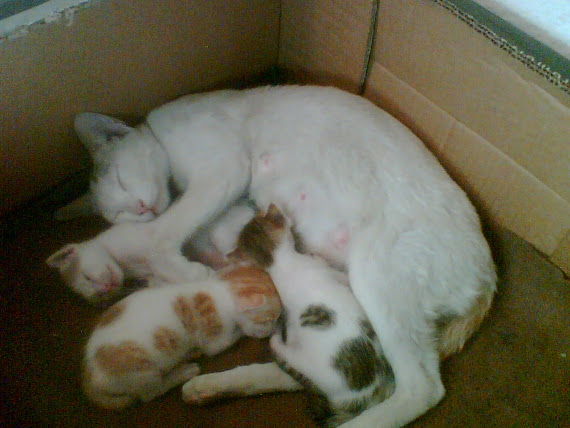
Minnu The Cat & Her Kittens Brownie, Goldie & Blackie
Someone with Nature

Syed Akbar in an island in river Godavari with Papikonda hills in the background
Recognition by World Vegetable Centre

Under the shade of Baobab tree

At Agha Khan Akademi in Kenya
Gateway to the Southern Hemisphere

Convention on Biodiversity

Syed Akbar at the 11th Conference of Parties to the United Nations Convention on Biological Diversity