2004
By Syed Akbar
Hyderabad, April 13: Two days after RSS chief KS Sudarshan asked Muslims to recognise Sri Krishna as one of the prophets of Islam, city Islamic scholars have declared India as the land of holy prophets and the first soil on the earth to receive the Divine Message from Allah.
"Islamic traditions hold that the first Prophet of Islam and progenitor of humanity, Hazrat Adam, descended on Sarandeep Island (now in Sri Lanka) after he was sent down from the Heaven in the wake of the Adam-Eve episode of eating the forbidden fruit. Since India is one of the oldest civilisations, many prophets may have been sent to guide humanity," says Mufti Sadiq Mohiuddin of the Department of Fatwas of 135-year-old Jamia Nizamia Islamic University.
The Mufti in his opinion (Fatwa) told this correspondent that early Islamic personalities including Ibn Asakir and Allama Ibn Saad had mentioned in their sayings (Riwayat) that Adam had landed on the Indian soil. Even famous Arab traveller Ibn Batuta had mentioned in his travelogues of having visited Sarandeep island where the first prophet of Islam had descended from the Garden of Eden.
Muslims believe that God had sent about 1.24 lakh prophets to all parts of the earth. However, the names of only 25 prophets have been mentioned in the Holy Quran.
Stating that the Holy Quran holds that Allah had sent His Prophets to all places at different times, Mufti Sadiq Mohiuddin points out that while Islamic scholars all over the world are of the view that India had been the land of prophets, they are divided on whether Sri Rama and Sri Krishna were prophets of Islam. "They may or may not have been the Prophets. We want to remain silent on the issue. But it is the duty of every Muslim to respect the religious personalities of other religions," he observed.
According to All-India Muslim Personal Law Board general secretary Abdur Raheem Qureshi, some Indian Islamic scholars believe Dhul-Kifl, one of the
holy personalities mentioned in the Quran, refers to Gautam Buddha. "There's no "P" sound in Arabic. Dhul Kifl means resident of Kifl or Kapil (Kapila Vastu). Some scholars also hold Mahavir was also a Prophet of God.
Islamic scholar Hafiz Shujat Hussain refers to the writings of eminent Islamic personality Moulana Tayyab Qasmi of Darul-Uloom Deoband who had held that Sri Ramachandraji and Sri Krishnaji could also be the prophets. "We should give utmost respect to Hindu prophets as we give respect to prophets from Hazrat Adam to Hazrat Muhammad including Hazrat Musa (Moses) and Hazrat Isa (Jesus).
City Muslim scholars also quote from "Subhatul Marjan Fi Tarikhe Hindustan", written by eminent Islamic scholar Allama Ghulam Ali Azad Bilgrami in Arabic, which describes India as the first domicile of Adam.
"In Ayodhya, the birth place of Sri Rama, there is a long grave. This grave is said to be the burial place Adam's son, Prophet Hazrat Shish," Hafiz Shujat points out.
Though Islamic scholars have different opinion on the prophet-hood of Sri Rama and Sri Krishna, they all agree that since India is the place where Hazrat Adam had descended, it had acquired the status of the first capital of entire humanity. Since Adam received angels and revelations from God, India could be called the first land where man ever received the enlightenment.
"Indian Muslims have always believed that God had sent His prophets, messengers and guides to India. We all hold Sri Rama and Sri Krishna in high esteem, not because Sudarshan advises us to do so, but because the Holy Quran and Islamic traditions wants us to. There are Islamic traditions that Prophet Muhammad used to say that he gets the smell of Paradise from India," says Peerzada Syed Shabbir Naqshbandi, president of All-India Religious Leaders' Association.
Tuesday, 6 July 2004


Wednesday, 5 May 2004
Forest fires become rare in Andhra Pradesh
2004
Syed Akbar
Hyderabad, May 5: Forest fires, which worry environmentalists elsewhere in the world, have become rare in Andhra Pradesh with the State Forest Department taking satellite imageries of the forests on daily basis.
The forest department gets remote sensing data on the status of green cover including forest fires every day at 2.00 pm, giving a first hand information what is going on in all the reserve forest.
"We analyse the data and take quick action to contain forest fires, in case we notice them. The information is passed on to lower rung officials instantaneously. The incidence of forest fires have come down by 50 per cent and the department could save hundreds of crores of Rupees worth forest material and wildlife from fire accidents," principal chief conservator of forests SK Das said.
Forests fires in the State have over the years been responsible for degradation. Vast areas of forests and grasslands are burnt every year. The loss simply runs into hundreds of crores of Rupees since the State forests harbour economically important species like teak, terminalia, anogeissus, bamboo, dalbergia, lannea and red sanders.
Forest fires are generally noticed between December and May as the leaf fall starts towards the end of December. The dry grass around forms a highly combustible material for forest fires.
The department has categorised factors influencing forest fires into fuel index like combustible bio-mass from forest type, topography (slope and aspect) and proximity (roads and settlements).
"We have established the inter-relationship for these factors and finally integrated it for identification and zonation of fire prone areas from lowest to highest risk. The geomatic maps pinpoint locations for erection of fire watch towers, execution of fire lines and construction of fire walls," Das pointed out.
Syed Akbar
Hyderabad, May 5: Forest fires, which worry environmentalists elsewhere in the world, have become rare in Andhra Pradesh with the State Forest Department taking satellite imageries of the forests on daily basis.
The forest department gets remote sensing data on the status of green cover including forest fires every day at 2.00 pm, giving a first hand information what is going on in all the reserve forest.
"We analyse the data and take quick action to contain forest fires, in case we notice them. The information is passed on to lower rung officials instantaneously. The incidence of forest fires have come down by 50 per cent and the department could save hundreds of crores of Rupees worth forest material and wildlife from fire accidents," principal chief conservator of forests SK Das said.
Forests fires in the State have over the years been responsible for degradation. Vast areas of forests and grasslands are burnt every year. The loss simply runs into hundreds of crores of Rupees since the State forests harbour economically important species like teak, terminalia, anogeissus, bamboo, dalbergia, lannea and red sanders.
Forest fires are generally noticed between December and May as the leaf fall starts towards the end of December. The dry grass around forms a highly combustible material for forest fires.
The department has categorised factors influencing forest fires into fuel index like combustible bio-mass from forest type, topography (slope and aspect) and proximity (roads and settlements).
"We have established the inter-relationship for these factors and finally integrated it for identification and zonation of fire prone areas from lowest to highest risk. The geomatic maps pinpoint locations for erection of fire watch towers, execution of fire lines and construction of fire walls," Das pointed out.
Monday, 29 March 2004
Cricket betting: Hyderabadi punters have the field day
2004
By Syed Akbar
Hyderabad, March 29: When Pakistan won the Bangalore test to level the cricket series with India, punters in Hyderabad made a big celebration. It was really an occasion for them to celebrate as the money involved in the betting game was quite high and it's all for them to take home.
Unlike their counterparts elsewhere, city punters favoured Pakistan even before the start of the third test, despite the fact that the Pakis were almost written off. City punters are "double-happy" as their earlier prediction of a India win at Kolkata test also came true.
According to a bookie, punters here loaded odds 2:1 in favour of Pakistan as India had never won a test match in the Garden City.
Points out satta bazar operator Pradeep, "Of the four test matches India played on the Chinnaswamy Cricket Stadium in Bangalore against Pakistan, it lost three and drew one test. Pakistan won three matches there earlier. Moreover, Pakistan was under tremendous pressure to win the Bangalore match to level the series. We loaded the dice in favour of Pakistan and our prediction came true."
Strangely enough, city Task Force police, who conduct regular raids during cricket series, are silent during the ongoing Pak tour of India. None of the bookie hideouts was raided this time though police officials admit in private that the city's satta bazar had made a turnout of at least Rs 40 crore during the first three test matches.
Punters all over the country changed odds quite frequently as the chances of the match heading for a draw were high at least till the tea break on the final day of the Bangalore test. But the Hyderabadi bookies stuck with their favourite Pakistan even when India was at 108 for two.
"We do not know about punters outside Hyderabad. As far as we are concerned, we take a decision after working out several details including individual statistics of cricketers, ground and team. We work it out so meticulously that most of our predictions come true. Say 99.99 per cent. We bid for India at the Kolkata test and India won", observes a bookie from Begum Bazar area of the city.
Test series is over and punters have made a big money. And what about the one day internationals that begin on April 2? As bookie Mahesh reveals, the odds are "yet to be fixed".
"The lots will be thrown just a day before the first ODI at Kochi or after the toss. Right now we cannot say anything. Betting turns more serious after a couple of ODIs if India or Pakistan clinches them", he says.
Cricket satta bazar in twin cities operate in three different ways - in person, through cell phone or laptop (internet). But the cell phone type is the most preferred one for its secrecy. During the Bangalore test at one stage the odds against India changed from 2:1 to 6:1. A notable feature of bookies in the city is that they take a day off from their routine business or work to concentrate on betting. Monday was the busiest day for bookies as the odds changed quickly after lunch.
By Syed Akbar
Hyderabad, March 29: When Pakistan won the Bangalore test to level the cricket series with India, punters in Hyderabad made a big celebration. It was really an occasion for them to celebrate as the money involved in the betting game was quite high and it's all for them to take home.
Unlike their counterparts elsewhere, city punters favoured Pakistan even before the start of the third test, despite the fact that the Pakis were almost written off. City punters are "double-happy" as their earlier prediction of a India win at Kolkata test also came true.
According to a bookie, punters here loaded odds 2:1 in favour of Pakistan as India had never won a test match in the Garden City.
Points out satta bazar operator Pradeep, "Of the four test matches India played on the Chinnaswamy Cricket Stadium in Bangalore against Pakistan, it lost three and drew one test. Pakistan won three matches there earlier. Moreover, Pakistan was under tremendous pressure to win the Bangalore match to level the series. We loaded the dice in favour of Pakistan and our prediction came true."
Strangely enough, city Task Force police, who conduct regular raids during cricket series, are silent during the ongoing Pak tour of India. None of the bookie hideouts was raided this time though police officials admit in private that the city's satta bazar had made a turnout of at least Rs 40 crore during the first three test matches.
Punters all over the country changed odds quite frequently as the chances of the match heading for a draw were high at least till the tea break on the final day of the Bangalore test. But the Hyderabadi bookies stuck with their favourite Pakistan even when India was at 108 for two.
"We do not know about punters outside Hyderabad. As far as we are concerned, we take a decision after working out several details including individual statistics of cricketers, ground and team. We work it out so meticulously that most of our predictions come true. Say 99.99 per cent. We bid for India at the Kolkata test and India won", observes a bookie from Begum Bazar area of the city.
Test series is over and punters have made a big money. And what about the one day internationals that begin on April 2? As bookie Mahesh reveals, the odds are "yet to be fixed".
"The lots will be thrown just a day before the first ODI at Kochi or after the toss. Right now we cannot say anything. Betting turns more serious after a couple of ODIs if India or Pakistan clinches them", he says.
Cricket satta bazar in twin cities operate in three different ways - in person, through cell phone or laptop (internet). But the cell phone type is the most preferred one for its secrecy. During the Bangalore test at one stage the odds against India changed from 2:1 to 6:1. A notable feature of bookies in the city is that they take a day off from their routine business or work to concentrate on betting. Monday was the busiest day for bookies as the odds changed quickly after lunch.
Wednesday, 17 March 2004
Geographical Indication for Kondapalli toys
2004
By Syed Akbar
Hyderabad, March 17: After Pochampalli Ikkat, the State government is planning to push the world famous Kondapalli wooden toys for Geographical Indication (GI) protection rights to safeguard this unique craftsmanship from cheap imitation and extinction.
Once the GI office in Mumbai accepts the State government's plea on Kondapalli toys, dozens of artisans in the dusty village of Kondapalli in the outskirts of Vijayawada city will secure international rights on their art designs and craftmanship. No one else outside the geographical area of Kondapalli village will have the right to produce Kondapalli toys either by hand or machine.
A senior official in the AP Handicrafts Development Corporation told this correspondent that the GI rights would help the poor artisans earn worldwide recognition. "The artisans will also get a few bucks more for their hard work. What is needed is aggressive marketing strategy both at the national and international level", he pointed out.
Kondapalli toys are crafted from a special type of softwood, locally known as Tella Poniki, available in the adjoining reserve forests. Unlike toy-makers elsewhere in the State, the Kondapalli artisans use only natural water colours. They mostly use a paste prepared from tamarind seed powder to join various parts of the toy. Some enterprising artisans, however, use synthetic adhesives. Once the toy is chiselled, they use sawdust and tamarind seed paste to give finishing shape and attach limbs to the toy. The toy is then left for a day or two for drying. Some of the famous Kondapalli toys include the 10-headed demon king Ravana, the village gathering, snake charmer, village belle, palmyra tree. Different colours are used to symbolise the character of the image. The influence of Islamic idiom is also felt on some toys. The process being highly flexible, Kondapalli toys have found many admirers in foreign countries.
Rural Development Minister D Srinivas pointed out that the State government was also planning to obtain patent rights for Gadwal sarees (both silk and cotton), Uppada and Jamdhani fabrics and Dharmvaram silk sarees, besides the Kalamkari art designs of Pedana in Krishna district.
Earlier, he told the State Assembly that the government had successfully obtained patent rights for Pochampalli sarees. "The government wants to obtain GI rights for several products which reflect the cultural legacy of the State", he said.
By Syed Akbar
Hyderabad, March 17: After Pochampalli Ikkat, the State government is planning to push the world famous Kondapalli wooden toys for Geographical Indication (GI) protection rights to safeguard this unique craftsmanship from cheap imitation and extinction.
Once the GI office in Mumbai accepts the State government's plea on Kondapalli toys, dozens of artisans in the dusty village of Kondapalli in the outskirts of Vijayawada city will secure international rights on their art designs and craftmanship. No one else outside the geographical area of Kondapalli village will have the right to produce Kondapalli toys either by hand or machine.
A senior official in the AP Handicrafts Development Corporation told this correspondent that the GI rights would help the poor artisans earn worldwide recognition. "The artisans will also get a few bucks more for their hard work. What is needed is aggressive marketing strategy both at the national and international level", he pointed out.
Kondapalli toys are crafted from a special type of softwood, locally known as Tella Poniki, available in the adjoining reserve forests. Unlike toy-makers elsewhere in the State, the Kondapalli artisans use only natural water colours. They mostly use a paste prepared from tamarind seed powder to join various parts of the toy. Some enterprising artisans, however, use synthetic adhesives. Once the toy is chiselled, they use sawdust and tamarind seed paste to give finishing shape and attach limbs to the toy. The toy is then left for a day or two for drying. Some of the famous Kondapalli toys include the 10-headed demon king Ravana, the village gathering, snake charmer, village belle, palmyra tree. Different colours are used to symbolise the character of the image. The influence of Islamic idiom is also felt on some toys. The process being highly flexible, Kondapalli toys have found many admirers in foreign countries.
Rural Development Minister D Srinivas pointed out that the State government was also planning to obtain patent rights for Gadwal sarees (both silk and cotton), Uppada and Jamdhani fabrics and Dharmvaram silk sarees, besides the Kalamkari art designs of Pedana in Krishna district.
Earlier, he told the State Assembly that the government had successfully obtained patent rights for Pochampalli sarees. "The government wants to obtain GI rights for several products which reflect the cultural legacy of the State", he said.
Sunday, 15 February 2004
Indians consume more DDT through foods, thanks to Centre's norms
2004
Syed Akbar
Hyderabad, Feb 15: Indians will continue to consume more amounts of poisonous DDT through meat and poultry, if the Central government has its way.
While the WHO-FAO controlled Codex Alimentarius Commission favoured the maximum residual level (MRL) for the harmful pesticide, DDT, to be fixed at 0.1 to 3 mg per kg of poultry and meat, India has been arguing that the MRL should be 5 mg per kg. The present MRL for DDT world-wide is 5 mg per kg and Codex wants to bring it down to cut the quantum of the pesticide residue entering the body.
The argument put forth by the Codex India under the Union Ministry of Health and Family Welfare is that 5 mg DDT per kg of poultry or meat will not cause harm either to the health of the people or the industry. Strangely enough the Indian government, which first proposed the DDT levels in 2003, continues to stand by its argument. Even the mid-term Codex Plan of the MHFW supports the view that DDT levels should be at 5 mg per kg.
Health experts, however, warn that regulat intake of DDT in minute quantities will have a synergetic effect on the overall functioning of the body. Eminent gastroenterologist Dr SC Samal of Apollo Hospitals warns DDT even in minute quantities will cause cancer and peripheral neuropathy, affecting the nervous system.
Many countries including the USA have banned DDT and have stringent regulations on DDT MRLs in food products. If the Codex India succeeds in its argument, Indians will have to consume DDT at least double the quantity fixed by other countries.
Codex Alimentarius Commission is in the process of finalising standards for food products including vegetables, fruits, processed food, meat and poultry. At least two Codex meetings are slated for this year and according to Codex sources here, India wants to safeguard the poultry and meat industry in view of local conditions. For instance, while DDT is banned in many countries, the product continues to make its way in the Indian agriculture system. Animals grazing on fields build up DDT residues in their bodies and this passes on to human beings through food chain.
According to the Codex India website, which contains the minutes of various Codex meetings, India supported the establishment of MRLs for DDT at appropriate level to "ensure consumer protection but not a lower level, which might result in difficulty to trade". The Codex India feels that 5 mg of DDT per kg is "appropriate".
Even the Regional Co-ordinator for Asia expressed reservation on the proposed draft on MRLs for DDT at 0.1-.3 mg/kg. in poultry, meat.
"India, therefore, strongly recommends the EMRL for DDT should
be fixed at 5 mg/kg on meat (on fat basis)," the website points out.
While arguing its case on pesticide residues in spices, the Codex India observes, "when analysis are performed for monitoring purposes it is
especially important that confirmatory data are generated before
reporting on samples containing pesticides that are not normally
associated with that commodity or where MRLs have been exceeded.
Samples may contain interfering chemicals that may be misidentified as
pesticides. So, while reporting the monitoring data on spices,
confirmatory data for some of the pesticides samples should be reported."
Syed Akbar
Hyderabad, Feb 15: Indians will continue to consume more amounts of poisonous DDT through meat and poultry, if the Central government has its way.
While the WHO-FAO controlled Codex Alimentarius Commission favoured the maximum residual level (MRL) for the harmful pesticide, DDT, to be fixed at 0.1 to 3 mg per kg of poultry and meat, India has been arguing that the MRL should be 5 mg per kg. The present MRL for DDT world-wide is 5 mg per kg and Codex wants to bring it down to cut the quantum of the pesticide residue entering the body.
The argument put forth by the Codex India under the Union Ministry of Health and Family Welfare is that 5 mg DDT per kg of poultry or meat will not cause harm either to the health of the people or the industry. Strangely enough the Indian government, which first proposed the DDT levels in 2003, continues to stand by its argument. Even the mid-term Codex Plan of the MHFW supports the view that DDT levels should be at 5 mg per kg.
Health experts, however, warn that regulat intake of DDT in minute quantities will have a synergetic effect on the overall functioning of the body. Eminent gastroenterologist Dr SC Samal of Apollo Hospitals warns DDT even in minute quantities will cause cancer and peripheral neuropathy, affecting the nervous system.
Many countries including the USA have banned DDT and have stringent regulations on DDT MRLs in food products. If the Codex India succeeds in its argument, Indians will have to consume DDT at least double the quantity fixed by other countries.
Codex Alimentarius Commission is in the process of finalising standards for food products including vegetables, fruits, processed food, meat and poultry. At least two Codex meetings are slated for this year and according to Codex sources here, India wants to safeguard the poultry and meat industry in view of local conditions. For instance, while DDT is banned in many countries, the product continues to make its way in the Indian agriculture system. Animals grazing on fields build up DDT residues in their bodies and this passes on to human beings through food chain.
According to the Codex India website, which contains the minutes of various Codex meetings, India supported the establishment of MRLs for DDT at appropriate level to "ensure consumer protection but not a lower level, which might result in difficulty to trade". The Codex India feels that 5 mg of DDT per kg is "appropriate".
Even the Regional Co-ordinator for Asia expressed reservation on the proposed draft on MRLs for DDT at 0.1-.3 mg/kg. in poultry, meat.
"India, therefore, strongly recommends the EMRL for DDT should
be fixed at 5 mg/kg on meat (on fat basis)," the website points out.
While arguing its case on pesticide residues in spices, the Codex India observes, "when analysis are performed for monitoring purposes it is
especially important that confirmatory data are generated before
reporting on samples containing pesticides that are not normally
associated with that commodity or where MRLs have been exceeded.
Samples may contain interfering chemicals that may be misidentified as
pesticides. So, while reporting the monitoring data on spices,
confirmatory data for some of the pesticides samples should be reported."
Friday, 17 October 2003
Feeling tired during Ramzan fast? Take this special herbal powder during saher to beat fatigue
2003
By Syed Akbar
Hyderabad, Oct 17: Feeling tired during the Ramzan fast? Take just two doses of five grams of a special Ramzan herbal powder and your fasting during this holy month will turn into a pleasant experience.
A city-based Unani expert has come out, for the first time in the country, with an energy rejuvenation herbal formula based on time-tested Islamic medical traditions. Called "Dawa-e-Tajdeed-e-Energy", the Ramzan medicine is a formulation of 12 different herbs in power form. It has to be taken with milk or ripe dates before Sahar and after Iftar to keep the physiological functions of the body in good condition.
The medicine is available free of cost for the devout from October 18 at Wasaey Darul Sahat in Yakutpura Darwaza of old city. It is also sent by courier to people outside the city.
Many people who fast during Ramzan complain of general weakness, backaches, bad breath, cankers, cold virus, blackouts, diarrhoea, headaches, muscle tightness, nausea, skin disturbances, nervousness and tiredness. The problems compound after 10 or 20 days of fasting as the body starts cleaning up the toxins accumulated during the year. The medicine also helps in controlling bad breath during fasting.
Says Hakeem Wasaey Mohani, "the medicine functions like a multi-vitamin tablet. It improves blood circulation, aids in digestion, controls blood pressure and gives mental agility. Those who take the medicine do not feel tired during the past. It is specially meant for the aged, women and those suffering from minor physiological disorders".
The most common problem reported by those on fast is backache. Back pain can increase due to toxins in the lower intestine. Blood vessels that draw nutrients from the colon are very close to the nerves of the spine.
He told this correspondent that one of the herbs used in the formulation helps in controlling cankers. It cleans the toxic build-up in the mouth by removing the bacterial growth between the teeth. In persons on fast, the tongue becomes coated with waste resulting in cankers and loss of appetite.
Stating that during fasting the body conserves energy with the heart pumping slower, Hakeem Wasaey points out that standing or moving quickly from a resting position will cause the blood to flow to the legs, causing blackouts and dizziness.
"When waste is released too quickly by the lymph glands some of the toxic overload is taken by the liver and secreted with bile into the stomach. This causes nausea. The Ramzan medicine will dilute the bile and toxin mixture, helping to flush it from the system," he explains.
Those on fast also suffer from the problem of ketones, an intermediary metabolic product that may accumulate in the blood to high levels and cause ketoacidosis. Combined with high levels of urea, resulting from protein metabolism, this state can cause intense discomfort, headaches, back pain, dizziness, weakness and nausea in a person on fast.
By Syed Akbar
Hyderabad, Oct 17: Feeling tired during the Ramzan fast? Take just two doses of five grams of a special Ramzan herbal powder and your fasting during this holy month will turn into a pleasant experience.
A city-based Unani expert has come out, for the first time in the country, with an energy rejuvenation herbal formula based on time-tested Islamic medical traditions. Called "Dawa-e-Tajdeed-e-Energy", the Ramzan medicine is a formulation of 12 different herbs in power form. It has to be taken with milk or ripe dates before Sahar and after Iftar to keep the physiological functions of the body in good condition.
The medicine is available free of cost for the devout from October 18 at Wasaey Darul Sahat in Yakutpura Darwaza of old city. It is also sent by courier to people outside the city.
Many people who fast during Ramzan complain of general weakness, backaches, bad breath, cankers, cold virus, blackouts, diarrhoea, headaches, muscle tightness, nausea, skin disturbances, nervousness and tiredness. The problems compound after 10 or 20 days of fasting as the body starts cleaning up the toxins accumulated during the year. The medicine also helps in controlling bad breath during fasting.
Says Hakeem Wasaey Mohani, "the medicine functions like a multi-vitamin tablet. It improves blood circulation, aids in digestion, controls blood pressure and gives mental agility. Those who take the medicine do not feel tired during the past. It is specially meant for the aged, women and those suffering from minor physiological disorders".
The most common problem reported by those on fast is backache. Back pain can increase due to toxins in the lower intestine. Blood vessels that draw nutrients from the colon are very close to the nerves of the spine.
He told this correspondent that one of the herbs used in the formulation helps in controlling cankers. It cleans the toxic build-up in the mouth by removing the bacterial growth between the teeth. In persons on fast, the tongue becomes coated with waste resulting in cankers and loss of appetite.
Stating that during fasting the body conserves energy with the heart pumping slower, Hakeem Wasaey points out that standing or moving quickly from a resting position will cause the blood to flow to the legs, causing blackouts and dizziness.
"When waste is released too quickly by the lymph glands some of the toxic overload is taken by the liver and secreted with bile into the stomach. This causes nausea. The Ramzan medicine will dilute the bile and toxin mixture, helping to flush it from the system," he explains.
Those on fast also suffer from the problem of ketones, an intermediary metabolic product that may accumulate in the blood to high levels and cause ketoacidosis. Combined with high levels of urea, resulting from protein metabolism, this state can cause intense discomfort, headaches, back pain, dizziness, weakness and nausea in a person on fast.
Saturday, 9 August 2003
Pesticides in fruits, vegetables

August 9, 2003
By Syed Akbar
Hyderabad, Aug 8: It's not just soft drinks which are loaded with high levels of poisonous chemicals. Fresh fruits and vegetables, milk, cheese, ice creams, sweets, and chicken too have residues of harmful chemicals in them, scientists said.
A WHO study several years back had revealed that pesticide levels even in human milk in India were alarmingly high, Prof S A Abbasi, senior professor and director, Centre for Pollution Control and Energy Technology at the Pondicherry University, said.
Laboratory studies have shown that more than 60 per cent of vegetable and fruit samples collected from different parts of Andhra Pradesh are contaminated with harmful pesticides. Experts are particularly alarmed over the presence of DDT in samples of fruits and vegetables grown in the State.
According to a report of the Food Protectants and Infestation Control Department of the Central Food Technological Research Institute, Mysore, high levels of DDT residues had been reported from Andhra Pradesh, "probably due to intensive application of DDT for vector control under the malaria irradiation programme".
Agro-products grown in the State are so contaminated with pesticides that several European nations have imposed restrictions on their import. The situation is so alarming that the Central government has reportedly instructed a major public laboratory in the city not to publish its test findings in the annual report.
"We used to carry the details in our publications till two years ago. Now we have been asked to report the data only to Delhi," a senior official admitted.
As against the maximum residual value of 5 ppm fixed for DDT by the WHO and the Food and Agriculture Organisation, samples from the State contained DDT up to 3 ppm. Though the residual level is below the MRL, the very presence of DDT points to the extent of pesticide contamination in food products.
Studies by the city-based NIN on 68 fruit and vegetable samples and the Pesticide Residue Laboratory of Angrau on scores of samples revealed that most of the fruits and vegetables tested were contaminated with pesticides and insecticides. Agro products like guava, banana and leafy vegetables were relatively free of contaminants.
While NIN conducted tests on 10 varieties of grapes, apples, mangoes, potatoes, beans, carrots and tomatoes, the university laboratory studied lady fingers, tomatoes, mangoes, grapes, brinjals and cauliflower.
The agro products were obtained both directly from fields and from city markets. Vegetables are grown on just three per cent of the total cultivable area in the State and yet the pesticide consumption is as high as 14 per cent. Taking body weight into account, children consume three to 21 times more of these agro products than adults do, exposing them to higher risk.
"The pesticide residues are well within the MRL values. Even these quantities can be eliminated by thoroughly washing the vegetables or fruits. About 90 per cent of the residues can be eliminated from wheat and rice by washing the grains several times. The toxicity or otherwise of these pesticides depend on the acceptable daily intake ratio", NIN deputy director S Babu told Deccan Chronicle.
The studies revealed the presence of harmful chemicals like carbaril, monocrotofos, phosalone, dimethioate, cypermethrin, feneolerate, Melathion, phanpimethane, mithamil, prophenophos, permethrin, metalaxil, diethane M45, ridonil MZ, carbandizam, diophinatemythyl and deltamethrin.
According to Central Integrated Pest Management Centre sources, Guntur, Prakasam, Krishna, Khammam and Warangal districts are notorious for their high intake of pesticides.
Tuesday, 5 August 2003
Forest Atlas of Andhra Pradesh Is Ready
2003
Syed Akbar
Hyderabad, Aug 5: For the first time the State will have its own "forest atlas" which guides people on the topography of the State's reserve forests and its fast declining wildlife.
The State Forests Department is using the state-of-the-art satellite imagery technology to prepare the forest atlas with both colour and black and white satellite photographs. The forest atlas is likely to be in place by the end of this year.
"It will give spatial distribution of forest type along with density. It involves overlay analysis of forest types with forest density coverage. The forest type map will be generated using multi-spectral LISS-III (colour cameras) and hyper-spectral data. The density mapping will be done using PAN (black and white images) data," a senior forest official in the GIS told this correspondent.
The department will also map the bamboo areas in reserve forests using the satellite remote sensing data and the existing forest working plans. Based on this the probable out-turn will be estimated. Officials are now busy taking inventory of bamboo vegetation. Vegetation type mapping will be taken up employing satellite data and forest working plans.
The forests department boasts of 63,814 sq km of forest area while actual dense forest area is just 23,048 sq km. As much as 19,859 sq km is under "open forest" which means thin or degraded forest area. The proposed forest atlas will give an idea on the nature of various forest types, the flora and fauna they contain, and the density or otherwise of reserve forests.
Syed Akbar
Hyderabad, Aug 5: For the first time the State will have its own "forest atlas" which guides people on the topography of the State's reserve forests and its fast declining wildlife.
The State Forests Department is using the state-of-the-art satellite imagery technology to prepare the forest atlas with both colour and black and white satellite photographs. The forest atlas is likely to be in place by the end of this year.
"It will give spatial distribution of forest type along with density. It involves overlay analysis of forest types with forest density coverage. The forest type map will be generated using multi-spectral LISS-III (colour cameras) and hyper-spectral data. The density mapping will be done using PAN (black and white images) data," a senior forest official in the GIS told this correspondent.
The department will also map the bamboo areas in reserve forests using the satellite remote sensing data and the existing forest working plans. Based on this the probable out-turn will be estimated. Officials are now busy taking inventory of bamboo vegetation. Vegetation type mapping will be taken up employing satellite data and forest working plans.
The forests department boasts of 63,814 sq km of forest area while actual dense forest area is just 23,048 sq km. As much as 19,859 sq km is under "open forest" which means thin or degraded forest area. The proposed forest atlas will give an idea on the nature of various forest types, the flora and fauna they contain, and the density or otherwise of reserve forests.
Monday, 23 June 2003
Last minute bidding for diagnostic facilities
2003
By Syed Akbar
Hyderabad, June 23: After ailines, it's the turn of the medical sector in the State to offer online and last minute bidding for diagnostic tests and surgery. Come July 1 and as many as 50 common surgeries will be sold for just Re 1.
Doctor Munnabhai Technologies, which recently launched bidding for diagnostic tests, has now opened common surgeries for as low as Re 1 at corporate hospitals. "Surgery at Re 1" offer includes surgeon's fee, anaesthetist's fee, nursing charges, operation theatre charges and general ward accommodation for specified number of days.
All that the patient has to do is to pay the cost of medicines and disposables. Patients are free to purchase these items from the hospital or bring them from outside on their own. The scheme is valid up to August 30. And from September 1, surgeries will be sold through bidding on internet, mobile phone sms or in person.
Doctors, however, are sceptical of the scheme and doubt the quality of the service provided to patients. "Bidding for airlines is OK. It is unethical to bid on one's health. Unless surgeons and hospitals offer heavy discounts or take up charity, it's not possible to offer surgery at Re 1", argues eminent plastic surgeon Dr N Hemant Kumar.
General surgeon Dr B Ramesh Rao welcomes the idea of highly subsidised charges for common surgeries but doubts the viability of the project since the fee hospitals pay to surgeons and anaesthetists is fairly good. He also does not agree with the concept of opening the health sector for open auction. Dr Ramesh feels that there may be some hidden charges as otherwise it may not be possible for hospitals to conduct surgeries at such an unbelievable price.
"This is a special offer where almost 50 kinds of surgeries are sold everyday without any frills, one of each kind, on a first come first served basis to non-emergency patients", says Dr Shantan Reddy, director of Doctor Munnabhai 24x7. Patients can rest assured as the surgeon being nominated will be an experienced one. The charges for the surgeon are included in the Re 1 package as the surgeon is employed by the hospital.
Noted surgeon Dr Viswas Naik does not agree with Dr Shantan Reddy. Says he, "Bidding for diagnostic tests is welcome since machines are involved. You can put hundreds of patients under machines for tests. But in case of surgeries, human life is involved. It is unethical to introduce bidding for surgeries".
"We provide services during off-peak hours/period and utilise the perishable services to generate additional revenues. Like airlines, hospitals too have perishable services like equipment time, hospital rooms, doctors' time and operation theatre time. If not used by the end of the day, they are wasted", clarifies Dr Shantan Reddy.
By Syed Akbar
Hyderabad, June 23: After ailines, it's the turn of the medical sector in the State to offer online and last minute bidding for diagnostic tests and surgery. Come July 1 and as many as 50 common surgeries will be sold for just Re 1.
Doctor Munnabhai Technologies, which recently launched bidding for diagnostic tests, has now opened common surgeries for as low as Re 1 at corporate hospitals. "Surgery at Re 1" offer includes surgeon's fee, anaesthetist's fee, nursing charges, operation theatre charges and general ward accommodation for specified number of days.
All that the patient has to do is to pay the cost of medicines and disposables. Patients are free to purchase these items from the hospital or bring them from outside on their own. The scheme is valid up to August 30. And from September 1, surgeries will be sold through bidding on internet, mobile phone sms or in person.
Doctors, however, are sceptical of the scheme and doubt the quality of the service provided to patients. "Bidding for airlines is OK. It is unethical to bid on one's health. Unless surgeons and hospitals offer heavy discounts or take up charity, it's not possible to offer surgery at Re 1", argues eminent plastic surgeon Dr N Hemant Kumar.
General surgeon Dr B Ramesh Rao welcomes the idea of highly subsidised charges for common surgeries but doubts the viability of the project since the fee hospitals pay to surgeons and anaesthetists is fairly good. He also does not agree with the concept of opening the health sector for open auction. Dr Ramesh feels that there may be some hidden charges as otherwise it may not be possible for hospitals to conduct surgeries at such an unbelievable price.
"This is a special offer where almost 50 kinds of surgeries are sold everyday without any frills, one of each kind, on a first come first served basis to non-emergency patients", says Dr Shantan Reddy, director of Doctor Munnabhai 24x7. Patients can rest assured as the surgeon being nominated will be an experienced one. The charges for the surgeon are included in the Re 1 package as the surgeon is employed by the hospital.
Noted surgeon Dr Viswas Naik does not agree with Dr Shantan Reddy. Says he, "Bidding for diagnostic tests is welcome since machines are involved. You can put hundreds of patients under machines for tests. But in case of surgeries, human life is involved. It is unethical to introduce bidding for surgeries".
"We provide services during off-peak hours/period and utilise the perishable services to generate additional revenues. Like airlines, hospitals too have perishable services like equipment time, hospital rooms, doctors' time and operation theatre time. If not used by the end of the day, they are wasted", clarifies Dr Shantan Reddy.
Friday, 16 May 2003
Munna Bhai system for hospitals
2003
By Syed Akbar
Hyderabad, May 16: Gone are the days when you enter a corporate hospital or a diagnostic centre and silently pay whatever bill is thrust into your hands. Now you can quote your own price through a telephone bidding for any of the diagnostic tests on offer.
Enter the world of open auction in health. Like in airlines, you can participate in the health bidding, quoting as little as Rs 1500 for an MRI scan costing Rs 6,500 or Rs 500 for a plan CT scan which otherwise is available for Rs 2,500. Ordinary lab tests can be had for a mere Rs 25 per test.
But the only hitch is that you have to wait for three days to a week to get the tests done or you may have to visit the hospital at an untimely hour. In some cases, you may simply get the report sans the film, which is quite costly. Those requiring urgent medical tests have no option but to pay the price fixed by the hospital or the diagnostic centre. You may also not get the hospital of your choice.
A group of corporate hospitals and diagnostic centres in Hyderabad has now come out with a novel concept of utilising non-peak hours by offering medical tests at highly discounted prices through open auction. The savings range between 25 and 75 per cent depending on one's requirement, choice of healthcare provider and urgency.
Introduced for the first time in the country by Hyderabad-based Doctor Munnabhai Technologies P Limited, the concept of medical bidding is fast catching up with patients. Inspired by Sanjay Dutt-starrer Munnabhai MBBS, the company has enrolled a group of hospitals and diagnostic centres for the novel offer, "Doctor Munnabhai 24x7".
"There's no compromise on the quality. The reports are accurate since the tests are conducted on the same machines. We are able to offer tests at discounted prices by utilising non-peak hospital hours, say 6 am to 9 am and 8 pm to 12 midnight. Even at the discounted rate of Rs 1500, some hospitals make a profit of Rs 300, if the number of films is restricted. We at Image have been offering MRI scan for Rs 2,950 for the past one year. We give utmost priority to quality and accuracy as our reports are open to disputes in consumer fora", says eminent gastroenterologist Dr CL Venkat Rao who is also a director of Image Hospitals.
And how do hospitals make the profit by offering huge discounts? According to Dr Venkat Rao, the prices vary from patient to patient. "Many hospitals do not charge anything for white ration cardholders. For others they charge at normal rates", he clarifies.
It is not that every patient who participates in the bidding gets the tests done at discounted prices. The bids every day. Sometimes a patient may be lucky to get MRI scan done for just Rs 1500 or he may have to pay even Rs 5000 for the same test.
"Our concept works on the lines of airlines operators. Like airlines have introduced bidding for their vacant seats, we are offering discounts for tests at non-peak hours. We have been receiving about 100 calls a day since the concept was introduced on May 7 and 50 per cent of the callers have availed of discount benefits. Patients need not worry about the quality as the hospitals and diagnostic centres covered in our promotional campaign are of top standard", points out Mohan Kaushik, vice-president (marketing) of the company.
The company has opened a website offering a plethora of medical and health services both for patients and doctors. All they have to do is to participate in the bidding at the stipulated hour and quote their own price tag.
There are five offers on the website for patients to choose form. In the "Instabuy" offer, a patient can save up to 25 per cent on diagnostic tests if he or she required it immediately. One can save up to 50 per cent in the "Bidbuy" offer but will have to wait for a maximum of three days.
Patients may join Munnabhai Club and participate in auction for various tests. The auction starts at Re.1. Munnabhai will choose the healthcare provider but appointment may take a week.
Dr Venkat Rao, however, feels that hospitals may not sustain the heavy discounts for a long time. It is just a promotional offer. The prices may change at a latter date.
Senior radiologist Dr B Murali says it is possible to conduct tests at discounted prices if the number of films in MRI scan is brought down. "We take a series of films for MRI scan. Each film costs about Rs 300. If we take 10 films, the cost goes up to Rs 3000. The report is given to the patient without or with a limited number of films", he clarifies.
Though Apollo Hospitals is included in the Munnabhai list, it has backed out of the discounts offer.
By Syed Akbar
Hyderabad, May 16: Gone are the days when you enter a corporate hospital or a diagnostic centre and silently pay whatever bill is thrust into your hands. Now you can quote your own price through a telephone bidding for any of the diagnostic tests on offer.
Enter the world of open auction in health. Like in airlines, you can participate in the health bidding, quoting as little as Rs 1500 for an MRI scan costing Rs 6,500 or Rs 500 for a plan CT scan which otherwise is available for Rs 2,500. Ordinary lab tests can be had for a mere Rs 25 per test.
But the only hitch is that you have to wait for three days to a week to get the tests done or you may have to visit the hospital at an untimely hour. In some cases, you may simply get the report sans the film, which is quite costly. Those requiring urgent medical tests have no option but to pay the price fixed by the hospital or the diagnostic centre. You may also not get the hospital of your choice.
A group of corporate hospitals and diagnostic centres in Hyderabad has now come out with a novel concept of utilising non-peak hours by offering medical tests at highly discounted prices through open auction. The savings range between 25 and 75 per cent depending on one's requirement, choice of healthcare provider and urgency.
Introduced for the first time in the country by Hyderabad-based Doctor Munnabhai Technologies P Limited, the concept of medical bidding is fast catching up with patients. Inspired by Sanjay Dutt-starrer Munnabhai MBBS, the company has enrolled a group of hospitals and diagnostic centres for the novel offer, "Doctor Munnabhai 24x7".
"There's no compromise on the quality. The reports are accurate since the tests are conducted on the same machines. We are able to offer tests at discounted prices by utilising non-peak hospital hours, say 6 am to 9 am and 8 pm to 12 midnight. Even at the discounted rate of Rs 1500, some hospitals make a profit of Rs 300, if the number of films is restricted. We at Image have been offering MRI scan for Rs 2,950 for the past one year. We give utmost priority to quality and accuracy as our reports are open to disputes in consumer fora", says eminent gastroenterologist Dr CL Venkat Rao who is also a director of Image Hospitals.
And how do hospitals make the profit by offering huge discounts? According to Dr Venkat Rao, the prices vary from patient to patient. "Many hospitals do not charge anything for white ration cardholders. For others they charge at normal rates", he clarifies.
It is not that every patient who participates in the bidding gets the tests done at discounted prices. The bids every day. Sometimes a patient may be lucky to get MRI scan done for just Rs 1500 or he may have to pay even Rs 5000 for the same test.
"Our concept works on the lines of airlines operators. Like airlines have introduced bidding for their vacant seats, we are offering discounts for tests at non-peak hours. We have been receiving about 100 calls a day since the concept was introduced on May 7 and 50 per cent of the callers have availed of discount benefits. Patients need not worry about the quality as the hospitals and diagnostic centres covered in our promotional campaign are of top standard", points out Mohan Kaushik, vice-president (marketing) of the company.
The company has opened a website offering a plethora of medical and health services both for patients and doctors. All they have to do is to participate in the bidding at the stipulated hour and quote their own price tag.
There are five offers on the website for patients to choose form. In the "Instabuy" offer, a patient can save up to 25 per cent on diagnostic tests if he or she required it immediately. One can save up to 50 per cent in the "Bidbuy" offer but will have to wait for a maximum of three days.
Patients may join Munnabhai Club and participate in auction for various tests. The auction starts at Re.1. Munnabhai will choose the healthcare provider but appointment may take a week.
Dr Venkat Rao, however, feels that hospitals may not sustain the heavy discounts for a long time. It is just a promotional offer. The prices may change at a latter date.
Senior radiologist Dr B Murali says it is possible to conduct tests at discounted prices if the number of films in MRI scan is brought down. "We take a series of films for MRI scan. Each film costs about Rs 300. If we take 10 films, the cost goes up to Rs 3000. The report is given to the patient without or with a limited number of films", he clarifies.
Though Apollo Hospitals is included in the Munnabhai list, it has backed out of the discounts offer.
Subscribe to:
Posts (Atom)
Mother's Care
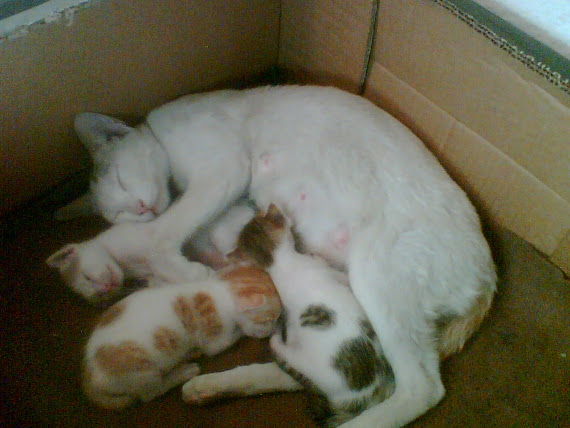
Minnu The Cat & Her Kittens Brownie, Goldie & Blackie
Someone with Nature

Syed Akbar in an island in river Godavari with Papikonda hills in the background
Recognition by World Vegetable Centre

Under the shade of Baobab tree

At Agha Khan Akademi in Kenya
Gateway to the Southern Hemisphere

Convention on Biodiversity

Syed Akbar at the 11th Conference of Parties to the United Nations Convention on Biological Diversity