2003
By Syed Akbar
Hyderabad, March 13: India on Sunday crossed another milestone in its nuclear programme with city-based MTAR Technologies developing indigenous technology for "Grid Plate", a crucial component of Prototype Fast Breeder Reactor.
"We have realised this technology for the first time in the world. Our nuclear programme is self-reliant. We are making a transition into domains which others have not made. With the development of the Grid Plate technology India has demonstrated that it can chart on territories which others have not yet ventured into", Atomic Energy Commission chairman Anil Kakodkar said after formally handing over the technology to Indira Gandhi Centre for Atomic Research.
Dr Kakodkar felt that India would eventually usher into inexpensive nuclear electricity regime with a unit of power costing just Rs 2. Dr Baldev Raj, director of IGCAR, said India would soon become a "nuclear guru".
Stating that fast breeder reactors are the only option to meet the increasing demand for power in near future. India is one of the seven countries in the world to build up necessary research and development base for commercialisation of FBR technology.
Prototype fast breeder reactor is a 500 MWe sodium cooled fast breeder reactor. Grid Plate forms an important component of PFB reactor. Grid Plate is a box type structure with bolted construction. The shell assembly is bolted at its periphery to top and bottom plates, which are interconnected by 1758 sleeves. The material of construction is special grade SS 316LN with stringent control on chemical composition and supplementary requirements on mechanical properties and non-destructive examinations. It weighs about 80 tonnes.
"Grid Plate is accorded highest safety classification with stringent manufacturing and inspection requirements. MTAR has specially constructed a large workshop and established the requisite facilities like SPM, large size heat treatment furnace and nuclear clean hall", MTAR chief executive Brig V Sreeramulu said.
It may be recalled that for the fast breeder thermal reactor project, the Grid Plate was the only component that was made in France, in 1976, due to the critical technology involved in its manufacture.
Baldev Raj said the country had been constructing eight nuclear reactors at a cost of Rs 22,000 crore.
The AEC is still working on the proposal to set up a nuclear research and development unit at Visakhapatnam, Anil Kakodkar told reporters later.
Thursday, 13 March 2003


Monday, 30 December 2002
Narsapur lace and crochet works all set to make a fashion statement
2002
By Syed Akbar
Hyderabad, Dec 30: Narsapur lace and crochet works are all set to make a fashion statement in the international market.
The city-based National Institute of Small Industry Extension Training and the National Institute of Fashion Technology are roping in international fashion names like the Harrods, Mark Spencer, Mother Care and Wall Mart for a fashion event showcasing the Naraspur lace and crochet works including lingerie. The fashion show will be held in the city sometime in March. The All-India Crochet Lace Exporters' Association and the Naraspur Lace Park will co-sponsor the first-ever fashion show of lace garments.
NISIET, a Central government body, plans to develop marketing linkages between Narsapur, a sleepy village on the banks of the river Godavari in West Godavari district, and international chain of super stores based in London and other major cities in the world.
Lace garments are in great demand in the international market but most of lace weavers in Narsapur prepare traditional products like doilies and table mats. The NISIET provided training to the artisans introducing international quality standards and creating international marketing networks. About two lakh women are involved in the lace work for the past 150 years in and around Narsapur.
"The idea is to make Narsapur cluster into a global sourcing point for crochet lace garments. New products like designer garments and lingerie will be introduced. For a pair of beach wear of crochet lace for women it will take 200 gms of yarn and will take three days work for an artisan to lace. The artisan will fetch about 15 US dollars in international market. We are ensuring that the product comes out with international quality standards like non bleeding and fastness of colour and colour standard under precipitation," says NISIET technical adviser YVS Mahadev.
As a prelude to the fashion show the NISIET has provided the artisans with patterns compact discs for prototype development. The total turnover of Narsapur lace market is Rs 50 crore. The NIFT is now training women artisans in advance fashion courses like crochet language and design pattern.
"An interesting aspect of the work force in the Narsapur cluster is the existence of specialized labour groups in the form of housewives, who take up part-time knitting. The fashion show will be great boon for them," Mahadev said.
By Syed Akbar
Hyderabad, Dec 30: Narsapur lace and crochet works are all set to make a fashion statement in the international market.
The city-based National Institute of Small Industry Extension Training and the National Institute of Fashion Technology are roping in international fashion names like the Harrods, Mark Spencer, Mother Care and Wall Mart for a fashion event showcasing the Naraspur lace and crochet works including lingerie. The fashion show will be held in the city sometime in March. The All-India Crochet Lace Exporters' Association and the Naraspur Lace Park will co-sponsor the first-ever fashion show of lace garments.
NISIET, a Central government body, plans to develop marketing linkages between Narsapur, a sleepy village on the banks of the river Godavari in West Godavari district, and international chain of super stores based in London and other major cities in the world.
Lace garments are in great demand in the international market but most of lace weavers in Narsapur prepare traditional products like doilies and table mats. The NISIET provided training to the artisans introducing international quality standards and creating international marketing networks. About two lakh women are involved in the lace work for the past 150 years in and around Narsapur.
"The idea is to make Narsapur cluster into a global sourcing point for crochet lace garments. New products like designer garments and lingerie will be introduced. For a pair of beach wear of crochet lace for women it will take 200 gms of yarn and will take three days work for an artisan to lace. The artisan will fetch about 15 US dollars in international market. We are ensuring that the product comes out with international quality standards like non bleeding and fastness of colour and colour standard under precipitation," says NISIET technical adviser YVS Mahadev.
As a prelude to the fashion show the NISIET has provided the artisans with patterns compact discs for prototype development. The total turnover of Narsapur lace market is Rs 50 crore. The NIFT is now training women artisans in advance fashion courses like crochet language and design pattern.
"An interesting aspect of the work force in the Narsapur cluster is the existence of specialized labour groups in the form of housewives, who take up part-time knitting. The fashion show will be great boon for them," Mahadev said.
Sunday, 1 December 2002
Charminar Bank never received Rs 38 crore it had deposited in the scam-tainted Krushi Cooperative Bank
2002
By Syed Akbar
Hyderabad, Dec 1: Charminar Bank never received Rs 38 crore it had deposited in the scam-tainted Krushi Cooperative Bank. It was only in the books of account that the deposits were withdrawn and encashed.
In a startling revelation, the auditors of Charminar Bank noted that the "transaction raises high suspicion about the genuineness of the receipts of cash and also their disbursement as loans".
The Charminar Bank simply made book adjustments showing that the Krushi Bank had repaid the cash deposit after it came to know that the Krushi Bank might collapse any moment under the impact of large-scale financial irregularities. The Charminar authorities, fearing that their murky financial dealings would be out once the Krushi Bank collapsed, made hurried entries in their records to show that Krushi had returned the deposit in instalments. But in reality Krushi Bank never repaid the money to Charminar. This simply means that the size of the scam in the Krushi Bank is Rs 73 crore and not just Rs 35 crore which the investigating authorities believe.
The murky dealings in the Charminar Bank came to light in the audit report carried out by chartered accountants Prema Gopal and Company. Charminar Bank has deposited with Krushi Bank in the form of fixed deposit Rs 38 crore on July 29, 1998 and reportedly withdrew it in phases between March and August 2001. The Bank collapsed in mid-August 2001.
The State government has ordered an inquiry into the entire transaction between Charminar and Krushi Bank. Hyderabad district cooperative officer has been asked to submit report on the murky dealings. According to Charminar Bank managing director V Prabhakar, "the truth will come out when the DCO gives his report. We will initiate action accordingly".
The audit reports says, "entries were passed in the books of the Charminar Bank as if cash has been received from Krushi Bank by a particular branch on a particular day. these branches transferred the same amount on the same day to Purani Haveli branch. Again the same day the same amount was transferred to different branch/branches by Purani Haveli branch and those amounts were shown as given to different parties the same day as loans. The series of transactions, particularly in some cases with different denominations recorded in the books of different branches for the same amount on the same dates raises high suspicion about the genuineness of the receipts of cash and also their disbursement as loans".
According to the audit report cash was deposited by Krushi Bank in Purani Haveli branch without there being any account with the branch. Even the current account in the James Street branch was opened on March 27 a few days after the payment was said to have been made.
The cooperative department is eagerly awaiting the arrest of Krushi chief K Venkateswara Rao, whose interrogation will bring the truth behind the Charminar-Krushi transactions.
By Syed Akbar
Hyderabad, Dec 1: Charminar Bank never received Rs 38 crore it had deposited in the scam-tainted Krushi Cooperative Bank. It was only in the books of account that the deposits were withdrawn and encashed.
In a startling revelation, the auditors of Charminar Bank noted that the "transaction raises high suspicion about the genuineness of the receipts of cash and also their disbursement as loans".
The Charminar Bank simply made book adjustments showing that the Krushi Bank had repaid the cash deposit after it came to know that the Krushi Bank might collapse any moment under the impact of large-scale financial irregularities. The Charminar authorities, fearing that their murky financial dealings would be out once the Krushi Bank collapsed, made hurried entries in their records to show that Krushi had returned the deposit in instalments. But in reality Krushi Bank never repaid the money to Charminar. This simply means that the size of the scam in the Krushi Bank is Rs 73 crore and not just Rs 35 crore which the investigating authorities believe.
The murky dealings in the Charminar Bank came to light in the audit report carried out by chartered accountants Prema Gopal and Company. Charminar Bank has deposited with Krushi Bank in the form of fixed deposit Rs 38 crore on July 29, 1998 and reportedly withdrew it in phases between March and August 2001. The Bank collapsed in mid-August 2001.
The State government has ordered an inquiry into the entire transaction between Charminar and Krushi Bank. Hyderabad district cooperative officer has been asked to submit report on the murky dealings. According to Charminar Bank managing director V Prabhakar, "the truth will come out when the DCO gives his report. We will initiate action accordingly".
The audit reports says, "entries were passed in the books of the Charminar Bank as if cash has been received from Krushi Bank by a particular branch on a particular day. these branches transferred the same amount on the same day to Purani Haveli branch. Again the same day the same amount was transferred to different branch/branches by Purani Haveli branch and those amounts were shown as given to different parties the same day as loans. The series of transactions, particularly in some cases with different denominations recorded in the books of different branches for the same amount on the same dates raises high suspicion about the genuineness of the receipts of cash and also their disbursement as loans".
According to the audit report cash was deposited by Krushi Bank in Purani Haveli branch without there being any account with the branch. Even the current account in the James Street branch was opened on March 27 a few days after the payment was said to have been made.
The cooperative department is eagerly awaiting the arrest of Krushi chief K Venkateswara Rao, whose interrogation will bring the truth behind the Charminar-Krushi transactions.
Thursday, 22 April 1999
This graveyard has no `room' for marriages, say Islamic elders

By Syed Akbar
Published in Indian Express on April 22, 1999
VIJAYAWADA, APRIL 21: A major controversy is raging in the Muslim community in coastal Andhra over the decision by a group of Telugu Desam Party leaders to construct a shadi-khana (marriage hall) over a piece of graveyard at Bhavanipuram in the city.
The move is strongly opposed by Islamic scholars on the ground that no structure should be constructed over any graveyard, which is a notified Wakf property. Construction over a graveyard, whether in use or abandoned, is against the principles of Shariah (Islamic jurisprudence) and established Wakf laws of India.
While the TDP leaders plan to go ahead with their move and invite Chief Minister N Chandrababu Naidu to lay the foundation stone for the `Shadi-khana-cum-ITI complex', a section of Muslim scholars threatened to launch an indefinite fast to lodge their protest.
Ever since the State Government announced that it would construct shadi-khanas in all districts for the benefit of Muslims, the district Wakf committees concerned have startedidentifying vacant Wakf lands, in some cases even graveyards. And as the State Assembly polls are drawing closer, some enthusiastic TDP leaders, particularly those in the party's minorities cell, are keen to launch the project, without thinking of the religious implications.
Senior Advocate Syed Ahmad Ali dashed off a letter to the Chief Minister urging his intervention against construction of marriage or community halls or any structure on Wakf lands, particularly graveyards. He appealed to him to issue instructions to all district collectors and the Andhra Pradesh State Wakf Board to implement the orders.
The Krishna district Wakf committee, represented mostly by TDP minorities cell activists, has drawn up a plan to construct a marriage hall over two acres of the 6.90-acre graveyard abutting the Vijayawada-Hyderabad national highway here. The land, a notified Wakf property, has been in use as a graveyard for several decades.
A part of the graveyard was encroached upon and it was used for agriculturalpurpose. However, the encroachments were removed with the intervention of the Wakf Board. A few months ago, a wall was constructed dividing the graveyard into two.
Krishna district Wakf committee president and TDP leader AR Afsar, when contacted, said the shadi-khana would be constructed at a cost of Rs 50 lakh. The State Government agreed to pay Rs 25 lakh, he said adding that efforts were on to bring the CM for the foundation-stone ceremony.
He disputes the contention that the land was never used as a graveyard, though some traces of graves existed.
Noted religious scholar and head-priest of the city's biggest Jamia mosque, Maulana Abdul Qadeer, argues that a graveyard is inalienable even after it has been closed. And a land dedicated for a graveyard will always remain a graveyard even if it has fallen into decay and even if traces of the dead are not left.
If anything is built on an obsolete graveyard the community has a right to get it demolished as it will be in contravention of theoriginal purpose of dedication.
Citing various judgments of Supreme Court, Abdul Azeez of the Muslim Minorities Forum, points out that the nature of a graveyard will not alter simply because it was not so used in recent years. Once a mosque or graveyard is created, they remain always as mosque or graveyard. They cannot be utilised for any other purpose even though prayers are offered or not offered in the mosque and graveyard remains as graveyard only though dead are buried or not being buried into it.
Monday, 15 March 1999
Reward us, not Naxal, wail AP tribal women

Published in The Indian Express on Tuesday, March 16, 1999
By Syed Akbar
Pedamallapuram (AP), March 15: The tribal women of Pedamallapuram, a far-flung hamlet in East Godavari district of Andhra Pradesh, are furious once again. This time, their ire is directed at the state government for its decision to announce a reward of Rs 5 lakh to a Naxalite leader who surrendered recently.
Pedamallapuram captured newspaper headlines all over the country last year when its illiterate and ill-clad tribal women raised a banner of revolt against Naxalites. So strong was the women's movement that Naxalites of the People's War Group (PWG) did not venture to enter the village for a full six months. But, one night they attacked defenceless villagers and killed two Dalits including an MPTC member.
The attack notwithstanding, the tribal women continued to fight the Naxalites and even imposed a ban on alcohol. Men who violated the diktat were tonsured and paraded in public.
Today the Pedamallapuram women are angry with the state government. The reason: Announcement of a reward of Rs 5 lakh tosurrendered PWG East division committee leader Pilli Venkatesam alias Jambri, whom the women hold responsible for all the woes they face now. ``He is behind all the violent attacks on us. We lost two of our people because of him'', the women said arguing whether it was proper on the part of the government to reward a Naxalite leader responsible for the killing of innocent Dalits.
And what do the women want? They demand that the reward which the state government has announced be utilised for the development of Pedamallapuram.
``Let there be a hospital or a pucca road be laid with the amount,'' suggested tribal women movement leader Ramulamma and Bodoju Ganga, wife of slain MPTC member Venkateswara Rao. The women made it clear in unequivocal terms that they would not tolerate the government paying the reward to Jambri. ``We were the ones beaten up and we who lost everything. We have been living in fear. The money should come to our village and not to the Naxalite leader,'' the women pointed out inchorus.
They said they were least bothered about Jambri or his surrender. All they wanted was that the government should not reward those who caused harm to others. Recalling the promise of Jambri in writing that the Naxalites would do no harm to the village and if they did the villagers would be paid compensation, Ramulamma wondered how the Naxalite leader would accept the Government's largesse. They demanded that Jambri visit Pedamallapuram and explain his role.
Though the women are against the Naxalites, they seem to have no personal enmity with Jambri, who headed the Nagulakonda dalam. ``He may not be directly involved in the attacks, but as the Dalam leader he should own the responsibility,'' they said ridiculing the way the Naxalite surrendered along with his wife on `health grounds' and was seeking the reward, which the government announced as part of its general policy towards surrendered Naxalites. The tribal women also questioned the committees formed by Jambri.
The committees, mostlycomprising non-tribals, should leave the village, they demanded. The Naxal had earlier warned the villagers against accepting benefits from the government and his turnabout in accepting cash from the government in return for his surrender has understandably infuriated the women of the village.
Wednesday, 9 December 1998
Financier is king in coastal Andhra's sex industry

The Indian Express, December 9, 1998
By Syed Akbar
PEDDAPURAM, DEC 8: The "financier" enters Lakshmi's life when she is fined by the court. He is there, outside the court, waiting with the money. She doesn't need to give any guarantee, it just work on ``mutual trust,'' Lakshmi should repay in daily installments with 40 per cent interest. The problem is he never leaves her life.
Nor that of the owner of brothel who bought her on a contract. It was the financier who bankrolled the deal. ``We have to bear the rest of our expenditure like purchase of cosmetics, clothes and medicines and obtaining bail whenever remanded to judicial custody. At times we run short of money. That is when the financiers come to our rescue,'' says Lakshmi (not her real name), a sex worker.
The financiers fund the `companies' and rule the `trade' in the coastal belt of Andhra Pradesh, where sex is an industry and where they use euphemisms from the business lexicon to describe prostitution and related thing. Everyone plays the game according to the financier's rules.
As many as 200 financiers get the sex industry going in the infamous red light areas of East and West Godavari districts. They collect exorbitant interests -- up to 40 per cent -- on the money they lend to ``company owners'', read brothel-owners, and sex workers.
According to insiders, the money involved in the `finance business' here runs into at least Rs 50 crore. The daily turnover is a little over Rs 10 lakh. Such financiers are mainly concentrated in towns such as Peddapuram,Duvva, Tadepalligudem, Tanuku, Velpuru, Rajahmundry and Eluru.
Here's how it works: First, a broker brings the news to a `company' owner about a `new arrival' from a certain place or about the availability of a `fresh face'. The company owner then approaches the financier, who in turn ``personally assesses the quality of the product''.
Only if he is satisfied that the `product' is `saleable' in the market and reimburses the investment along with high profits, the financier hands over the money to the company owner who takes the woman oncontract. The money is repaid in daily installments.
While a middle-aged sex-worker fetches Rs 5,000 on a three-month contract period, those in the teens command as much as Rs 25,000 a month. This investment is borne by the financiers, who recover the money before the contract expires.
The financiers of the sex industry operate from both sides. They finance the company owners as well as sex-workers for their daily needs. While the sum involved is large in the case of company owners, who maintain as many as 25 to 40 sex workers, it is just a few thousand rupees in the case of individual sex-workers.
Whenever the police raid brothels and produce sex-workers before court, the financiers rush there with money. They pay the fine imposed on individual sex-workers and bear the expenditure involved in obtaining bail. Once the sex-workers are free and resume work, the money invested is collected.
In some cases money is advanced towards renovation of brothels with latest luxuries like revolving beds and lovelyrooms with mirrors all around. Some brothels here, a policeman says, beat star hotels in terms of facilities.
G Venkateswara Rao, a financier, proudly says that his area of operation extends to places like Mumbai, where a large number of sex-workers from Andhra Pradesh are holed up. He finances the expenditure incurred by individuals who seek a ``lucrative career'' in Mumbai or northern cities on `contract' for a specified period.
``There is no need for a surety or guarantor. Everything functions smoothly on mutual trust,'' he says.
According to a senior police officer, each financier makes not less than Rs 50,000. Asked why the police did not crack down on the financiers, he expresses helplessness in the absence of complaints. ``Moreover, financing is not a crime,'' he adds.
Sunday, 6 December 1998
Devadasis: Slave to tradition
1998
By Syed Akbar
VIJAYAWADA, DEC 6: Despite the efforts of voluntary organisations to abolish the Devadasi system, it flourishes in the interiors of Andhra Pradesh. Only, the creed of exploiters has changed. Where the Devadasi (servant of God) once served the entire village, she is today a pawn in the hands of influential politicians.
Local politicians in Khammam and Krishna districts organise Bhogam Melas in honour of visiting dignitaries, some of whom are top political leaders. Women are invited and a mela is held in a remote place. The women perform semi-nude or nude dances and entertain the guests after the programme.
The Bhogam and Dommera communities believed that their women were born to ``serve the deity''. Once offered to God as Devadasis, the women became the property of the village. Social circumstances and economic compulsions forced them to leave their profession of serving the deity through their art in various temples of the State, particularly in the Krishna, East and West Godavaridistricts.
The Bhogam community owes its origin to the Devadasi system prevalent in many villages of South India, Andhra Pradesh in particular. The Devadasis are called Bhogams or Kalavanthulu in Krishna and East and West Godavari districts, Matangis in Nellore and Prakasam and Jogins in Telangana.
The girl offered to the temple by the Bhogam community would look after the temple's religious needs.
Dance being considered a form of worship, the girls were trained in various types of the art form. They used to perform before the deity and in the process, entertain the village.
In the last 200 years, the system turned into one of organised prostitution. Some of the Devadasis have taken to the `respectable' profession of `record dancing', giving semi-nude performances during marriages or social gatherings.
By Syed Akbar
VIJAYAWADA, DEC 6: Despite the efforts of voluntary organisations to abolish the Devadasi system, it flourishes in the interiors of Andhra Pradesh. Only, the creed of exploiters has changed. Where the Devadasi (servant of God) once served the entire village, she is today a pawn in the hands of influential politicians.
Local politicians in Khammam and Krishna districts organise Bhogam Melas in honour of visiting dignitaries, some of whom are top political leaders. Women are invited and a mela is held in a remote place. The women perform semi-nude or nude dances and entertain the guests after the programme.
The Bhogam and Dommera communities believed that their women were born to ``serve the deity''. Once offered to God as Devadasis, the women became the property of the village. Social circumstances and economic compulsions forced them to leave their profession of serving the deity through their art in various temples of the State, particularly in the Krishna, East and West Godavaridistricts.
The Bhogam community owes its origin to the Devadasi system prevalent in many villages of South India, Andhra Pradesh in particular. The Devadasis are called Bhogams or Kalavanthulu in Krishna and East and West Godavari districts, Matangis in Nellore and Prakasam and Jogins in Telangana.
The girl offered to the temple by the Bhogam community would look after the temple's religious needs.
Dance being considered a form of worship, the girls were trained in various types of the art form. They used to perform before the deity and in the process, entertain the village.
In the last 200 years, the system turned into one of organised prostitution. Some of the Devadasis have taken to the `respectable' profession of `record dancing', giving semi-nude performances during marriages or social gatherings.
Sunday, 20 September 1998
Chinagollapalem: Island goes into slow dissolve

September 20, 1998
The Indian Express
By Syed Akbar
Nature's laws affirm instead of prohibit. If you violate her laws, you are your own prosecuting attorney, judge, jury and hangman. This prophetic warning by eminent ecologist Eugene P. Odum appears to have become a reality in Chinagollapalem, a picturesque island in Andhra Pradesh's Krishna district.
The 6,000-acre island with 7,000 inhabitants is on the verge of extinction. Already 20 per cent of it has practically disintegrated into the Bay of Bengal. Every day, seawaters lash it brutally, wave after wave. Environmentalists warn that if no immediate steps are taken to prevent sea erosion, the island could disappear from the Indian map over the next 20 years.
Denudation of mangrove forests in the vicinity, the unchecked pollution in the Kolleru lake that straddles it and the construction of an artificial outlet for the Upputeru rivulet have all taken their toll on Chinagollapalem.In fact, the case of Chinagollapalem is nothing short of what could be termed ``environmental retaliation''. K.Satyanarayana is a victim of this ``retaliation''. A decade ago, he was a rich landlord owning 40 acres of lush green coconut orchards and causurina gardens. Today, he has been reduced to penury, and survives on the largesse of village elders.
The single cause for this unfortunate transformation in Satyanarayana's life is sea erosion. The sea has ``eaten'' as much as 1,000 acres in the last 15 years, making many a landlord join the swelling ranks of the landless poor. In a pathetic incident that occurred some years ago, a woman called Padma committed suicide, unable to bear her husband's impoverishment after the land given to him as part of her dowry was completely eroded.
With the state Government preferring to turn a blind eye to this serious environmental tragedy unfolding before its very eyes, it looks like many more are destined to go the way of Satyanarayana and others like him. Ministers and senior officials have visited the island a number of times.
But ironically, the government machinery isyet to act. Says Uday Kumar, a senior agriculturist who has been living on this island for five decades, ``The state Government gives an ex-gratia payment of Rs 1 lakh each to the kin of victims who die in natural calamities. We are 7,000 people. How will ex-gratia amounts help us? Will the Chief Minister think of remedial steps only after we are washed away by the sea?''
Soil erosion has assumed such alarming proportions in Chinagollapalem island that in the past six months alone, the sea has progressed about three metres landward. And the pace gets accelerated during full moon and new moon days when the waves are high. Five kilometres of the eight-kilometre-long island are facing erosion. Huge causurina and coconut trees fall down almost every day along the coast as the soil that had once held them is carried away by the waters. At places, one can discern the process taking place with the naked eye, as small clumps of sand and mud get carried away by sea waters with every wave.
Chinagollapalem islocated amidst striking natural beauty, with the Bay of Bengal on one side and the Upputeru rivulet on the other three. The island is highly fertile and luxuriant, with thousands of coconut and causurina trees. There are also large mango, sapota and cashewnut orchards dotting the island. Incidentally, it is also the home of some rare mangrove species. The main income for the inhabitants is through agriculture, though some of them live on fishing.
There are a few government schools but no hospitals or roads. At times villagers die before medical attention reaches them. The nearest full-fledged hospital for the islanders is 20 km away at Bhimavaram, in West Godavari district, or 50 km at Gudiwada, in Krishna district. What makes handling medical emergencies even more difficult is the serious lack of transportation facilities to the mainland and from there to the nearby towns.
The problem of sea erosion for the islanders is not new. It started 15 years ago, but at a much slower pace. The phenomenon continueduntil 1994, when it suddenly stopped, much to the relief of the inhabitants. But the problem resurfaced in September 1997 and has become even more pronounced since March this year.
Soil erosion here can be termed as ``land drifting'', since the soil from the Chinagollapalem island is carried away and deposited about two km away, seawards. Thanks to this process, a new 300-acre island was formed a few years ago. It served a useful function since it used to protect the old island from being directly attacked by the sea. But since last September, the new island as well as the old island started getting eroded. Now a third island is getting formed right in the middle of the sea, about a kilometre from the second island. Environmentalists are at a loss to explain the phenomenon, while the villagers blame it on the ``lopsided'' policy of the state Government.
Panchayat president K. Hanumanth Rao clarified that the erosion started only after the Government dug up a channel to the Upputeru rivulet in order todivert the excess water from its natural course. Says Rao: ``Our woes started with the new channel. We are cut off from the mainland and the sea started eating away our lands.'' ``The sea has encroached upon my fields up to a metre since August 12. Twenty high-yielding coconut trees were washed away in just one month,'' says 35-year-old Tamba Satyanarayana, pointing to his six-acre orchard, which is now reduced by half. To supplement the lost income, he and his wife have been catching prawn seedlings. ``I will be on streets if something is not done to stop the erosion,'' he says.
But even as the islanders curse their fate, officials plead helplessness. ``It's a natural phenomenon and no one can do anything to stop it,'' says a senior official who does not want to be quoted. But when confronted with the villagers' argument that it is not a natural occurrence but a ``government-made'' one, the official has no answer.
Wednesday, 29 July 1998
50 years of solitude -- Development shuns AP tribals

July 29, 1998
By Syed Akbar
VIJAYAWADA, July 28: Uke Venkaiah was 30 years old when India became free. And as the country looks back in its golden jubilee with pride over the development it has achieved, life for him has remained what it was 50 years ago. Venkaiah belongs to the Kondareddy tribe, the most primitive tribal group in Andhra Pradesh. The 50 years of independence have not brought about any change in the lifestyles of this hill-habitant tribal group which is facing extinction.
The population of Kondareddys, inhabiting the inaccessible forest areas of Khammam, East and West Godavari, and Visakhapatnam districts, is fast dwindling, causing concern to anthropologists. According to the latest census, there are just one hundred thousand Kondareddys in Andhra Pradesh and a little over half of them live in Khammam district. The mortality rate in this tribe is the highest among the three major tribal groups in the state the other two being Koyas and Lambadas.
``I hear from the radio that the country has progressed a lot. Iwonder whether it is true when I see my habitation. There has been no development in the last 50 years. There is no electricity and no roads. The same old forest tracts and the same old health problems. Nothing has changed for us,'' says Venkaiah, as an aeroplane flies past the hills surrounding his Uppanapalle hamlet in Chintoor mandal.
Unlike many others, Venkaiah is fortunate to be able to listen to the radio as his hamlet boasts of one. A radio set was brought by a tribal elder a few years ago. But most of the time it remains silent for want of batteries, which are available only in the nearest non-tribal village, a five-hour walk away.
A visit to Kondareddy or Koya hamlets like Chintagandi, Karamanakonda, Gabbilalagondi and Elugalagondi in Khammam district uncovers their miserable health condition. More than 80 per cent of the Kondareddys living in 64 hamlets are malnourished. Women and children are the worst affected. Almost all the children below five years have pot bellies indicatingmalnutrition. Skin ailments, malarial fevers, and diarrhoea are quite common. Doctors rarely visit the habitations.
There are many habitations that the project officers (POs) of the Integrated Tribal Development Agency (ITDA), which is supposed to look after the welfare of tribals, have never visited. Even Uppanapalle, which is just 40 km from the ITDA headquarters at Bhadrachalam, has not seen the face of a PO for six years. The tribal school in the village does not run regularly.
Barefoot and wearing loin cloths, the Kondareddys walk down the hills for about half-a-day to reach the nearest fair price shop to get their monthly ration, 10 to 15 kg of cheap quality rice supplied by the State Government. Tribals have been demanding that the fair price shops be located in the nearest tribal hamlet instead of villages in the plain areas.
The ITDA has opened schools in some tribal hamlets, but many of them remain closed for want of teachers. All the students sit on the floor in one classroom. The residentialschools have no electricity and the surroundings are unhygienic. The tribal children may not regularly get nutritious food as the wardens concerned have to walk for miles together to fetch fresh vegetables and groceries. Children are fed some low-quality rice and watery dal.
In one such residential school at Vidyanagar, the Kondareddy children rehabilitated from Vegisagandi and Baibokka look shabby. They have not had a bath for almost a week. When asked, the warden said he had to receive clothes from ITDA and new clothes ``will be supplied soon''.
In the absence of proper coordination among government departments, the ITDA could achieve little success in its mission to rehabilitate this most primitive tribal group that does not like to live on plains. Certain schemes proposed by ITDA for the welfare of Kondareddys are yet to take off.
Many Kondareddys lost their livelihood after the forest department tightened its vigil over felling of bamboo trees. Left with no other go, this tribe has beenresorting to ``podu'' (shifting cultivation) by levelling huge forest tracts, in the process damaging forests and sealing their future.
Wednesday, 15 July 1998
Oldest east coast port in ruins due to years of neglect

Published in The Indian Express on Wednesday, July 15, 1998
By Syed Akbar
VIJAYAWADA, July 14: There are abandoned sheds, rusted machinery, a few
condemned boats, sandcast approach channel, cattle grazing the outgrown
greenery, and human waste littered all around. But, the Andhra Pradesh
State government likes to call it the Machilipatnam seaport and fishing
harbour.After M V Dalakhi of Malta left the port on June 22, 1989, the
Machilipatnam port has not seen any ship anchoring in its area. While the
government and the trade unions are battling out the issue of
privatisation, the port with a vast hinterland continues to be deserted.
The labour has migrated to other ports.
Machilipatnam is one of the two intermediate ports in the state. It's
maritime history dates back to the first century BC when it was an outlet
to many nations. It developed by leaps and bounds under various rulers
through the centuries. Its decline began after India became independent.
For all practical purposes, the once glorious Machilipatnam port is dead.
And the government is just to write the requiem byofficially declaring it
as closed.
The cash-strapped State Government only added to the apprehension of the
people of Machilipatnam that their port, the oldest on the east coast,
will be closed down, when it recently shifted the machinery, in working
condition, to the Kakinada port.
The staff strength at the port has been reduced over the years. As many as
15 cargo boats remain unused. A grab dredger with four mud punts is lying
rusted at the entrance of the port channel. The signal station with VHF
facilities has gone dead. The transit lights for the approach channel have
all disappeared.
The port officer, who is common for Machilipatnama and Kakinada, could not
be contacted as he stays in Kakinada, where shipping activity is in
abundance.
"What remains today is scrap. A few years ago much of the equipment was in
working condition. The private consultancy firm, appointed in 1992 to
study the working of the port, listed many facilities as existing and
suggested some more. But, now the government hasto begin from scratch,"
says a leader of the Machilipatnam Port Employees' Union.
Even the four barges of the private sector remain unused. Estimated to
cost Rs 2 crore, the barges were to sail in January this year. Abandoned
midway, they are rusting in the open.
MAIN PROBLEM: The main problem facing the port is the unstable nature of
the sand bar which keeps shifting from south to north, and back, in a
cyclic manner. The approach channel keeps shifting and at times the water
is only about two feet deep at low tide over the bar.
This drift estimated at about 0.6 million cubic metres with its dominant
direction to the north, results in the shifting of the channel and
reduction of water depth over the bar.
Boats are then forced to cross during the high tide, thereby imposing
restrictions on the traffic. Further, heavy breakers exist in the approach
channel making it dangerous for boats to negotiate the bar.
Thanks to neglect from all quarters, the traffic fell from 79,269 tonnes
in 1985-86 tojust 6,588 tonnes in 1989-90. And since then, there has been
no traffic at all. The revenue last year was just Rs 2 lakh.
"Almost a million tonnes of cargo can be handled. It may even go up to 1.5
million tonnes. The APSEB is willing to get its coal supplies through the
Machilipatnam port. The conversion of the Guntur-Guntakal metre gauge into
broad gauge means a direct access to the west coast, boosting business,"
feels Venkatasubbaiah, who has studied the port in detail.
A report by Howe (India) Limited, a Delhi-based consultancy firm, pointed
out that the approach channel was trying to bypass the guide bunds. The
bank on the south side was being eroded, while that on the northern side
was getting silted up. It suggested that urgent action should be taken to
prevent the by-passing of the river. Protection works and dredging are
necessary. Six years have passed since the report was submitted. The
"urgency" is yet to be recognised.
The report estimated the total cost of development of the port at Rs12.25
crore in 1992. But, it has escalated to Rs 30 crore now.
Subscribe to:
Posts (Atom)
Mother's Care
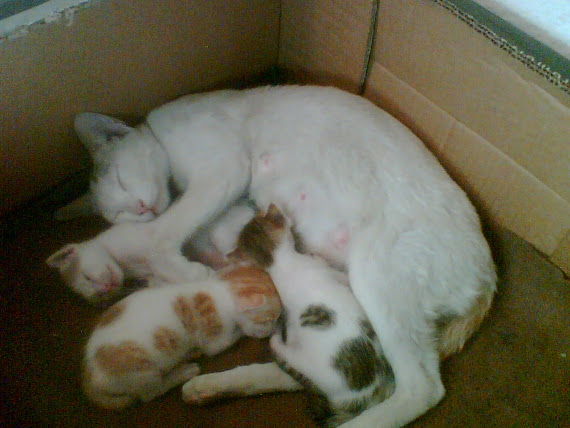
Minnu The Cat & Her Kittens Brownie, Goldie & Blackie
Someone with Nature

Syed Akbar in an island in river Godavari with Papikonda hills in the background
Recognition by World Vegetable Centre

Under the shade of Baobab tree

At Agha Khan Akademi in Kenya
Gateway to the Southern Hemisphere

Convention on Biodiversity

Syed Akbar at the 11th Conference of Parties to the United Nations Convention on Biological Diversity